 English
 русский
 Español
 عربى
عربى
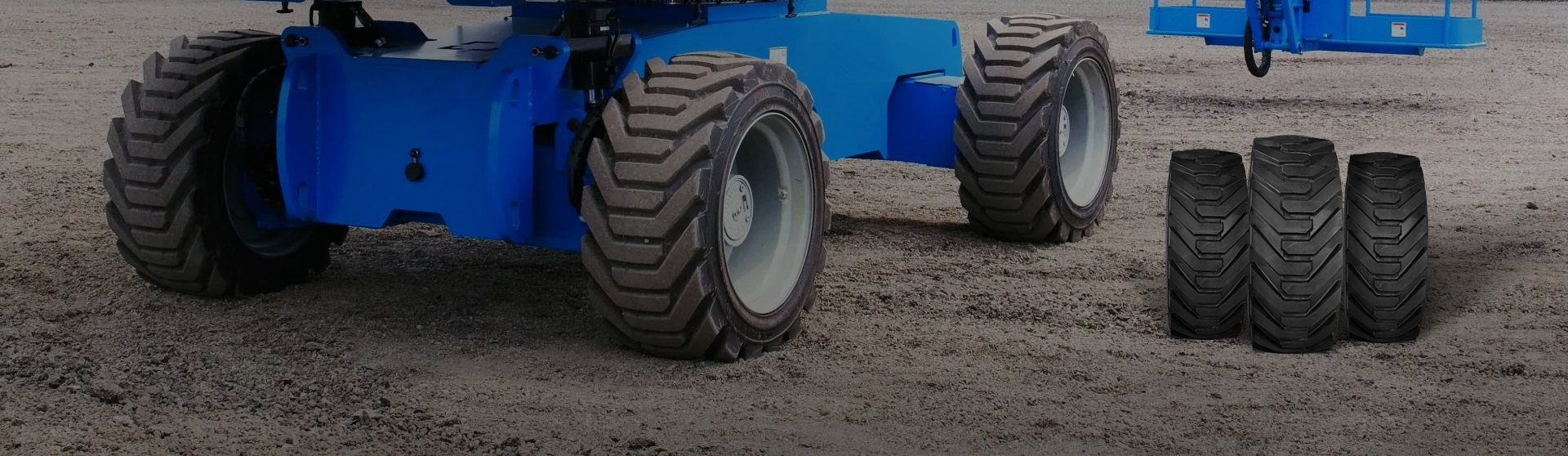

Why Solid Rubber Wheel and Solid Tire for Forklift Are the Industry Standard
A solid rubber wheel is the correct and most widely specified tire solution for forklifts operating in indoor warehouse, manufacturing, and distribution center environments. Unlike pneumatic tires, a solid tire for forklift cannot go flat, cannot be punctured by nails, metal shavings, or broken pallet wood, and requires no pressure maintenance. In environments where downtime from a flat tire costs a business hundreds of dollars per hour in lost productivity, this reliability advantage alone justifies specifying solid rubber wheels over every pneumatic alternative. The practical conclusion is straightforward: if your forklift operates primarily on sealed concrete or smooth asphalt and carries loads in the range of 1,000 to 10,000 kilograms, a solid tire for forklift is the technically and economically correct specification.
This article explains exactly what a solid rubber wheel is, how solid tires for forklifts are constructed and specified, when to use them versus alternatives, how to select the correct size and compound for a specific application, and how to manage their installation and replacement correctly to protect both the forklift and the operators who depend on it.
What Is a Solid Rubber Wheel and How Is It Different From a Pneumatic Tire
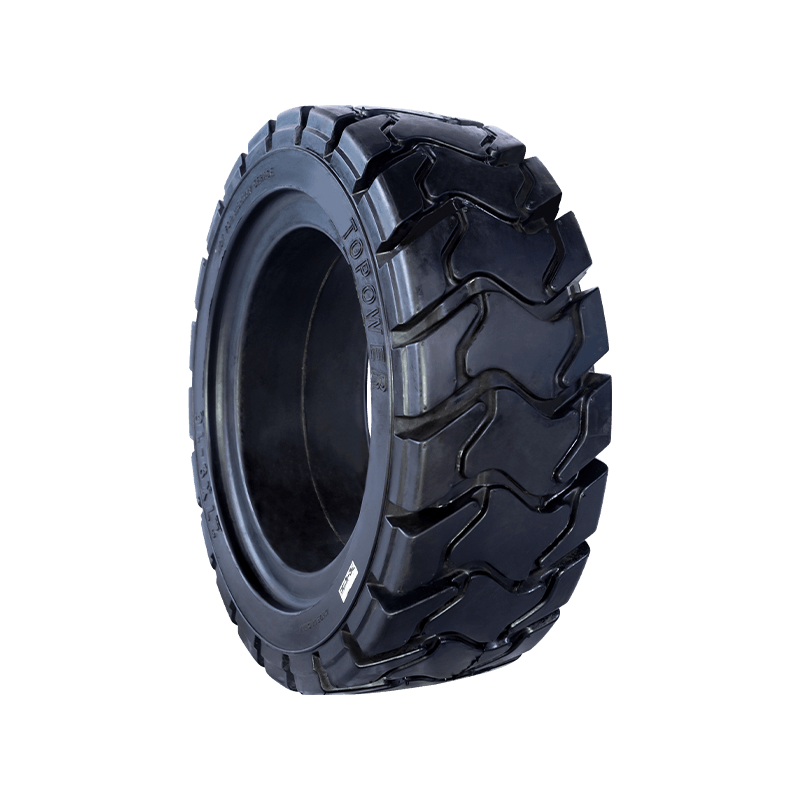
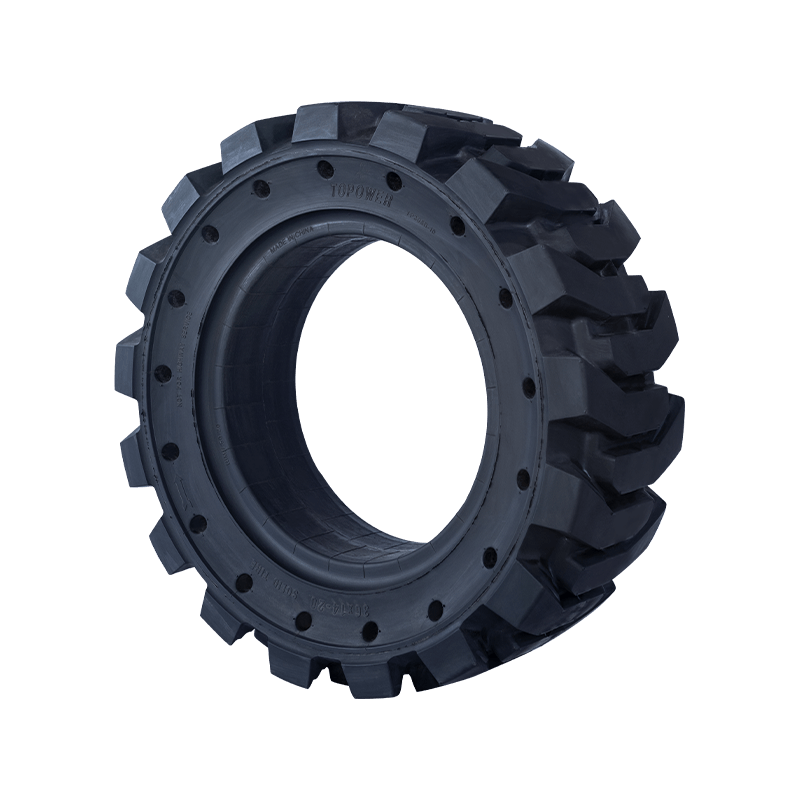
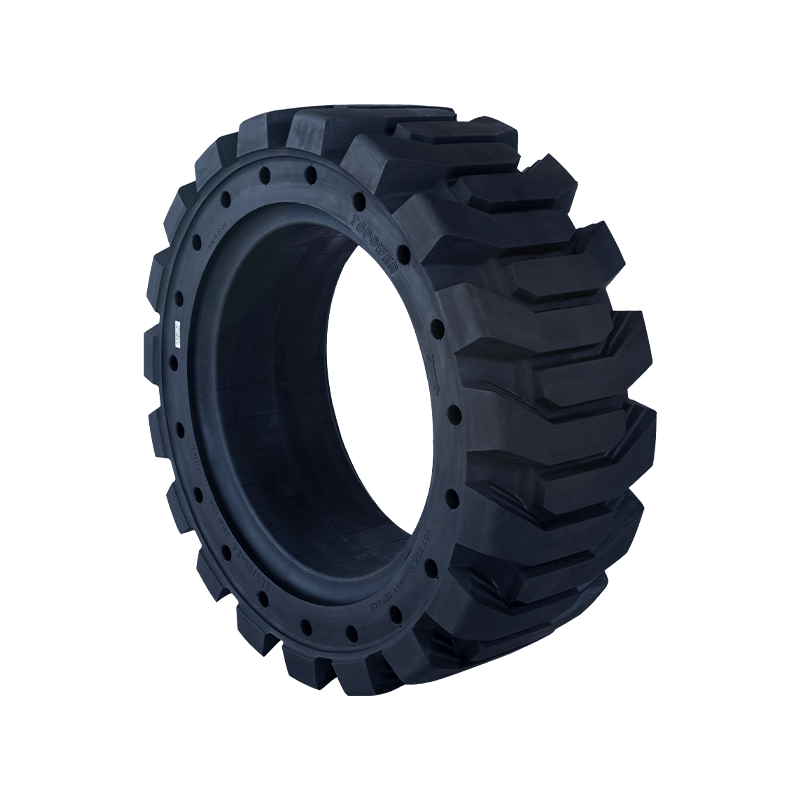
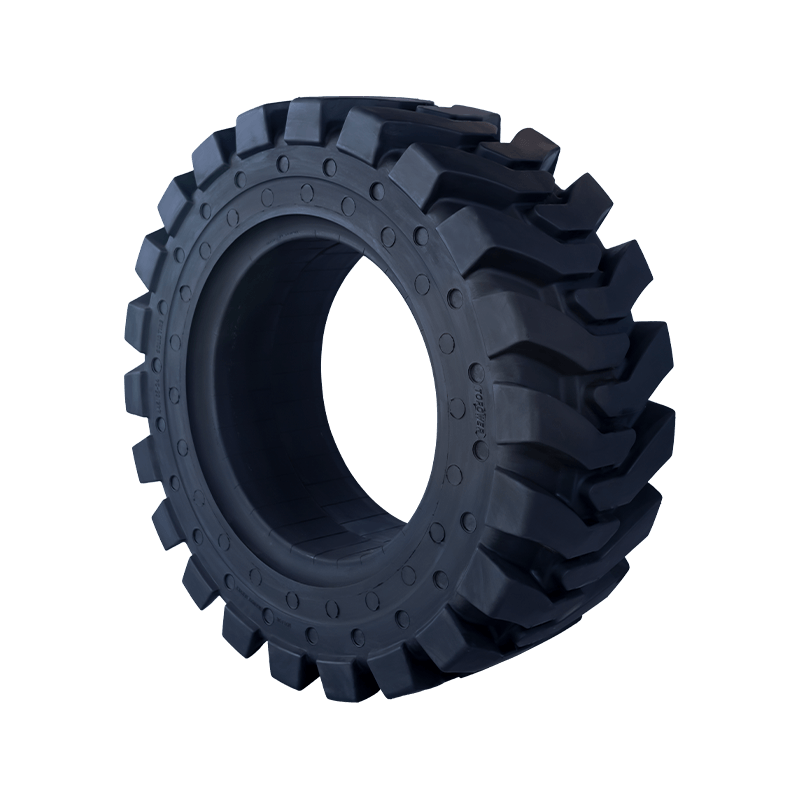
A solid rubber wheel is exactly what the name describes: a wheel assembly in which the rubber component is entirely solid throughout its cross-section, with no air cavity, no inner tube, and no valve stem. The rubber is bonded or press-fitted onto a steel band or rim that interfaces with the forklift wheel hub. Because there is no air to lose, the solid rubber wheel maintains its load-bearing geometry permanently and consistently throughout its service life, delivering predictable performance from the first hour of use to the last.
The fundamental structural difference between a solid tire for forklift and a pneumatic tire defines their respective performance envelopes. A pneumatic tire uses compressed air at typically 100 to 120 PSI to support the vehicle load, with the flexible sidewall deforming under load to create the tire's ground contact patch and ride cushioning. A solid rubber wheel achieves the same load-bearing function through the elastic compression and recovery of the rubber compound itself, with no dependence on contained air pressure. This means a solid rubber wheel can carry its rated load continuously at zero risk of pressure-related failure, making it uniquely suited to the unrelenting duty cycles of commercial forklift operation where a machine may complete 50 to 100 load cycles per shift across a 16 to 24 hour operating day.
Construction Types: Band-On vs. Press-On Solid Tires
Solid tires for forklifts are manufactured in two primary construction formats that determine how they are mounted onto the forklift wheel:
- Band-on solid rubber wheels consist of a solid rubber tread section bonded to a steel rim band. The complete band-on assembly (rubber plus steel band) is pressed onto the forklift's cast or fabricated wheel hub using a tire press, with the steel band secured by the interference fit between the band outer diameter and the hub inner diameter. Band-on construction is the dominant format for counterbalance and reach truck forklifts in the 1,500 to 10,000 kg capacity range.
- Press-on solid rubber wheels use a solid rubber tire with a precisely machined bore that is pressed directly onto a standard wheel rim using a hydraulic tire press to a specified interference fit. This format allows the wheel rim to be reused across multiple tire replacements, with only the worn solid rubber tire replaced each time. Press-on construction is common on smaller electric forklifts and warehouse order pickers where wheel size is small and rim reuse economics are favorable.
Multi-Layer Compound Construction for Performance Optimization
Premium solid tires for forklifts are not manufactured from a single homogeneous rubber compound throughout their full section. Instead, they use a multi-layer construction that places different rubber formulations at different positions within the tire cross-section to optimize the performance properties at each location. A typical three-layer solid tire for forklift consists of a hard base compound for load support and stability, a softer mid-layer for vibration absorption and heat management, and a specialized tread compound selected for the specific floor surface and duty cycle of the application. Multi-layer solid rubber wheels from leading manufacturers demonstrate 20 to 35 percent longer service life than single-compound alternatives at equivalent load conditions, primarily because the optimized tread compound resists the specific wear mechanisms (flat spotting, chunking, or abrasive wear) relevant to each application environment.
Solid Tire for Forklift Specifications: Reading and Selecting the Right Size
Every solid tire for forklift carries a size designation that encodes the critical dimensions needed to confirm fitment compatibility with a specific forklift model and wheel hub. Understanding this sizing system is essential for procurement and replacement, as specifying the wrong size tire can result in a tire that does not fit the rim, does not clear the forklift frame, or does not carry the required load safely.
Decoding the Standard Size Designation
The standard size format for a solid rubber wheel for forklift application is expressed as three numbers: Overall Diameter x Width x Rim Diameter, all in millimeters or inches depending on the market convention. For example, a tire designated 18 x 7 x 12 1/8 has an overall diameter of 18 inches, a section width of 7 inches, and a rim diameter of 12 1/8 inches. All three dimensions must match the forklift manufacturer's specification for the specific model and axle position (drive axle or steer axle) to ensure correct fitment, adequate ground clearance, and compliance with the forklift's rated load capacity.
Using a solid rubber wheel with an overall diameter more than 5 percent smaller than the OEM specification can reduce the forklift's rated lift height and compromise its stability triangle geometry, both of which represent safety-critical deviations from the forklift's certified operating parameters. Always cross-reference the replacement tire size against the forklift's data plate and the original equipment manufacturer's tire specification before ordering replacement solid tires.
Load Capacity Ratings and Safety Margin Requirements
Each solid tire for forklift carries a load rating expressed in kilograms or pounds per tire at a specified speed. The combined load capacity of all tires on the forklift must meet or exceed the forklift's rated capacity plus the weight of the forklift itself and all attachments. For a 3,000 kg capacity counterbalance forklift with a machine weight of 4,500 kg, the total weight on the tires in a fully loaded condition is approximately 7,500 kg distributed across four tires. Each tire must therefore have a load rating of at least 1,875 kg, and selecting tires with a 20 percent safety margin above this minimum is standard practice, pointing to a minimum per-tire rating of 2,250 kg for this application.
| Forklift Capacity | Typical Drive Tire Size | Typical Steer Tire Size | Min. Load Rating Per Tire | Recommended Compound |
|---|---|---|---|---|
| 1,000 to 1,500 kg | 15 x 5 x 11 1/4 | 12 x 4 1/2 x 8 | 1,000 to 1,200 kg | Standard black or non-marking |
| 2,000 to 3,000 kg | 18 x 7 x 12 1/8 | 16 x 6 x 10 1/2 | 2,000 to 2,500 kg | Standard or cushion compound |
| 3,500 to 5,000 kg | 21 x 8 x 15 | 18 x 7 x 12 1/8 | 3,000 to 4,000 kg | Heavy duty compound |
| 6,000 to 10,000 kg | 28 x 12 x 22 | 21 x 8 x 15 | 5,000 to 7,000 kg | Extra heavy duty compound |
Compound Selection: Matching the Solid Rubber Wheel to the Application Environment
The rubber compound used in a solid rubber wheel determines its performance characteristics across the full range of application variables: floor surface type, operating temperature, load cycle intensity, and the presence of chemicals, oils, or other contaminants on the floor surface. Selecting the wrong compound for the operating environment is one of the most common causes of premature solid tire wear and unexpected tire failure.
Standard Black Compound: The General Purpose Choice
Standard black solid rubber wheels use a carbon-black reinforced natural rubber or synthetic rubber compound that provides an excellent balance of load capacity, tread wear resistance, and traction on smooth concrete and asphalt surfaces. Carbon black reinforcement increases the compound's tensile strength and abrasion resistance by a factor of 5 to 10 compared to unreinforced rubber, giving standard black solid tires their characteristic durability on high-traffic warehouse floors. Standard black compound solid tires are the correct choice for approximately 75 to 80 percent of indoor warehouse and distribution center applications where there is no specific requirement for non-marking or chemically resistant performance.
Non-Marking Compound: Required for Food, Pharmaceutical, and Clean Floor Environments
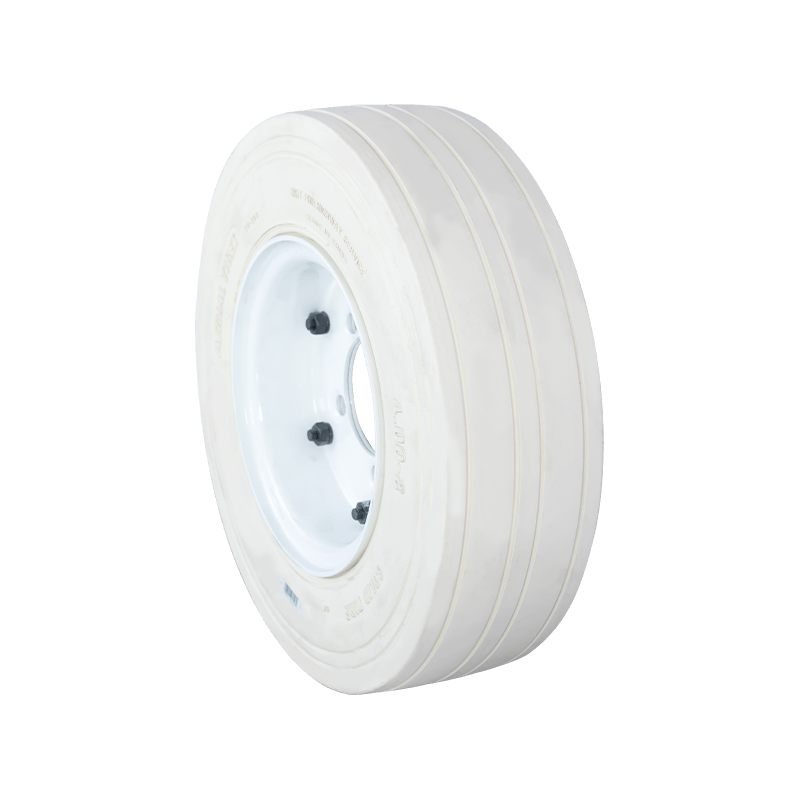
Non-marking solid rubber wheels replace the carbon black reinforcement with silica or light-colored reinforcing agents, producing a white, gray, or light tan colored tire that does not deposit black rubber marks on the floor surface when the tire scuffs or side-loads during turning. This compound is mandatory in food processing facilities, pharmaceutical manufacturing environments, clean rooms, and any facility where floor hygiene standards prohibit rubber contamination of the working surface.
Non-marking solid tires typically have 10 to 15 percent lower tread wear life than equivalent black compound tires at the same load because silica reinforcement provides slightly lower abrasion resistance than carbon black. This trade-off is entirely acceptable in clean environments where the application requirement makes non-marking compound non-negotiable, but non-marking tires should not be specified simply for aesthetic preference in environments where their shorter service life adds unnecessary replacement cost without a functional justification.
Polyurethane Solid Wheels: The High-Hardness Alternative
Polyurethane solid wheels occupy a distinct niche in the solid wheel market, used primarily on electric pallet trucks, electric order pickers, and small reach trucks rather than on counterbalance forklifts. Polyurethane offers Shore A hardness values of 80 to 95, compared to 60 to 75 Shore A for standard rubber compound solid tires, giving polyurethane wheels substantially higher load capacity per unit of tire width and dramatically lower rolling resistance on smooth hard floors. A polyurethane solid wheel of a given size can typically carry 40 to 60 percent more load than the same-size rubber solid wheel, which is why it is the dominant material choice for the drive and load wheels of electric pallet trucks where compact wheel size must support loads of 1,500 to 2,500 kg.
The limitations of polyurethane are its brittleness in cold environments below 0°C (where it becomes prone to chipping and cracking), its poor performance on rough or contaminated surfaces where the rigid compound generates severe vibration rather than cushioning it, and its significantly higher unit cost compared to rubber solid tires. Polyurethane is the correct specification for smooth-floor electric pallet truck applications and incorrect for any application involving rough surfaces, temperature extremes, or the heavier loads handled by counterbalance forklifts.
When to Replace a Solid Tire for Forklift: Wear Indicators and Safety Limits
Knowing when a solid rubber wheel has reached the end of its service life is as important as selecting the correct tire in the first place. Operating a forklift on worn solid tires beyond their service limit creates multiple safety risks and accelerates damage to the forklift's drivetrain, steering components, and mast assembly.
The Safety Line: The Standard Wear Limit Indicator
Most solid tires for forklifts manufactured to international standards include a molded-in wear indicator commonly called the safety line, the wear line, or the 50% wear indicator. This is a continuous groove or line molded into the side of the tire at a depth corresponding to the minimum safe remaining rubber thickness above the steel rim band. When the top surface of the solid rubber wheel has worn down to the level of the safety line, the tire must be replaced immediately regardless of its apparent functional condition.
Operating below the safety line means that the remaining rubber thickness is insufficient to prevent the steel band from making intermittent contact with the floor during load-bearing operation, which damages the floor surface, severely reduces traction, dramatically increases vibration transmitted to the forklift structure, and risks sudden complete tire failure that could result in load instability. In regulated workplaces, operating a forklift with tires worn below the safety line is a documentable safety violation subject to enforcement action.
Other Replacement Triggers Beyond Tread Wear
Tread depth is not the only criterion for solid rubber wheel replacement. The following conditions also require immediate tire replacement regardless of remaining tread depth:
- Chunking or tearing: Sections of rubber torn away from the tread surface, exposing the underlying compound layers or the steel band, create an out-of-round condition that generates severe vibration and rapid propagation of further damage
- Flat spotting: A localized flat area worn into the tread by emergency braking or prolonged operation under overload, creating a thumping vibration on every wheel revolution that stresses the forklift mast and carriage components
- Separation from the rim band: Any visible gap or movement between the rubber tread section and the steel band indicates bond failure that will progress rapidly to complete detachment under operating loads
- Cracking through the tread or sidewall: Deep cracks in the rubber compound indicate thermal degradation or chemical attack that has compromised the structural integrity of the solid rubber wheel beyond safe use
Solid Rubber Wheel vs. Pneumatic Tire: The Definitive Comparison for Forklift Applications
| Performance Parameter | Solid Rubber Wheel | Pneumatic Tire |
|---|---|---|
| Puncture risk | Zero (no air cavity) | High on debris-contaminated floors |
| Maintenance requirement | No pressure checks; replace when worn | Daily pressure checks; puncture repair |
| Ride comfort on smooth floors | Good (cushion compound) to moderate | Excellent |
| Performance on rough outdoor surfaces | Poor (limited deflection over obstacles) | Excellent |
| Service life on smooth warehouse floor | 2,000 to 4,000 operating hours | 1,200 to 2,500 hours (with puncture risk) |
| Stability under high load | Excellent (consistent geometry) | Good (dependent on correct inflation) |
| Upfront cost | Higher per tire | Lower per tire |
| Total cost of ownership (indoor use) | Lower (no downtime or repair cost) | Higher (maintenance and puncture costs) |
The comparison data confirms the practical conclusion: for smooth-floor indoor forklift operation, the solid rubber wheel delivers lower total cost of ownership, higher operational reliability, and better load stability than pneumatic alternatives despite its higher initial unit price. Pneumatic tires remain the correct choice for outdoor forklifts operating on unpaved or uneven surfaces, or for rough-terrain applications in construction, lumber yards, and agricultural environments where the pneumatic tire's ability to absorb large surface irregularities through air compression is functionally irreplaceable.