 English
 русский
 Español
 عربى
عربى
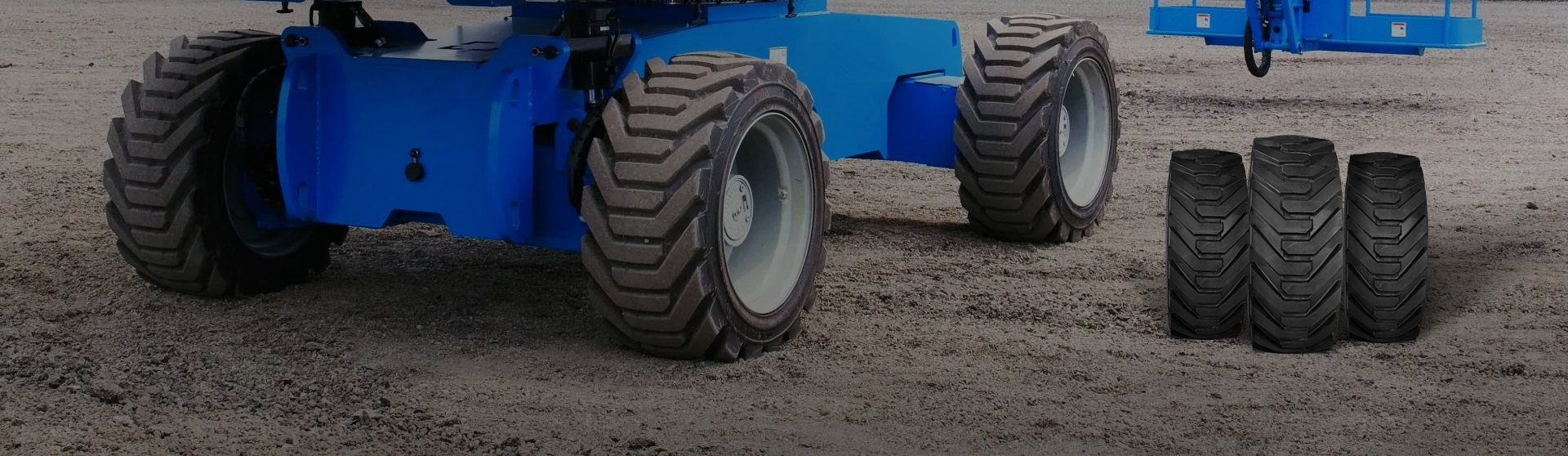

When a plant manager opens a tire catalog and sees both solid and pneumatic options for the same forklift, the natural question is: which one keeps the operation safer and cheaper over a full working year? The direct answer is that solid tires usually deliver fewer flats and more predictable load support in controlled industrial spaces, while pneumatic tires provide a more comfortable ride and better grip on uneven, unpaved, or pothole-prone ground. The rest of the decision comes down to how often the machine stops for tire failure, how much the operator feels vibration, and what the floor surface does to a tread compound.
This guide is written for maintenance supervisors, procurement engineers, and equipment owners who need a practical comparison before they replace a tire or spec a new machine. It covers construction, load behavior, comfort, puncture resistance, energy cost, traction, maintenance, and application-specific recommendations.
Solid and pneumatic tires: definitions that matter
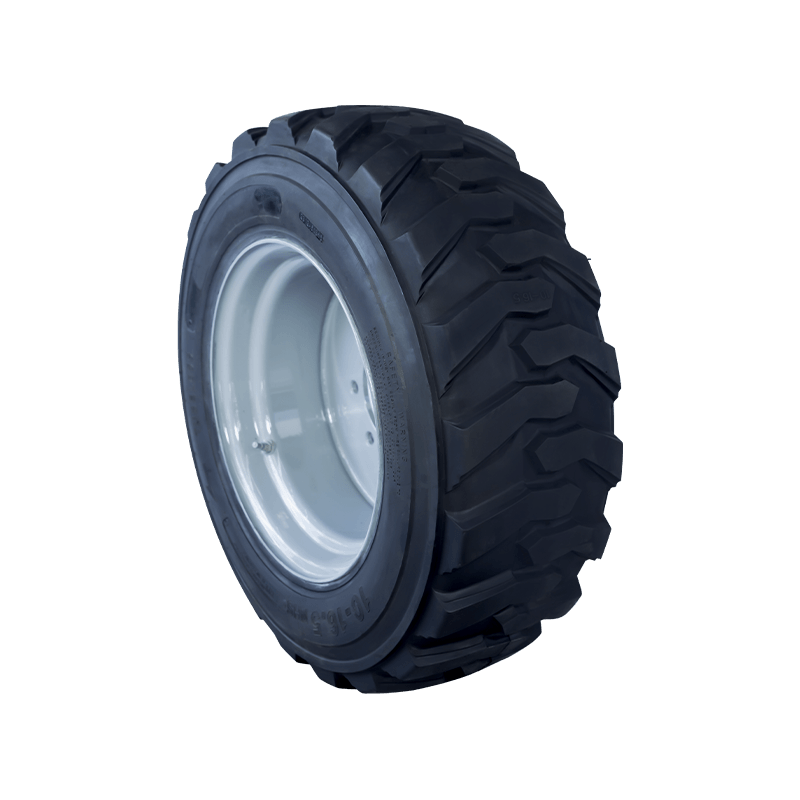
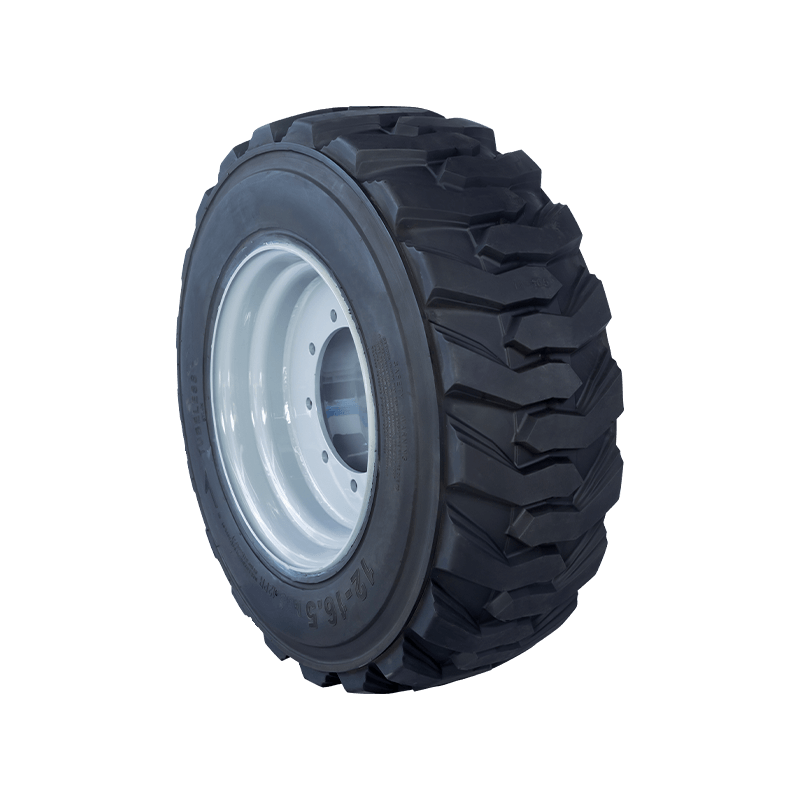
A pneumatic tire contains compressed air and has a carcass, sidewall, bead, and tread. The air pressure carries part of the load, and the sidewall flexes as the tire rolls over obstacles. Pneumatic tires are common on vehicles that travel at higher speeds or over mixed terrain, because the air volume absorbs impact energy and keeps the contact patch large enough for traction.
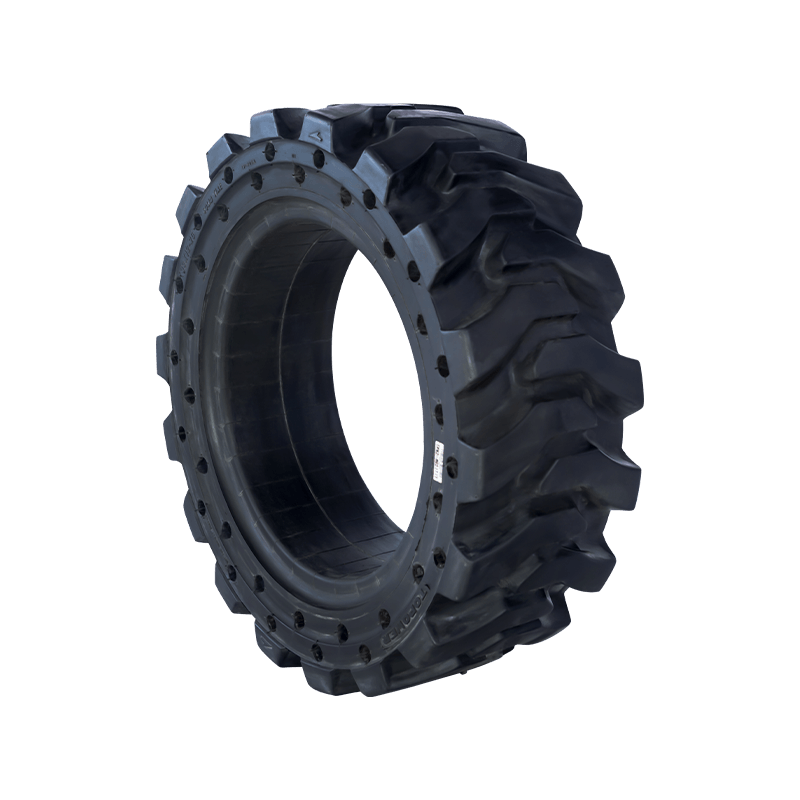
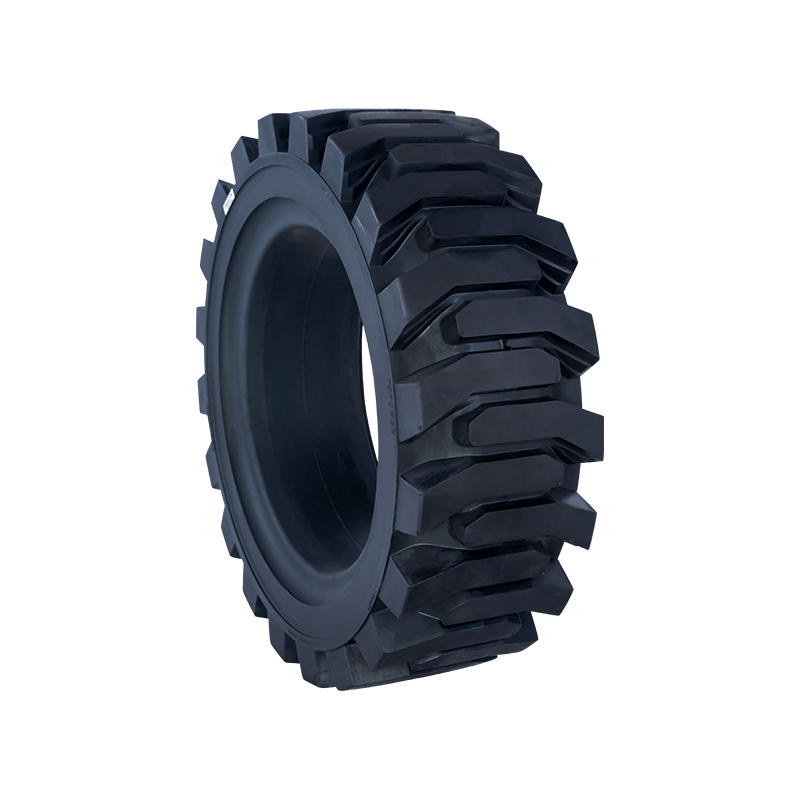
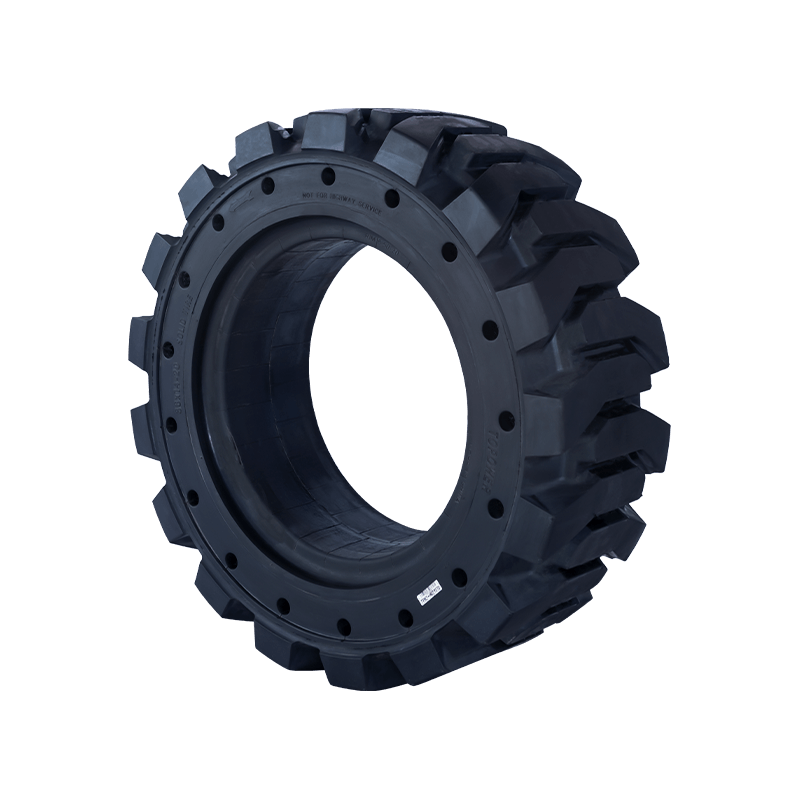
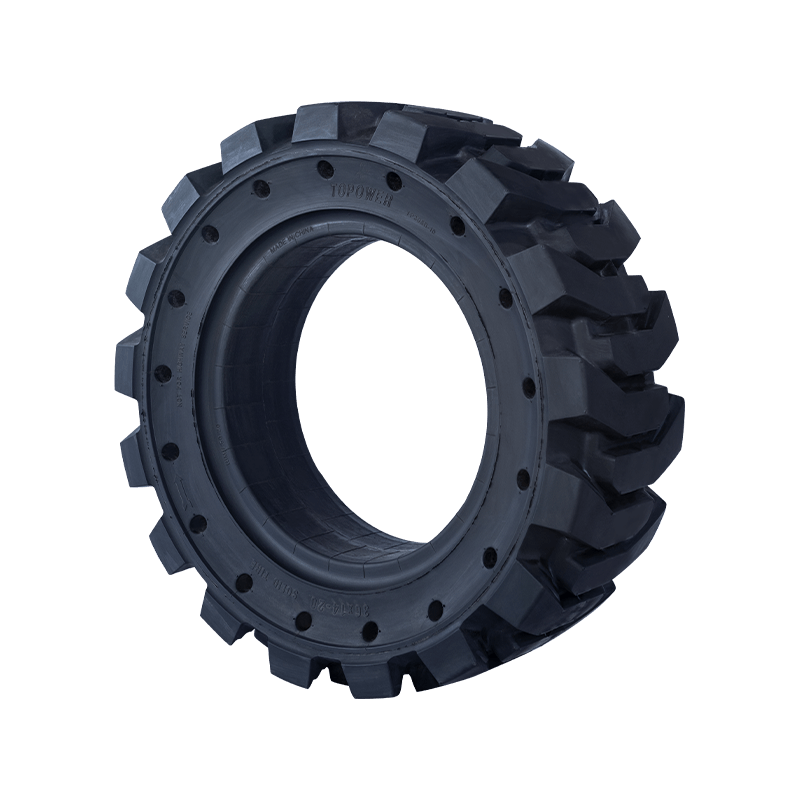
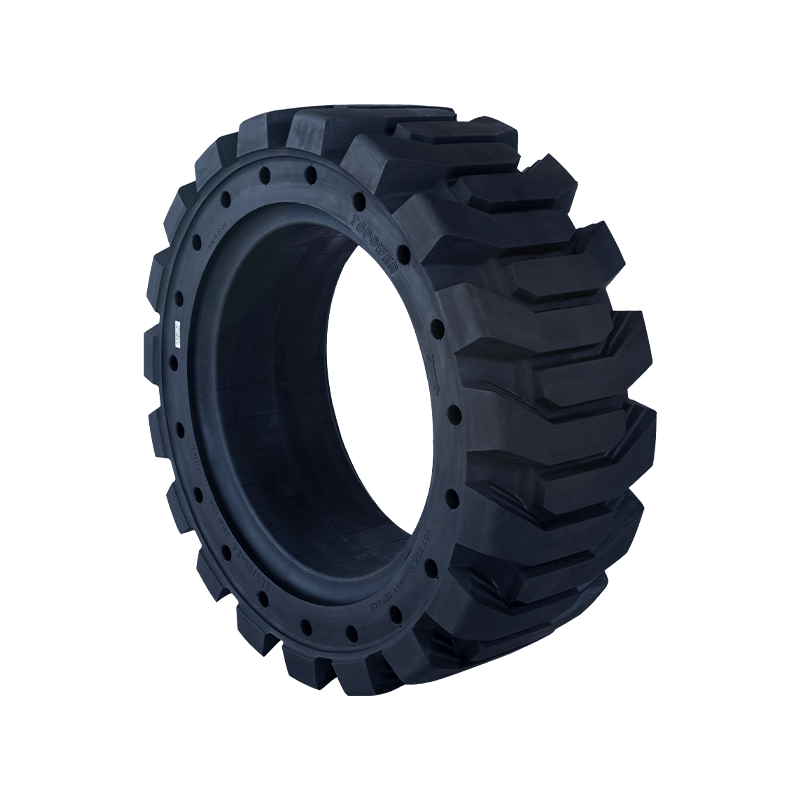
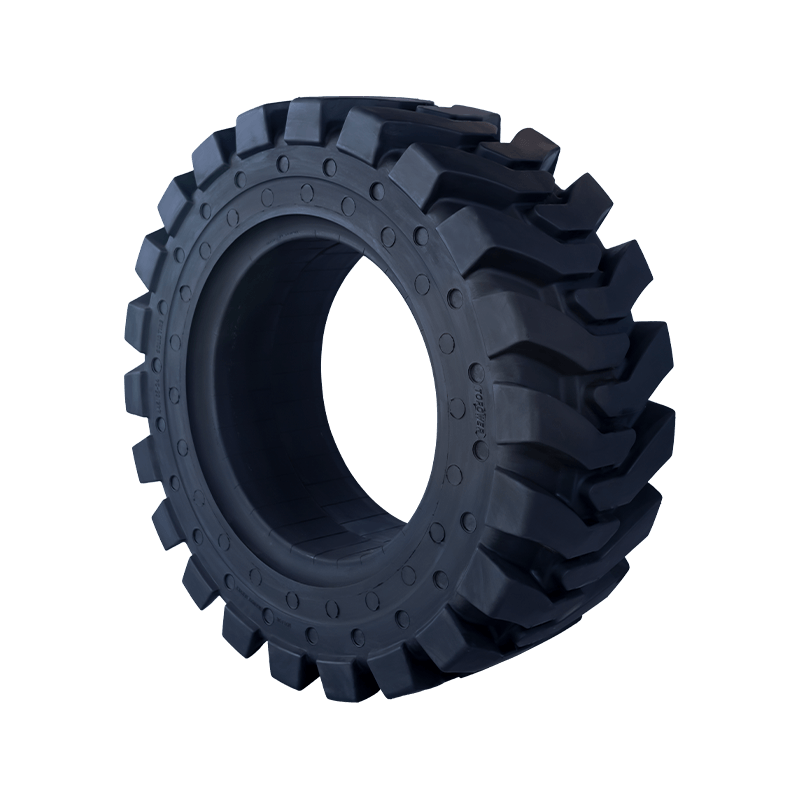
A solid tire is made from rubber or polyurethane compound with no air cavity. It can be a press-on tire that is pressed onto a steel wheel, a bonded-on tire that is cured directly onto the wheel, or a pneumatic-shaped solid tire that mounts on a standard pneumatic rim. Because it has no air pressure to lose, it cannot go flat in the conventional sense. That is why solid tires dominate forklift fleets, scissor lifts, boom lifts, sweepers, and other industrial equipment working near metal scrap, glass, concrete, and similar puncture hazards.
Several related terms create confusion in the market:
- Cushion tire: commonly used in the forklift industry to mean a solid rubber tire designed for smooth indoor surfaces. It is not a pneumatic tire, and the word cushion refers to the rubber compound rather than an air cushion.
- Pneumatic-shaped solid tire: a solid tire with the same outline as a pneumatic tire. It fits pneumatic rims, gives a little more sidewall deflection than a press-on solid tire, and is often used on construction equipment where flats are frequent but some shock absorption is still needed.
- Foam-filled pneumatic tire: a pneumatic tire with the cavity filled with polyurethane foam so that it cannot deflate. It behaves more like a solid tire but keeps the outer tread pattern and a slightly softer ride.
- Run-flat insert: a polymer or rubber support fitted inside a pneumatic tire so that the vehicle can continue to move at reduced speed after pressure loss.
The practical difference is not merely air versus no air. It is about where the load is carried, how the tire deforms, and what happens after the first puncture.
| Characteristic | Solid tire | Pneumatic tire |
|---|---|---|
| Air pressure maintenance | None required | Required and must be checked regularly |
| Flat risk from sharp objects | Very low | High unless filled with foam or fitted with a run-flat insert |
| Ride comfort on rough surfaces | Firmer and more vibration | Softer and more shock-absorbing |
| Traction on loose or wet ground | Usually limited by smaller contact area | Usually better due to air pressure and tread flex |
| Typical service life in clean industrial use | Long | Shorter if under-inflated or exposed to debris |
| Replacement difficulty | Often needs a hydraulic tire press or specialized tooling | Can be dismounted and repaired at lower tooling cost |
| Best known for | Reliability and low downtime | Driver comfort and versatile grip |
Load capacity and stability
For heavy loads on flat indoor surfaces, solid tires generally provide more stable and predictable load support than pneumatic tires. A pneumatic tire carries weight through air pressure, and if that pressure changes with temperature or a slow leak, the effective footprint and load distribution also change. A solid tire carries weight through the stiffness of the rubber compound and the bond to the wheel, which means the contact behavior is more consistent until the tire is overloaded or wears out.
Stability is another advantage. Solid tires, especially press-on cushion tires on forklifts, sit lower than pneumatic tires of similar diameter. A lower tire height lowers the machine center of gravity and can reduce the risk of tipping when the mast is raised with a heavy load. That is one reason indoor forklift operations often select cushion-style solid tires even though the ride is firmer. For a lift truck that stacks pallets in narrow racks all day, the reduced machine height and improved side stability are more valuable than a softer ride.
That does not mean a solid tire always has a higher load rating than a pneumatic tire in the same marked size. The load capacity of both constructions depends on inflation pressure, ply rating or load index, tire compound, operating speed, and duty cycle. A pneumatic tire with a high ply rating and proper pressure can carry substantial loads on rough terrain. A solid tire must be chosen from the manufacturer load chart for the exact wheel type and application. Overloading a solid tire can cause the rubber to deflect too much, generate heat, and lead to bond separation. Under-using a pneumatic tire can cause sidewall flex and overheating at high speed.
The key purchasing rule is simple: use the equipment manufacturer's wheel load and tire manufacturer's capacity chart, not the visual size. For applications that run near the rated capacity for long shifts, solid tires are often easier to manage because their load behavior is less sensitive to maintenance errors such as under-inflation. For a deeper look at the load mechanics, this explanation of how industrial solid tires achieve high load-bearing capacity is a useful technical reference.
Ride comfort and vibration
If operator comfort is the first priority and the machine regularly travels over rough ground, pneumatic tires are usually the better choice. A pneumatic tire spreads impact forces more evenly around the wheel and uses compressed air as a spring. That spring effect absorbs sharp shocks, reduces vibration transmitted to the axle, and helps the operator hold a consistent position around debris or expansion joints. Solid tires, by contrast, transmit much more impact directly to the wheel and the machine. The rubber itself flexes, but without an air chamber, the energy has nowhere else to go.
This is especially noticeable on small machines with little suspension. A lawn mower, a small scissor lift, or a hand-controlled sweeper fitted with a solid tire can feel harsh when crossing thresholds or broken concrete. Several equipment owners have reported that firm no-flat tires on mowers create an unacceptable ride, even though the tires solve flat problems. The same physics applies to forklift operators, although seated forklifts with good seats and indoor smooth floors may not feel the difference as strongly.
Where ride comfort is measured in vibration terms, a solid tire can increase whole-body vibration exposure for operators who drive long distances at higher speeds. Europeans and North American safety standards both place limits on daily vibration exposure. A machine that spends eight hours traveling over uneven pavement with solid tires may require a more expensive seat suspension, or it may need lower travel speed, just to keep operators comfortable. If the route includes potholes, railroad crossings, gravel, or unfinished site ground, pneumatic tires are worth the flat risk because they reduce the physical load on the operator.
Some solid tire manufacturers reduce this problem by using softer rubber compounds, pneumatic-shaped profiles, or polyurethane formulations. A polyurethane solid tire can absorb more vibration than a hard rubber press-on tire, but it may not offer the same durability on sharp debris. There is always a trade-off between tread hardness and ride quality. The correct strategy is to measure the worst daily route, not just the smoothest area of the warehouse.
| Condition | Best construction | Main reason |
|---|---|---|
| Smooth concrete in a warehouse | Solid or cushion tire | Stable, durable, no flat risk |
| Asphalt yard with potholes | Pneumatic or foam-filled pneumatic | Air chamber absorbs shock |
| Construction site with sharp steel and debris | Solid pneumatic-shaped tire | Puncture resistance with some sidewall flex |
| Long travel distances at moderate speed | Pneumatic radial tire | Lower rolling resistance and better vibration damping |
Puncture resistance and durability
Solid tires are the clear winner when the working environment contains sharp metal, glass, pallet nails, rebar, or other objects that can pierce a tire sidewall or tread. A pneumatic tire can be patched or filled, but a flat in the middle of a shift stops the machine, blocks the aisle, and creates safety risk. Solid tires eliminate that category of failure. That is why recycling centers, metal fabrication plants, demolition sites, and container yards frequently spec solid tires even though they cost more per tire and ride harder.
Foam-filled pneumatic tires are a common compromise. They use a normal pneumatic casing but replace the air with a solid polyurethane foam core. The tire cannot go flat after a puncture, and the tread retains better grip than many press-on solid tires. The disadvantages are extra weight, higher cost, and heat buildup during high-speed operation. A foam-filled tire also becomes harder to repair once the casing is damaged, because the foam fills the entire cavity. Still, for mixed-duty machines that need a softer ride but cannot afford downtime from flats, foam filling is worth considering.
Solid tires are not indestructible. If they continuously run over sharp curbs, steel-edged pallets, or severe impact obstacles, the rubber can chip, chunk, or separate from the wheel. Some solid tires develop cracks from ozone exposure, chemical contact, or long-term heat. The term puncture-proof is often used loosely; it should mean resistant to penetration by sharp objects, not resistant to every type of damage. A solid tire can still fail by overloading if the rubber compound overheats internally, especially on fast-moving industrial machines.
Durability also depends on the tire becoming flat at the contact patch. Pneumatic tires normally deform more under load, which can reduce contact pressure but also increases flexing in the sidewall. The repeated flexing generates heat in the casing. Solid tires, particularly press-on designs, have a much stiffer sidewall region and less flexing. If they stay within the load chart, they usually last longer in hours of operation before replacement. If they are run under-inflated, pneumatic tires fail early from sidewall cracking and tread chunking. Solid tires fail early from bond separation or heat if oversped or overloaded.
When comparing durability, separate two questions: how often the tire suffers a puncture, and how many work hours before the tread is worn down. Solid tires win on punctures; pneumatic tires can win on tread life when the machine is fast and the route is smooth because radial pneumatic treads are designed to run at higher speeds without overheating. For most indoor material handling equipment, however, solid tires are a better total value.
Weight, rolling resistance, and energy efficiency
A solid tire is usually heavier than a comparable pneumatic tire because the entire cavity is filled with dense rubber or polyurethane. That extra weight sits at the wheel rim, which increases the moment of inertia and makes the machine harder to accelerate, decelerate, and turn. On battery-electric forklifts and aerial work platforms, this directly reduces battery run time. Every time the machine starts and stops, the drive motor has to spin up a heavier wheel assembly. The effect is small for a single start, but it accumulates over hundreds of cycles every shift.
Pneumatic tires are generally more energy-efficient on flat, hard surfaces when properly inflated. The air pressure creates a smaller hysteresis loss in the sidewall, and the lighter wheel assembly uses less energy. However, a pneumatic tire that is under-inflated has high rolling resistance, because the tire deflects too much and generates heat inside the carcass. A solid tire with a specially formulated low-rolling-resistance compound can match or beat an under-inflated pneumatic, but it is unlikely to match a correctly inflated radial pneumatic at moderate speed.
The weight difference also affects machine capacity in a subtle way. A forklift has a rated capacity based on a stable center of gravity. Replacing pneumatic tires with heavier solid tires adds unsprung weight to the axle, which may increase the machine weight and reduce its payload margin unless the manufacturer allows this change. Some equipment has counterweight considerations that make a heavier tire acceptable or even beneficial, but the change should be reviewed with the forklift supplier before conversion.
Energy cost matters more in fast-moving material handling than in slow indoor stacking. A sit-down counterbalance forklift moving pallets in a large DC can consume 10 percent more energy with solid tires than with radials if the duty cycle, distances, and speeds are high. The downtime savings from no flats may still justify the energy penalty. The important point is to estimate the full cost, not just the tire purchase price.
Traction, footprint, and ground damage
Pneumatic tires provide better traction on soft, loose, or uneven surfaces because the air-filled tire flexes and creates a longer footprint when the ground is rough. The sidewall allows the tread to wrap around small bumps, increasing the number of tread blocks in contact with the ground. A solid tire cannot conform to the terrain as easily. Its footprint is relatively fixed, and a large part of the tread may not touch the ground on hard bumps or gravel, reducing grip and increasing slip.
Traction is especially important for forklifts moving up ramps, skid steer loaders working in mud, and agricultural equipment crossing soft fields. A pneumatic tire with a deep lug tread has self-cleaning properties and higher peak traction. Solid tires are available with deep tread patterns too, particularly pneumatic-shaped solids for construction machines, but their lack of deflection still hurts them on rocks and loose surfaces. Operators often notice wheel spin on wet ramps when converting from pneumatic to solid.
Ground damage is a separate concern. On polished concrete or epoxy-coated warehouse floors, pneumatic tires with dark tread compounds can leave black marks. Solid tires with non-marking or polyurethane compounds are preferred because they avoid dust marks and black streaks. Solid tires also reduce floor scrubbing damage because the hard compound is less likely to be cut by floor debris, but the harder tread can occasionally scuff a soft floor if the forklift turns sharply under load. Non-marking solid tires are designed for exactly this balance.
For outdoor machines that must travel across grass, gravel, or mud, a wide pneumatic tire will usually outperform a solid tire of the same width. If the application has frequent flats outdoors, the solution is to choose a heavier pneumatic size, use foam filling, or fit a puncture-resistant liner rather than automatically moving to a completely solid tire. The best tire is the one that gets the machine through the terrain without stopping and without destroying the floor.
Maintenance and downtime
Pneumatic tires require ongoing attention: pressure checks, valve cap maintenance, visual inspections for cuts, and more frequent replacement after under-inflation. The cost of a pressure check is small, but the cost of skipping it is a blown tire in the middle of a shipment. Solid tires remove inflation from the maintenance checklist, which makes maintenance simpler. There is no valve core to leak, no pressure differential between dual wheels, and no risk of a slow leak leaving one side of a forklift lower than the other.
Solid tires still need inspection. The maintenance team should look for embedded metal, cuts in the tread, sidewall cracks, heat damage, and separation of the rubber bond from the wheel. On press-on tires, the steel band and rubber interface should be checked for movement between the band and wheel. A tire that slips on the wheel creates high heat and quickly destroys the assembly. In applications where tire surfaces are exposed to oils, solvents, or strong sunlight, chemical degradation can appear before the tread is worn out.
Replacement labor differs significantly. A pneumatic tire can be removed with a tire machine or tire irons, and the tube or casing can be patched or replaced on site. A solid press-on tire usually must be pressed off the wheel with a hydraulic press and then pressed on a new one. This requires a shop with the right tooling, and it can be difficult to do on the equipment side of the machine. In remote sites, a solid tire failure may require taking the wheel to a specialist or bringing in heavy equipment. That means while solids reduce flat-related downtime, they can increase the turnaround time for tire replacement when the tread is finally worn out.
In practice, most industrial fleets accept the higher replacement complexity of solid tires because the removal schedule is predictable. They schedule tire changes during planned maintenance, not after an emergency call. Pneumatic tires may be easier to repair, but the emergency can happen when the truck is fully loaded and the warehouse needs it most.
Forklift applications: whether to choose solid or pneumatic tires
For most indoor forklifts in warehouses and factories, a solid cushion tire is the standard choice. The floors are smooth, loads are repetitive, and the risk of forgetting air pressure is too high. Solid tires give stable lift truck handling, longer wear, and no sudden flats while the mast is raised. Counterbalance forklifts used on smooth concrete should generally stay with solid or cushion tires.
Outdoor forklifts are a different case. Pneumatic tires with a wide footprint are better on wet asphalt, gravel, and packed earth. They provide more traction and a more comfortable ride for operators who travel across the yard to the loading dock. The extra height can make the truck less stable when lifting at full height, so the equipment should be specified for the tire diameter from day one. If outdoor sites contain scrap steel, broken pallets, or construction debris, foam-filled pneumatic tires or pneumatic-shaped solid tires are often a better compromise than either a hard press-on solid or a standard pneumatic.
Loading docks are somewhere in between. A truck that only travels 20 meters between the dock and the rack, on clean concrete, is best served by a solid tire. A dock that has a smooth indoor area but a long ramp to a muddy yard may need a pneumatic tire to prevent ramp spin. The most practical way to decide is to trace the full route from empty to loaded and back, including the parts the catalog photograph does not show.
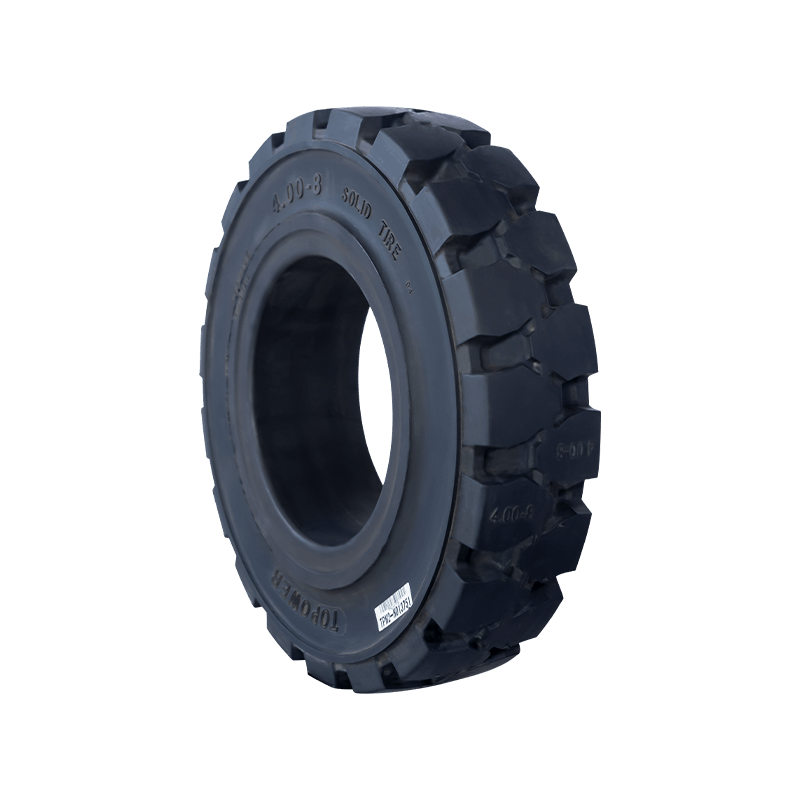 Solid Forklift Tire for Clean Concrete and Dock RoutesThis solid forklift tire eliminates blowout risks on finished floors and loading docks. It suits short clean travel routes with strong load capacity and low maintenance, making it a practical choice for warehouse operations.View Product →
Aerial work platforms and scissor lifts
Boom lifts and scissor lifts are often operated on finished floors, on asphalt, or on construction slabs. The main tire risk is a pneumatic blowout while the platform is elevated. A flat tire on a boom lift can change the machine level, increase stability risk, and make lowering the platform from an elevated position more complicated. Solid tires and foam-filled tires are therefore common on this equipment because they remove the blowout hazard and protect the machine from being stranded at height.
Ride comfort on an aerial work platform is less important than on a forklift that travels thousands of meters per shift. Scissor lifts generally travel slowly and for short positioning moves. The operator spends most of the time on the platform, not driving, so the firmer ride of a solid tire is rarely a major complaint. A solid tire also helps reduce the total wheel height, which can make it easier to fit a scissor lift under a low ceiling or inside a trailer.
On ground conditions that are really rough, such as aggregate bed or unfinished gravel, a pneumatic tire with a high flotation footprint can be more suitable. Many platform providers use foam-filled pneumatic tires in those conditions to keep a softer ride and better grip while still avoiding flats. When the priority is floor protection inside a building, a non-marking solid tire is often the right choice.
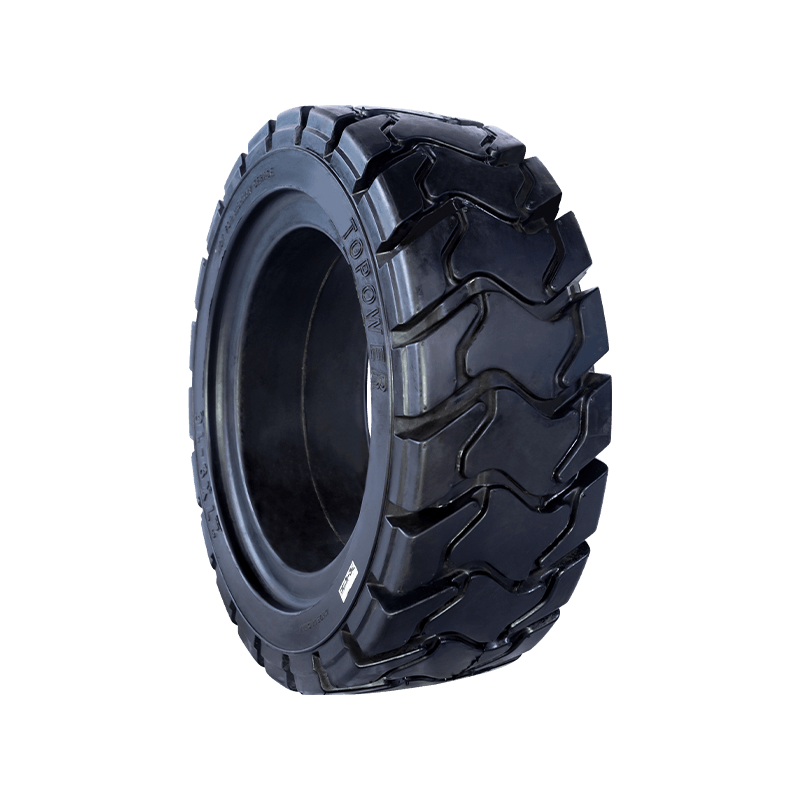 Solid Tire for Boom Lifts on Debris-Rich Job SitesThis solid boom lift tire prevents punctures from scrap metal and concrete, keeping elevated platforms safe and reducing downtime. It handles harsh conditions while avoiding blowout hazards during operation.View Product →
Skid steer loaders and compact construction equipment
Skid steer loaders work in demolition, scrap handling, utility construction, and site preparation. They frequently run over sharp metal, broken concrete, and scrap rebar. Pneumatic tires offer traction and ride comfort, but they suffer costly punctures on demolition sites. Solid tires are a proven solution for scrap yards and construction cleanup because they allow the machine to keep working through debris without stopping to repair a flat. The trade-off is reduced traction in mud and a harsher ride when moving at speed across rough ground.
A better option in mixed conditions may be a treaded solid tire with a pneumatic shape. It fits the standard skid steer rim, provides a deeper tread pattern, and gives a small amount of sidewall flex. It will not match an air-filled tire on wet clay or downhill traction, but it avoids the extreme downtime of a pneumatic tire on a site full of metal. For contractors who move between clean asphalt and demolition zones, the machine should be fitted with a tire that can handle the worst condition it will meet regularly, not the average condition.
Skid steer tire size also affects machine balance and breakout force. Larger diameter wheels improve ground clearance but may reduce stability. Solid tires, especially steel-band press-on types, are heavier and can add stability, but they increase unsprung weight and stress on the final drive. The application and weekly hours should determine whether the solid tire is used only on the front axle, on all four positions, or not at all.
Non-marking solid tires and indoor floor protection
Facilities with polished concrete, epoxy coatings, vinyl floors, or light-colored tiles often choose non-marking solid tires. The dark compounds used in standard pneumatic and standard solid tires can leave scuff marks when the machine turns under load. Non-marking compounds are formulated to avoid rubbing off onto the floor. They are common on electric forklifts, scissor lifts, warehouse tractors, and cleaning equipment used in food plants, electronics factories, hospitals, and high-end distribution centers.
Non-marking tires are usually solid or foam-filled because the compounds used in solid tires can be adapted to meet floor cleanliness requirements while retaining structural strength. A non-marking pneumatic tire is also available from some manufacturers, but pneumatic tires are more likely to run at irregular pressure and expose the sidewall to floor contact during cornering, leaving marks. A solid non-marking tire maintains a more predictable footprint and is easier to characterize in a floor-care program.
Non-marking properties should not be confused with puncture resistance. A non-marking solid tire can still be cut by sharp metal, and a non-marking tread in a facility with heavy debris will wear faster. The operator should also watch for floor damage from debris trapped under the tire. A firm non-marking compound does not clean the floor; it simply avoids transferring the usual black heel marks.
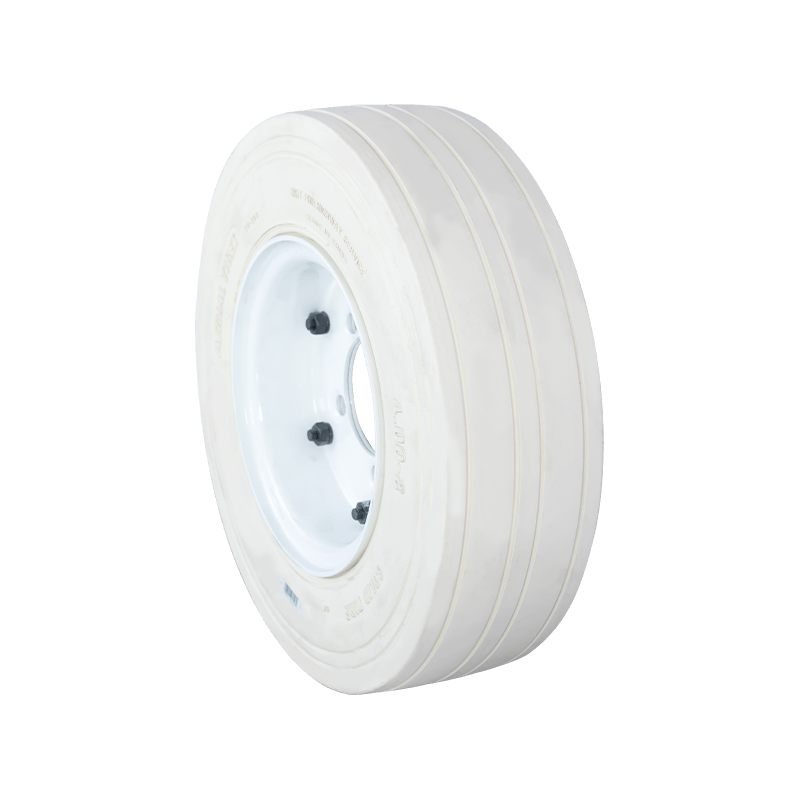 Non-Marking Solid Tire for Indoor Cleanliness RequirementsThis non-marking solid tire uses light-colored rubber to keep floors clean in indoor environments. Ideal for cleanliness-sensitive facilities, it offers dependable solid-construction performance without leaving marks.View Product →
Total cost of ownership
Purchase price is only one line in the total cost of ownership. A solid tire often costs more than the comparable pneumatic tire, and the wheel assembly can be more expensive. But the cost per hour of operation is usually lower in applications with frequent punctures and clean floors. To calculate the real difference, track four numbers: tire purchase cost, installation cost, expected service life, and unplanned downtime cost per failure.
Downtime is often the largest hidden item. If a forklift in a shipping operation fails for 45 minutes because of a flat, the labor cost of the driver, the idle waiting time, and the delayed shipment can easily add up to more than the price of a tire. A fleet that destroys one pneumatic tire per month because of nails will almost always reduce total cost by switching to solid tires, even if the solid tire price is twice as high. On the other hand, a fleet that rarely gets flats and travels long distances at high speed may pay a substantial energy and maintenance penalty with solids.
| Cost factor | Solid tire | Pneumatic tire |
|---|---|---|
| Initial purchase price | Higher | Lower |
| Mounting equipment needed | Often hydraulic press | Standard tire machine or manual tools |
| Flat repair cost per event | No flat repair needed | Patch/tube repair plus downtime |
| Energy efficiency on long routes | Lower, especially with heavy wheels | Higher when properly inflated |
| Expected hours in clean industrial use | Long | Moderate, depends on pressure |
| Risk of failure outside maintenance | Lower | Higher |
For mixed fleets, it is common to run solid tires on machines with high flat frequency and pneumatic tires on machines with high travel speed or rough terrain. Standardizing on one construction for an entire fleet can be convenient, but it may not be the lowest cost strategy. The most profitable fleet specification is the one that matches the tire construction to the duty cycle of each machine class.
How to select solid versus pneumatic tires
The decision process can be reduced to seven checks. Work through them in order, and the right option usually becomes clear.
- Define the typical daily route. Measure the distance traveled, the surface type, and the worst obstacle the machine crosses. If the route includes more than 20 percent unpaved or uneven ground, give strong consideration to pneumatic or foam-filled pneumatic tires.
- List the current tire failures. Count flats, sidewall cuts, tread repairs, and replacements over the past 12 months. If flats are frequent, solid tires or run-flat inserts are the primary solution. If failures are mainly worn tread, the tire construction is less relevant than the compound.
- Check the machine manufacturer’s load chart. Confirm that the proposed tire size and type can carry the maximum load at the maximum operating speed. Do not assume that changing from pneumatic to solid simply changes the material; it also changes the load index and wheel fitment.
- Evaluate ride comfort and vibration exposure. Ask operators about fatigue, back pain, and bottle opening at the charging station. For operators driving more than two hours per shift, a pneumatic tire can be a meaningful improvement, even with the flat risk.
- Confirm floor sensitivity. Polished concrete, epoxy, and moisture-sensitive floors generally require non-marking solid tires. Pneumatics, especially dark rubber treads, may leave marks or damage soft coatings during scuffing.
- Compare replacement logistics. Check if the maintenance shop has the tooling to change a press-on solid tire. If not, adding the tooling cost or using pneumatic tires with puncture resistance may be more practical.
- Run a small pilot. Fit one machine with the new tire opinion, keep records for 60 days, and compare downtime, energy consumption, and operator feedback. Hard data removes the emotion from the tire decision.
There is no universally superior tire. A solid tire is not a better tire than a pneumatic tire; it is a better solution for a specific set of operating conditions. The same is true in reverse. The question is not simply solid versus pneumatic, but which construction gives the machine the most uptime per dollar on the routes it actually runs.
Final word
Choose solid tires when flats are a regular interruption, when loads are heavy and speeds are low, when floors are clean and smooth, and when operator vibration is not a serious concern. Choose pneumatic tires when ride comfort, traction on rough ground, energy efficiency over long travel, or soft footprint is the controlling factor. Choose foam-filled or run-flat solutions when you need the best compromise between shock absorption and puncture immunity.
For a manufacturer or fleet buyer, the next step is to collect real operating data, review the wheel and load specifications, and test one representative machine with the candidate tire. The right tire will reduce downtime, keep the floor undamaged, and give the operator a tool that feels safe. The wrong tire, whether solid or pneumatic, will always find a way to cost more than its price tag.