 English
 русский
 Español
 عربى
عربى

Two forklifts, one 200-metre concrete apron, and a safety notice borrowed straight from road transport: keep three truck lengths between vehicles. The yard supervisor does the arithmetic, gets 48 metres, and quietly leaves the board blank, because the apron is 40 metres long and those forklifts have never travelled faster than 15 km/h in their working lives.
That mismatch is exactly why this question keeps circulating. The short answer: two forklifts almost never need three truck lengths between them. In normal operating conditions the working gap sits between a quarter and one truck length, which for a 16-metre tractor-trailer works out to roughly 4 to 18 metres. Inside a warehouse aisle at walking pace it shrinks further, to about one forklift length. Three truck lengths is a highway habit applied to a machine with a completely different speed, mass and braking profile.
The practical impact is bigger than a number on a sign. A rule that asks for 48 metres on a 40-metre apron gets ignored, and once one part of a safety notice is ignored the rest of it loses authority too. Operators also start treating the gap as a fixed target rather than a variable, so nobody re-checks it when the floor turns wet, when the load changes from empty pallets to a tonne of steel billets, or when the tyres are swapped from pneumatic to solid. Getting the number roughly right, and adjusting it for conditions, does more for load integrity and rear-end risk than any painted floor marking can.
The Short Answer, Expressed in Truck Lengths
For a 2.5 to 3.5 tonne counterbalance forklift running on dry, swept concrete, the following gaps below are the ones most fleets converge on after measuring their own machines. They assume a competent operator, a serviceable brake system, a rated load within the load centre, and forward travel only.
| Travel speed | Reaction plus braking distance | Suggested minimum following gap | Equivalent in 16 m truck lengths |
|---|---|---|---|
| 5 km/h (3 mph) | About 2.0 m | 3 to 4 m | 0.2 |
| 8 km/h (5 mph) | About 3.0 m | 5 to 6 m | 0.3 |
| 12 km/h (7.5 mph) | About 5.5 m | 9 to 10 m | 0.6 |
| 16 km/h (10 mph) | About 8.0 m | 13 to 15 m | 0.8 to 0.9 |
| 20 km/h (12 mph) | About 12 m | 18 to 20 m | 1.1 to 1.2 |
| 25 km/h (15 mph) | About 18 m | 28 to 30 m | 1.7 to 1.8 |
Two conclusions fall out of that table. First, the answer is closer to one truck length than three, and only at the top of the speed range do you even cross the one-truck-length line. Second, the number moves faster than most people expect: doubling travel speed roughly quadruples the braking part of the distance. That is why a single posted figure for a whole site is usually the wrong answer, and why a rule tied to speed bands is easier to defend in a safety audit.
Why the Truck-Length Rule Was Never Written for Forklifts
The phrase itself is inherited from road transport, where it works because every vehicle in the discussion is roughly the same shape and mass. Drop it into a forklift yard and four things break immediately.
- The unit is undefined. A rigid box truck is 6 to 12 metres, a tractor with a 53-foot trailer is about 21 metres bumper to bumper, and a road train can exceed 25 metres. If the person who wrote the notice meant the trailer alone, three truck lengths is 48 metres; if they meant a rigid truck, it is 30 metres. Nobody on the shift knows which one applies.
- A forklift is tiny by comparison. A 2.5 tonne counterbalance is only 2.3 to 3.0 metres long including the forks. One truck length is five to seven forklift lengths, so the borrowed rule asks for space no forklift needs at its actual travel speed.
- The physics do not scale. A forklift in a yard travels between 8 and 20 km/h. Braking distance grows with the square of speed, so a rule calibrated for traffic moving four or five times faster simply cannot be transplanted.
- Modern standards are performance-based. Industrial truck safety standards on both sides of the Atlantic require the operator to maintain control and to be able to stop within the clear distance ahead. They deliberately avoid a fixed count of vehicle lengths, because the correct distance depends on the machine, the load and the floor on the day.
None of that means the notice is harmless. A vague or impossible figure invites the worst outcome in a busy yard: everyone develops a private interpretation. Some operators follow nose to tail because 48 metres is unachievable, and others leave 20 metres and get overtaken on the inside.
Five Variables That Actually Set the Gap
If you want a defensible number, work through the variables that change it. All five are visible to a supervisor in under a minute, which is what makes them usable on a shift briefing.
Speed and travel direction
Most forklift collisions happen at junctions and doorways at low speed, but the severity is driven by the speed at the moment of impact. A truck travelling forward with a load has the mast, the load and the counterweight all inside the normal envelope; one travelling in reverse has a short rear overhang, poor visibility past the counterweight and a different braking feel. Many fleets set a lower speed limit for reverse travel, and a longer following distance for any machine carrying a high or unsecured load.
Load weight, load centre and stability
A 1.5 tonne load at a 600 mm load centre behaves very differently from the same mass at 900 mm. The further the centre of gravity moves forward, the more weight transfers to the front axle and the less grip remains at the rear, which is where steering and much of the braking stability comes from. Loads that shift in the forks, such as a drum or a coil on a thin pallet, effectively increase the following distance whether the operator plans for it or not. The way solid tyres behave under different load conditions is documented in more detail in this article on how industrial solid tyres perform under different load conditions, and it explains why the same truck can feel stable on one load and nervous on the next.
Floor surface, cleanliness and slope
Dry, swept concrete gives the shortest stopping distances. A film of water, oil, flour dust or sugar is enough to cut friction noticeably, and outside surfaces bring grit, mud and ice into the equation. Slopes add a component of gravity that either helps or fights the brake, and a loaded forklift descending a ramp with the load leading must travel in reverse, which changes the safe speed and the safe gap at the same time.
Visibility, layout and traffic mix
Racking uprights, stack corners, dock levelers, parked trailers and even a raised mast block sight lines. Where pedestrians, cyclists or trucks share the same lane, the following gap between two forklifts is not the only gap that matters; the lateral clearance to the most vulnerable road user is. Aisle width, door widths and turning radii are usually the real constraint on site, and they are fixed while the speed is not.
Braking system, tyres and maintenance
Brake adjustment, tyre wear, tyre type and floor contamination all act on the same contact patch. A machine three months overdue for brake adjustment does not stop where a freshly serviced one does, and an operator who has only driven the freshly serviced machine will be badly calibrated. Building the tyre and brake check into the pre-shift routine is cheaper than any post-incident investigation.
How to Convert It Into Truck Lengths on Your Own Site
If your site rules are written in truck lengths and you cannot change them this week, do the conversion properly once and post the result. It takes an afternoon.
- Measure your own truck length. Park a typical tractor-trailer or rigid truck and measure bumper to bumper, or trailer front to rear if that is what the notice actually meant. Write the figure down. You now have a local unit instead of a borrowed one.
- Measure real stopping distance. Mark a start line on the floor, accelerate the laden forklift to each normal travel speed, brake at the mark and measure where the machine stops. Repeat three times with the same load and once with a lighter load.
- Add reaction and safety margin. Operators need roughly a second to recognise a hazard and apply the brake, so add 1.5 metres at 5 km/h and up to 7 metres at 25 km/h to the measured braking distance.
- Apply site multipliers. Add 30 to 50 percent for damp, dusty or uneven floors, 50 to 100 percent for ramps and cold stores, and treat any blind corner as requiring an approach speed low enough to stop inside the visible distance rather than a fixed gap.
- Divide by your truck length. The result is a site-specific figure that actually means something, and it will almost always land between a quarter and one and a half truck lengths.
- Re-measure after changes. New tyres, a resurfaced aisle, a heavier product line or a repair to a brake system all move the number. Re-testing twice a year is enough for most sites.
Where the Gap Has to Grow Beyond the Normal Figure
Normal travel on a dry aisle is the easy case. Four situations routinely demand more space than the table above suggests, and in these places the truck-length framing is worth keeping, because the truck itself is the obstacle.
Ramps and slopes
On a grade, a loaded forklift descending forward carries the load ahead of the drive axle, which is the least stable configuration. The safe practice is to descend in reverse with the load uphill, travel at a fraction of flat-ground speed, and leave enough room that a stall or rollback does not end in contact. Because the truck behind is following down a slope, its own stopping distance is longer than on the flat, so the separation has to grow rather than shrink.
Docks, trailers and mixed traffic
The dock apron is the one place where thinking in truck lengths is genuinely correct, because the trailer body is roughly a truck length long and it moves. Trailers creep forward during loading, landing gear can settle, and a driver who has lost patience can pull away while a forklift is still inside. A workable rule is to keep any waiting forklift clear of the full length of the trailer plus a working margin at the rear doors, and to treat the area within a truck's turning sweep as a no-queue zone.
Blind corners, doorways and pedestrian crossings
At a blind corner, speed and sight line matter more than any fixed gap. The useful rule is to slow to a speed from which the operator can stop within the distance they can see, sound the horn where sight lines are obstructed, and stop completely before entering the pedestrian route. Where pedestrians share the aisle, add lateral clearance of at least one metre to the walking side and keep the following gap open so that a sudden stop does not push the machine sideways into a person.
Cold stores, food plants and wash-down areas
Condensation, ice patches and standing water reduce friction well before the operator notices, and freezer floors commonly combine a hard surface with a thin film of moisture. In food and pharmaceutical plants the additional constraint is floor marking and product hygiene, which is why many fleets run non-marking compounds that leave no black scuff trail on pale epoxy floors. If your aisles are cleaned frequently and kept bright, the traction picture is better than it looks, and the following gap can usually stay close to the dry-floor figure.
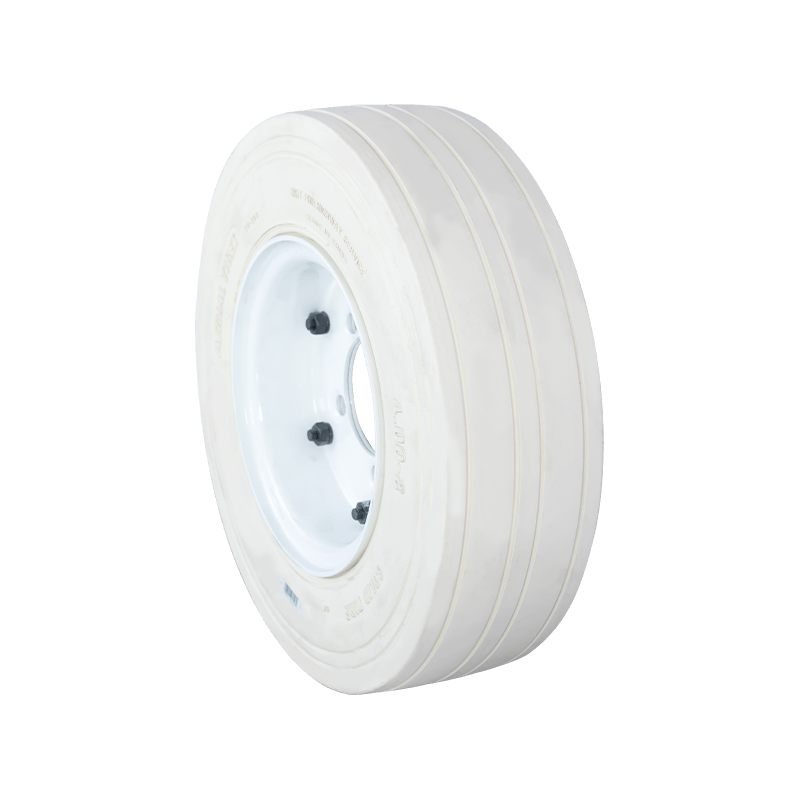 Non-Marking Solid Tyres and Scissor Lift Tyre RangeWhite and gray non-marking solid tyres for scissor lifts and indoor machinery, helping keep pale epoxy floors clean in hygiene-sensitive areas.View Product →
Two checks matter more than the gap in these areas: confirm the floor is actually dry along the whole route rather than only at the door, and confirm the tyres are rated for the low temperatures involved so the compound does not harden and lose grip.
How Tyre Choice Moves the Safe Distance
Tyres sit between the brake and the floor, so they change the number in the table above. This is not a minor detail: on the same machine, the same load and the same speed, a change of tyre construction can shift the measured stopping distance by a metre or more, which is the difference between a clean stop and a nudge into the racking.
Pneumatic versus solid
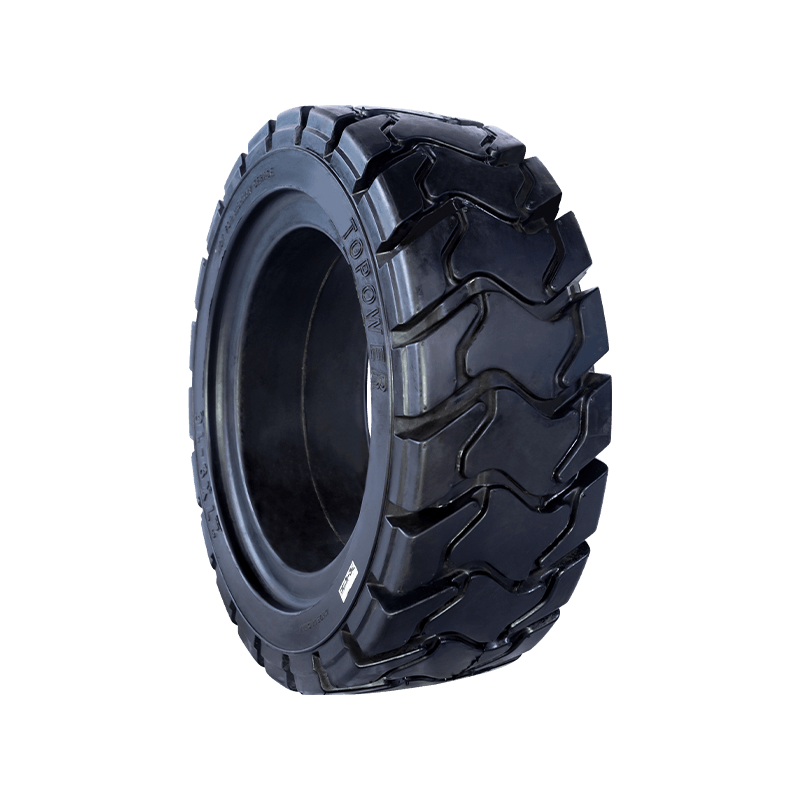
Pneumatic tyres cushion the load and offer the best grip on rough or loose ground, but they flex, they can be punctured, and the machine's stability changes as inflation pressure varies. Solid tyres remove that variability. With less sidewall deflection, the contact patch stays consistent, the machine feels firmer and the height of the load stays predictable all shift, which is why most indoor and yard forklifts now run them. On clean concrete that consistency usually translates into a shorter and more repeatable stopping distance; on wet or gritty ground, tread pattern and compound quality matter far more than the solid-versus-pneumatic argument.
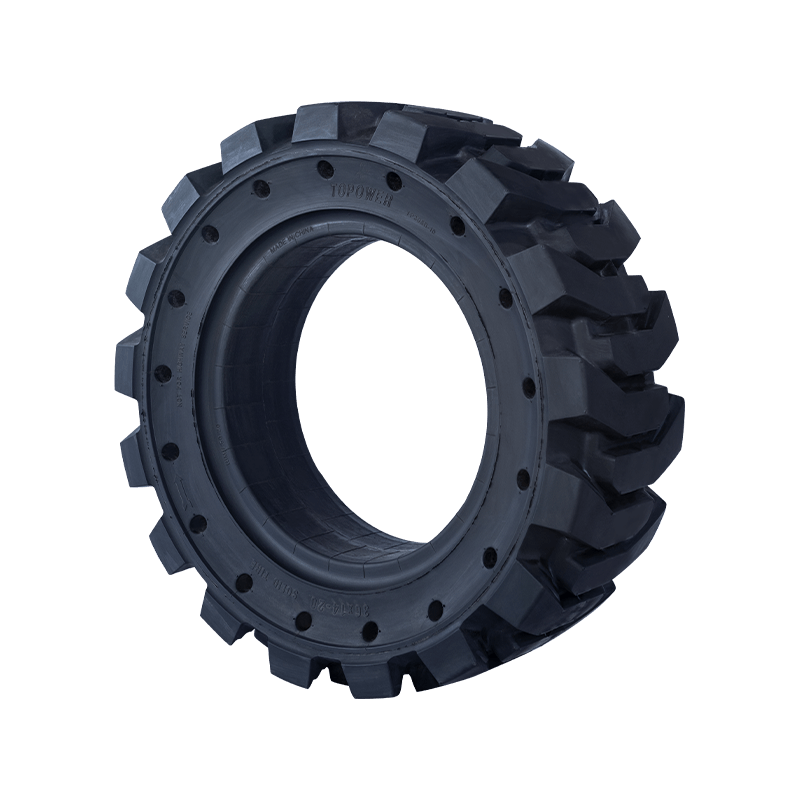
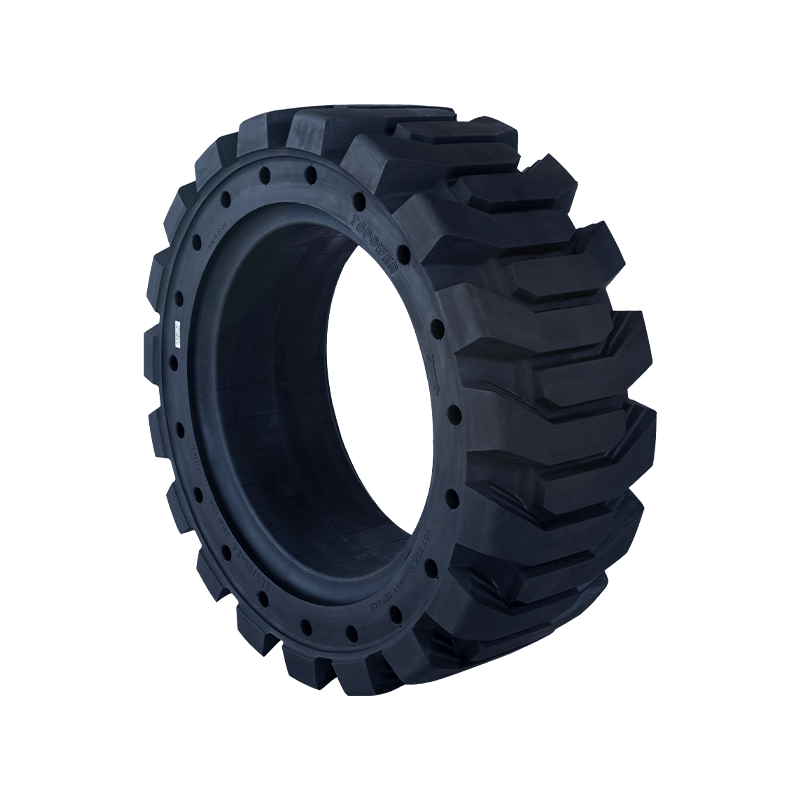
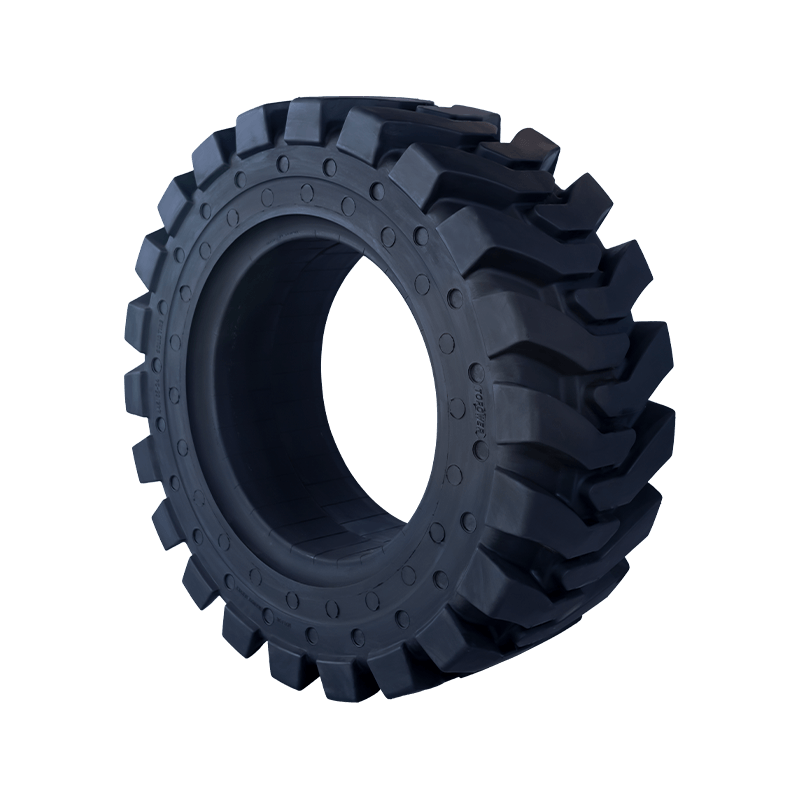
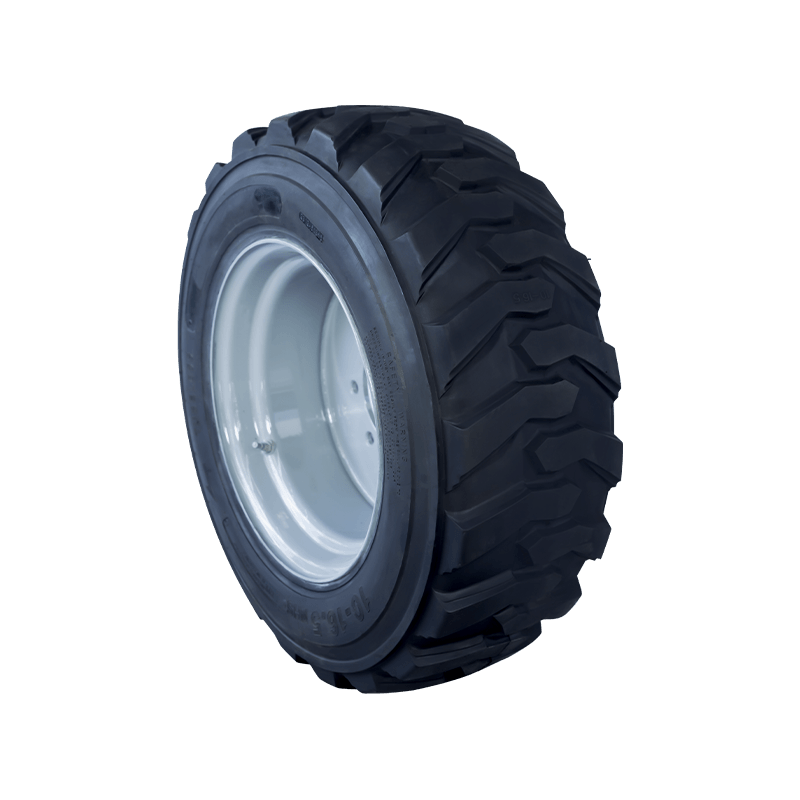
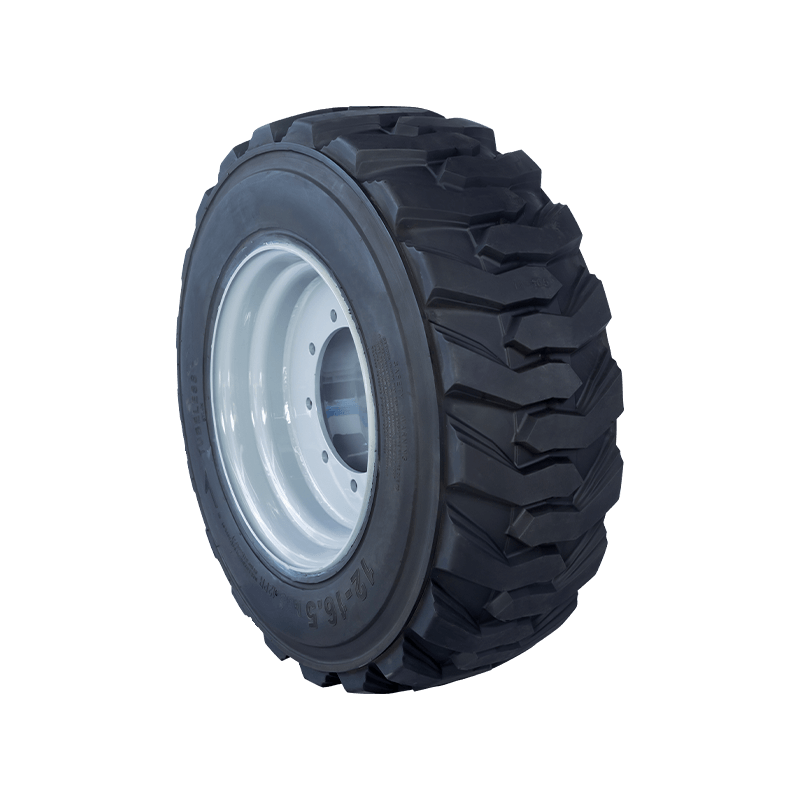
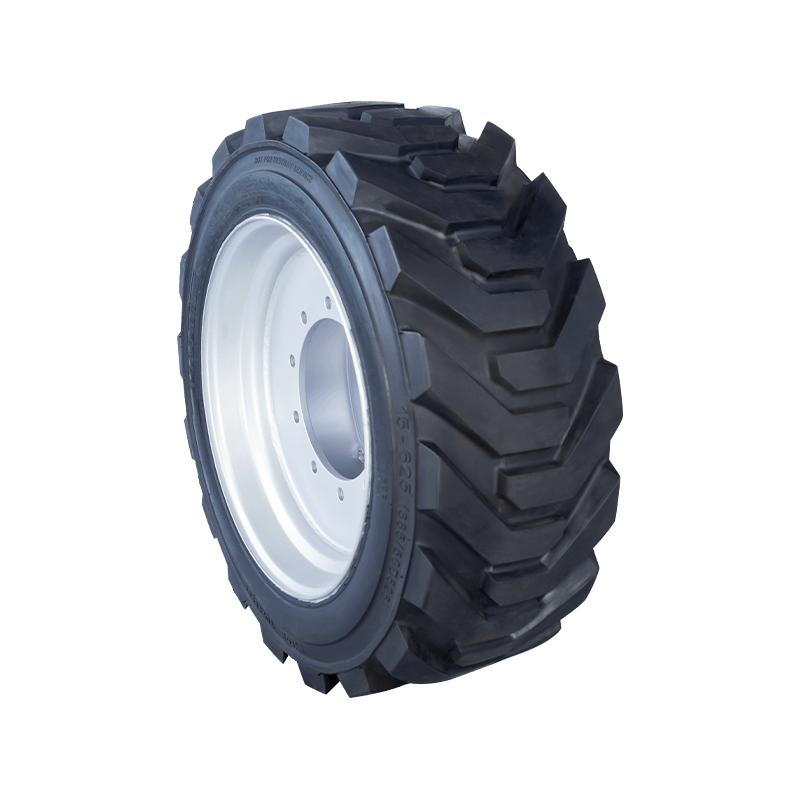
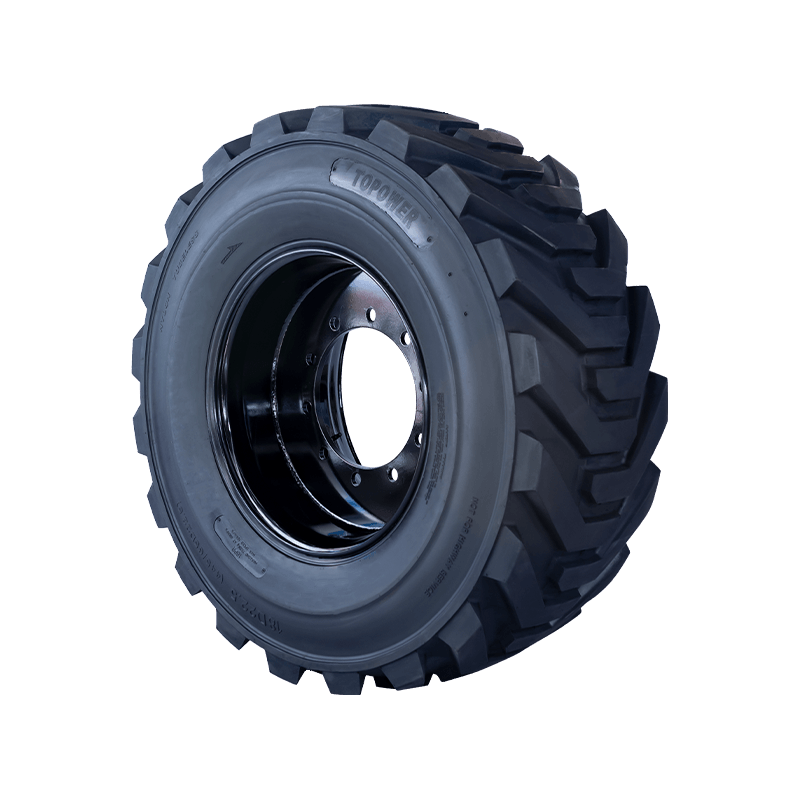
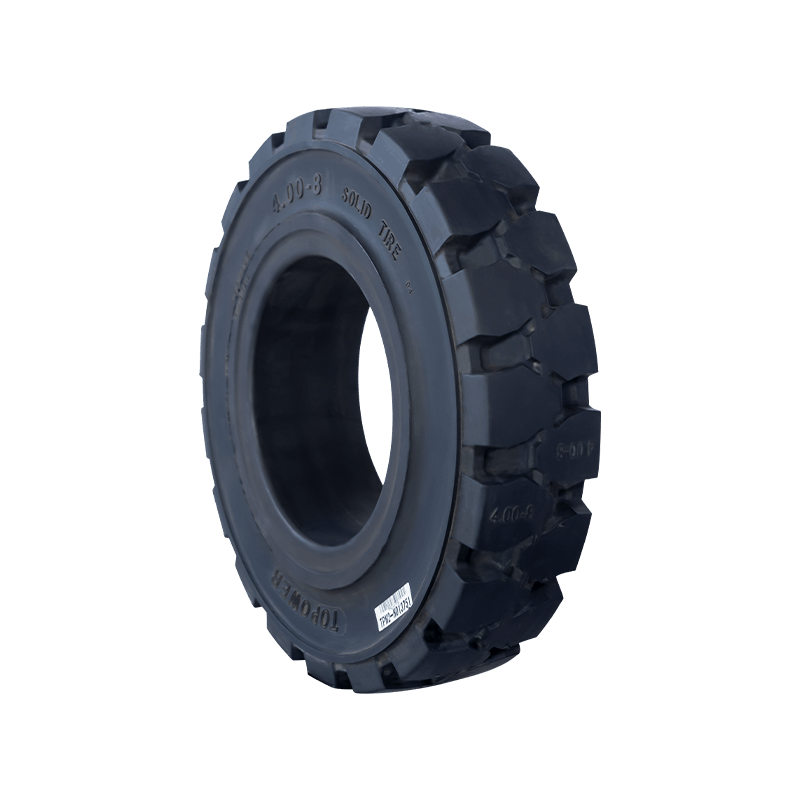 Forklift Solid Tyres with Pneumatic Rims for Industrial FleetsPneumatic-rim solid forklift tyres in TP301 and TP301B sizes, offering consistent load bearing and maintenance-free performance for indoor and yard duties.View Product →
Press-on versus resilient
Smaller electric counterbalance trucks, three-wheel machines and narrow-aisle equipment often use press-on tyres mounted directly onto the rim. They are compact, easy to change and give good load capacity for their size, but they transmit more shock to the chassis and they heat up faster on long runs, so they suit repetitive short cycles rather than a full shift of yard work. If the same truck works both the aisle and the outdoor apron, check the tyre's speed and load rating against the hardest task, not the average one, because the following gap you can safely use is set by the worst condition in the duty cycle.
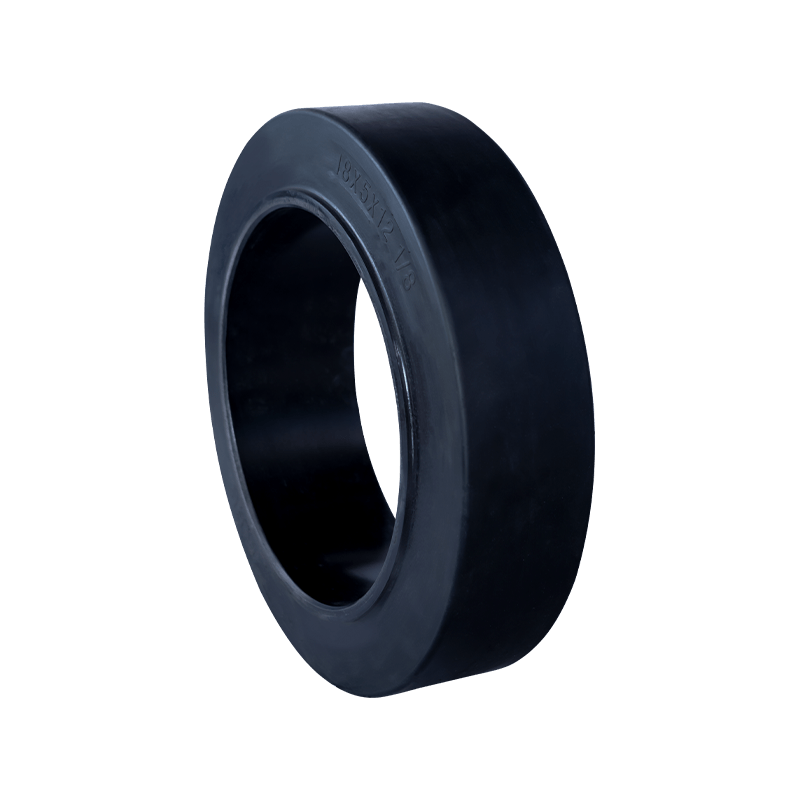 Press-On Solid Tyres with Reusable Steel Rims for ForkliftsPress-on solid tyres for forklifts and trailers, featuring reusable steel rims and low heat generation for compact electric trucks and narrow aisles.View Product →
Condition and wear patterns
Flat spots, uneven wear and chunking all reduce the contact patch, and they usually appear on the tyres that do the braking. A machine that pulls to one side under braking will need more distance regardless of what the specification says. Measuring tread depth and checking for flat spots at the same interval as the brake inspection keeps the two systems in step.
The Numbers Planners Should Post Instead
Rather than a single site-wide figure, post a short table by area. It takes ten minutes to produce and removes almost every argument about what the rule means.
| Area | Typical travel speed | Suggested minimum following gap | Equivalent in 16 m truck lengths |
|---|---|---|---|
| Indoor aisle, dry and straight | 6 to 8 km/h | 4 to 6 m | 0.25 to 0.4 |
| Indoor aisle, junction or doorway | 5 km/h or walking pace | 3 to 4 m, with a full stop at the junction | 0.2 to 0.25 |
| Outdoor yard, long straight run | 16 to 20 km/h | 13 to 20 m | 0.8 to 1.2 |
| Dock apron beside trailers | 5 to 8 km/h | Clear of the full trailer length plus rear clearance | 1.0 or more, treated as a no-queue zone |
| Loaded descent on a ramp | Walking pace, load uphill | Double the flat-ground gap for that speed | 0.6 or more |
| Cold store or wash-down area | 6 to 10 km/h | 8 to 12 m until the floor is proven dry | 0.5 to 0.75 |
Two supporting rules make the table work in practice. First, the gap is a minimum, not a target, and it is measured from the front of the following machine to the nearest point of the one ahead, not wheel to wheel. Second, whoever is behind is responsible for the gap, and the machine in front is responsible for signalling. Assigning both halves prevents the familiar argument at the end of a shift.
Turning the Number Into Something Operators Actually Follow
A figure on a laminated notice changes nothing on its own. These are the measures that make a following-distance rule stick.
- Paint the gap as a floor marking at junctions and dock entrances where the required distance is short enough to visualise, and use a painted stop bar at blind corners instead of a distance nobody can judge.
- Set speed limits by area and enforce them with the truck's own controller settings where available, because a governed 8 km/h limit is easier to defend than a sign nobody can read from the seat.
- Give one-way circulation priority in aisles narrow enough that two laden trucks cannot pass with clearance, and mark passing bays.
- Require a full stop, horn and visual check at every blind doorway, regardless of how clear the aisle looks.
- Keep pedestrians out of forklift lanes entirely where possible, and where it is not possible, mark a separate walkway and keep the machines out of it.
- Include tyre condition and brake feel in the pre-shift check, and take complaints about pulling or a long pedal seriously the same day.
- Brief the gap in truck lengths only if your team already thinks that way, and always alongside the metre figure, because mixed units cause mixed behaviour.
- Review after every near miss, floor resurfacing, tyre change or new product introduction, since each of those shifts the underlying physics.
What to Do Next
The honest summary is that there is no fixed answer in truck lengths, only an answer in stopping distance that you convert into whatever unit your site already speaks. For most forklift operations that conversion lands between a quarter and one truck length on dry ground, and grows towards one and a half truck lengths on ramps, wet floors and heavy off-centre loads. Three truck lengths is a road-transport rule that found its way onto a warehouse wall, and it can be retired politely.
Start with one measurement. Take the most heavily loaded forklift on site, load it, and measure its stopping distance at the speed your operators actually use. Add a second for their reaction time, apply a margin for the floor as it will look in February rather than in July, and post the result by area rather than site-wide. If the numbers come out smaller than the current notice, that is not a loosening of safety; it is a rule your team can actually keep, which is worth more than a strict rule they ignore.
Tyres deserve a place in that review, because they are the one variable that quietly changes underneath the machine without anyone touching the speed limit. Operators working in clean indoor applications, cold stores and mixed indoor-outdoor yards should look at a manufacturer that builds for those exact duty cycles across forklift, aerial platform and run-flat applications, such as the industrial solid tyre range designed around load, floor and temperature rather than around a single universal specification. Match the tyre to the worst condition in the duty cycle, keep the brakes in step with the tyres, and the distance question answers itself in metres, in seconds and, if anyone insists, in truck lengths.