 English
 русский
 Español
 عربى
عربى
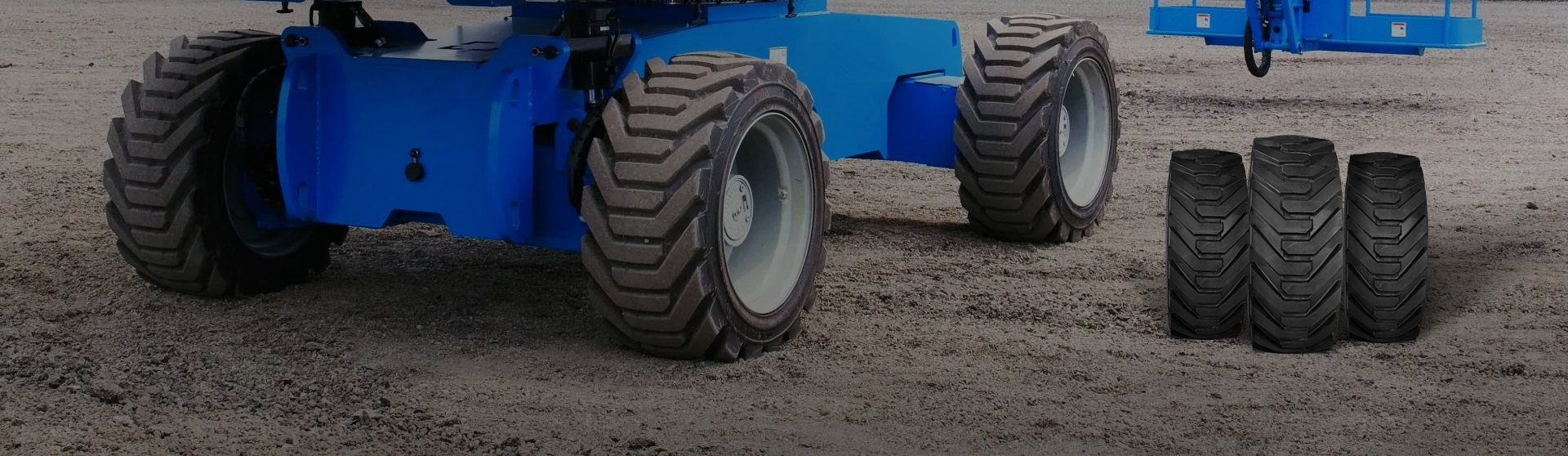

When a forklift moves a heavy pallet through a narrow aisle, the operator feels every small shift in the load. The machine leans, the rear wheels come off the ground just slightly, and the driver tightens the steering wheel. That moment of uncertainty comes down to a simple geometric rule: the forklift's stability triangle. The three points that form it are the centers of the two front wheels and the pivot point of the rear steering axle.
What Are the Three Points of a Forklift Stability Triangle?
A forklift's stability triangle is not a hypothetical drawing. It is the footprint that supports the entire machine. On a typical sit-down counterbalanced forklift, the three points are:
- Center of the left front wheel contact patch
- Center of the right front wheel contact patch
- Pivot point of the rear steering axle
These three points are the only places where the forklift's body transfers its weight to the ground. The front wheels carry the bulk of the load, while the rear axle is a steering axle that oscillates or pivots around a central pin. That pin, not the two rear wheels, is the third point.
| Point | Location | Effect on stability |
|---|---|---|
| Front wheel centers | Both front drive wheels | Carry the heavy load; form the wide front tipping line |
| Rear axle pivot | Center pin of the steering axle | Provides the only rear support; narrows the triangle for lateral tipping |
| Combined center of gravity | Vertical projection parked inside the triangle | Must remain inside; crossing any edge begins a tip |
Why Is It a Triangle If the Forklift Has Four Wheels?
At first glance, a four-wheeled machine seems to have a rectangular footprint. However, the rear axle assembly is not fixed rigidly to the frame. The axle is attached at a central pivot, allowing the two rear wheels to move up and down independently over uneven floors. In practice, the rear wheels are not always in contact with the ground. The pivot point acts as the single rear support, and the two front wheel contact patches are the two front supports. Connecting these three points creates a triangle—the only stable support polygon.
This design gives the forklift its steering flexibility. The rear axle can oscillate, so when one rear wheel rolls over a piece of debris, the axle tilts without lifting the entire truck. The consequence is that the support polygon is not a rectangle. The stability margin is always described by a triangle, which is wider at the front and narrower at the rear.
The Center of Gravity Must Stay Inside the Triangle
Stability is not just where the forklift touches the floor; it is also where the combined center of gravity lands. The center of gravity includes the empty forklift weight, the battery, the mast, the forks, and the load. For the truck to remain upright, the vertical projection of this total center of gravity must stay within the stability triangle. If it moves outside the edge, the forklift starts to tip.
The margin between the center of gravity and the triangle's edge is small by design. Manufacturers define a load capacity based on a specific load center and lifting height. This is a tolerance issue: a load that is rated for 3,000 lb at a 24-inch load center may not be safe at a 48-inch load center, because moving the load forward shifts the center of gravity closer to the front tipping line.
Forward Tipping: The Load-Moment See-Saw
Forward tipping is the most common forklift accident. The front axle is the fulcrum. When the forklift lifts a load, the load creates a moment that tries to rotate the truck forward around the front axle. The counterweight behind the rear axle resists that rotation. The balance between these two moments determines whether the front tipping line—the line connecting the two front wheel centers—will be crossed.
If the load is too heavy, too far forward, or lifted too high, the combined center of gravity crosses the front edge of the stability triangle. The rear wheels lift, and the machine rotates forward. The counterweight design gives a small safety margin, but that margin disappears when the load center exceeds the rated value or when the vehicle is on a slope. For example, a forklift with a 2,500 lb capacity at a 24-inch load center will have a much lower safe capacity if the load is stacked to a 36-inch load center. Failing to account for that shift is a primary cause of tip-over injuries.
Sideways Tipping and the Narrow End of the Triangle
The triangle is widest at the front wheels and narrowest at the rear pivot point. This means the forklift has less sideways stability near the rear. When the operator turns at speed, the centrifugal force pushes the center of gravity toward the outside of the turn. If the turn radius is tight or the forklift is carrying a high load, the center of gravity can cross the left or right edge of the triangle. This is particularly common with an unladen forklift because the center of gravity is high and close to the rear, yet the counterweight provides no lateral resistance.
Raising the load also raises the center of gravity. A higher center of gravity increases the likelihood of sideways tipping because it increases the moment arm for lateral forces. Operators should travel with the forks as low as possible and slow down during turns. The same principle applies when carrying a load on a ramp: the effective stability triangle changes with the slope angle, and the center of gravity moves to the downhill side. Knowing that a loaded forklift has a narrower safety envelope at the rear should affect how aggressively you approach a turn.
Dynamic Forces: Stability Is Never Static
Forklift stability is not a fixed condition. Every movement changes the position of the center of gravity. Starting, stopping, accelerating, braking, and turning all add horizontal forces. Slopes and uneven surfaces move the triangle's support points vertically, which can lift one rear wheel and effectively change the pivot point. On a grade, the effective stability triangle opens only to the downhill side. The load center shifts toward the downhill edge, and the operator may need to drive the forklift slowly and keep the load slightly tilted backward.
Dynamic forces also include shock loads. If the forks catch on a pallet or the load drops suddenly, the resulting jolt can push the center of gravity past the boundary in a fraction of a second. This is why operator training emphasizes smooth operation and cargo securement. A forklift that appears stable at rest can become unstable the moment the driver releases the brake on a sloping dock, because the lateral force from the slope adds to the already narrow rear triangle.
Where Tires Enter the Physics
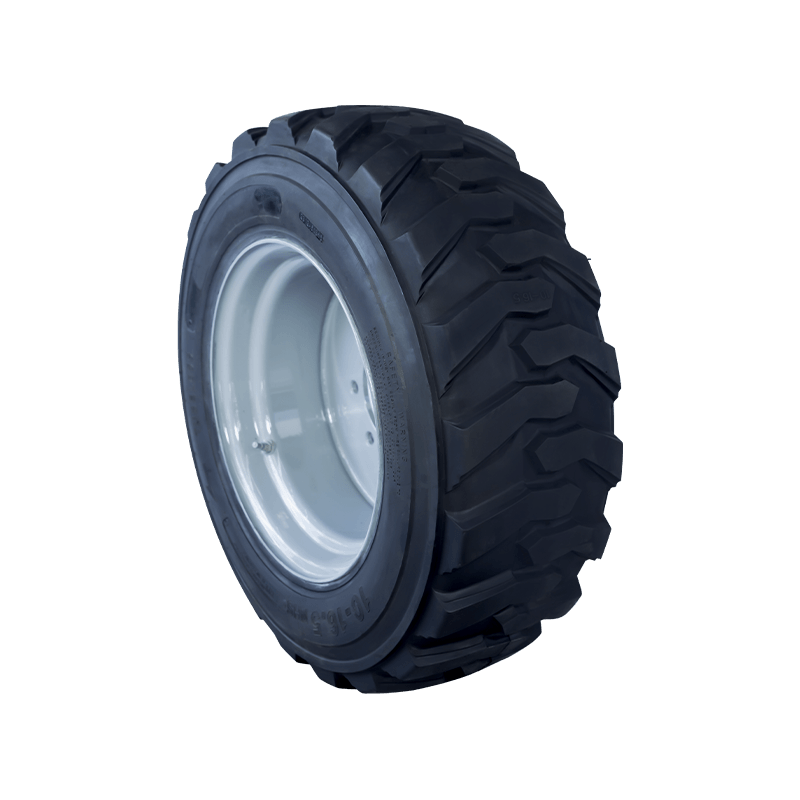
The stability triangle depends on the tire contact patches. If a tire is worn, inflated to the wrong pressure, or mismatched between the left and right side, the contact patch moves. The effective footprint changes, often making the triangle narrower on one side. Bulging or cracking tires can also alter the way the forklift transfers weight, especially under load. On a pneumatic forklift tire, a puncture can cause a sudden loss of pressure, which shifts the support point and reduces the stability margin.
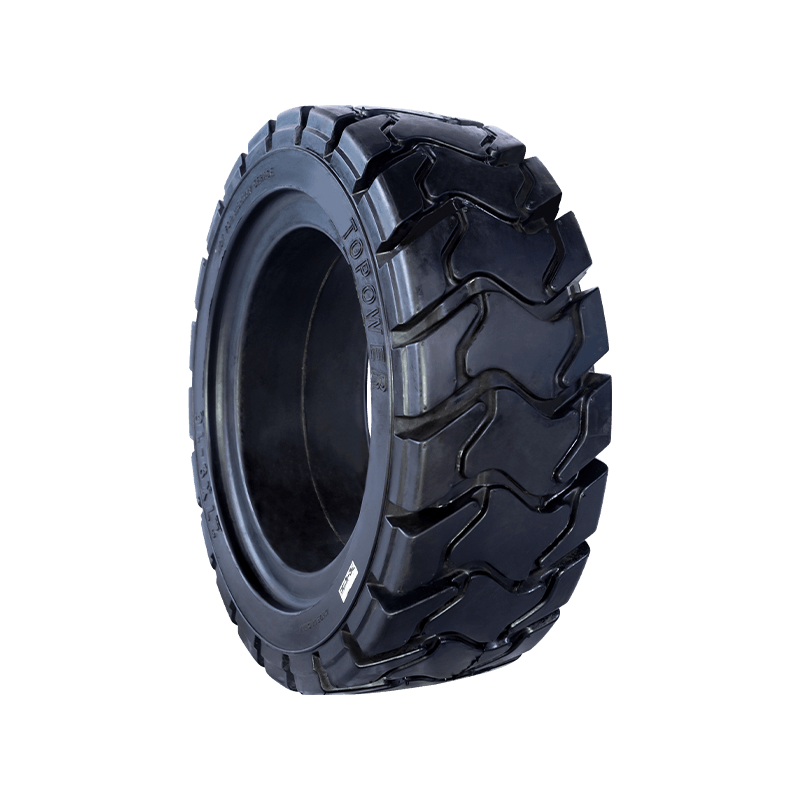
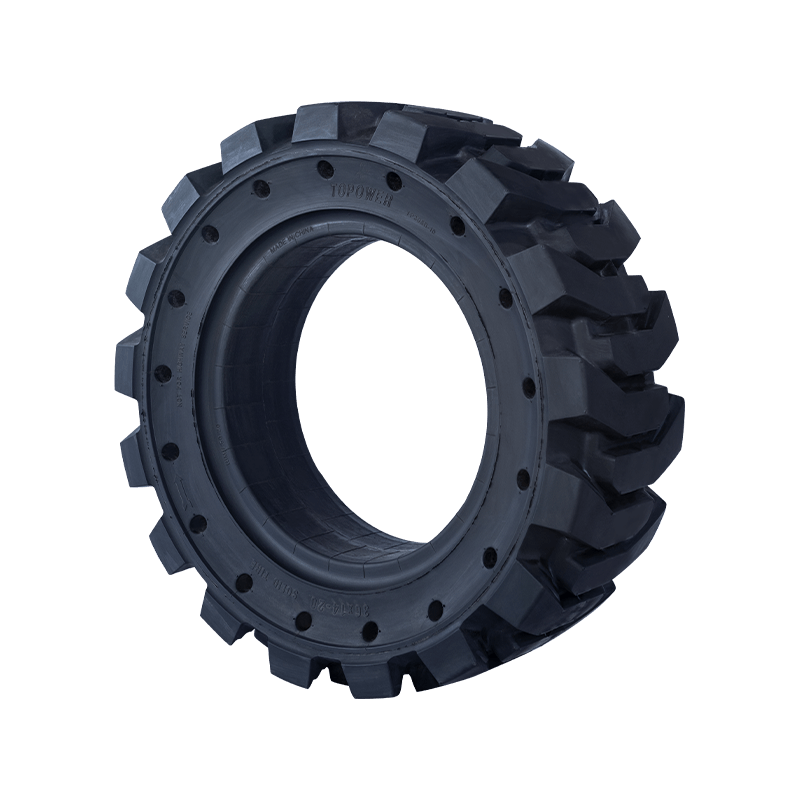
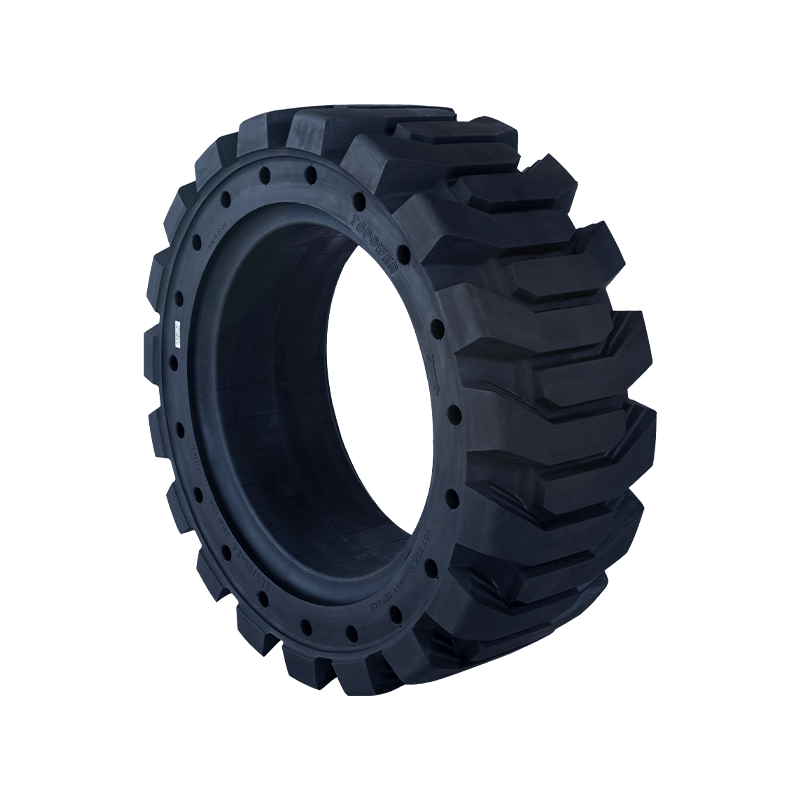
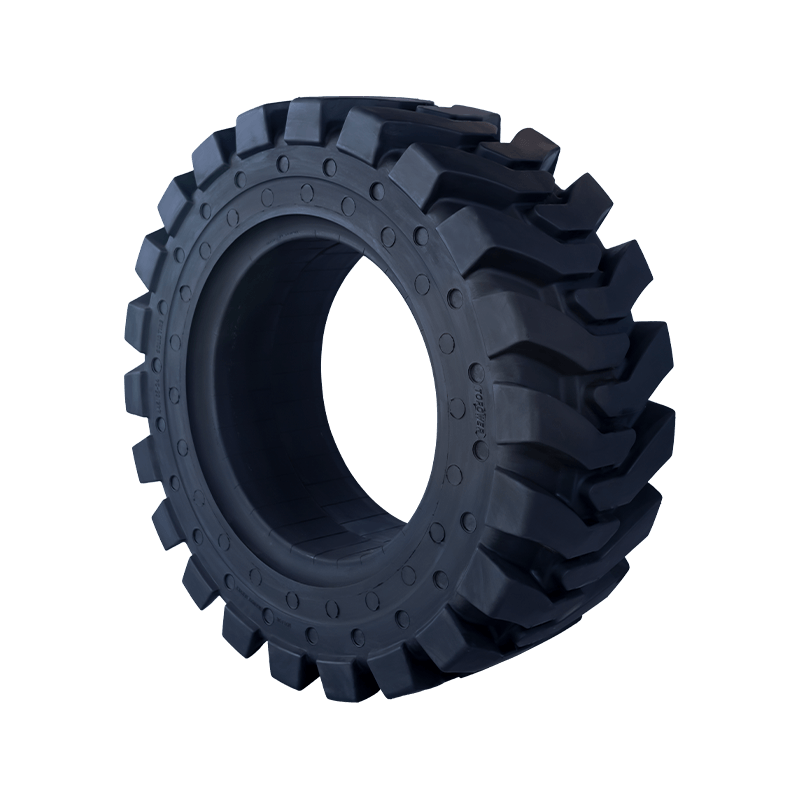
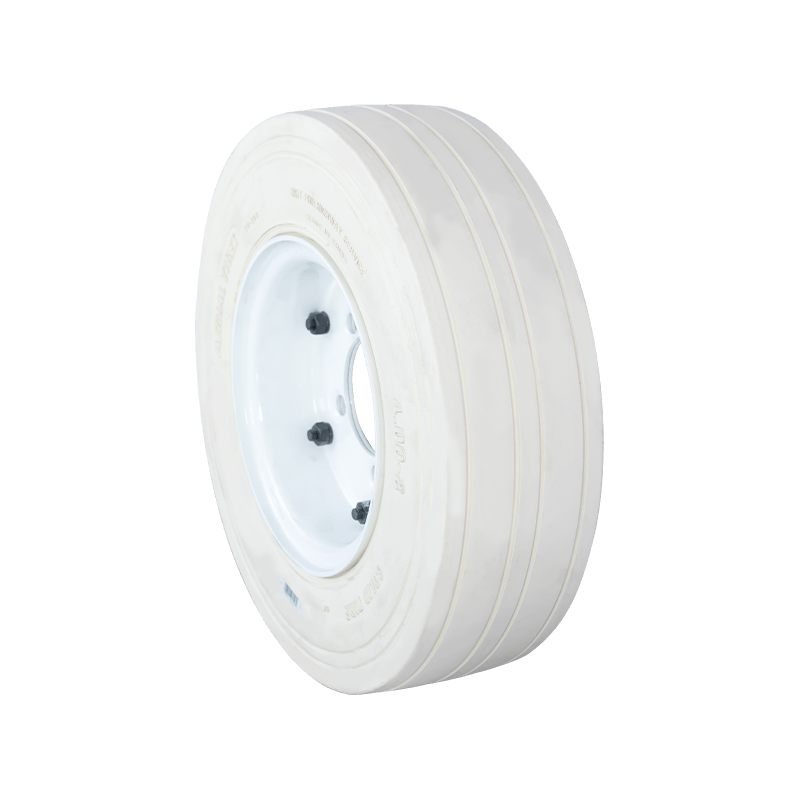
For this reason, many industrial operations choose solid tires for forklifts. A forklift solid tyre has no air chamber to lose, so its contact patch remains consistent throughout a shift. The tire's flat profile and rubber compound are designed to carry heavy loads without the sidewall flex that can change the effective footprint. This is particularly important in docking areas, steel plants, and recycling facilities where sharp debris can pierce pneumatic tires.
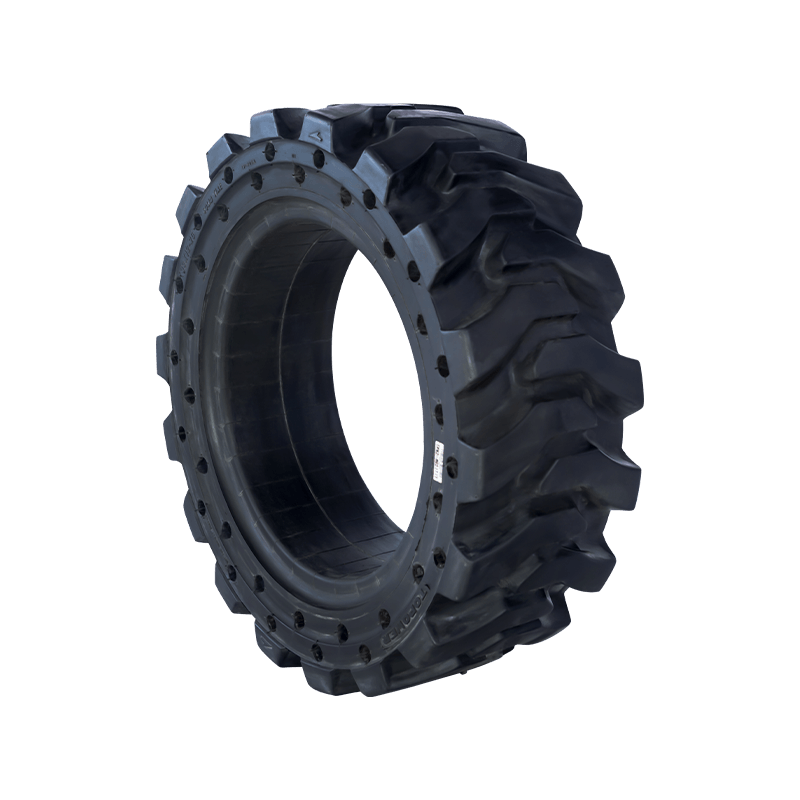
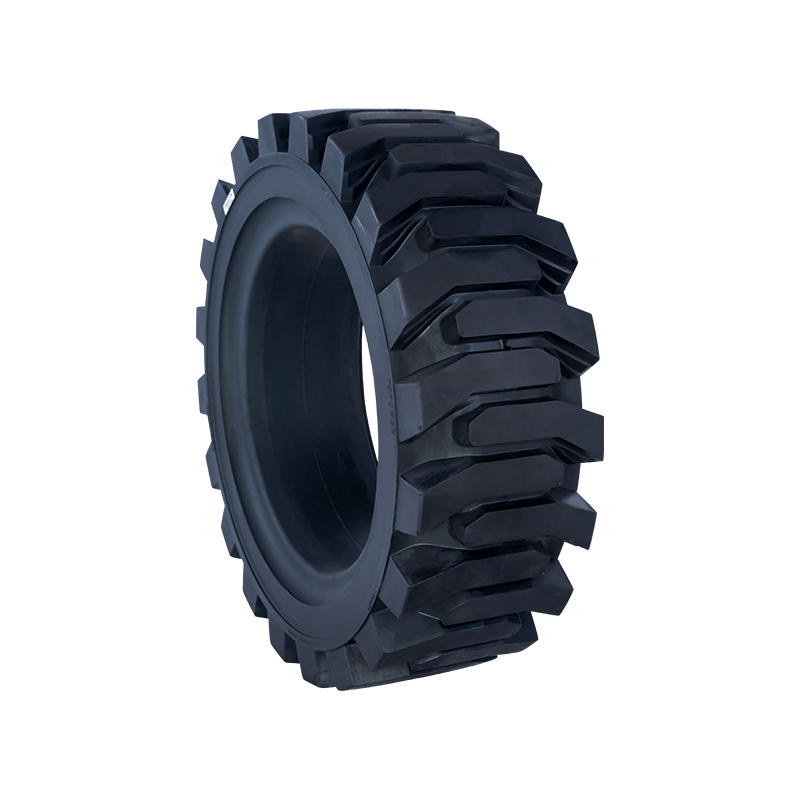
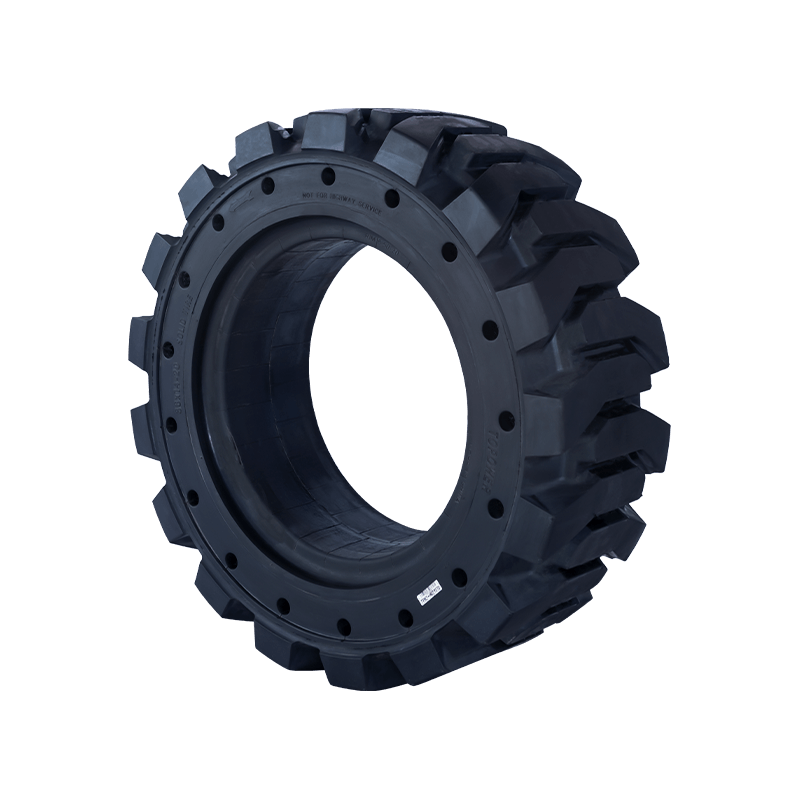
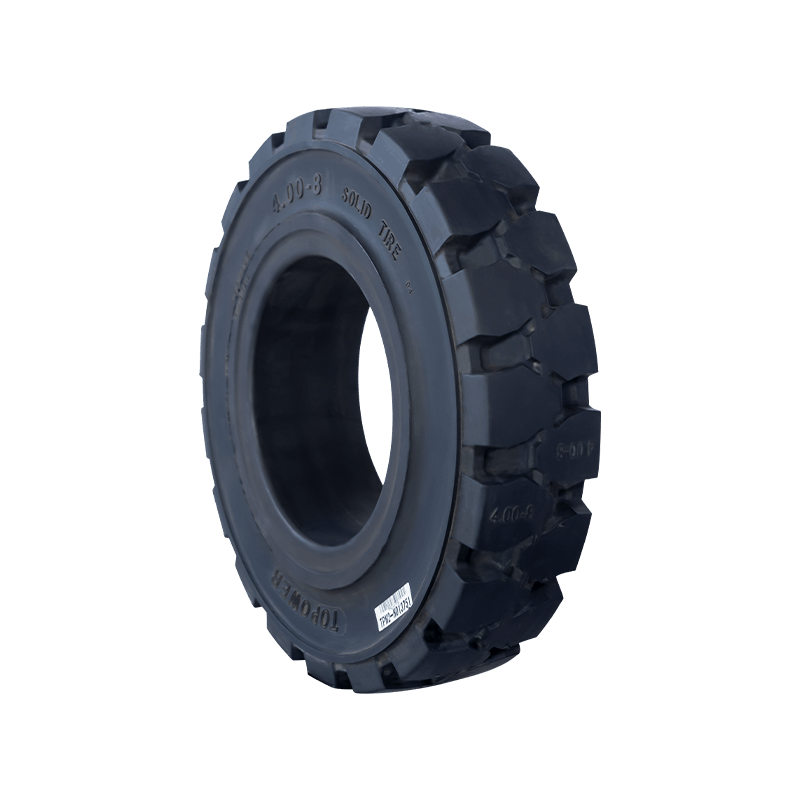 Forklift Solid Tyres for Harsh Conditions and StabilityThese solid tires are built for heavy loads, debris-prone areas, and puncture resistance. Their consistent footprint supports stable handling, but verify size and load capacity against your forklift's data plate to maintain designed stability margins.View Product →
How Tire Choice Affects the Margin You Were Given
Every forklift has a designed stability margin. That margin is based on the original tires and the original geometry. Changing to a non-matching tire size or using a tire with a different outside diameter changes the axle height and the pivot point's relation to the front axle. Installing a solid tire with the wrong load capacity can also alter the machine's ability to absorb shock, which directly affects dynamic stability. Buyers should verify the tire's load capacity, size, and speed rating against the forklift's data plate.
At Jiangsu Topower Tyre Co., Ltd., the company manufactures forklift solid tires in a range of industrial applications, including non-marking and press-on variants. These products are built for the demanding conditions of material handling, where an unexpected flat tire is not just a maintenance issue—it is a stability issue. When evaluating replacement tires, look for a reliable manufacturer that offers consistent rubber chemistry and strict dimensional tolerances, because those parameters define how the stability triangle will behave.
What Operators Should Check Before Each Shift
The stability triangle is only as safe as the maintenance of the forklift and the judgment of the operator. Before every shift, check the tires for cuts, large chunks, or uneven wear. Confirm that both front tires are the same size and that the rear steering axle can oscillate freely. Then think about the load: the weight, the load center, and the lifting height. Keep the load low, center it on the forks, and avoid quick turns. If you are working on a slope or uneven floor, reduce the effective load capacity and travel slowly.
If you are interested in how industrial solid tires perform under different load conditions, you can read our article on the topic.
How Do Industrial Solid Tires Perform Under Different Load Conditions?
Remember that the stability triangle is not an abstract concept—it is the physical envelope in which your forklift remains upright. Keep the load low, keep the tires in good condition, and respect the difference between forward and sideways tipping. Small operational choices add up to a large safety margin.