 English
 русский
 Español
 عربى
عربى
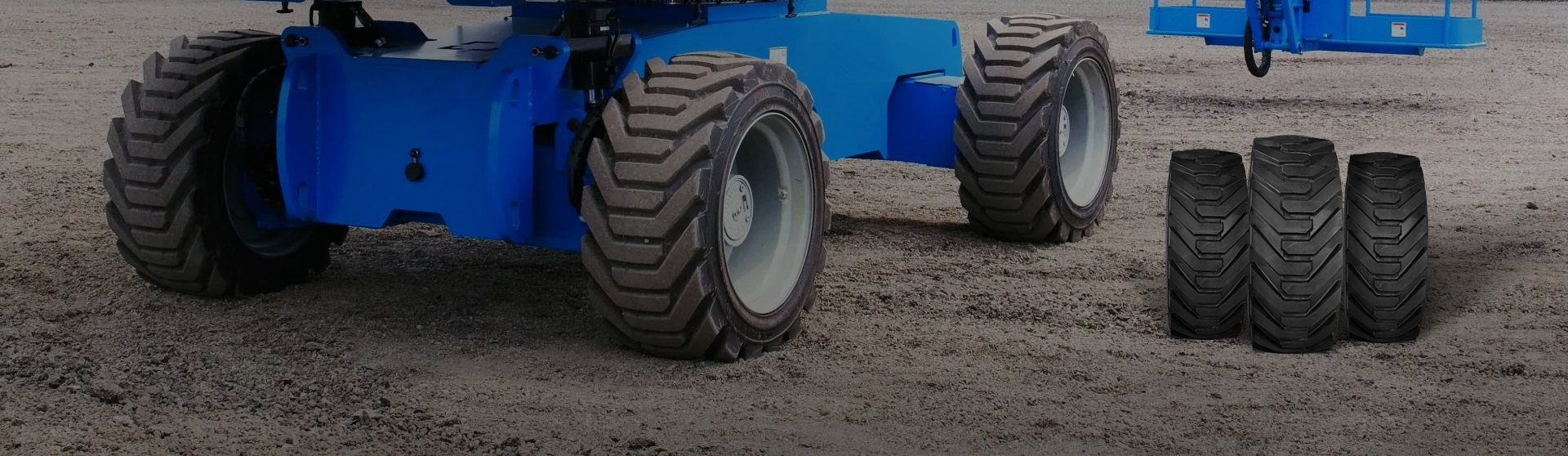

A skid steer loader working beside a scrap pile does not stop because the machine lacks power. It stops when a pneumatic tyre meets a sharp edge, loses air, and forces the operator to spend valuable time changing the wheel. For construction, demolition, waste handling, and site cleanup, solid tyres for skid steer loaders are often the more dependable choice because they remove the air cavity that causes the most common flat-tyre failures.
Solid tyres change more than puncture resistance. They change the operator’s day, the maintenance schedule, and the cost-per-hour calculation. The right tyre keeps the loader moving on rough ground, concrete, rebar-littered demolition debris, and muddy access roads. The wrong tyre can make the machine harsh to operate, hard on the driveline, or too expensive to run. This guide explains what to compare when selecting solid tyres, from construction and tread pattern to rubber compound, mounting method, and total operating cost.
Why Solid Tyres Are Often the Better Choice
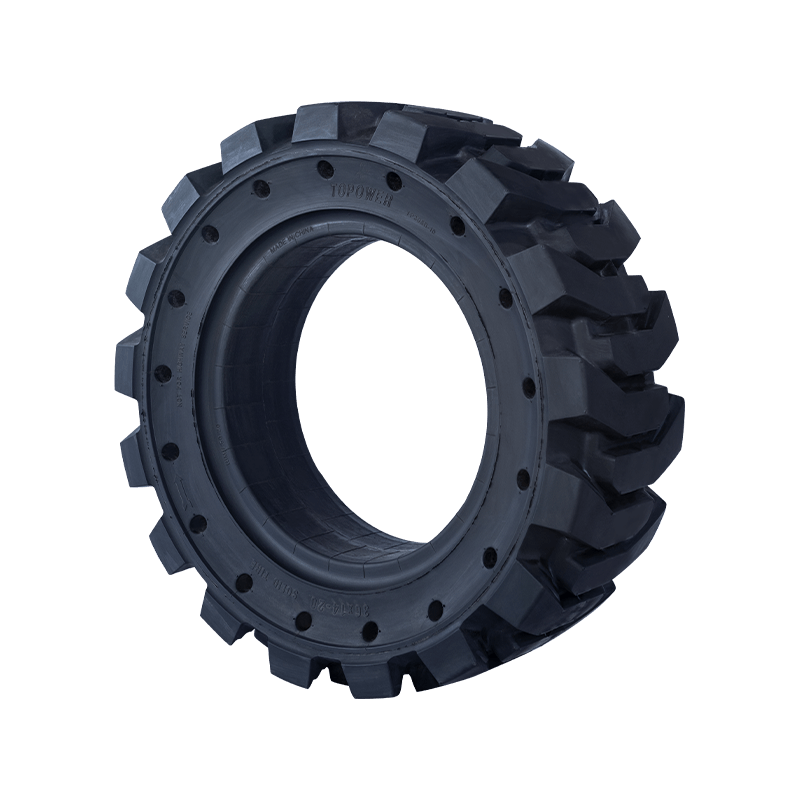
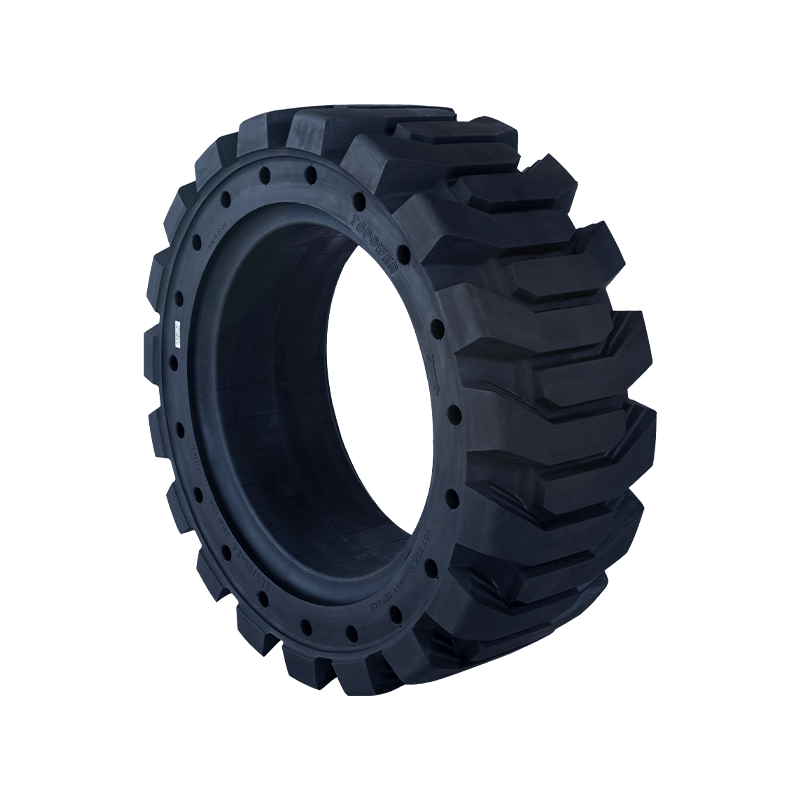
A solid skid steer tyre has no air chamber. The tyre is built as a dense rubber body, usually with a steel base or wheel core, and it carries the machine’s weight through the rubber compound itself. That construction removes the most common cause of downtime: punctures, sidewall cuts, and slow leaks.
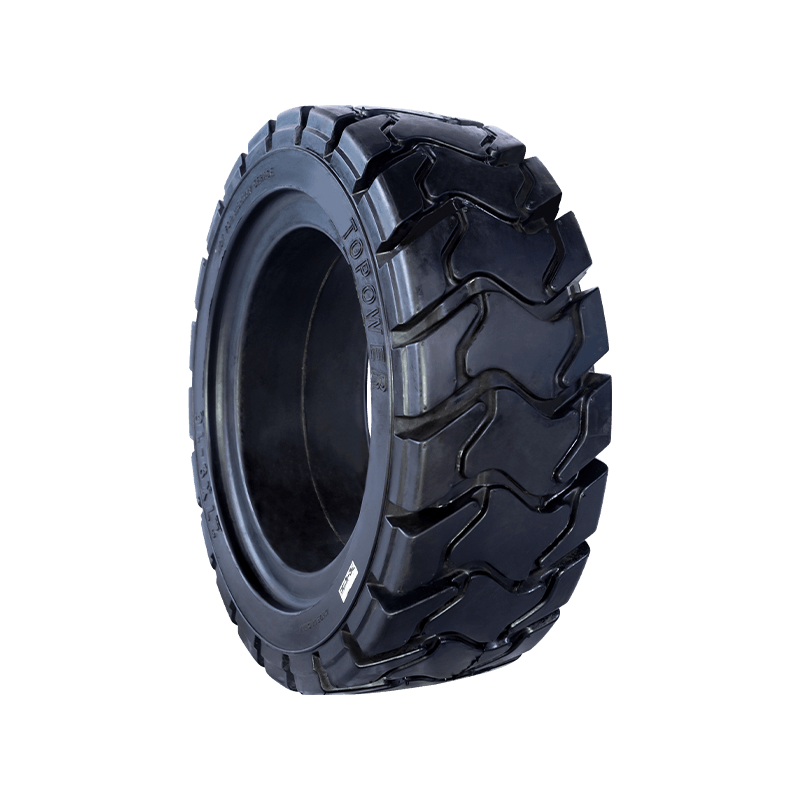
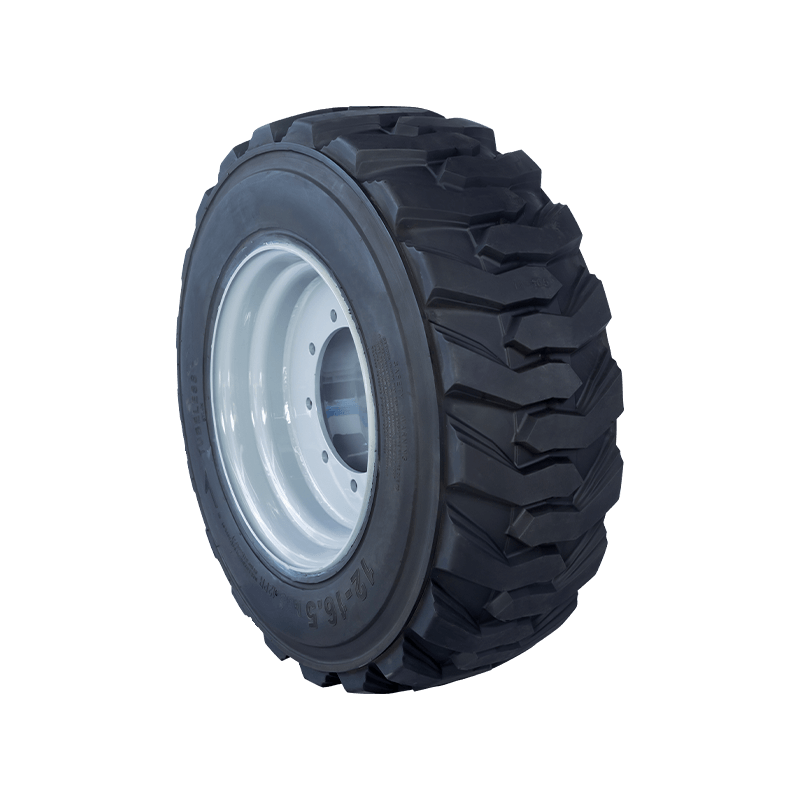
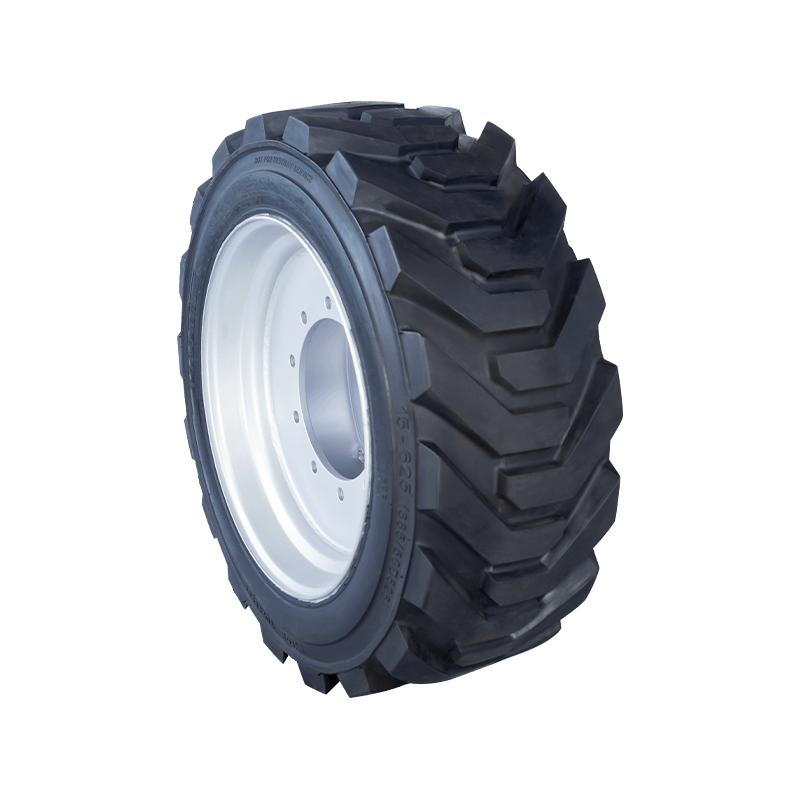
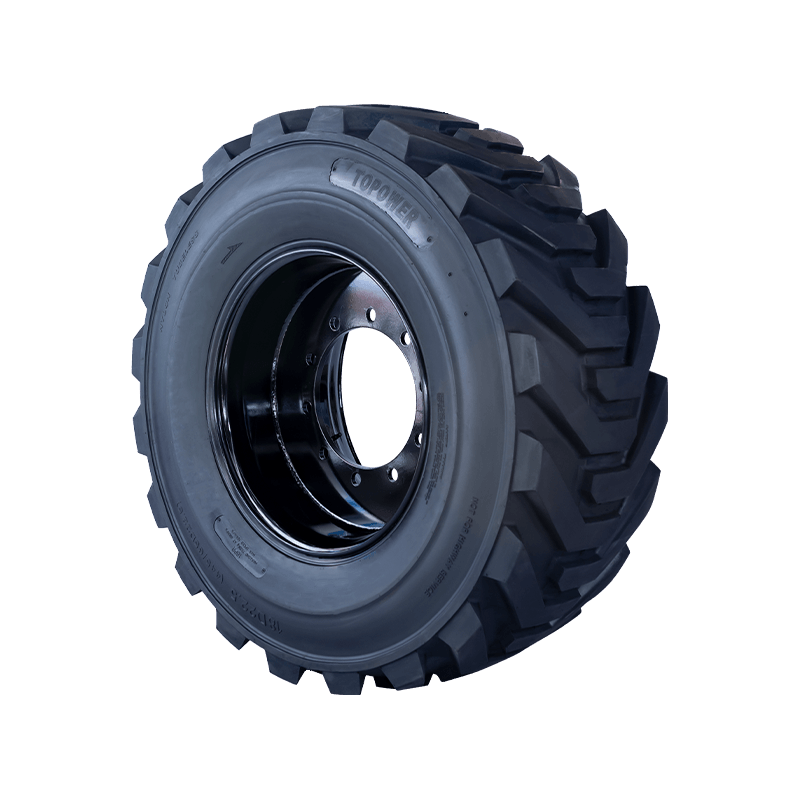
The practical effect is easier to measure. In recycling yards, demolition sites, and scrap processing, the ground is covered with sharp metal, glass, and concrete. Pneumatic tyres can fail within hours. A purpose-designed skid steer loader solid tyre is built to handle those conditions without losing air. Workers can spend more time loading and less time changing tyres.
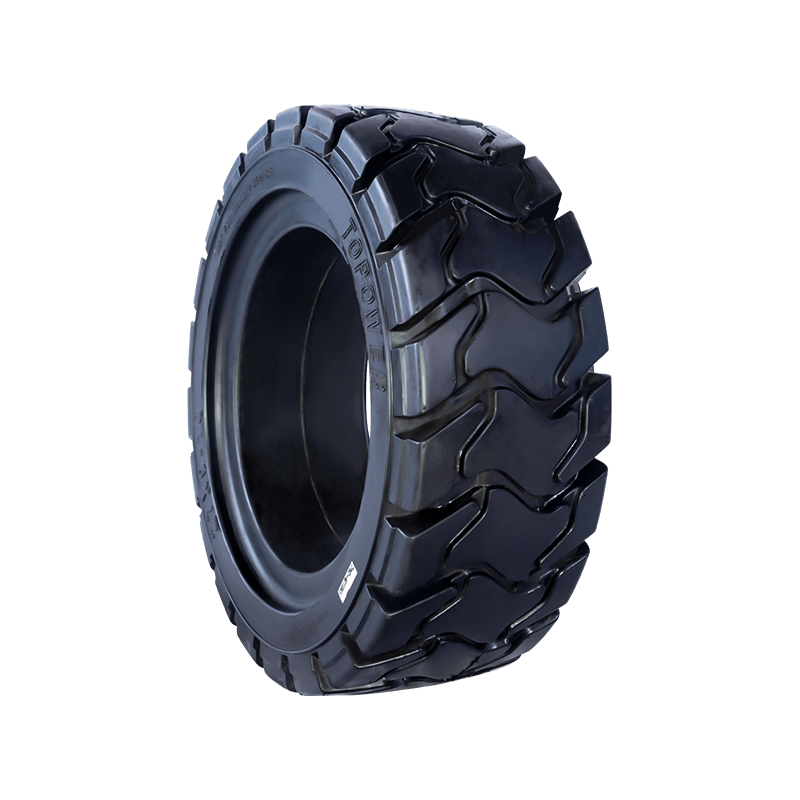 Wholesale Skid Steer Loader Solid Tyre Manufacturers, FactoryAs China Skid Steer Loader Solid Tyre Manufacturers and Skid Steer Loader Solid Tyre Factory, Jiangsu Topower Tyre Co., Ltd. supply Whole...View Product →
The trade-off is ride comfort. Solid tyres are firmer than pneumatic tyres, and the machine transmits more vibration. Modern solid tyre designs use aperture holes and specially selected rubber compounds to soften the ride, but a skid steer will still feel different with solids. For most harsh-site applications, that trade-off is worth it because uptime improves.
Pneumatic vs. Solid: What Changes on the Machine
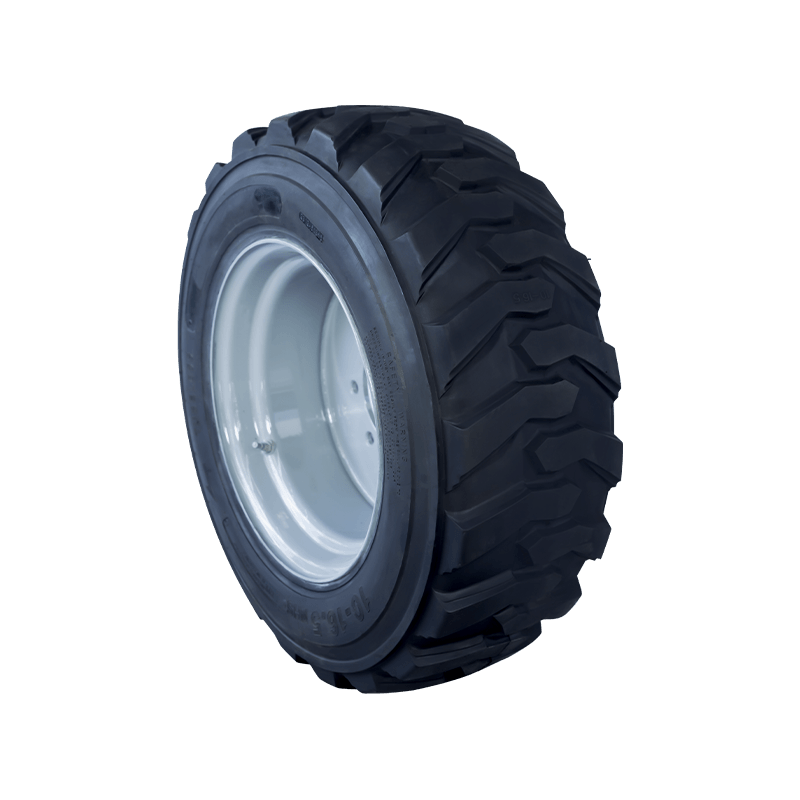
The decision starts with the working surface and the cost of downtime. Pneumatic tyres provide a softer ride and good traction on smooth or moderate terrain. Solid tyres provide puncture resistance, consistent load support, and less maintenance. The comparison below summarises the main differences for skid steer loaders.
| Factor | Pneumatic tyre | Solid tyre |
|---|---|---|
| Air pressure | Must be checked and maintained | None required |
| Puncture risk | High around sharp debris | Eliminated |
| Ride comfort | Better cushioning on flat surfaces | Firmer; improved by aperture holes and compounds |
| Carrying capacity | Depends on pressure and sidewall stiffness | Depends on rubber compound, size, and base design |
| Maintenance | Pressure checks, repairs, tube or sealant needs | No pressure checks; inspect cuts, wear, and wheel bolts |
| Best fit | Clean, smooth, low-risk sites | Demolition, recycling, waste, scrap, and rough construction ground |
Neither construction is always better. A pneumatic tyre can still be the right choice if the loader works almost exclusively on clean, improved ground and the operator values ride comfort. A solid tyre becomes obviously better when flats are frequent enough to interrupt production.
How Solid Skid Steer Tyres Are Mounted
Solid tyres are not all installed the same way. The mounting method affects torque transfer, replacement difficulty, and total wheel cost. There are three common systems.
Press-on solid tyres
Press-on tyres are made with a steel rim or band that is pressed into a rubber body. The tyre is fitted onto the wheel with an interference fit, usually with a hydraulic press. Press-on designs are common in material handling because replacement can be done without changing the complete wheel assembly. Proper fit is essential. A press-on tyre that is too loose can slip under the high torque of a skid steer, and one that is too tight can be very difficult to install.
Bonded solid tyres
Bonded tyres are vulcanised or bonded directly to a steel base or wheel. This gives a more permanent connection and allows better load distribution under heavy loads. Bonded solid tyres are often preferred for demanding applications because the rubber is less likely to rotate on the rim. The trade-off is that the entire wheel assembly may need to be replaced when the tyre wears out.
Segmented solid tyres
Segmented tyres are built from rubber blocks or sections mounted on a base. If one segment is damaged, it can be replaced without discarding the whole tyre. This can lower the cost of a severe cut or chunk failure, especially in abrasive rock handling. Segmented designs are less common for skid steer loaders than press-on or bonded types, and their availability depends on the size and brand.
When comparing quotes, confirm what is included. A wheel assembly with a bonded tyre costs more upfront but may reduce downtime. A press-on tyre may have a lower purchase price but can require more labour to press on and replace. The right choice is the one that fits the repair capability at the job site.
Tread Pattern: Match the Surface Before Choosing the Compound
Solid tyres can be produced with several tread patterns. The pattern controls traction, self-cleaning, and wear on different surfaces. It also affects how the machine feels when the operator turns or brakes.
- Smooth or semi-smooth tread works best on concrete, asphalt, and other hard surfaces. It puts more rubber on the ground, reduces vibration, and improves stability on flat floors.
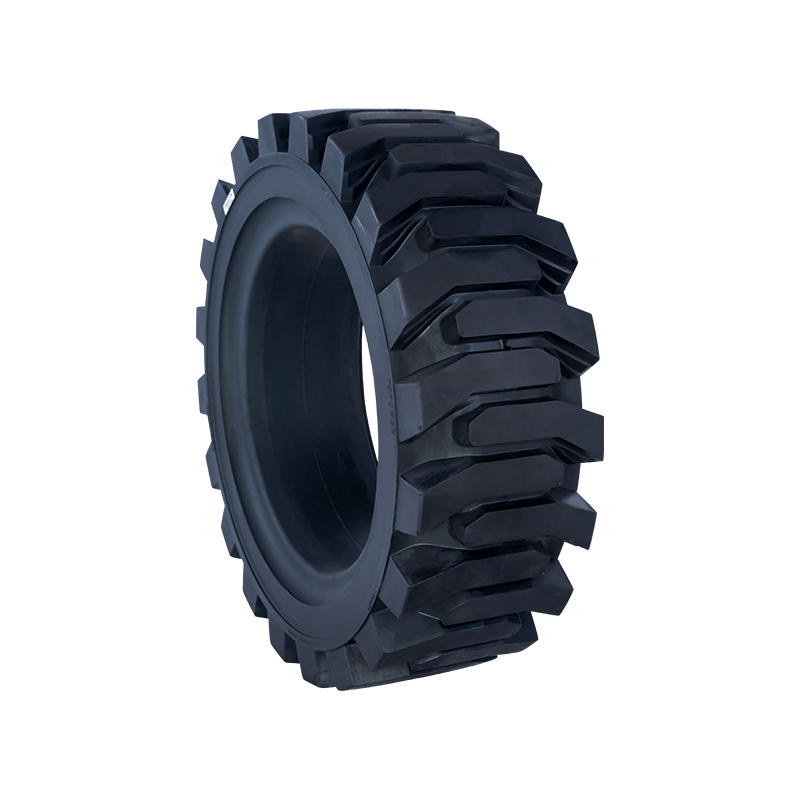
- Directional lug tread is better for muddy or loose ground. The lugs bite into the surface and help the loader maintain traction in a straight line.
- Chevron or bar tread is designed for high traction and self-cleaning. It sheds mud and debris while the wheel turns, which is helpful when a skid steer crosses soft or wet terrain.
If the loader works on finished concrete and then moves to a dusty yard, an all-purpose tread with moderate lug height may be more practical than an aggressive construction tread. The tread pattern should also be considered with the machine’s turning behaviour. A skid steer turns by sliding its wheels, and a pattern that is too aggressive can increase wear and strain on the driveline.
For indoor work or surfaces that cannot be marked, use a non-marking solid tyre. The non-marking compound gives the same puncture resistance but leaves less black residue on light-coloured concrete or finished floors.
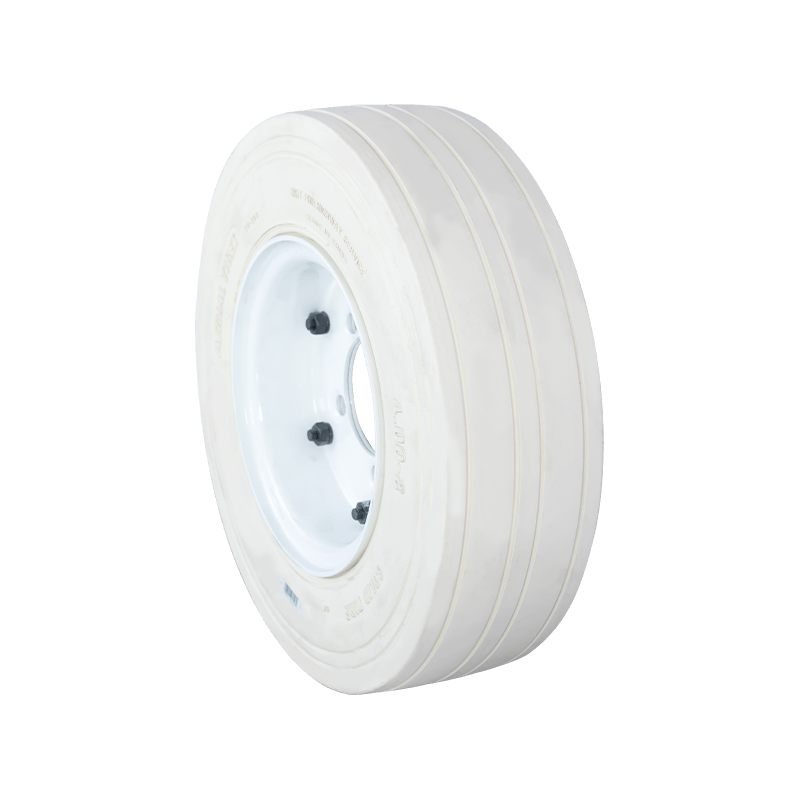 Wholesale Non-marking Solid Tyre Manufacturers, FactoryAs China Non-marking Solid Tyre Manufacturers and Non-marking Solid Tyre Factory, Jiangsu Topower Tyre Co., Ltd. supply Wholesale Non-mar...View Product →
Aperture Hole Designs and Ride Comfort
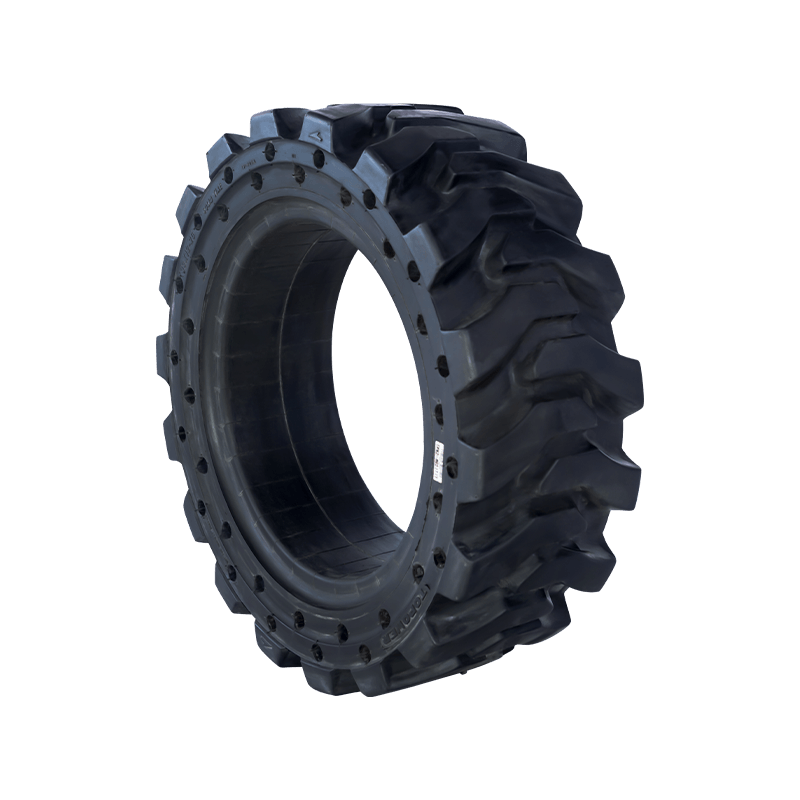
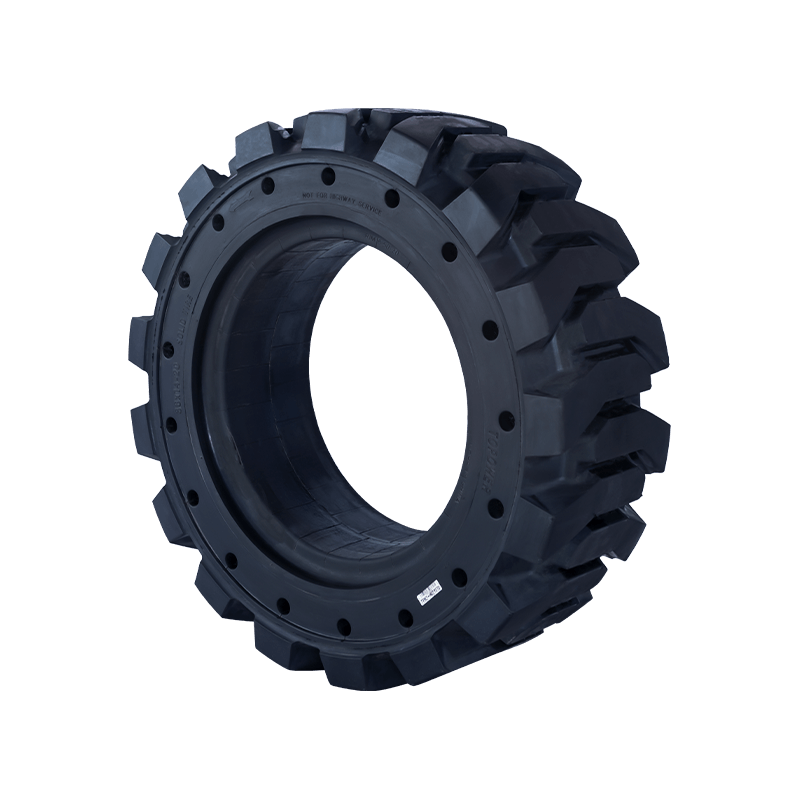
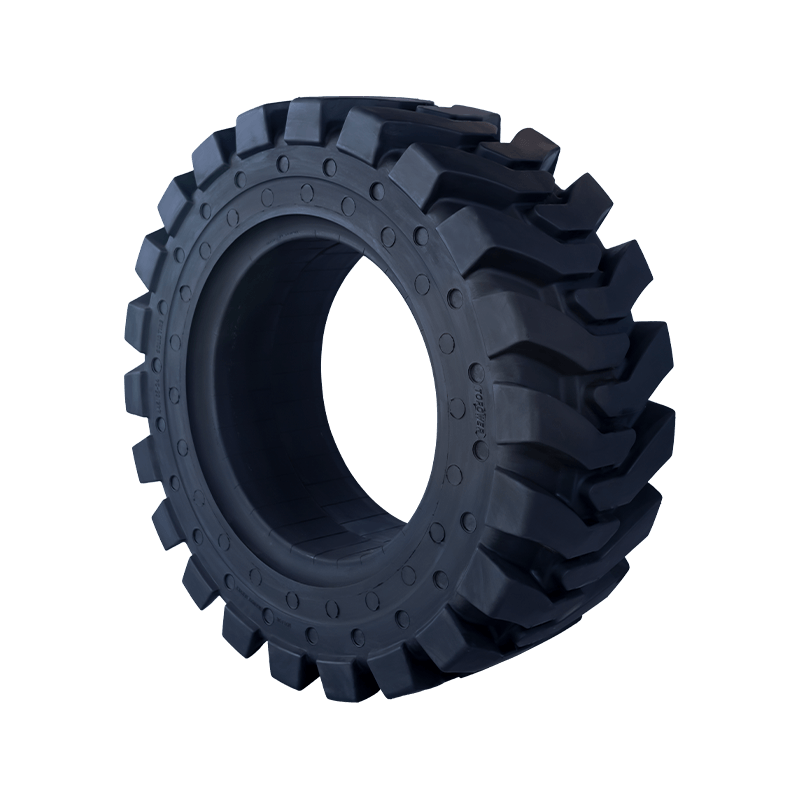
One of the most common ways to improve comfort in a solid tyre is to add aperture holes to the side of the rubber body. These holes are not a weakness. They allow the tyre to compress and flex under load, which softens the ride, reduces heat buildup, and lowers the amount of stress transferred to the machine.
Round holes
Round holes are the simplest design. They provide a predictable amount of deflection and work well in applications where the operator needs a softer ride on uneven ground.
Elongated holes
Elongated holes are shaped to allow more progressive deflection. They can help distribute the load over a larger area and are often used when the machine carries heavy loads over rough surfaces.
Staggered holes
Staggered hole patterns are positioned to avoid creating weak lines through the tyre. This can improve durability when the tyre is subject to repeated side loads and impacts.
The number, size, and position of aperture holes should match the load and application. Too many holes can make the tyre structure too soft; too few holes can leave it harsh and prone to heat retention. A manufacturer’s recommendation should be based on the machine weight, typical speed, and ground condition.
Rubber Compounds: Hardness, Wear, and Marking
The rubber compound determines how well a solid tyre resists cuts, how long it lasts, and how it behaves at different temperatures. For skid steer tyres, the important compound properties are hardness, abrasion resistance, heat resistance, and whether the tyre leaves marks on clean floors.
A harder compound, often described by durometer, usually wears longer and carries heavy loads with less flex. It also transmits more vibration and may be more prone to chunking on sharp rock. A softer compound provides more grip and comfort but can wear faster and overheat under continuous use. The best choice is a balance between hardness and elasticity for the actual working conditions.
Natural-rubber-based compounds tend to offer good cut and tear resistance under repeated impact, while synthetic blends can improve heat resistance and wear. Some applications use a polyurethane solid tyre, which has very high wear resistance and low rolling resistance, though the purchase price is higher and the ride can be stiffer. If the priority is eliminating marks on finished floors or reducing wear on smooth concrete, a non-marking or polyurethane option should be evaluated before making a final decision.
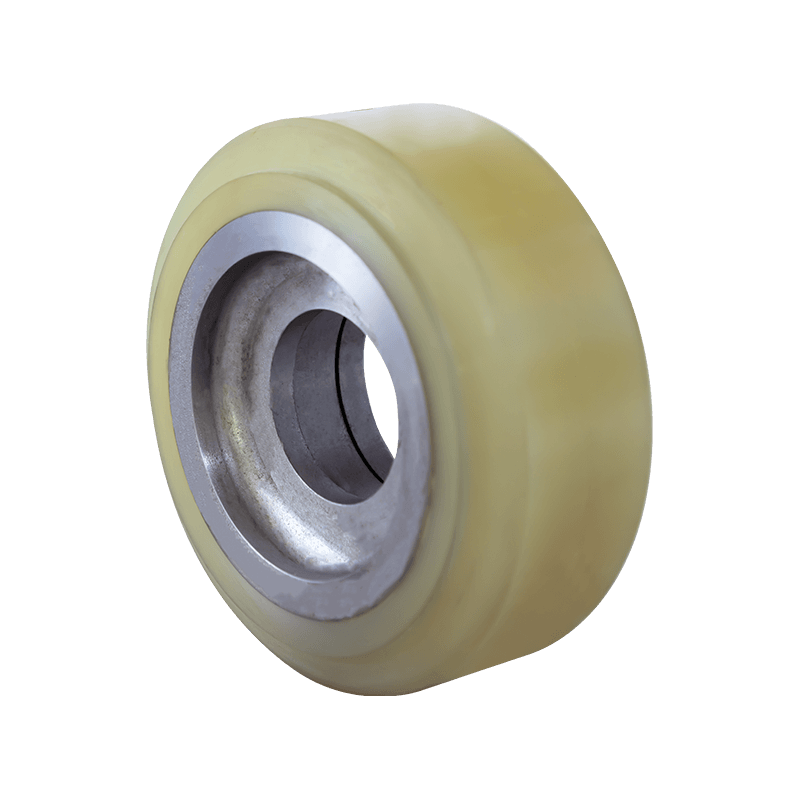 Wholesale Polyurethane Solid Tyre Manufacturers, FactoryJiangsu Topower Tyre Co., Ltd. is China Polyurethane Solid Tyre Manufacturers and Polyurethane Tire Factory, provides Wholesale Polyureth...View Product →
Load Capacity, Cost, and Payback
Solid skid steer tyres are sold by size, load rating, and construction, but the load rating is only the starting point. The actual performance depends on how the tyre is used, the machine’s weight, the terrain, and the speed. A tyre that is loaded beyond its design envelope will build heat and fail early. For more detail, it is worth reading about how industrial solid tyres achieve their load-bearing capacity.
Pricing for solid skid steer tyres varies widely with size, tread, compound, and mounting method. A common buyer’s guide range for many loader applications is $600 to $1,200 per tyre, but that is not a fixed market price. Some heavy-duty sizes with special compounds cost more, and replacement wheels add further cost. The better comparison is cost per hour or cost per week, not initial purchase price.
If a pneumatic tyre fails twice a week and each failure costs an hour of production plus a service call, a solid tyre can pay for itself quickly. If the machine runs mostly on clean, prepared surfaces and flats are rare, the higher purchase price is harder to justify. Site-specific downtime data should guide that decision.
Maintenance and Inspection After Installation
A solid tyre does not need air pressure checks, but it still needs attention. Operators should inspect the tyre surface for cuts, chunks, uneven wear, and foreign objects wedged in the tread or aperture holes. Small cuts may not be serious at first, but if they grow, water and debris can enter the tyre and cause separation.
Check the wheel bolts and the contact area between the tyre and rim. A press-on tyre can slip if the fit is wrong, and a bonded tyre can develop separation if the wheel has been abused. Follow the manufacturer’s recommended inspection schedule and keep records of wear patterns so that problems are caught early.
Keep the tyres reasonably clean and remove stones, metal, or compacted mud from the tread. If one tyre is badly worn, replace it as a matched pair on the same axle. Mixing a worn tyre with a new tyre changes the effective diameter and can stress the driveline. Also, remember that a solid tyre is heavier than a pneumatic tyre. Take that into account when hoisting, moving, and installing the wheel assembly.
Final Recommendations
Solid tyres for skid steer loaders work best where punctures stop production. The key is to select the right combination of tread, compound, aperture holes, and mounting method for each site. For demolition, scrap handling, recycling, and construction, a dedicated loader tyre with a strong compound and suitable tread is usually the most reliable option.
Start with the machine size and working surface. Then decide whether the priority is traction, ride comfort, non-marking behaviour, or the longest possible wear life. Confirm the mounting method with the wheel supplier, and cost the solution by total operating cost. When those steps are followed, a solid tyre becomes a predictable part of the machine rather than an experiment.