 English
 русский
 Español
 عربى
عربى

If your forklift runs a typical eight-hour shift, five days a week, its wheels turn roughly 2,000 hours every year. That simple math turns “how long do solid forklift tires last” from a technical question into a budget and planning issue: how often should you expect to buy tires, and how do you avoid a blowout or a bare steel ring in the middle of a busy loading shift?
The direct answer is that the most common solid forklift tires used on counterbalance trucks have a working benchmark of 5,000 to 10,000 operating hours. Some tires fail before 3,000 hours. Others still look acceptable past 15,000 hours. The gap is not luck. It is the result of load, speed, floor quality, operator behavior, and the tire’s compound and construction. This guide explains the numbers, the variables that push them up or down, and the inspection rules that tell you when a solid tire is genuinely finished.
A Realistic Baseline: 5,000 to 10,000 Operating Hours
The 5,000-to-10,000-hour range is not a manufacturer promise or a warranty limit. It is a working reference used by fleets, tire suppliers, and maintenance teams that track tire costs per hour. To understand what that range means in calendar time, consider a single-shift warehouse running 2,000 hours per year. A tire that reaches 5,000 hours lasts about 2.5 years; one that reaches 10,000 hours lasts about five years. In a two-shift operation, the same tire may need replacement every one to three years.
The lower end of the range — around 5,000 hours — assumes normal indoor conditions, moderate loads, and regular inspections. The upper end — around 10,000 hours — assumes favorable conditions: smooth, clean concrete, loads kept below capacity, operators who avoid sharp turns, and a tire compound selected for the specific application. When any of those assumptions weaken, service life drops. When all of them are managed, service life climbs.
Calendar age matters too, even when the hour meter stays low. Rubber oxidizes, hardens, and loses elasticity over time. A solid tire that has been mounted for six or seven years, even with only 2,000 hours on it, may be closer to replacement than its tread depth suggests. That is why an effective tire management plan tracks both operating hours and installation date.
Why There Is No Universal Number for Solid Forklift Tires
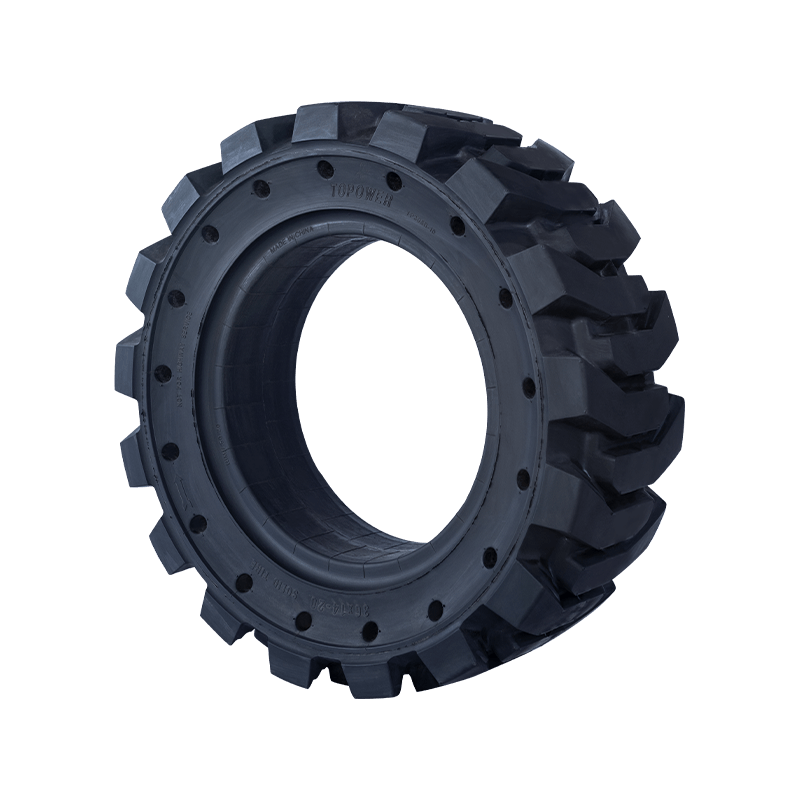
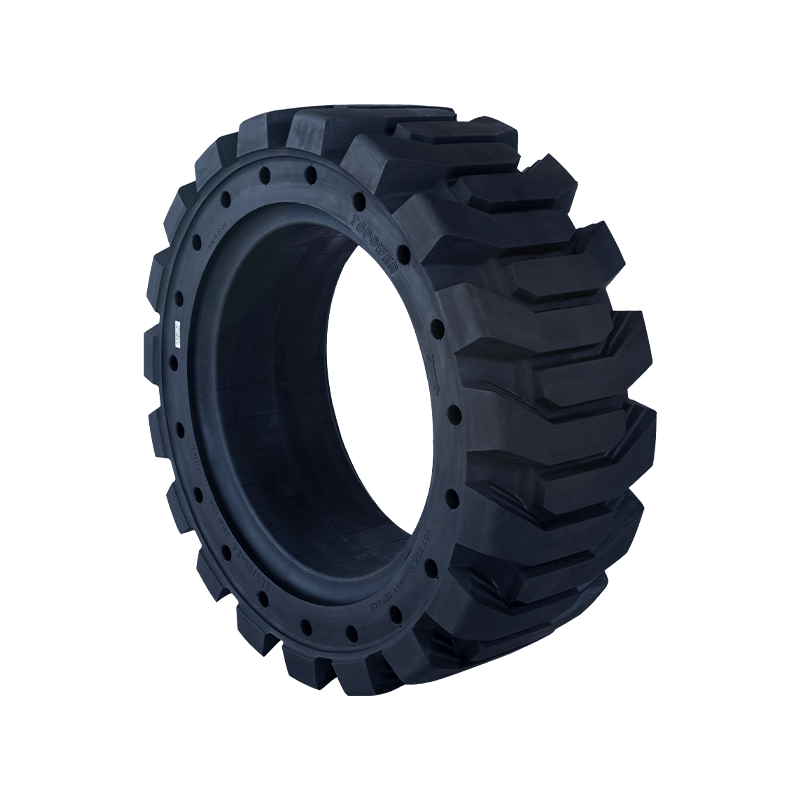
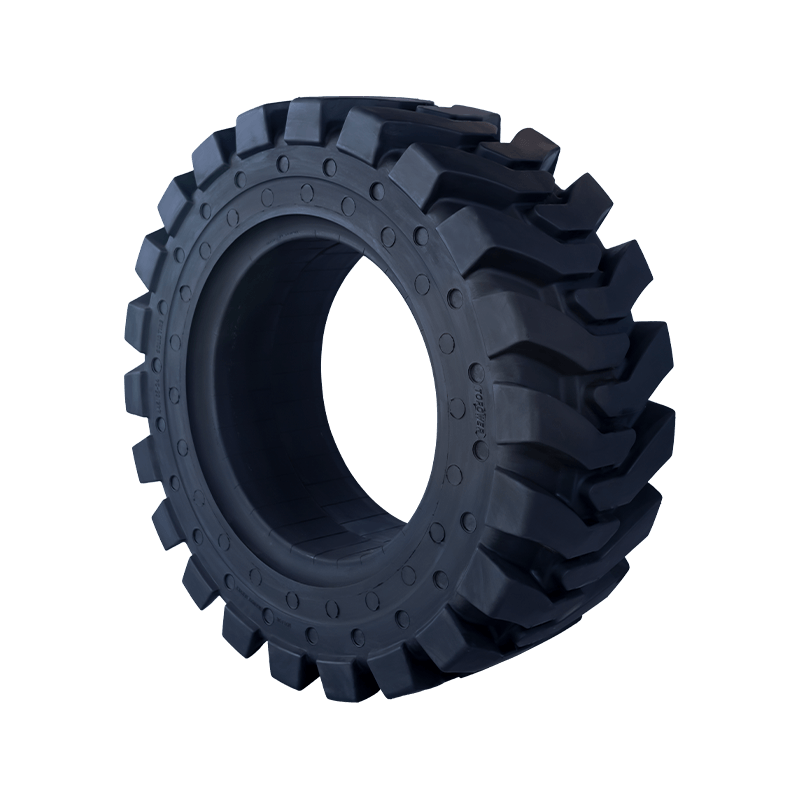
The phrase “solid forklift tire” covers several constructions, and they do not wear at the same rate. A press-on solid tire is a rubber band bonded to a steel base, used mainly on indoor electric and internal-combustion forklifts. A solid pneumatic-look tire mimics the shape of a pneumatic tire but has no air cavity; it is common on outdoor rough-terrain machines and offers a different balance of traction and heat resistance. A polyurethane solid tire can outlast rubber in clean, smooth-floor operations but may be more vulnerable to impacts.
Press-On Solid Tires Are the Baseline
Press-on tires dominate Class I and Class IV forklift applications. They are built with a stiff rubber base and a wear-resistant tread layer, and they are pressed onto a steel wheel without air pressure. In a typical warehouse, a good press-on tire delivers the 5,000-to-10,000-hour range. The weakest part of a press-on assembly is usually the bond between the rubber and the steel base, not the tread itself. Heat and overload attack that bond and can cause the tire to slip or separate long before the tread looks worn.
Solid Pneumatic-Look Tires and Polyurethane Tires Shift the Numbers
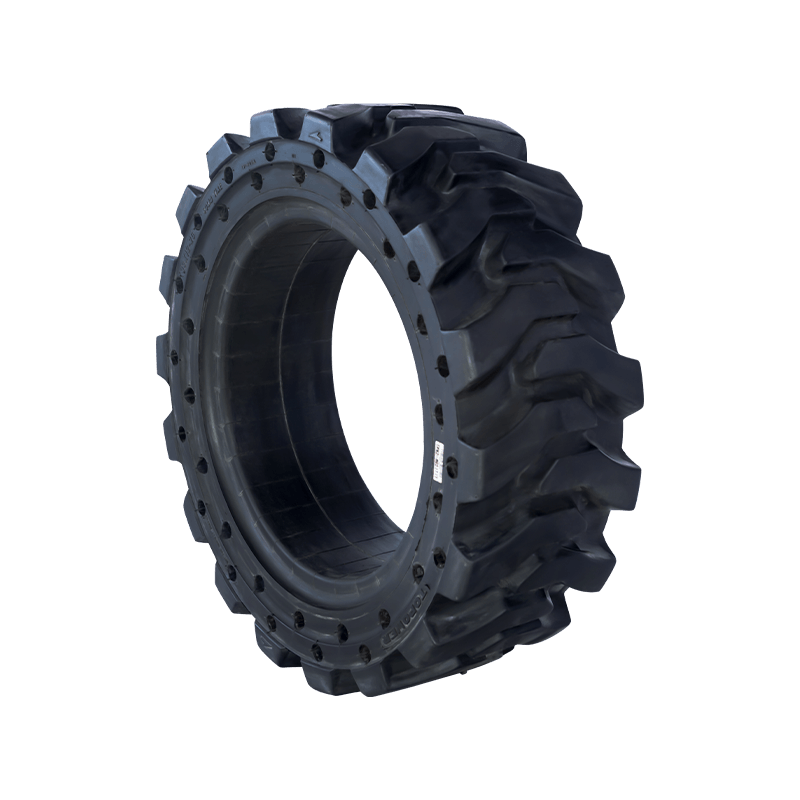
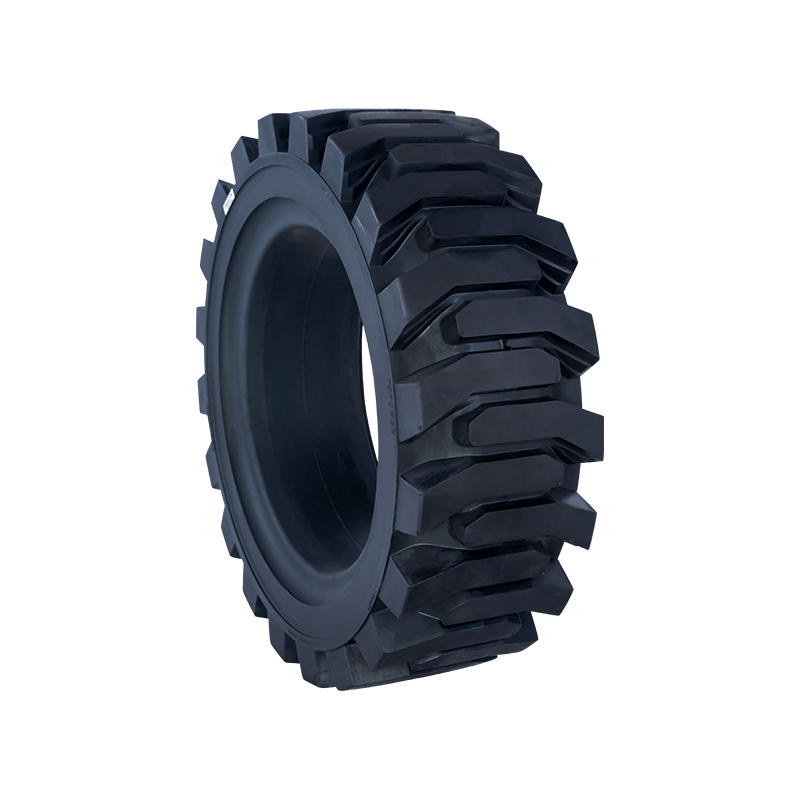
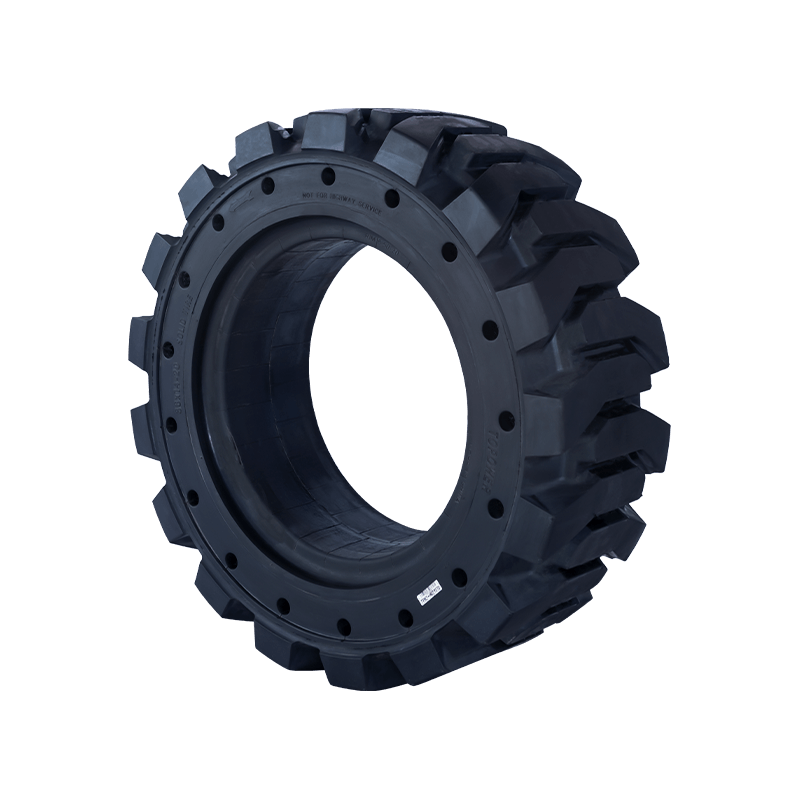
Solid pneumatic-look tires, often called solid pneumatic replacements, have deeper tread blocks and a more flexible sidewall area. They handle debris and outdoor surfaces better, but their higher rolling resistance and extra material can generate more heat. Polyurethane tires are much harder and offer low rolling resistance, which makes them attractive for electric forklifts running long distances on polished concrete; some users report twice the life of rubber in that specific environment, provided the tire is not subjected to heavy impacts or sharp-edged debris. A manufacturer’s solid forklift tire range normally groups these options by load class and drive position, so matching the construction to the job is the first step toward reaching the longer end of the service-life range.
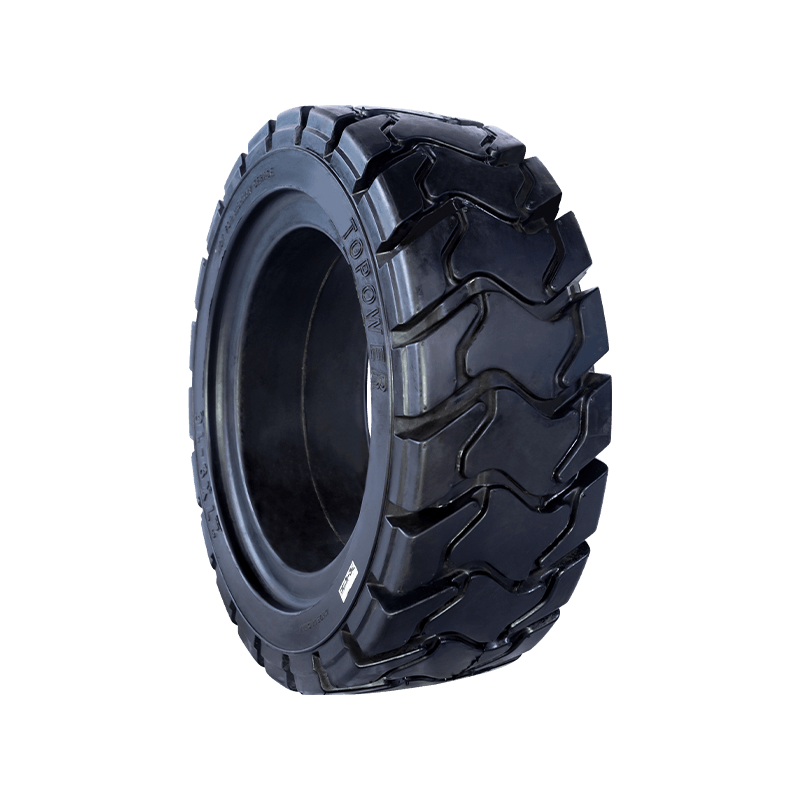
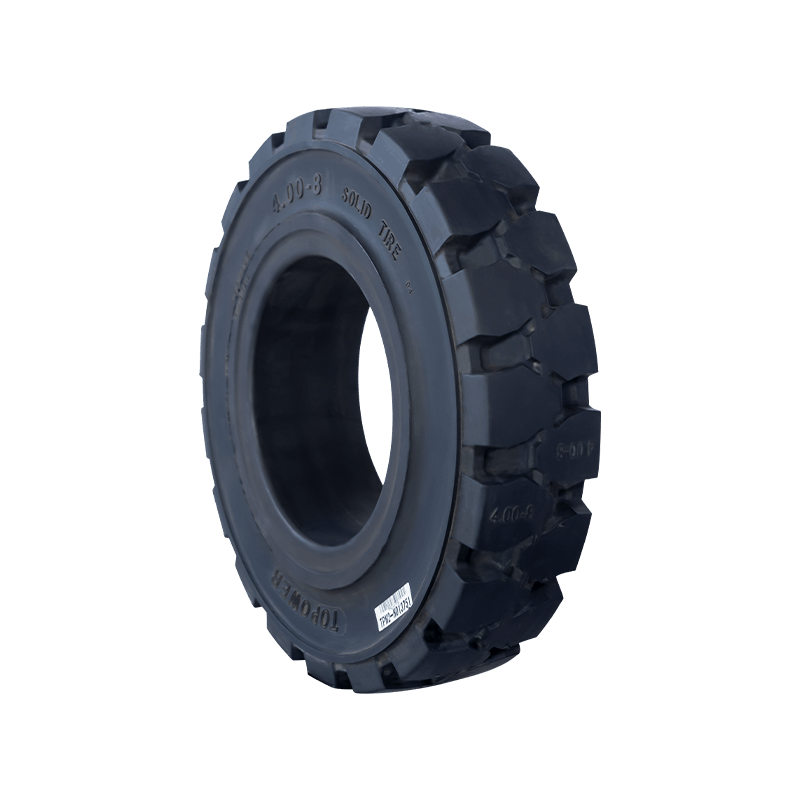 Wholesale Forklift Solid Tyre Manufacturers, FactoryAs China Forklift Solid Tyre Manufacturers and Wholesale Forklift Tyre Factory, Jiangsu Topower Tyre Co., Ltd. specialising in producing ...View Product →
Seven Factors That Decide Whether a Solid Tire Lasts 3,000 Hours or 15,000 Hours
Every early failure and every above-average result can be traced back to one or more of the following factors. Understanding them helps you set realistic expectations and defend your replacement budget with data rather than guesswork.
1. Load Utilization and Lifting Capacity
Load is the single largest influence on solid tire life. A fork truck rated for 5,000 lbs will generate more stress on its tires when it regularly carries 4,500 lbs than when it averages 3,000 lbs. Detail from how solid industrial tires perform under different load conditions shows that sustained high load accelerates heat build-up inside the rubber. Heat degrades the bond between rubber and steel and can cause the tread to separate. In practice, a forklift working consistently near maximum capacity may see tire life drop by 30 to 40 percent.
2. Operating Speed, Distance, and Duty Cycle
Speed converts mechanical work into heat. A forklift traveling 500 meters per load cycle moves more heat into its tires than one working in a tight bay. High-speed travel over long aisles, especially with a full load, is one of the fastest ways to shorten solid tire life. Duty cycle also includes the number of starts, stops, and direction changes. Frequent direction reversals scrub rubber off the contact patch in a way that steady travel does not.
3. Floor Surface and Site Conditions
Smooth, dry, clean concrete is the ideal surface for solid tires. Rough asphalt, expansion joints, potholes, gravel, and metal debris create impact loads and cutting forces that the tire was not designed to absorb. Saw-cut concrete joints, common in warehouses, act like repeated small hammers on the leading edge of the tire. Outside, sharp steel scrap or broken pallet fragments can slice through the tread compound in a single pass.
4. Temperature and Chemical Exposure
Solid tires generate internal heat from flexing, and they also absorb heat from the environment. Operating continuously in a foundry or near hot equipment pushes compound temperature beyond safe limits, softening the rubber and increasing wear. Cold storage is the opposite problem: below about 0°C, rubber hardens and becomes more brittle, so cracks can develop faster. Chemicals, oils, and solvents soften or swell certain rubber compounds. Before choosing a tire for a freezer, a chemical plant, or an outdoor yard, review the use environment requirements for industrial solid tires so that the compound matches the exposure.
5. Operator Behavior and Steering Habits
Sharp turns at speed, spinning the drive tires under load, and braking hard all grind rubber off the tread surface. Operators who turn the steering wheel while the truck is stationary — commonly called dry steering — add a scrubbing action that eats the front tire shoulders quickly. Driver training is not a soft topic; it changes tire wear by a measurable margin. Fleets that measure tire cost per hour often see a 20 to 30 percent difference between the best and worst operators on identical routes.
6. Inspection, Rotation, and Wheel Condition
Tires do not wear evenly forever. A minor alignment issue, a bent wheel, or a failing wheel bearing can turn one tire into a flat spot or create a diagonal wear pattern. Regular inspection catches these problems before a tire is destroyed. Rotating tires between drive and steer positions, when the manufacturer allows it, can level out wear. Ignoring a wheel problem is not a tire failure; it is a financial decision to let a small repair turn into a full tire replacement.
7. Tire Compound and Construction Quality
Not all solid tires are made with the same rubber chemistry. Some compounds prioritize load capacity, others prioritize cut resistance, and still others prioritize low rolling resistance. A tire built for smooth warehouse floors will wear poorly on gravel. A cut-resistant compound may feel harder and noisier indoors. The construction quality matters just as much: the thickness of the rubber layer between the tread and the steel base determines how much material is available to wear, and the quality of the rubber-to-steel bond determines whether the tire survives heat and impact. When a quoted price seems much lower than the market average, the savings often come from a thinner rubber layer or a weaker bond, both of which reduce service life.
How to Inspect a Solid Forklift Tire and Know When to Replace It
Hour meters and calendar dates are planning tools, but the tire itself is the final judge. A formal inspection at least once per month, and more often in severe applications, is the only reliable way to catch damage early. Use the following checks as a routine.
Remaining Rubber Depth Is the Primary Gauge
The common replacement rule is simple: when the tread rubber is worn down to about one-third of its original thickness, the tire should be replaced. On many solid tires, that point is visually obvious because the tread pattern fades or the sidewall indicators disappear. For press-on tires, measuring the total diameter with a caliper is more reliable than judging by eye. Compare the measured diameter against the figure stamped or printed on the tire sidewall. Once the tire has lost roughly two-thirds of its usable rubber depth, the remaining material can no longer absorb impact effectively, and the risk of damaging the wheel or the forklift axle increases.
Cuts, Chunking, and Tread Separation
Solid tires can survive small cuts, but large cuts that expose the reinforcing fabric or reach deep toward the steel base are dangerous. Chunking — when pieces of tread rubber break away, leaving a rough crater — reduces the contact area and accelerates further wear. Tread separation is the most serious issue: if a section of the tread lifts away from the tire body, the tire must be replaced immediately. A practical walk-through of the aspects of industrial solid tires that need regular inspection can help your maintenance team build a consistent weekly checklist.
Flat Spots, Vibration, and Bond Failure
A flat spot on a solid tire produces a rhythmic vibration that the operator feels through the seat and steering wheel. Flat spots are usually caused by locked-wheel stops, spinning under load, or mismatched tire diameters on the same axle. Bond failure, also called tire slippage or inner-ring separation, appears when the rubber ring rotates independently of the steel base. If the valve stem area on the wheel shifts position relative to the tire, or if a visible gap forms between the rubber and the wheel rim, the tire is no longer safe to use.
Age Limits Even for Rubber That Looks Fine
Rubber ages regardless of how many hours it works. Cracks appearing along the sidewall, around the base, or between tread blocks are signs of oxidation and hardening. On a forklift that has a low hour count but sits for long periods, age cracking may be the reason for replacement before the tread is worn. Many fleet managers set a hard rule: replace solid tires that are more than five or six years old, even if the remaining rubber depth still looks acceptable. This prevents sudden failure during a heavy lift, when the cost of downtime and potential damage far exceeds the cost of the tire.
Real-World Service Life by Application
The table below shows typical solid tire service-life ranges observed across common material-handling applications. The numbers are not guarantees; they are starting points for planning. The same tire that lasts 12,000 hours in one warehouse may last only 4,000 hours in another because of floor joints, aisle widths, and average load weights.
| Application | Floor or Site Condition | Typical Life Range | Primary Wear Mode |
|---|---|---|---|
| Warehouse / distribution center | Smooth, clean concrete | 6,000–12,000 hours | Even tread wear |
| Port container yard | Rough asphalt, gravel, uneven surfaces | 3,000–7,000 hours | Cuts, chunking, impact damage |
| Steel mill or scrap metal facility | Metal debris, heat exposure | 2,000–5,000 hours | Cutting, heat damage, separations |
| Cold storage / freezer | Smooth concrete, −20°C to −30°C | 4,000–8,000 hours | Hardening, cracking, flat spots |
| Construction and rough terrain | Mud, gravel, loose rock | 3,000–6,000 hours | Fast tread wear, sidewall cuts |
Two practical conclusions follow. First, a tire life estimate becomes useful only when it is tied to your actual floor conditions. Second, if your fleet’s solid tires are consistently dying below 4,000 hours, the cause is probably the application, not the tire brand. Fixing the cause — adding floor repairs, changing the tire compound, or improving operator technique — will do more than switching suppliers.
How to Extend Solid Forklift Tire Life Before You Even Mount the Tire
The decisions made before a tire touches a forklift determine a large share of its eventual life. Wrong sizing, wrong compound, or poor mounting can waste thousands of hours of potential service.
Match the Tire Type and Compound to the Application
Rubber compounds are engineered for different jobs. A standard smooth tread works well on clean, dry floors. A deep-tread traction pattern handles mud and gravel better but wears quickly inside a freezer. A cut-resistant compound is the right call near metal scrap, but it may ride harder than a general-purpose compound. For plants that need to keep the floor free of dark rubber marks, operations often switch to non-marking solid tire options that leave no black streaks while offering a service life close to standard rubber in the same conditions. The extra time spent reviewing the application with your tire supplier is usually repaid many times over in tire life.
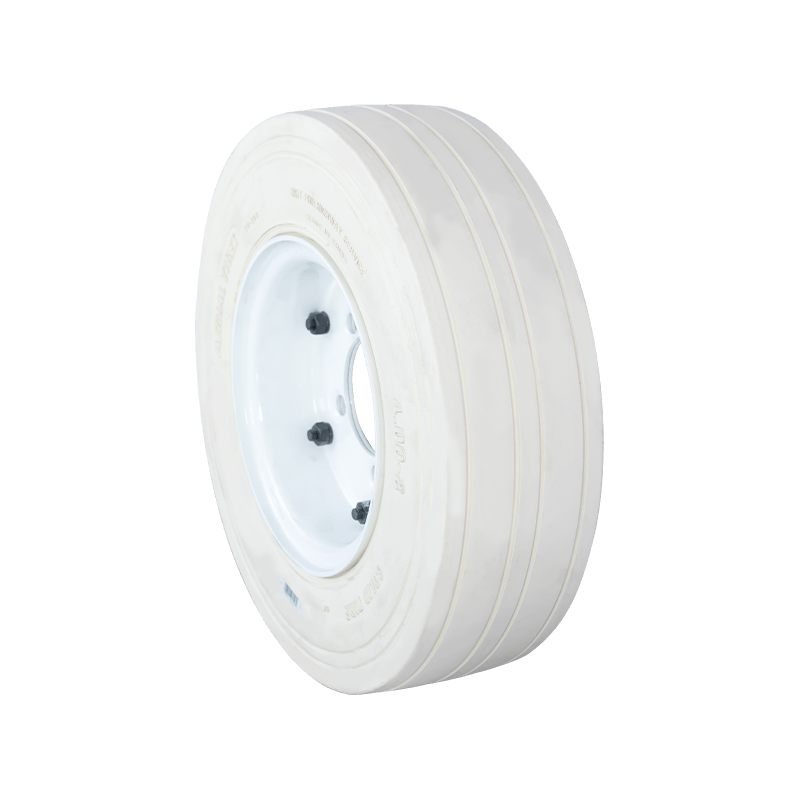 Wholesale Non-marking Solid Tyre Manufacturers, FactoryAs China Non-marking Solid Tyre Manufacturers and Non-marking Solid Tyre Factory, Jiangsu Topower Tyre Co., Ltd. supply Wholesale Non-mar...View Product →
Size the Tire to Real Weight, Not Just Nameplate Capacity
Forklifts are rated for a specific load center distance, and the actual weight carried is often lower than the maximum rating — but not always. Attachments such as sideshifters, clamps, or rotators add weight to the front axle and increase tire load even when the forks carry nothing. A truck equipped with a heavy attachment and used at full capacity can be effectively overloaded from the tire’s perspective. Check the actual axle loads, then select a tire whose load index exceeds the real dynamic load, not simply the truck model’s nominal capacity.
Pay Attention to Wheel Fit and Mounting Tolerances
Solid press-on tires require controlled interference between the tire’s inner diameter and the wheel’s outer diameter. If the fit is too loose, the tire can slip on the wheel; if it is too tight, the tire becomes difficult to mount and can be damaged during installation. Installation of a press-on solid tire should follow the manufacturer’s tolerance table, using a proper hydraulic press or a controlled inflation method, never a hammer. Clean, rust-free wheels are essential. Contaminated or corroded wheel surfaces create local stress points that lead to premature cracking at the base.
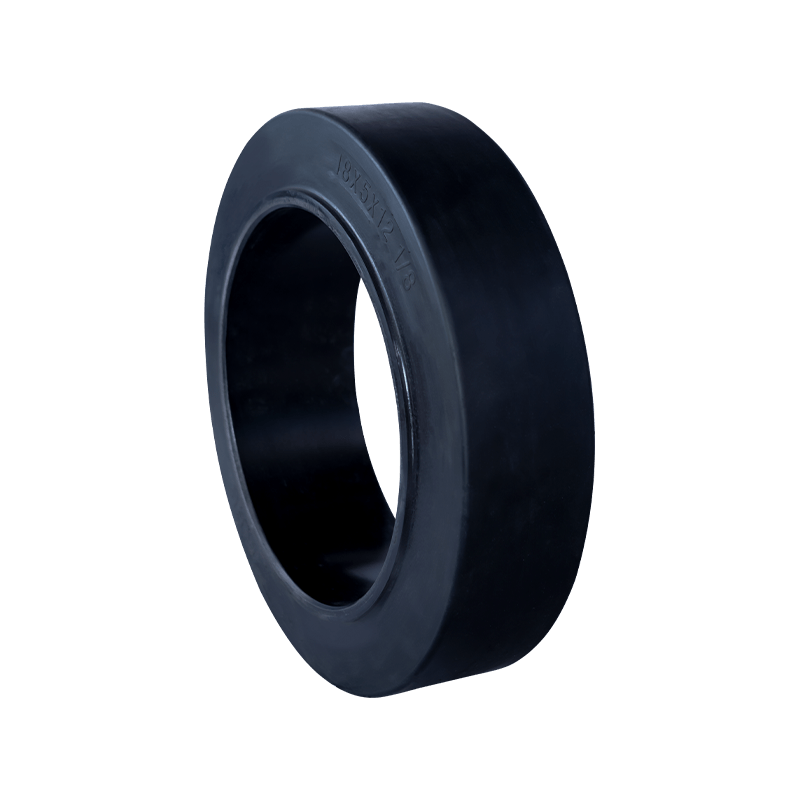 Wholesale Press-On Solid Tyre Manufacturers, FactoryAs China Press-On Solid Tyre Manufacturers and Press-On Solid Tyre Factory, Jiangsu Topower Tyre Co., Ltd. supply Wholesale Press-On Soli...View Product →
Operating Practices That Add Hours to Every Set of Tires
Once the correct tire is mounted, day-to-day operations take over. These habits consistently return measurable gains in tire life without requiring a large budget.
Operator Training: Reduce Scrubbing, Spinning, and Hard Stops
Scrubbing occurs when the front tires are turned while the truck is stationary or moving very slowly. It wears the tire shoulders into a rounded, stepped shape. Spinning the drive tires under a heavy load is equally destructive. Hard stops create flat spots and generate heat. A short training module focused exclusively on tire damage — using photos of real failed tires in your own fleet — is more effective than general driver training because operators see the direct result of their actions.
Keep Floors, Aisles, and Loading Areas Clean
A single steel bolt embedded in a warehouse aisle can destroy a solid tire in less than one full turn of the wheel. Debris that has not yet damaged a tire accelerates wear by acting as an abrasive layer between the tire and the floor. Sweeping lanes, repairing expansion joints, and controlling dust on concrete floors are low-cost tasks with a high return. A clean floor extends not only tire life but also wheel bearings and steering components.
Use a Simple Rotation and Documentation Plan
Rotating tires between the drive axle and the steer axle, where the manufacturer permits it, helps prevent uneven wear from becoming a premature failure. Documenting the installation date, hour meter reading, and tire position for each wheel gives you the data needed to evaluate both the tire brand and the application. When a tire fails early, the record will tell you whether it was a compound problem, a load problem, or an operator problem. Without records, every failure looks like a manufacturer defect — and many replacement decisions are made on emotion rather than evidence.
Replacement Timing, Budgeting, and Buying Decisions
Replacing a solid forklift tire is costly enough to deserve a plan, but delaying it too long costs more. A failed tire in the middle of a shift stops a truck, blocks an aisle, and can damage the wheel, the axle, or the floor. The right time to replace a solid tire is before it becomes an emergency.
Replace as a Set or at Least as an Axle Pair
Installing one new tire on an axle while the other remains worn creates a diameter mismatch that affects steering, traction, and drive-motor load. On a drive axle, mismatched diameters can overload the differential and cause transmission damage. The standard practice is to replace solid tires in matched pairs on the same axle, or as a complete four-tire set when the truck has significant wear on all positions. This seems wasteful in the short term but minimizes total drivetrain cost.
Compare Total Cost per Hour Rather Than Purchase Price
The price of a single tire is less important than its cost per operating hour. Divide the tire price by the expected service life in hours. If a $200 tire lasts 5,000 hours, it costs $0.040 per hour. If a $280 tire lasts 10,000 hours, it costs $0.028 per hour — 30 percent less despite a 40 percent higher purchase price. This calculation should include installation labor and downtime. When evaluating a cheaper tire, ask the supplier for the rubber thickness above the steel base and the load index. Whether you choose an economy tire or a premium one, the decision should be made with the lifetime cost on paper.
Verify Supplier Capability and Consistency
Tire life depends heavily on consistent manufacturing. A supplier that controls rubber compound, curing, and bond quality will produce a more predictable product than one competing only on price. Ask for test data, load indexes, and application references for the specific model you plan to buy. Reliable manufacturers will also tell you the limits of their product — maximum speed, maximum temperature, and acceptable floor conditions. If a supplier promises the same service life for every application, that is a red flag. The most useful conversations happen when you give the supplier a clear picture of your loads, floors, distances, and shift schedule, and they respond with a tire model and an expected life range for your specific case.
The Bottom Line: Plan for a Range, Then Verify by Inspection
The best starting assumption for most fleets is that a good solid forklift tire will last between 5,000 and 10,000 operating hours. Set your budget and replacement schedule around 7,000 to 8,000 hours, then let inspections move that number up or down. If a tire is wearing evenly and remains free of deep cuts, keep it in service toward the upper end of the range. If it shows chunking, heat cracks, or bond movement, replace it at the lower end.
Solid tires are a durable but not permanent component. Their life is a contract between the tire maker, the truck, the floor, and the operator. When all four work together, you will consistently reach the top of the range — and the rubber you do not replace is money staying in your operating budget.