 English
 русский
 Español
 عربى
عربى
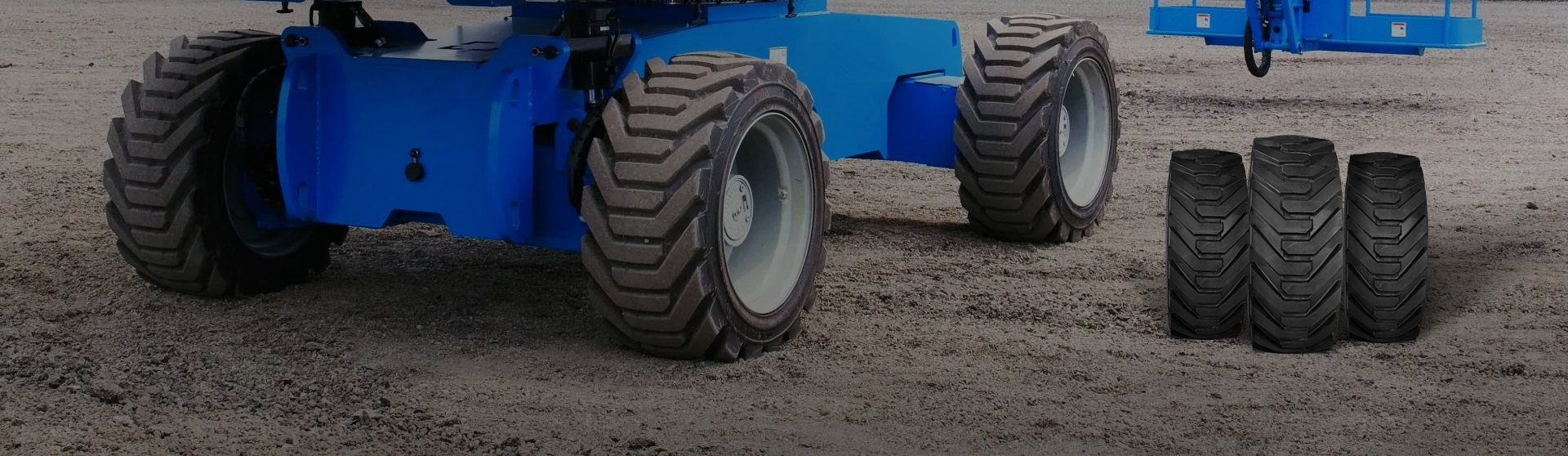

In a busy metal fabrication plant, a forklift hits a steel shard. The pneumatic tyre deflates instantly, and the truck stops until a replacement is fitted. Lost production time, labour cost, and safety risk follow. Solid tyres for forklifts exist to remove this failure mode. They do not rely on air pressure, so punctures cannot stop them.
If your operations involve rough floors, sharp debris, continuous shifts, or heavy loads, solid tyres are usually the stronger choice for forklifts. But the right type depends on your equipment, duty cycle, and floor conditions. This guide explains the main solid forklift tyre categories, how they compare with pneumatic tyres, and the selection factors that matter in practice.
What Are Solid Tyres for Forklifts?
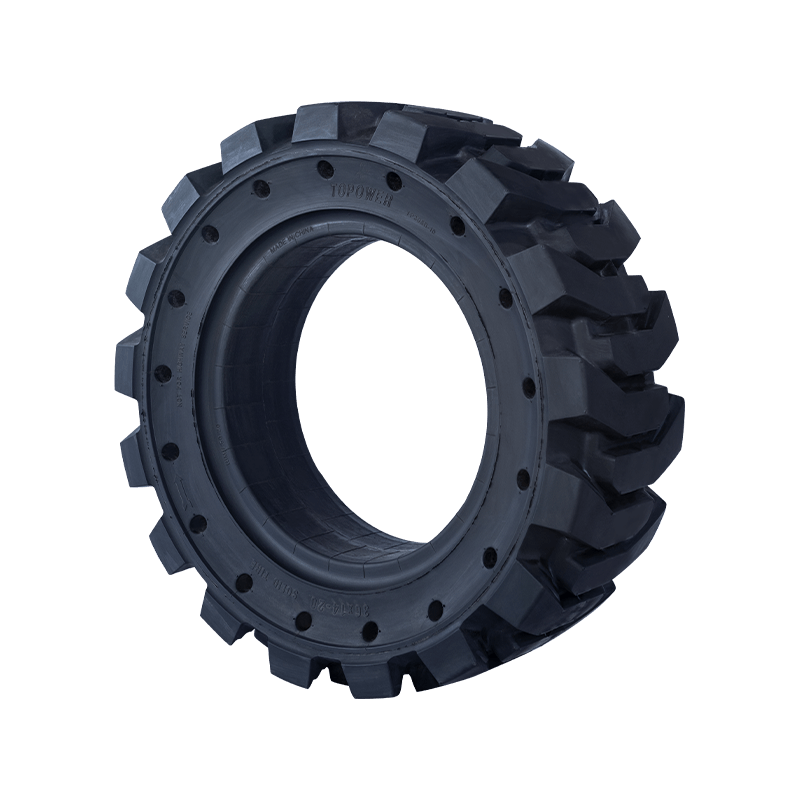
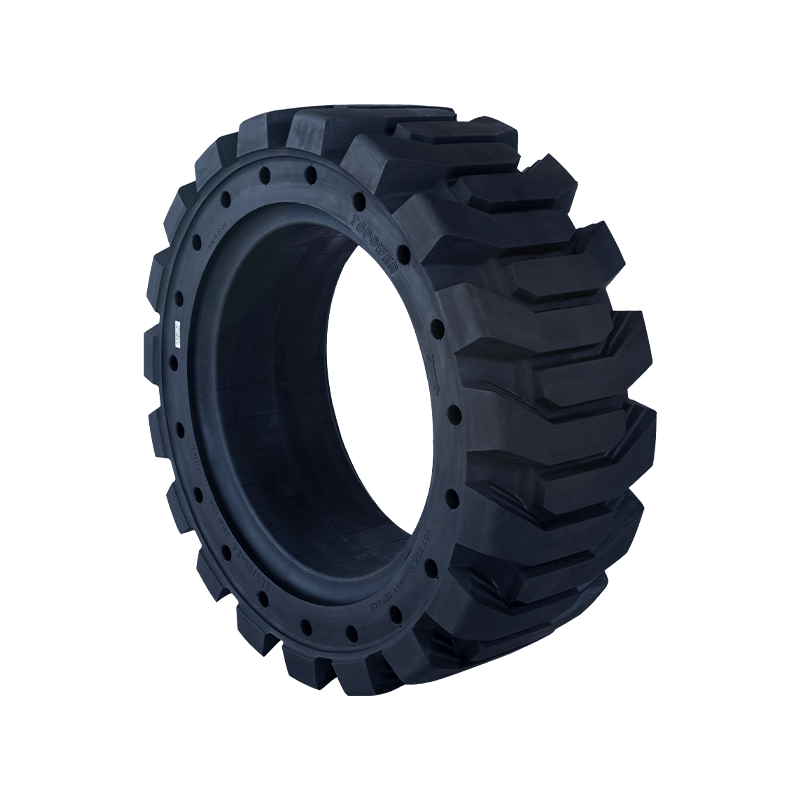
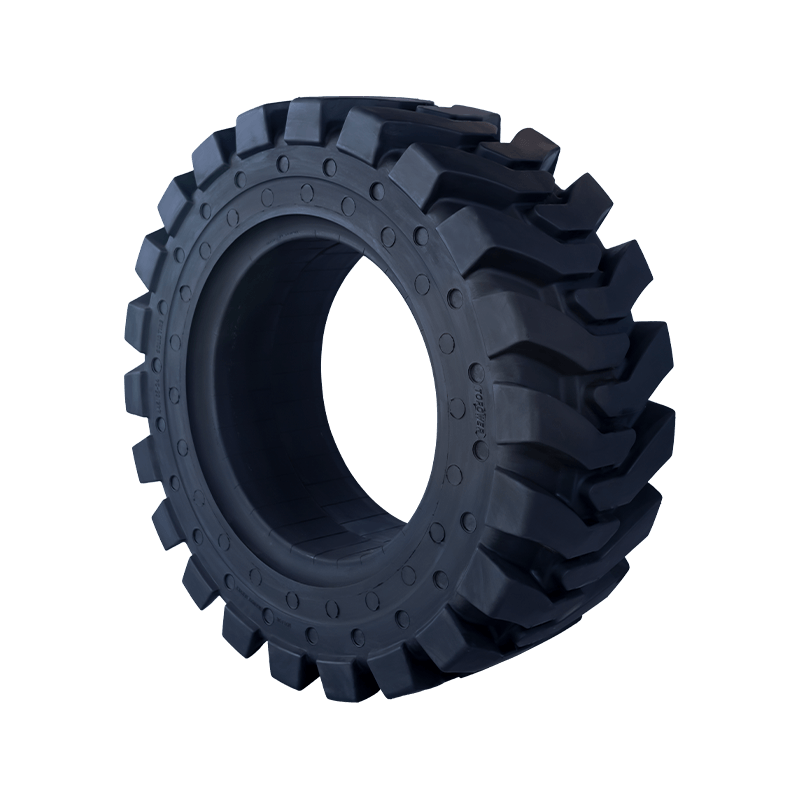
Solid tyres are manufactured from a solid rubber or polyurethane compound. There is no air chamber inside. The entire load is transferred through the tyre body, so the tyre keeps its shape under pressure. Unlike pneumatic tyres, a solid tyre cannot blow out when it is punctured. It also provides excellent sidewall stability, which helps when a forklift lifts heavy loads at height.
The trade-off is ride comfort. Solid tyres have less shock absorption than pneumatic tyres, and they build up heat faster when driven at high speed for long distances. This is why the choice between solid and pneumatic is not always obvious; it depends on your speed limits and the surface you operate on.
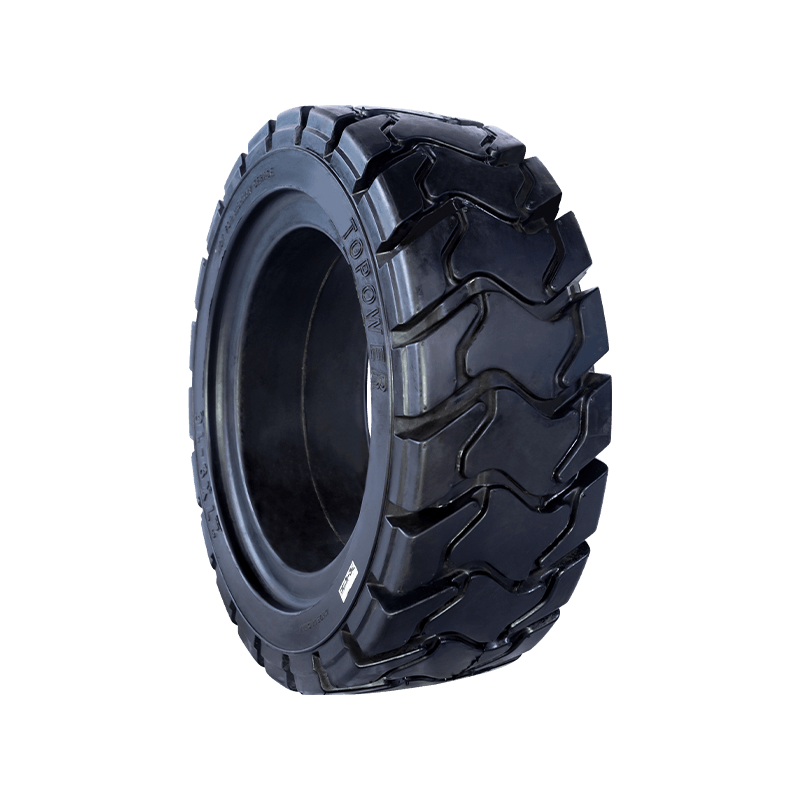
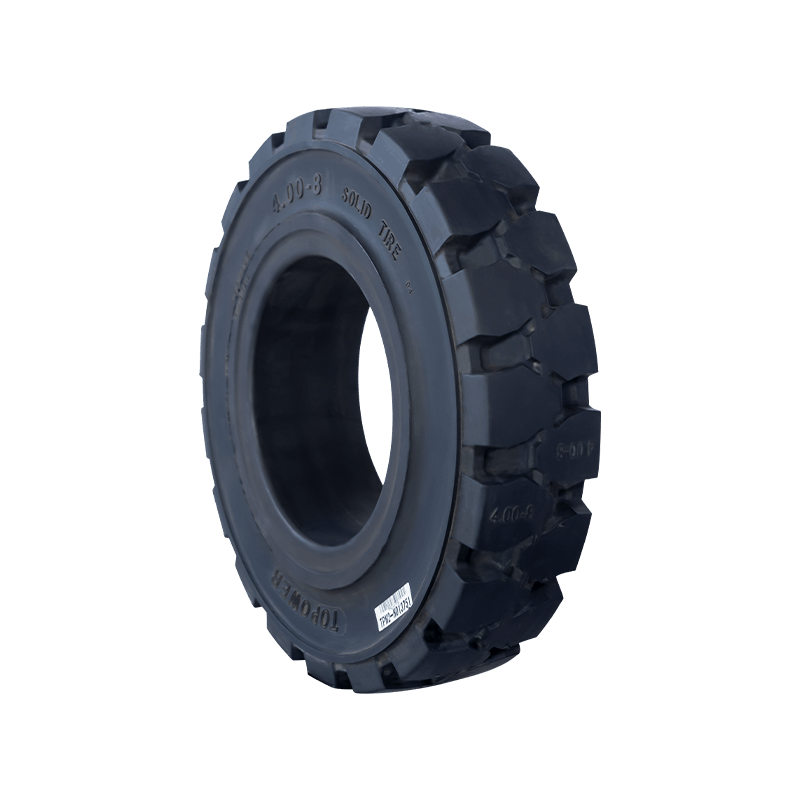 Forklift Solid Tyre for Pneumatic Rims with High Load CapacityThis solid tyre is mounted on standard pneumatic rims and offers strong load-bearing, cut resistance, and maintenance-free operation. It suits harsh conditions and can be ordered in black or non-marking versions.View Product →
Main Types of Solid Forklift Tyres
Forklift solid tyres are not one single product. They come in several constructions and material formulations. Here are the categories most often seen in industrial service.
Press-On Solid Tyres
Press-on solid tyres are made with a steel band or metal base that is pressed onto the wheel rim using an interference fit. The tyre cannot slide off because the press fit creates a permanent bond. They are commonly used in heavy-duty applications where loads are high and travel speeds are low, such as steel mills and ports. Press-on tyres are easy to replace when the tread wears out, because the rim is reused.
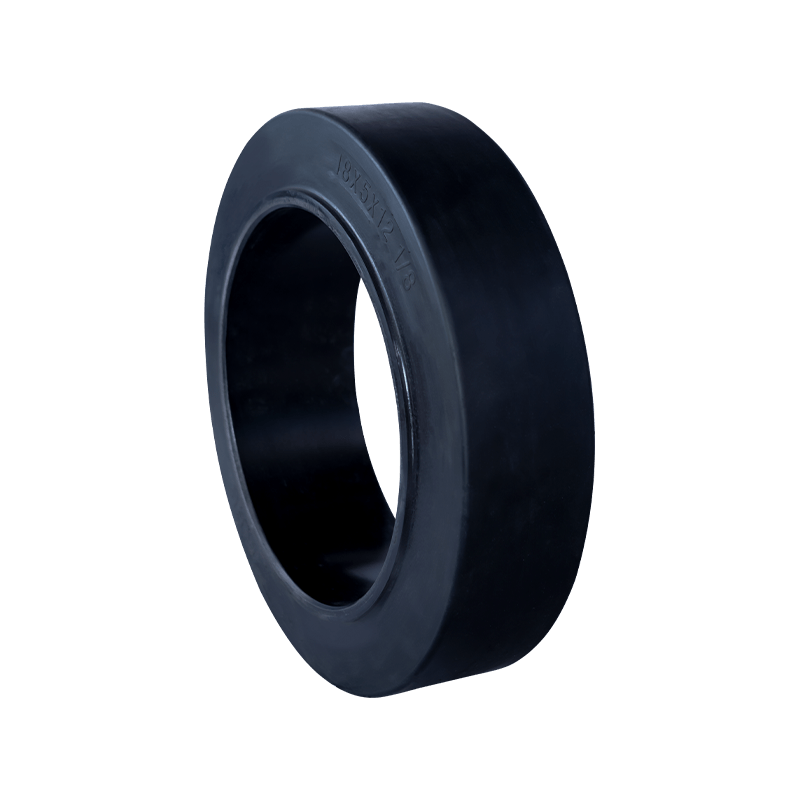 Press-On Solid Tyre with Reusable Steel Rim for Heavy DutyDesigned for high-load, low-speed applications, this tyre presses onto the rim and allows the steel band to be reused, reducing cost. It delivers good steering and wear resistance in demanding environments.View Product →
Cure-On Solid Tyres
Cure-on solid tyres are vulcanised directly onto the rim. This bonding method gives the tyre a secure attachment and allows a full width of rubber to flex. They are often used on standard pneumatic rims, which makes them convenient for mixed fleets. Cure-on tyres offer a smooth ride on rough floors and are a popular choice for warehouses and general material handling.
Polyurethane Solid Tyres
Polyurethane solid tyres are made from a cast polyurethane compound. They offer lower rolling resistance, better energy efficiency, and excellent resistance to abrasion and chemicals. Because polyurethane is softer than rubber, it reduces noise and floor damage. However, polyurethane tyres typically carry lower maximum loads than rubber solid tyres, so they are selected for lighter-duty equipment or indoor applications with clean floor requirements.
Non-Marking Solid Tyres
Non-marking solid tyres are made from a light-coloured compound that does not leave black rubber scuffs on concrete or sealed floors. They are essential in warehouses, logistics centres, food production, and any environment where floor appearance or hygiene matters. Non-marking tyres are usually available in both rubber and polyurethane versions.
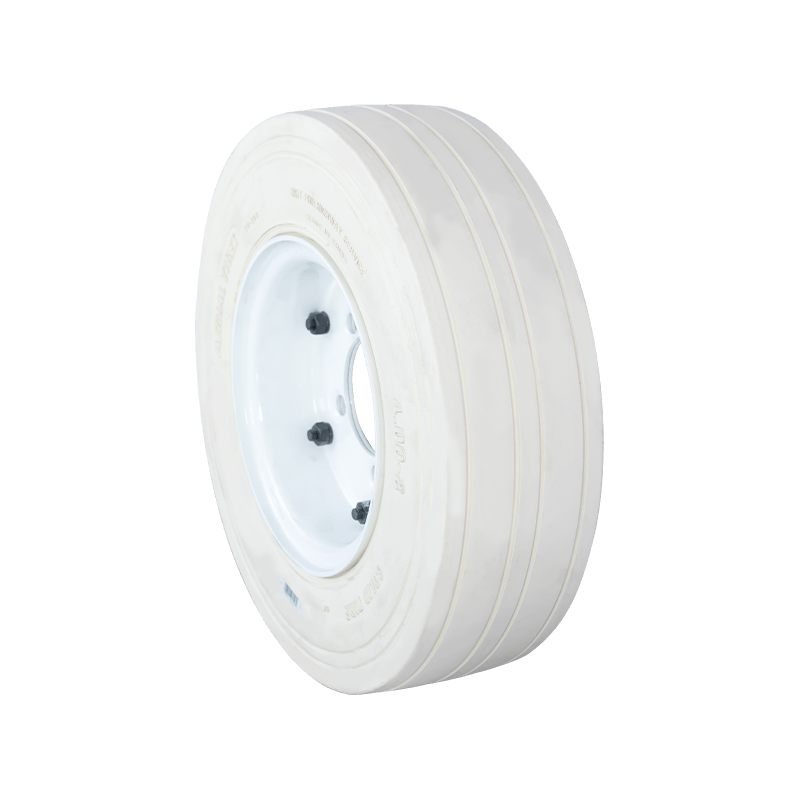 Non-Marking Solid Tyre for Clean Indoor EnvironmentsThis light-coloured solid tyre is ideal for warehouses and food production where floor hygiene matters. It leaves no black scuffs and is available in bonded, press-fit, and rim-based versions for versatile use.View Product →
Solid vs Pneumatic: Key Performance Comparison
To make the right decision, it helps to compare solid and pneumatic tyres on the factors that drive operational cost. The table below summarizes the key differences.
| Factor | Solid Tyre | Pneumatic Tyre |
|---|---|---|
| Puncture resistance | High | Low |
| Load capacity | High at low speed | Medium, depends on size |
| Heat buildup | Higher, limits sustained speed | Lower |
| Ride comfort | Lower, stiffer | Higher, air cushion effect |
| Floor damage | Can mark unless non-marking | Less direct marking, but puncture debris can cause damage |
| Speed limit | Typically 25-30 km/h or lower | Higher |
| Maintenance | No air pressure checks | Regular pressure checks and puncture repairs |
| Tyre life | Longer in abrasive, contaminated floors | Shorter in rough service |
In a continuous-use warehouse with clean smooth concrete, non-marking solid tyres may be the best balance. In an outdoor yard with uneven surfaces and long runs, pneumatic tyres may be more suitable. The right answer requires analysing your duty cycle, not just the initial cost.
How to Choose the Right Solid Tyre for Your Forklift
Selecting a solid forklift tyre involves more than checking the size. You must evaluate several operating parameters. Here is a practical approach:
- Determine the maximum load per axle and the tyre load rating. Pay attention to the load capacity of each tyre at the actual travel speed.
- Assess the floor and ground conditions: concrete, interlocking tiles, steel plates, gravel, or soil. Sharp debris and abrasive surfaces demand robust rubber compounds.
- Estimate the duty cycle: how many hours per shift, average speed, distance travelled, and number of lifts per hour.
- Check the rim and wheel compatibility. Press-on and cure-on tyres require different rim types. Do not mix them.
- Decide whether you need non-marking, anti-static, oil-resistant, or other special properties.
- Compare the total cost of ownership: purchase price, installation cost, expected service life, and downtime risks.
For vehicles that carry very heavy loads, we recommend reviewing the technical explanation on how industrial solid tyres achieve super-strong load-bearing capacity.
Installation and Maintenance Considerations
Installing solid tyres is a controlled process. Press-on tyres require a hydraulic press with the correct pressure and a conical guide to align the tyre with the rim. Cure-on tyres are fitted during manufacturing and do not normally need field assembly. Never use heat or force that exceeds the rim limits.
Once installed, inspect solid tyres regularly for tread wear, cracks, chunking, and heat damage. Check the tyre base for looseness. Measure the contact footprint. A solid tyre should maintain full contact with the ground when under load. Uneven wear indicates a misaligned axle or under-specified load.
Keep in mind that solid tyres can overheat on long high-speed runs. If your forklift travels long distances between shifts, consider a tyre with a lower heat-buildup formulation or switch to pneumatic tyres for that application.
Common Forklift Applications for Solid Tyres
Solid tyres are used across many industries. Common examples include:
- Foundries and metalworking plants where hot metal and sharp debris would deflate pneumatic tyres.
- Recycling facilities where metal scraps are concentrated on the floor.
- Chemical plants and food processing areas where punctures are both a safety and hygiene risk.
- Ports and cargo terminals with heavy loads and continuous operation.
- Warehouse floors that require non-marking tyres to keep surfaces clean.
Why Topower Tyre for Solid Forklift Tyres?
Jiangsu Topower Tyre Co., Ltd. specialises in industrial and engineering tyres, including forklift solid tyres. The company operates a 120,000 square metre facility and maintains its own research, lean production, and precision testing capabilities. With more than 60 patents and cooperation with universities and research institutes, Topower designs solid tyres for demanding industrial applications.
Located in Funing County, Yancheng City, Jiangsu Province, Topower serves equipment manufacturers and replacement markets worldwide. For fleets considering a switch to solid tyres, Topower offers a range of sizes and constructions for forklift, skid-steer loader, sweeper, and special vehicle applications.