 English
 русский
 Español
 عربى
عربى
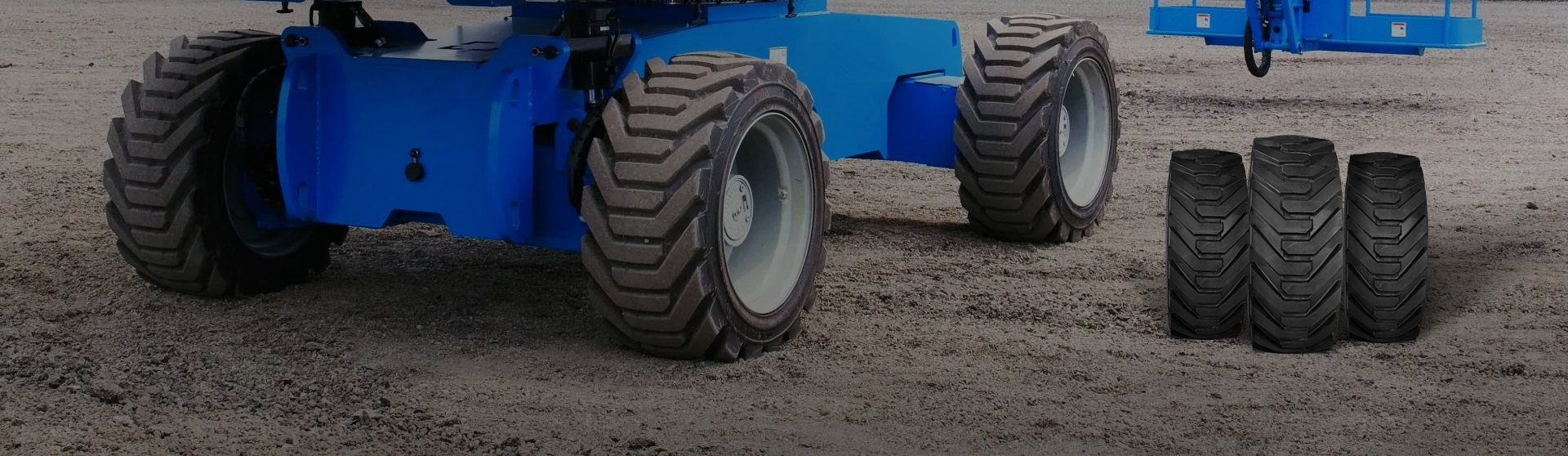

Choosing between rubber and polyurethane tires for your forklift is not a matter of personal preference it is an operational decision with measurable consequences for productivity, maintenance costs, and workplace safety. For most indoor electric forklifts operating on smooth, clean concrete floors, polyurethane tires are the superior choice. For propane-powered or internal combustion (IC) forklifts used in mixed or outdoor environments, rubber tires remain the practical standard.
That said, the right answer depends on a combination of factors: the type of forklift you operate, the surfaces you work on, the speed and duration of your shifts, the loads you carry, and even how clean you need to keep your facility floors. Both materials have undergone significant engineering advances in recent years, and neither is universally superior.
This guide breaks down every major performance dimension from rolling resistance and traction to durability, heat buildup, and total cost of ownership so you can make an informed, application-specific decision for your fleet.
Understanding the Materials: What Makes Rubber and PU Tires Different
Before comparing performance, it helps to understand what each material actually is and how it behaves under mechanical stress.
Rubber forklift tires are typically made from either natural rubber or synthetic rubber compounds, often blended with carbon black, sulfur, and other reinforcing agents through a vulcanization process. The result is a material that is relatively soft, highly elastic, and capable of deforming to absorb shock before returning to its original shape. This elasticity is what gives rubber its excellent grip on uneven or wet surfaces and its ability to cushion operators from vibration.
Polyurethane tires, on the other hand, are produced from a polymer formed by reacting a polyol with a diisocyanate. The chemistry can be tuned to achieve a wide range of hardness values, but forklift PU tires are generally formulated to be significantly harder than rubber. The material is dense, dimensionally stable, and exhibits low internal friction properties that translate directly into reduced rolling resistance and extended wear life, but at the cost of shock absorption.
These fundamental material differences cascade into every performance characteristic discussed below. Understanding the "why" behind each comparison makes it easier to apply the right tire to the right application rather than simply following a rule of thumb.
Rolling Resistance and Energy Efficiency: Which Tire Saves More Power?
Rolling resistance is the force a tire must overcome to roll forward. Every unit of energy spent fighting rolling resistance is energy taken away from lifting capacity, travel speed, and battery life. For electric forklifts Class II order pickers and Class III electric pallet jacks this is not a minor concern. It directly affects how many hours of productive work you get per charge cycle.
Polyurethane tires have measurably lower rolling resistance than rubber tires. Because PU is harder and deforms less under load, less energy is lost to internal heat generation as the tire flexes. Studies in material handling environments have shown that switching from rubber to polyurethane on electric pallet jacks can reduce energy consumption by 10–20%, depending on load weight and floor conditions. Over the course of a full workday, this can translate to one or more additional hours of operation per charge, reducing the number of battery swap cycles and extending overall battery service life.
Some manufacturers do produce low-rolling-resistance rubber tire formulations specifically designed for electric forklifts. These blends use softer, more pliable compounds and carefully engineered tread profiles to reduce hysteresis losses. However, even the best low-resistance rubber tires typically fall short of standard PU tires in this metric. The fundamental physics of a softer, more elastic material working against it.
For propane and diesel IC forklifts, rolling resistance matters less because the engine's power output is far greater relative to the losses involved. Here, rubber's superior traction, heat dissipation, and multi-surface performance are more valuable trade-offs.
| Tire Type | Rolling Resistance | Energy Efficiency | Recommended Application |
|---|---|---|---|
| Polyurethane Tires | Low | High extends battery life | Class II & III Electric Forklifts |
| Rubber Tires | Medium | Moderate better stability | Propane & IC Forklifts |
Load Capacity and Ride Comfort: Does Hardness Always Mean Better Performance?
This is one of the most misunderstood trade-offs in forklift tire selection. Hardness, measured on the Shore A or Shore D durometer scale, is not a simple measure of quality it is a material property that creates both advantages and disadvantages simultaneously.
Load Capacity: PU Wins on Numbers
Polyurethane tires are typically formulated to a Shore A hardness of 80–95, compared to rubber tires which commonly fall in the 60–80 range. This greater rigidity means PU tires deform far less under load, allowing them to carry significantly greater weight without the risk of excessive deflection, tire distortion, or heat-induced fatigue. In practical terms, a PU tire can often support load capacities roughly twice that of a comparably sized rubber tire. For high-density warehousing applications where forklifts regularly carry maximum-rated loads across multiple shifts, this is a compelling advantage.
The minimal deflection under load also helps maintain consistent fork height and stacking precision, which matters in narrow-aisle and high-bay racking environments where millimeter-level accuracy is required.
Operator Comfort: Rubber Wins on Feel
The same hardness that makes PU tires so capable under load makes them punishing over imperfect surfaces. Floor joints, pallet deck boards, small debris, and minor surface variations that a rubber-tired forklift absorbs quietly become noticeable jolts on a PU-tired machine. Over the course of an 8–10 hour shift, this vibration and shock transmission contributes to operator fatigue, reduced focus, and in extreme cases whole-body vibration (WBV) exposure, which is a recognized occupational health concern regulated by bodies including the EU Physical Agents Directive.
Rubber tires act as natural vibration dampers. Their elastic structure absorbs shock energy and dissipates it as minor heat rather than transmitting it up through the forklift frame and into the operator's seat. For operators spending long hours on a sit-down counterbalanced forklift or a walkie rider, this difference in ride quality is tangible and directly affects productivity and well-being.
This is why rubber tires remain dominant on Class I sit-down counterbalanced forklifts and on any machine used for extended travel distances across varied floor conditions.
| Tire Type | Hardness | Load Capacity | Ride Comfort |
|---|---|---|---|
| Polyurethane Tires | High | Excellent | Fair |
| Rubber Tires | Medium | Good | Excellent |
Traction Comparison: Which Tire Grips Better and When?
Traction the ability of a tire to grip the floor surface without slipping is a critical safety consideration for any forklift, but particularly for machines that carry heavy loads, operate at higher speeds, or make frequent directional changes. A tire that loses grip during a loaded turn or emergency stop is not just inefficient; it is dangerous.
Traction is a function of several variables: the coefficient of friction between the tire compound and the floor, the size of the contact patch (the area of tire actually touching the ground), and how well the tire conforms to surface irregularities. Rubber and PU perform very differently across these variables.
Dry, Smooth Floors: Both Tires Perform Well
On clean, dry concrete the ideal operating environment for both tire types the difference in traction is modest. PU tires, despite their hardness, maintain a reasonable contact patch due to their load-induced deflection, and their high-friction compound performs reliably. Rubber tires perform equally well, and their slightly larger contact patch on a given load provides marginally better distribution of braking and cornering forces. For practical purposes, either tire is acceptable on dry smooth floors.
Wet, Contaminated, or Coated Floors: Rubber Has a Clear Advantage
The gap widens significantly when floors are wet, oily, dusty, or coated. Rubber's elasticity allows it to deform slightly around microscopic surface irregularities, creating a mechanical interlock that supplements chemical adhesion. This is why rubber continues to grip effectively on wet concrete, painted floors, or surfaces with light contamination conditions common in loading docks, cold storage facilities, and manufacturing plants.
PU tires, being harder and less deformable, rely more heavily on surface-to-surface friction, which degrades sharply when a lubricating layer of water or oil is present. On wet floors, rubber tires can provide 30–40% more stopping force than PU tires of comparable size, a figure significant enough to affect forklift safety certification decisions at some facilities.
Siped PU Tires: A Partial Solution
Some PU tire manufacturers address this limitation through siping cutting fine angular grooves or slits into the tire tread. These sipes create additional leading and trailing edges on the contact patch, improving the tire's ability to channel contaminants and flex slightly on slippery surfaces. Siped PU tires do perform measurably better than non-siped versions on wet floors, but they still do not equal rubber's wet-weather traction. They represent a practical compromise for facilities where occasional floor moisture is unavoidable but the other benefits of PU (energy efficiency, long wear life, non-marking) are too valuable to abandon.
| Surface Type | Polyurethane Tires | Rubber Tires |
|---|---|---|
| Dry, Smooth Floor | Excellent | Excellent |
| Wet or Slippery Floor | Fair | Excellent |
| Rough or Uneven Surface | Fair | Good |
Durability, Wear Resistance, and Chemical Compatibility
For fleet managers and procurement teams, tire longevity translates directly into operating costs. A tire that lasts twice as long at 1.5 times the price is a better investment but only if it is used in an environment where its durability advantage can actually be realized.
Wear Life: PU Significantly Outperforms Rubber Indoors
On clean, smooth, hard surfaces such as finished concrete warehouse floors, polyurethane tires routinely last three to four times longer than comparable rubber tires. The primary reason is PU's exceptional abrasion resistance the material's dense polymer chains resist being worn away by the shear forces generated during acceleration, braking, and turning. Field reports from distribution centers operating high-cycle electric pallet jacks consistently describe PU tire sets lasting 12–18 months under continuous multi-shift operation, where rubber sets might need replacing every 4–6 months under the same conditions.
This advantage evaporates and can even reverse in demanding outdoor or impact-heavy environments. Repeated heavy impacts, rough surface textures, and debris embed themselves differently in PU than in rubber. While rubber absorbs and releases minor impacts elastically, PU can develop micro-cracks at stress concentration points, which propagate over time into chunking or spalling pieces of the tire body breaking away suddenly. This type of catastrophic wear is rare with rubber under the same conditions.
Cut and Tear Resistance: Another Win for PU on Clean Floors
Polyurethane's molecular structure gives it superior resistance to cutting and tearing compared to rubber. In environments where the floor may contain occasional metal shavings, small fasteners, or plastic strapping remnants common in manufacturing and packaging facilities PU tires are less likely to sustain surface damage that compromises their structural integrity. Rubber, being softer, is more vulnerable to being cut by sharp objects, though its elasticity means it often tolerates minor cuts without catastrophic failure.
Chemical Resistance: Know Your Environment
Both materials have specific chemical vulnerabilities that must be considered in industrial environments. Polyurethane generally handles dilute acids, alkalis, and many industrial lubricants well. However, strong organic solvents including methylene chloride, methyl ethyl ketone (MEK), and concentrated acids can degrade PU significantly, causing swelling, softening, or surface breakdown. Facilities that work with these chemicals should consult the tire manufacturer's chemical compatibility chart before specifying PU tires.
Rubber tires, depending on the specific compound formulation, can be vulnerable to petroleum-based oils and certain solvents as well, but they tend to degrade more slowly and predictably than PU when exposed to incompatible chemicals. In food and beverage processing environments where cleaning agents containing caustic soda or food-grade sanitizers are regularly applied to floors, verifying chemical compatibility for both tire types is an essential step in the specification process.
| Performance Dimension | Polyurethane Tires | Rubber Tires |
|---|---|---|
| Abrasion Resistance | High | Medium |
| Tear Resistance | High | Medium |
| Cut Resistance | High | Medium |
| Shock Absorption | Low | High |
Speed Capability and Heat Buildup: Why Operating Tempo Matters
Heat is one of the least visible but most destructive forces acting on a solid forklift tire. Every time a tire flexes under load which happens continuously as the tire rotates some of the deformation energy is not recovered elastically but is instead converted into heat within the tire body. This process is called hysteresis, and its severity depends on both the material's viscoelastic properties and the rate at which the tire is being flexed in other words, how fast the forklift is traveling.
Polyurethane tires have limited capacity to dissipate internally generated heat. At the low travel speeds typical of Class III walkie-type equipment (generally under 6 km/h), this is not a problem heat generation is modest and what is produced can radiate away from the tire surface. However, as travel speed increases, heat generation rises nonlinearly. Sustained high-speed operation on a PU-tired machine for example, a reach truck covering long warehouse aisles repeatedly at 10–12 km/h with a full load can cause the tire's internal temperature to rise to the point where the polyurethane begins to soften, lose structural integrity, or fail suddenly through chunking or delamination from the wheel hub.
Rubber tires, by comparison, have better thermal conductivity and greater tolerance for repeated thermal cycling. Their more open molecular structure allows heat to migrate from the interior toward the surface more effectively, where it can be convected away by airflow. This makes rubber the standard material for faster-moving IC and propane forklifts, which regularly travel at 15–20 km/h with loads. Most rubber tire manufacturers specify maximum continuous operating speeds for their products; PU manufacturers do the same, and those limits are consistently lower for comparable tire sizes.
The practical implication is straightforward: if your application involves sustained travel speeds above 8–10 km/h, or long continuous operating cycles without rest intervals, rubber tires are the safer and more reliable choice. PU tires are optimized for stop-and-go duty cycles at moderate speeds in controlled indoor environments.
Operating Environment and Floor Conditions: Matching the Tire to the Space
No single performance attribute matters more than matching the tire to its actual working environment. A tire that is excellent in the wrong setting will underperform and may create safety risks, while the same tire in its ideal application will reliably exceed expectations.
Indoor Controlled Environments: PU Is the Default Choice
Smooth, finished concrete floors in temperature-controlled warehouses and distribution centers represent the ideal operating environment for polyurethane tires. The floor provides consistent, predictable grip. Contaminants are managed through regular cleaning schedules. Temperatures are stable enough that tire compound properties remain consistent. Under these conditions, PU delivers maximum benefit: long wear life, minimal rolling resistance, and low maintenance frequency.
The non-marking characteristic of PU tires adds further value in these settings. Because polyurethane formulations do not include the carbon black pigments used in most rubber compounds, they do not leave black scuff marks on floor surfaces during tight turns or hard braking. In facilities with epoxy-coated floors or polished concrete, the absence of tire marks reduces cleaning labor and protects the floor coating's longevity a factor that facility managers in pharmaceutical, food processing, and electronics manufacturing regularly cite as a key selection criterion.
Cleanrooms, Pharmaceutical, and Food Processing Facilities
Beyond non-marking performance, PU tires offer a contamination control advantage in highly regulated environments. Most PU formulations are free from the chemical additives sulfur compounds, accelerators, antioxidants used in rubber vulcanization processes, some of which can off-gas or transfer to surfaces. In ISO-classified cleanrooms or FDA-regulated food production areas, this material purity reduces the risk of contamination events that can trigger costly recalls or regulatory findings.
Non-marking rubber tires do exist and are used in these environments when PU's hardness makes it unsuitable for example, on uneven tiled floors or surfaces with frequent wet wash-downs. These special formulations use light-colored rubber compounds without carbon black, providing a middle ground between PU's cleanliness and rubber's grip.
Outdoor, Mixed-Use, and Rough Surface Applications
For any application that takes the forklift outside, across yard surfaces, loading dock ramps, asphalt, gravel, or compacted dirt, rubber tires are the only practical choice. PU's low shock absorption means it transmits the forces generated by surface irregularities directly to the wheel hub, drive train components, and operator seat accelerating wear on suspension components and increasing operator fatigue to unacceptable levels.
Rubber's compliance with surface texture also provides the grip needed on loose, wet, or unpredictable outdoor surfaces that PU cannot match. The broader, softer contact patch distributes weight more effectively, reducing the risk of sinking into soft substrates or breaking through surface crusts on yard aprons.
| Work Environment | Recommended Tire | Reason |
|---|---|---|
| Smooth Indoor Concrete Floor | Polyurethane | Low rolling resistance, non-marking |
| Outdoor or Rough Surfaces | Rubber | Durable, high traction |
| Cleanroom or Pharmaceutical Facility | Polyurethane | No color additives, contamination control |
Temperature Sensitivity: Cold Storage, Freezer Warehouses, and High-Heat Environments
Temperature is a variable that rarely appears in basic tire comparison guides but can fundamentally change the performance of both rubber and polyurethane compounds. If your forklift operates in cold storage, a blast freezer, a foundry, or any environment with extreme ambient temperatures, this factor deserves careful attention.
Rubber compounds are generally more tolerant of low temperatures. Standard rubber retains adequate flexibility down to approximately -20°C to -30°C before it begins to harden and lose grip. Specially formulated cold-storage rubber compounds can extend this range further. As temperatures drop, rubber's elasticity decreases it becomes harder and less shock-absorbent but it does not typically undergo sudden or catastrophic changes in behavior at the temperatures found in most cold chain facilities (-18°C to -25°C).
Standard polyurethane formulations are more sensitive to cold temperatures. Below approximately 0°C, some PU compounds begin to lose their flexibility more rapidly than rubber, transitioning toward a glassy, brittle state. In a freezer warehouse where a PU-tired pallet jack is rolling over floor joints and pallet deck boards, this brittleness increases the risk of cracking or chunking under impact loads. Low-temperature PU formulations are available from specialist manufacturers, but they command a premium and are not always available in the full range of standard sizes.
At elevated temperatures hot manufacturing floors near furnaces or in foundry areas both materials face degradation, but rubber tends to soften and deform while PU may experience accelerated wear and reduced load capacity. In either extreme temperature scenario, consulting the tire manufacturer's published operating temperature range and requesting a material data sheet is the only way to make a reliable specification decision.
Cost Analysis: Initial Investment vs. Total Cost of Ownership
Procurement teams sometimes make the mistake of evaluating tire costs purely on the basis of purchase price. This approach systematically undervalues long-life tires and overweights the apparent savings on cheaper alternatives. A proper cost analysis needs to account for the full lifecycle: purchase price, installation labor, replacement frequency, downtime costs, and any secondary savings from extended battery life or reduced floor maintenance.
Purchase Price: PU Costs More Upfront
For a comparable forklift tire size, polyurethane tires typically cost 20–40% more than their rubber equivalents at the point of purchase. This premium reflects both the higher material cost of PU formulations and the more complex manufacturing processes involved in producing consistent, defect-free PU tire bodies. For a fleet of ten pallet jacks each requiring a set of drive and load wheels, the initial investment difference can run to several hundred dollars per machine.
Replacement Frequency: Where PU Recovers Its Premium
In appropriate operating environments, PU's three-to-four-times-longer wear life means that over a two-year operating period, a machine running PU tires may require only one replacement set while a rubber-tired equivalent requires three or four. When you factor in not just the cost of the replacement tires but also the labor cost of installation (which for press-on solid forklift tires typically requires a tire press machine and skilled labor at $50–$100 per axle-set depending on location) and the operational downtime during tire changes, the total cost advantage of PU over a two- to three-year horizon in a clean indoor environment can be substantial often 30–50% lower on a per-hour-of-operation basis.
Secondary Cost Impacts: Battery Life and Floor Maintenance
Two additional cost factors often go unaccounted in basic tire comparisons. First, the energy efficiency gain from PU tires on electric forklifts typically 10–20% reduction in energy draw extends battery cycle life. Forklift traction batteries are expensive assets, often valued at $3,000–$8,000 each. Reducing the number of charge cycles required per day can meaningfully extend battery replacement intervals, generating savings that partially or fully offset the premium cost of PU tires.
Second, non-marking PU tires eliminate the labor and materials cost of periodically cleaning rubber tire marks from facility floors particularly relevant in food-grade facilities where floor hygiene audits are routine and floor coatings are an ongoing capital investment.
| Tire Type | Initial Cost | Maintenance Frequency | Overall Service Life |
|---|---|---|---|
| Polyurethane Tires | Higher | Low | Long |
| Rubber Tires | Lower | Medium | Medium |
Forklift Class Compatibility: Matching Tire Type to Machine Design
Not all forklifts can accept both tire types interchangeably. The design of the machine its wheel hub dimensions, the type of braking system, the weight distribution, and the rated travel speed all influence which tire materials are compatible and approved for use.
Class I sit-down counterbalanced electric forklifts are designed to operate at higher travel speeds (typically 10–15 km/h loaded) and often travel significant distances across large facilities. Rubber cushion or pneumatic rubber tires are standard for Class I machines. PU tires are generally not recommended for Class I forklifts due to the speed-related heat buildup risk and the ride quality implications for operators using these machines over full shifts.
Class II narrow-aisle and reach trucks operate in confined spaces at lower speeds, primarily on drive-aisle concrete surfaces. Both rubber and PU tires are used in this class, with the choice depending on the specific model's design parameters and the facility floor conditions.
Class III walkie and rider pallet trucks are the most common application for PU tires. These machines operate at low speeds (typically 4–8 km/h), cover relatively short distances per cycle, and are almost exclusively used on smooth indoor concrete floors. PU tires are the dominant choice for Class III equipment in high-cycle distribution and fulfillment environments, where their long wear life, low rolling resistance, and non-marking properties deliver maximum value.
Always consult the original equipment manufacturer (OEM) documentation for your specific forklift model before changing tire type. Some manufacturers void warranty coverage or safety certifications if non-approved tire materials are fitted. Tire size, bore diameter, and hub width specifications must match exactly regardless of material choice.
Maintenance Practices: Extending Tire Life Regardless of Material
The best tire specification decision can be undermined by poor maintenance practices. Whether you choose rubber or polyurethane, a consistent inspection and care routine is essential for maximizing service life and preventing premature failures that create safety hazards and unplanned downtime.
Daily Pre-Shift Inspection
OSHA's forklift pre-operation inspection requirements (29 CFR 1910.178) mandate a visual check of tires before each shift. Operators should look for:
- Cuts, cracks, or embedded foreign objects in the tire tread or sidewall
- Chunking or missing sections of tread material
- Wear indicators (most solid forklift tires have a molded wear line; when the tire wears to this line, replacement is required)
- Unusual flat spots or deformation that might indicate the machine sat stationary for an extended period under load
- For PU tires specifically: any signs of bonding failure between the tire body and the steel wheel hub, which can appear as a separation gap or audible clicking during rotation
Floor Housekeeping: The Most Effective Tire Protection Measure
Regardless of tire material, the single most effective way to extend tire life is to keep the operating floor clean and free of debris. Nails, metal shavings, wire ties, broken pallet boards, and plastic strapping remnants are the leading causes of premature tire damage in warehouse and manufacturing environments. Establishing a regular sweeping or scrubbing schedule, and training operators to avoid driving over visible debris rather than through it, will pay dividends in reduced tire replacement frequency for both rubber and PU tires.
Load Management and Operating Habits
Consistently overloading a forklift beyond its rated capacity stresses tires disproportionately, even on short-duration lifts. Sudden hard braking, high-speed cornering, and aggressive acceleration all generate peak shear forces at the tire-to-floor contact patch that are significantly higher than the steady-state operating forces the tire was designed around. Training operators to handle loads smoothly and within rated parameters is not just a safety practice it directly protects the tire investment.
For PU tires specifically, avoiding prolonged static loading (leaving a fully loaded forklift parked overnight or over a weekend on the same tire contact patch) reduces the risk of flat-spotting, which occurs when the tire's polymer chains creep under sustained compressive stress and the tire develops a permanent local deformation at the contact area.
Making the Final Decision: A Practical Framework
With all the performance dimensions laid out, a systematic decision framework makes the final selection straightforward. Work through these questions in order:
- What type of forklift is it? IC, propane, or diesel-powered forklifts → rubber tires. Class I electric sit-down counterbalance → rubber tires. Class II or III electric walkie or rider pallet jack → evaluate PU.
- What surface does it operate on? Smooth indoor concrete, consistently maintained → PU is viable. Any outdoor surface, ramp, dock leveler, uneven floor → rubber tires.
- What travel speeds are typical? Sustained travel above 8–10 km/h → rubber tires. Low-speed, stop-and-go duty cycles → PU is viable.
- Are there environmental requirements? Non-marking requirement, cleanroom, or FDA-regulated facility → PU (or non-marking rubber if wet floors present). Chemical exposure concerns → verify compatibility for both materials.
- What are the temperature conditions? Freezer or cold storage below -10°C → verify low-temperature PU availability, or default to cold-rated rubber. High-heat environments → consult manufacturer for both materials.
- What is the operator experience priority? Multi-shift operators on long routes → rubber for comfort. Short-cycle, high-throughput indoor operations → PU's efficiency and low maintenance outweigh the harder ride.
For applications that fall clearly into one category or the other, this framework will give a definitive answer. For mixed-use applications machines that work partially indoors on smooth floors and partially on loading docks or yard areas rubber tires are generally the safer choice, as the outdoor and rough-surface performance requirements are more demanding and less forgiving of compromise than smooth indoor requirements.
Summary Recommendations by Forklift Type
- Propane or IC forklifts: Rubber tires are the best choice. Superior heat dissipation, multi-terrain adaptability, and the ability to handle variable surface conditions safely make rubber the default for any fuel-powered machine.
- Class II and III electric forklifts in clean indoor environments: Polyurethane tires are the ideal choice. Their energy efficiency, exceptional wear life, non-marking properties, and high load capacity deliver measurably better total cost of ownership and operational reliability under these conditions.
- Mixed-use or outdoor-capable electric forklifts: Rubber tires, or consult with your tire supplier about hybrid formulations that balance indoor efficiency with outdoor capability.
Both rubber and polyurethane tires represent mature, well-engineered technologies. The performance difference between a well-specified tire and a poorly specified one is far greater than the performance difference between the best rubber and the best PU tire in the same application. Spend the time to match the specification to the application, establish a consistent maintenance program, and your tire investment whichever material you choose will deliver reliable, cost-effective performance over its full designed service life.