 English
 русский
 Español
 عربى
عربى
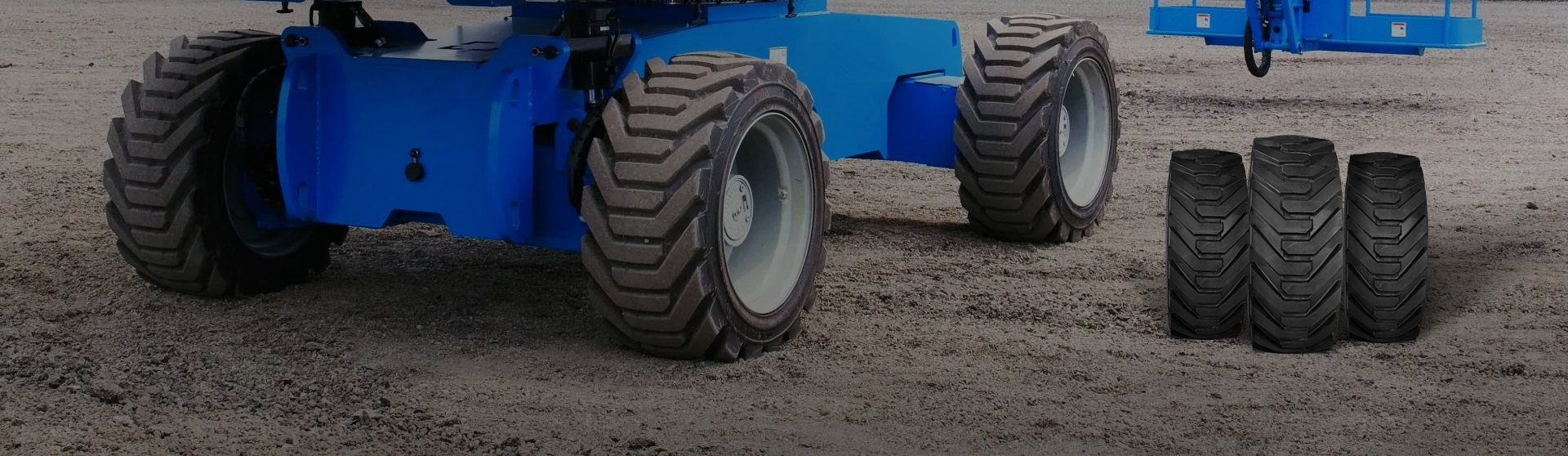

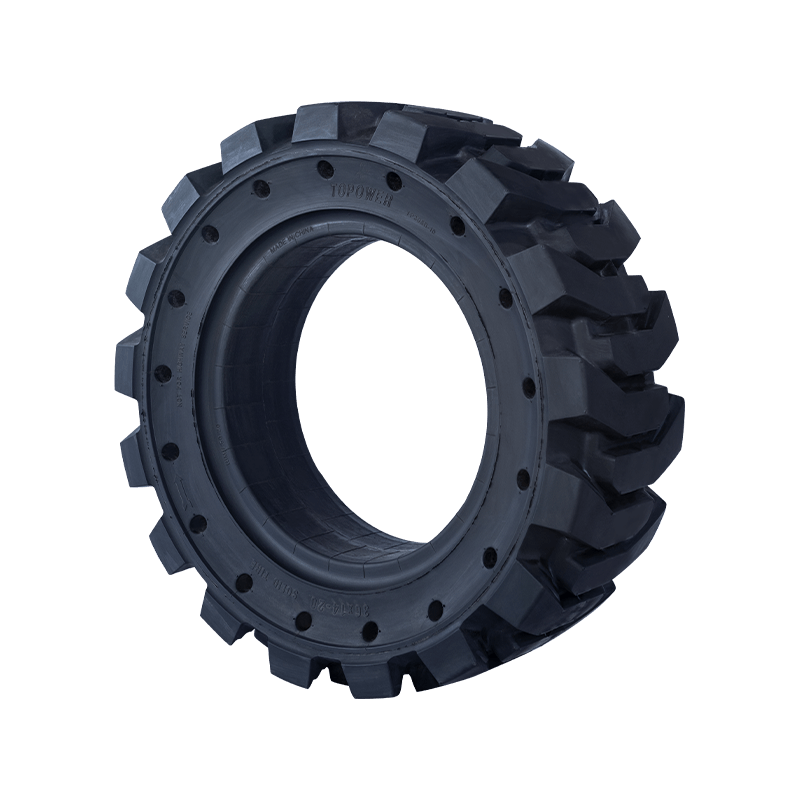
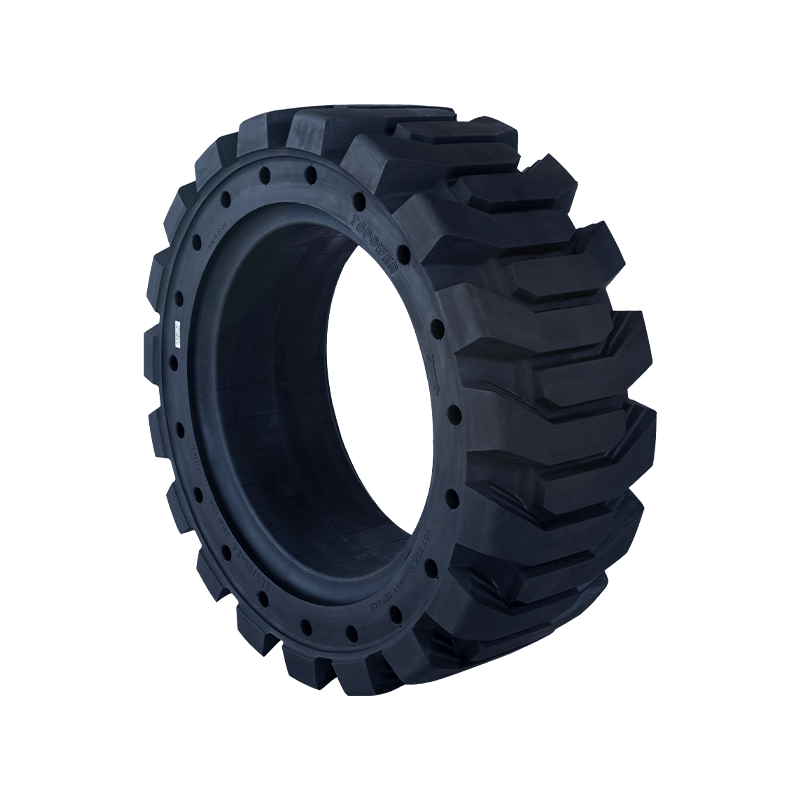
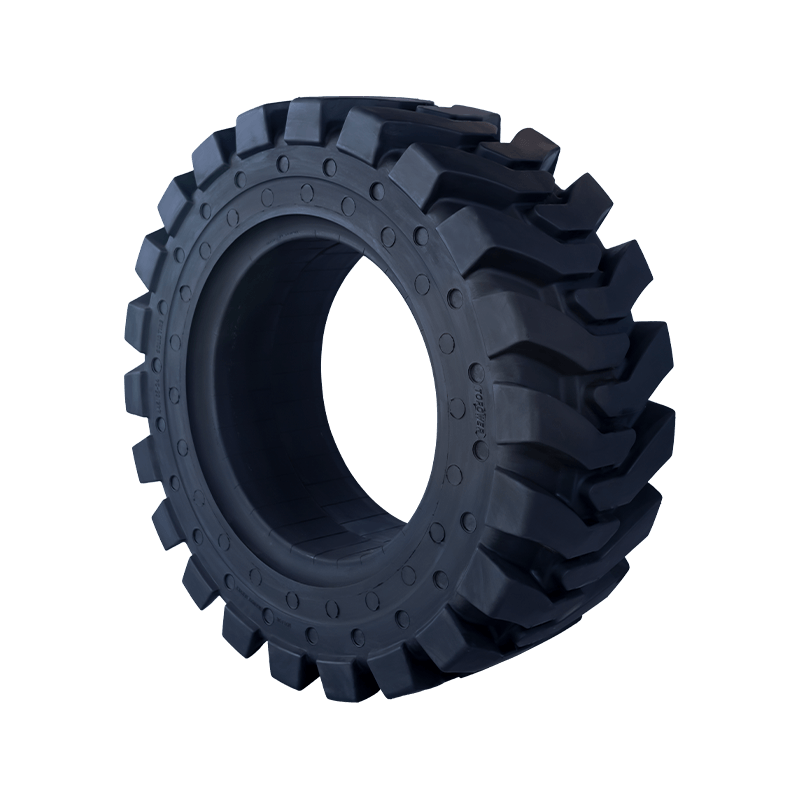
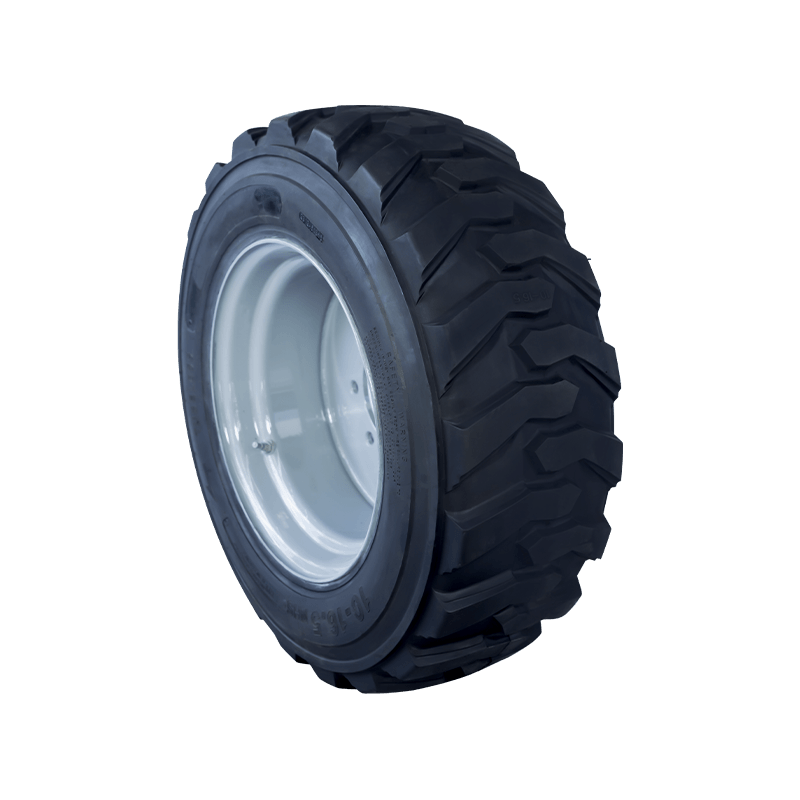
Industrial solid tyres are the foundation of safe, reliable, and productive operation for forklifts, reach trucks, tow tractors, and other material handling equipment in warehouses, distribution centers, manufacturing facilities, ports, and construction yards. Unlike pneumatic tyres that rely on air pressure to support load, solid tyres are manufactured from continuous rubber or polyurethane compound that fills the entire tyre cross section, eliminating the possibility of puncture, blowout, or pressure loss that would bring air filled tyres to an immediate halt in an industrial environment. For operations that run continuously and cannot tolerate downtime from tyre failures, the solid tyre category offers the dependability that pneumatic alternatives simply cannot match.
The direct answer for anyone evaluating industrial solid tyres is this: Press-On Solid tyres are the standard specification for the majority of electric and diesel counterbalance forklifts and reach trucks operating on smooth indoor surfaces, valued for their long service life, heat resistance, and consistent performance under continuous load cycling. Polyurethane solid tyres are the correct choice when floor preservation, low rolling resistance, and minimal vibration are the priority, particularly for lighter duty electric vehicles operating on sensitive flooring in food processing, pharmaceutical, and electronic manufacturing environments. This article covers both types alongside the broader industrial solid tyre category, with the technical and practical depth required for correct specification decisions.
What Industrial Solid Tyres Are and Why They Suit Indoor Material Handling
An industrial solid tyre is a tyre manufactured without any air cavity, constructed from solid rubber or polyurethane compound bonded around a steel or solid rubber band that provides the interface between the tyre and the wheel rim. The entire cross section of the tyre is load bearing material, meaning that the tyre cannot deflate, cannot be punctured by the nails, screws, glass fragments, and metal debris commonly found on industrial facility floors, and does not require any inflation pressure monitoring or maintenance. In a high throughput warehouse where a forklift may be operating 18 to 24 hours per day across multiple shifts, the elimination of pressure checks, puncture repairs, and blowout events represents a significant operational efficiency advantage over pneumatic alternatives.
Load Capacity and Deflection in Solid Tyres
Because solid tyres have no air cushion to distribute load across the tyre footprint, they support load by the elastic deflection of the rubber or polyurethane compound under weight. The contact patch between the tyre and the floor expands as load increases, and the load is supported by the compressive and shear stress in the solid material rather than by air pressure. Quality industrial solid tyres are compound engineered to achieve a defined deflection range of 15 to 22 percent of section height under rated load, which provides sufficient cushioning to protect both the vehicle structure and the floor surface from point load damage while maintaining the lateral stability that is critical for safe high lift forklift operation.
Press-On Solid Tyre: Construction, Performance, and Applications
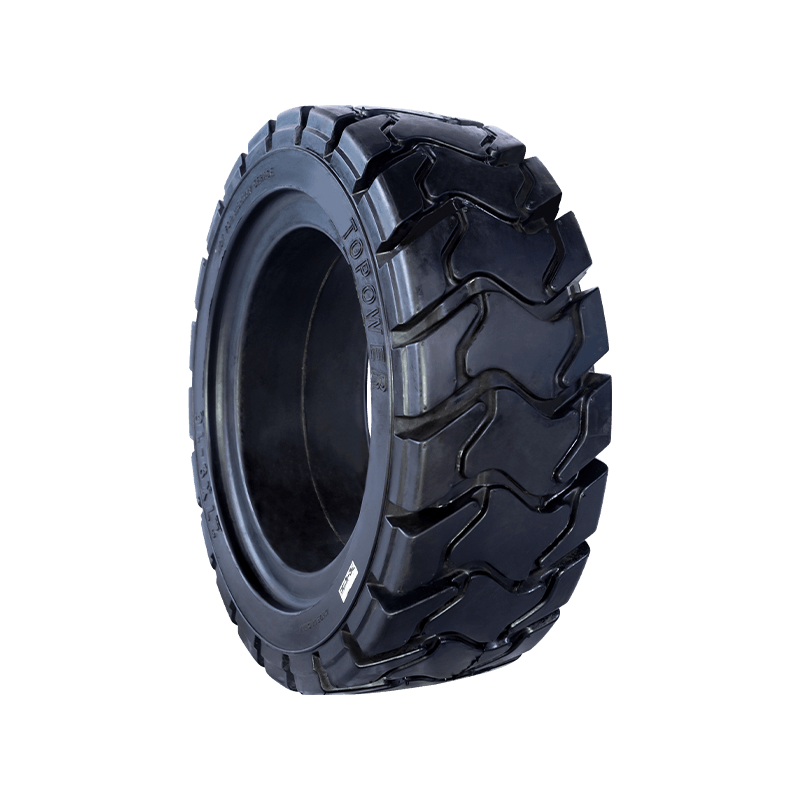
A Press-On Solid tyre consists of a vulcanized rubber tread and sidewall section bonded to a steel band that is pressed onto the wheel rim using a hydraulic press to a specified interference fit. The press on installation creates a secure mechanical connection between the tyre and rim that does not rely on adhesive, bolts, or retaining rings under normal operating conditions. The steel band provides a rigid base that transfers load from the rubber compound to the wheel rim and prevents the tyre from shifting on the rim during acceleration, braking, and lateral maneuvering.
Rubber Compound Grades for Press-On Solid Tyres
Press-On Solid tyres are manufactured in several rubber compound grades suited to different operational conditions:
- Standard black compound: General purpose natural and synthetic rubber compound suited to ambient temperature warehouse and distribution center operation. This is the most widely specified compound for counterbalance forklifts in standard indoor applications, delivering a balance of load capacity, wear resistance, and traction on concrete and asphalt surfaces.
- Heat resistant compound: Formulated for operations in hot environments such as steel mills, foundries, glass manufacturing, and other facilities where floor temperatures or ambient radiant heat are significantly elevated. Standard rubber compounds soften and degrade rapidly at temperatures above 60 degrees Celsius; heat resistant compounds maintain their structural integrity and load capacity up to 90 to 110 degrees Celsius depending on the specific formulation.
- Cold store compound: Formulated for operations in freezer and cold store environments where temperatures may be as low as minus 30 degrees Celsius. Standard rubber becomes stiff and brittle at low temperatures, losing its elasticity and traction characteristics. Cold store compounds retain flexibility and grip at sub zero temperatures through the inclusion of synthetic rubber types with low glass transition temperatures.
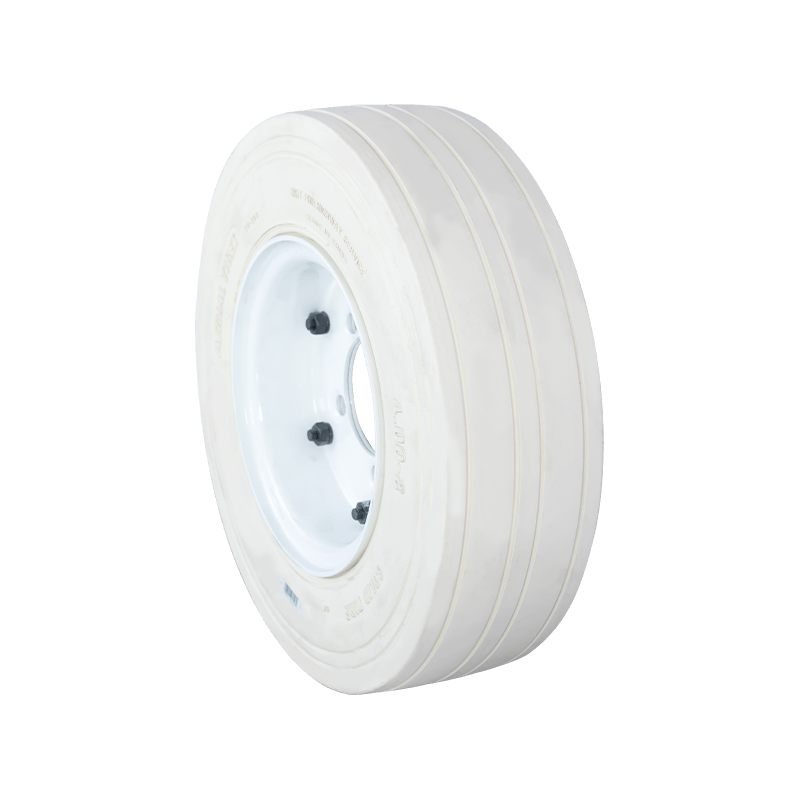
- Non marking compound: Formulated for use in food processing, pharmaceutical, retail, and clean manufacturing environments where black rubber compound marks are unacceptable on the floor surface. Non marking tyres are typically white or gray in color and use a carbon free compound that does not leave tyre marks on polished, painted, or coated floor surfaces.
Service Life of Press-On Solid Tyres
The service life of a quality Press-On Solid tyre in normal indoor warehouse operation is typically 2,000 to 4,000 operating hours, or approximately 1 to 2 years for a forklift operating on a single shift per day, before the wear line indicator embedded in the tyre sidewall is reached and replacement is required. Tyres used in intensive multi shift operations or on abrasive outdoor surfaces wear faster, while tyres used primarily for slow speed indoor operations on smooth concrete floors may exceed the upper end of this range significantly. The wear line indicator, typically a groove or colored band molded into the tyre at a defined depth from the outer surface, provides a clear visual replacement trigger that does not require measurement tools to assess.
Polyurethane Solid Tyre: Advantages, Limitations, and Correct Applications
A Polyurethane solid tyre is manufactured from cast or molded polyurethane compound rather than vulcanized rubber. Polyurethane is a thermosetting polymer with mechanical properties that differ substantially from rubber, and these differences produce a tyre that is genuinely superior to rubber alternatives in specific performance categories while being meaningfully inferior in others. Understanding which performance characteristics matter for the intended application is the basis for deciding whether a Polyurethane solid tyre or a rubber Press-On Solid tyre is the correct specification.
Performance Advantages of Polyurethane Solid Tyres
- Lower rolling resistance: Polyurethane compounds typically exhibit rolling resistance 20 to 40 percent lower than equivalent rubber solid tyres, which directly translates to extended battery life in electric forklifts and tow tractors. In operations where battery endurance is a productivity constraint, the battery run time extension from polyurethane tyres can meaningfully reduce the frequency of battery changes or charging interruptions per shift.
- Superior wear resistance: In controlled wear testing, polyurethane tyres outperform rubber tyres in abrasion resistance, typically achieving 3 to 5 times longer service life than standard rubber compound on smooth, clean indoor floors. The higher durometer (hardness) of polyurethane compared to standard rubber is the primary reason for this wear advantage.
- Non marking performance: Polyurethane is naturally non marking without requiring compound modification, making all standard Polyurethane solid tyres suitable for use in environments where floor marking is unacceptable, without the cost premium associated with non marking rubber compounds.
- Floor preservation: The lower contact pressure and smoother, harder tyre surface of polyurethane tyres cause less abrasive wear to epoxy coated, polished concrete, and other premium floor surfaces than rubber tyres of equivalent load capacity. In facilities where floor maintenance costs are significant, this floor preservation benefit has direct financial value.
Limitations of Polyurethane Solid Tyres and When Not to Use Them
- Poor performance on wet or contaminated floors: Polyurethane's smooth, hard surface provides substantially lower traction on wet, oily, or contaminated surfaces than rubber. In food processing facilities with frequent floor washing, in outdoor use, or in any environment where floor surfaces are regularly wet or contaminated, polyurethane tyres present a genuine safety risk from reduced braking and cornering grip.
- Limited temperature range: Polyurethane compounds degrade significantly at elevated temperatures, losing load capacity and becoming adhesive at temperatures above approximately 60 degrees Celsius. They are also unsuitable at very low temperatures, where polyurethane becomes excessively brittle. Polyurethane solid tyres are appropriate only for ambient temperature indoor use within approximately 10 to 40 degrees Celsius.
- Higher initial cost: Polyurethane solid tyres typically cost 30 to 60 percent more per tyre than equivalent rubber Press-On Solid tyres, and the cost benefit analysis only favors polyurethane when the wear life advantage is fully realized in a suitable clean, dry indoor environment.
Comparing Industrial Solid Tyre Types: Selection Reference
| Factor | Press-On Solid tyre (Standard) | Press-On Solid tyre (Non marking) | Polyurethane solid tyre |
|---|---|---|---|
| Material | Vulcanized rubber on steel band | Carbon free rubber on steel band | Cast or molded polyurethane |
| Traction on wet floors | Good | Good | Poor |
| Temperature range | Minus 30 to 90 degrees C (grade dependent) | Ambient to 60 degrees C | 10 to 40 degrees C (ambient only) |
| Wear life (smooth indoor floor) | 2,000 to 4,000 hours | 2,000 to 3,500 hours | 6,000 to 12,000 hours (in suitable conditions) |
| Rolling resistance | Standard | Standard | 20 to 40 percent lower than rubber |
| Floor marking | Marks floors (black compound) | Non marking | Non marking |
| Relative cost | Reference (lowest) | 10 to 25 percent above standard | 30 to 60 percent above standard rubber |
| Best application | General warehouse, outdoor, extreme temperatures | Food, pharma, retail, clean rooms | Clean dry indoor electric vehicle applications |
Correct Specification and Replacement of Industrial Solid Tyres
Specifying the correct Industrial Solid tyre for a forklift or material handling vehicle requires matching the tyre size designation to the wheel rim specification and the operational environment to the appropriate compound or material type. The following practical guidelines cover the key specification and replacement considerations:
- Match the tyre size precisely to the rim specification. Industrial solid tyres are designated by their nominal dimensions in millimeters or inches, and the tyre must be matched exactly to the wheel rim diameter, width, and the press on band width. An incorrectly sized tyre will not press onto the rim correctly, may move under load, and presents a safety risk in operation.
- Replace all tyres on the same axle simultaneously. Mixing worn and new tyres on the same axle creates a height difference between the two sides that induces stress in the vehicle's drive and steering systems and creates an unlevel load platform that affects load stability at height. All tyres on the drive axle of a counterbalance forklift should be replaced as a matched set at the same service interval.
- Use a hydraulic press for Press-On Solid tyre installation and removal. The interference fit between the tyre band and the wheel rim requires a minimum of 10 to 20 tonnes of press force for correct installation in most sizes, and removal requires equivalent force to break the interference bond. Attempting to install or remove press on tyres by hammering or improvised means damages both the tyre and the rim and is a recognized cause of tyre loosening in service.
- Replace tyres before the wear indicator line is reached, not after. Operating a forklift beyond the tyre wear indicator increases the risk of tyre separation from the band, reduces load stability due to reduced tyre height, and increases vibration transmission to the vehicle structure and operator. The wear indicator represents the minimum safe tyre height, not a guideline for how long wear can continue after it becomes visible.
Industrial solid tyres represent one of the highest impact maintenance decisions for any material handling fleet, directly affecting vehicle operating cost, floor protection, productivity uptime, and operator safety. Selecting the correct type, whether a standard Press-On Solid tyre, a specialized compound variant, or a Polyurethane solid tyre, based on the actual operating environment and usage pattern of the vehicle rather than defaulting to the lowest initial cost, consistently delivers better total cost of ownership outcomes and fewer operational disruptions over the service life of the vehicle.