 English
 русский
 Español
 عربى
عربى
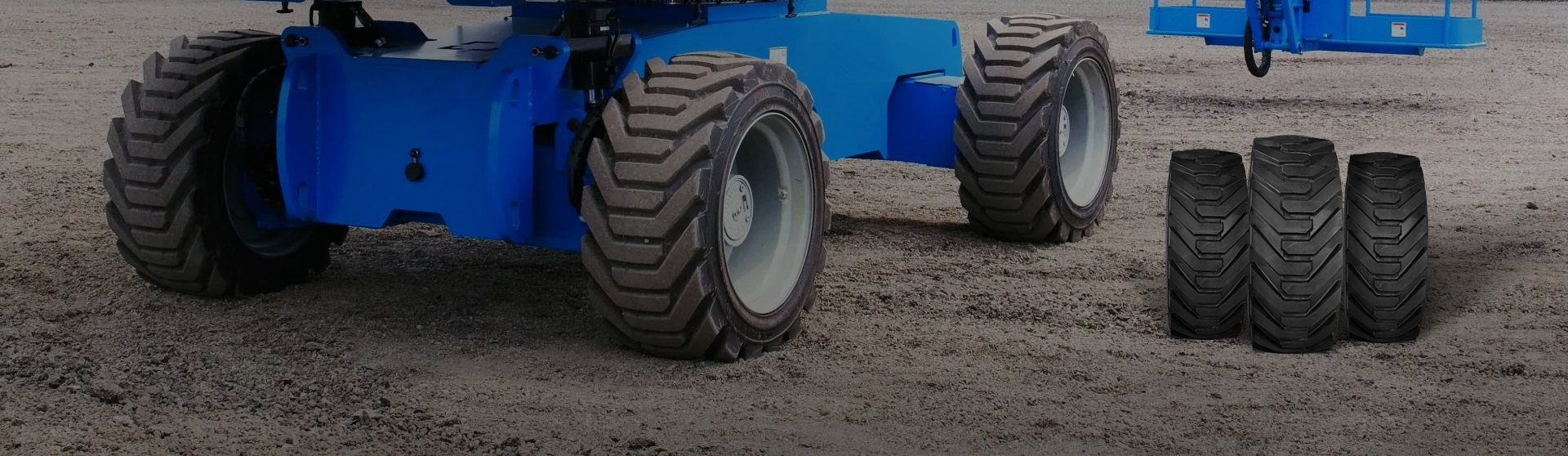

Pneumatic Tyres vs Solid Tyres, Polyurethane Tyre Role, and the Forklift Tyres Selection Framework
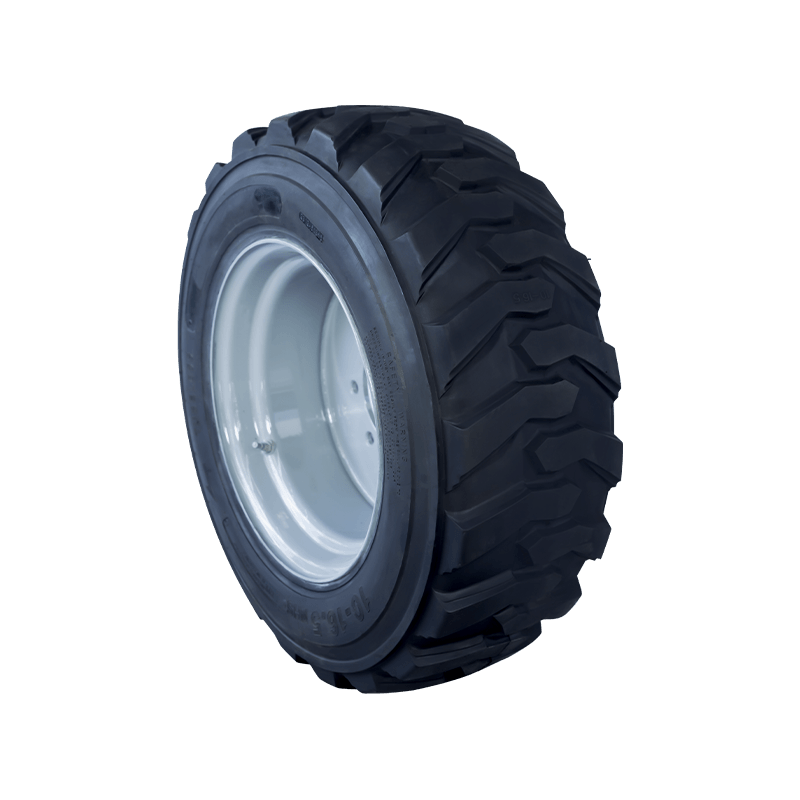
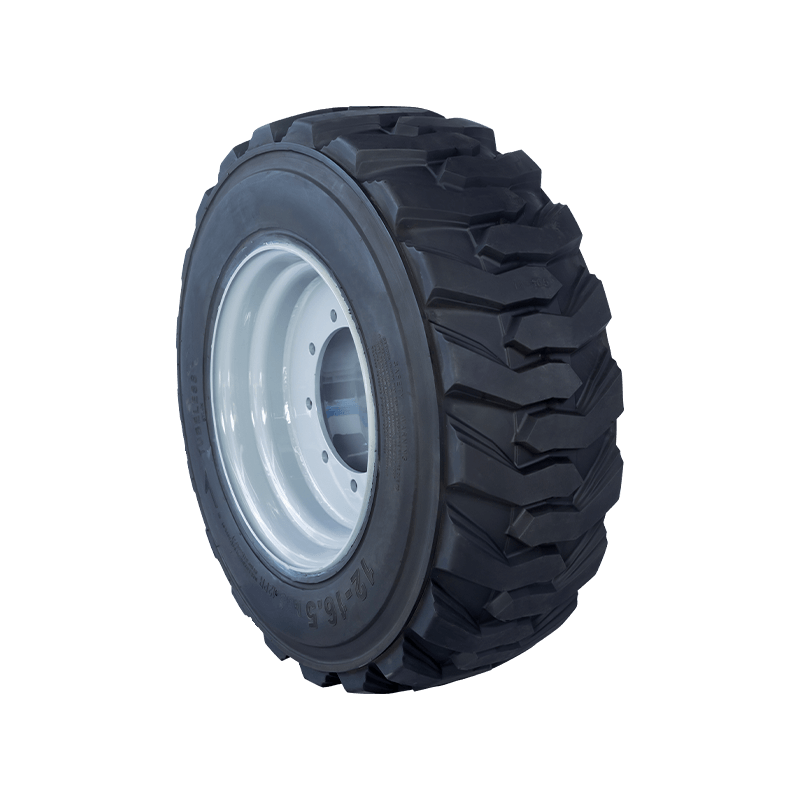
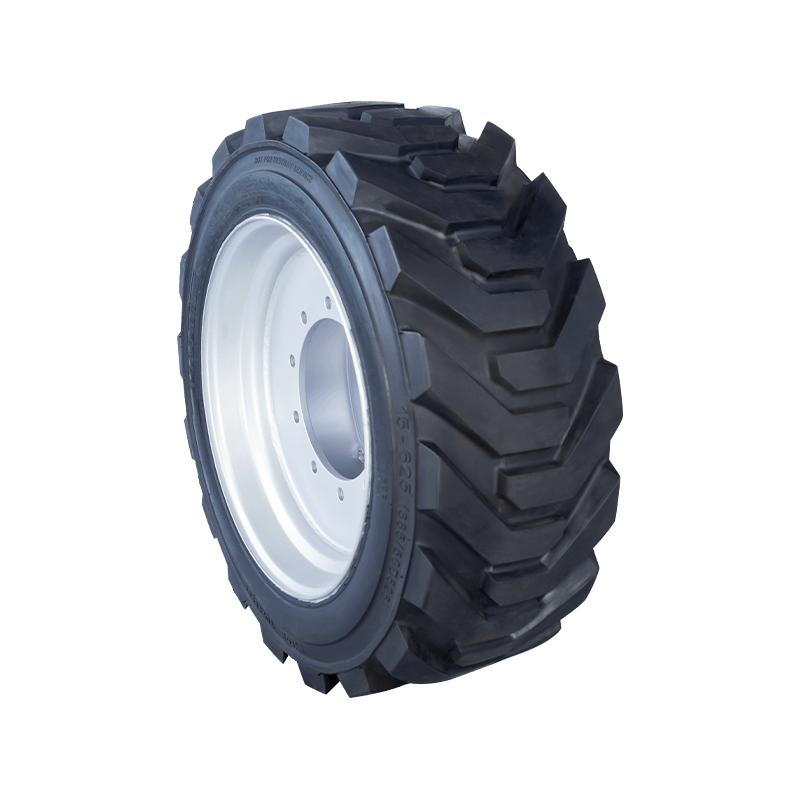
The choice between pneumatic tyres vs solid tyres for forklift and industrial material handling equipment is primarily decided by the operating surface and the acceptable level of downtime risk. Pneumatic tyres perform better on rough, outdoor, and uneven surfaces where their compressed air volume absorbs shock loading and provides traction on soft or contaminated ground. Solid tyres outperform pneumatic tyres on smooth indoor surfaces, particularly concrete warehouse floors, where the elimination of puncture risk, the removal of inflation maintenance requirements, and the superior load capacity per unit size produce lower total operating costs across the machine's service life.
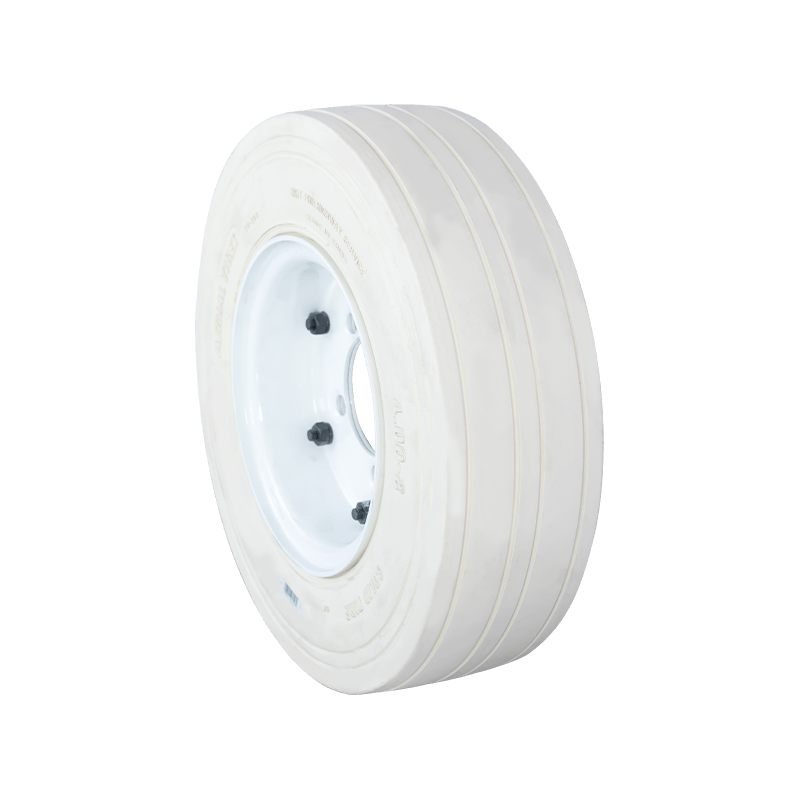
The Polyurethane Tyre is a distinct third category that occupies a specific and frequently overlooked position in the industrial tyre selection matrix. A Polyurethane Tyre is not a rubber solid tyre and not a pneumatic tyre: it is a solid tyre moulded from polyurethane polymer rather than rubber compound, producing a tyre that is harder, more dimensionally stable, and more chemically resistant than rubber solid tyres at equivalent size, but with less load cushioning capability. The Polyurethane Tyre is the standard specification for electric pallet jacks, order pickers, and reach trucks operating in clean, smooth-floor warehouse environments where chemical spills, oil contamination, or floor-marking restrictions make rubber tyre alternatives unsuitable.
Forklift tyres are a distinct engineering category from road vehicle tyres in every dimension: their load ratings, duty cycles, tread patterns, replacement criteria, and selection logic all differ fundamentally from the passenger and commercial vehicle tyre selection approaches that most buyers encounter before entering industrial fleet management. This guide addresses each of these dimensions with the specific data and practical guidance that forklift operators, fleet managers, and procurement teams need to make correct tyre decisions.
Pneumatic Tyres vs Solid Tyres: The Fundamental Technical Distinction
The pneumatic tyres vs solid tyres debate in industrial applications has a longer and more nuanced answer than the equivalent question in road vehicle contexts, because the operating conditions, duty cycles, and performance priorities of forklifts and materials handling equipment differ so fundamentally from road vehicles that some of the comparative logic is reversed. Understanding the physics of each tyre type's load-bearing and vibration-damping mechanisms is the correct starting point for the pneumatic tyres vs solid tyres evaluation.
How Pneumatic Tyres Generate Load Capacity and Cushioning
A pneumatic tyre carries its load through two mechanisms acting simultaneously. The primary mechanism is the compressed air column within the tyre cavity: the air pressure (typically 80 to 120 PSI for forklift pneumatic tyres) multiplied by the internal surface area of the tyre creates an upward force that balances the downward load from the vehicle and cargo above. The secondary mechanism is the structural stiffness of the tyre carcass (the ply layers of textile or steel cord within the rubber) that prevents the tyre sidewall from collapsing under the load even if the air pressure momentarily decreases.
The air volume that carries the load is also the mechanism that provides cushioning: when the pneumatic tyre encounters a bump, hole, or surface irregularity, the rubber tyre deflects and the air within compresses locally, absorbing the impact energy through adiabatic compression and distributing it over a longer time period than direct hard contact would produce. This cushioning action is what makes pneumatic tyres comfortable on rough surfaces and protective of both the vehicle structure and the operator's body from shock loading.
The critical vulnerability of the pneumatic load-bearing mechanism is that it depends entirely on maintaining the correct air pressure within the tyre cavity. A pneumatic tyre at 50% of its rated inflation pressure can carry only approximately 50% to 60% of its rated load before the sidewall deflects to the point of contacting the rim, causing rim damage and tyre failure. In practice, forklift pneumatic tyres in busy operations lose pressure gradually through natural permeation through the rubber compound (typically 1 to 3 PSI per week), through valve core wear, and through the microscopic punctures from floor debris that may not be immediately obvious as flat tyres but cause progressive pressure loss over hours or days.
How Solid Tyres Generate Load Capacity Without Air
A solid tyre carries its load entirely through the compressive stiffness of the solid rubber or polyurethane mass between the mounting surface (the rim for press-on band tyres, or the wheel bead seat for pneumatic-profile solid tyres) and the road contact surface. There is no air volume, no inflation pressure, and no dependence on maintaining any fluid property within the tyre to sustain its load rating.
The solid tyre's load capacity is determined by the cross-sectional area of the solid rubber or polyurethane column multiplied by the material's compressive modulus at the operating load. A larger cross-section, a higher-durometer (harder) compound, and a wider contact width all increase the load capacity of a solid tyre. In practical terms, solid tyres of the same external dimensions as equivalent pneumatic tyres generally have equal or higher load ratings because the full cross-sectional area of the solid mass contributes to load carrying, compared to the pneumatic tyre where only the compressed air column and the tyre sidewall contribute, with the void at the center contributing nothing.
The absence of air cushioning in a solid tyre means that shock loads from surface irregularities are transmitted directly through the solid rubber mass to the vehicle frame and operator. The rubber compound itself provides some damping through hysteretic energy dissipation (heat generated by the rubber deformation cycle), but this is substantially less effective than the pneumatic air column at absorbing peak shock forces. Vibration measurement studies comparing equivalent forklifts on the same rough floor surface have found that operators experience 2 to 4 times higher whole-body vibration levels on solid tyres than on pneumatic tyres at the same operating speed. This difference is essentially negligible on smooth warehouse concrete but becomes operationally significant on rough outdoor surfaces, pitted industrial floors, or dock areas with expansion joint gaps.
Pneumatic Tyres vs Solid Tyres: Complete Performance Comparison
| Performance Factor | Pneumatic Tyres | Solid Tyres (Rubber) | Polyurethane Tyre |
|---|---|---|---|
| Puncture risk | High | Zero | Zero |
| Inflation maintenance | Weekly check required | None | None |
| Ride quality on smooth floors | Good | Good to very good | Moderate |
| Ride quality on rough surfaces | Excellent | Poor | Poor |
| Load capacity per size | Moderate (pressure dependent) | High | Very high |
| Tread life on concrete | 1,500 to 2,500 hours | 2,500 to 4,000 hours | 4,000 to 8,000 hours |
| Floor marking risk | Moderate to high | Moderate (non-marking available) | Very low (light coloured) |
| Chemical resistance | Moderate (rubber compound) | Moderate (compound dependent) | Good to excellent |
| Rolling resistance on hard floors | Low to moderate | Low | Very low |
| Best primary surface | Outdoor, rough, unpaved | Indoor smooth concrete | Indoor smooth, clean floors |
The Operating Environment Decision Tree for Pneumatic Tyres vs Solid Tyres
Resolving the pneumatic tyres vs solid tyres selection for a specific application requires answering four environmental questions in sequence, where the first question whose answer points definitively to one tyre type ends the evaluation:
- Does the vehicle operate outdoors on unpaved, rough, or wet natural surfaces? If yes, pneumatic tyres are required. Solid tyres of any type lack the traction, flotation, and shock absorption needed for outdoor rough-surface operation, and the vibration transmitted to the operator on rough outdoor surfaces through solid tyres creates ergonomic and regulatory compliance problems. If no, proceed to question 2.
- Is the operating floor smooth and hard (concrete, asphalt, tile, or equivalent)? If yes, solid tyres are the technically superior choice for all reasons discussed in this guide. The pneumatic tyre provides no advantage on smooth hard floors and introduces puncture risk and inflation maintenance cost that solid tyres eliminate. If the surface is rough concrete, cracked asphalt, or heavily pitted industrial floor, evaluate the severity of the surface irregularities against the vibration tolerance of the operation before proceeding to solid tyre specification.
- Are there floor-marking, chemical contamination, or food-safety restrictions that require clean, non-marking tyre contact? If yes, a Polyurethane Tyre or a non-marking rubber solid tyre is required. Standard black rubber solid tyres and pneumatic tyres leave carbon black deposits on polished floors during lateral scrubbing turns. If no, standard black rubber solid tyres are appropriate for the application.
- Is the vehicle a pallet jack, order picker, or reach truck operating at low to moderate loads in a clean warehouse? If yes, a Polyurethane Tyre is typically the optimum specification for drive and load-bearing wheel positions, providing the longest tread life, lowest rolling resistance for battery conservation on electric vehicles, and inherent non-marking properties. For heavy counterbalance forklifts above 2 tonnes, rubber solid tyres are generally preferred over polyurethane for the drive wheels due to their superior grip on acceleration and turning.
Solid Tyre: Construction, Compound Technology, and Application Range
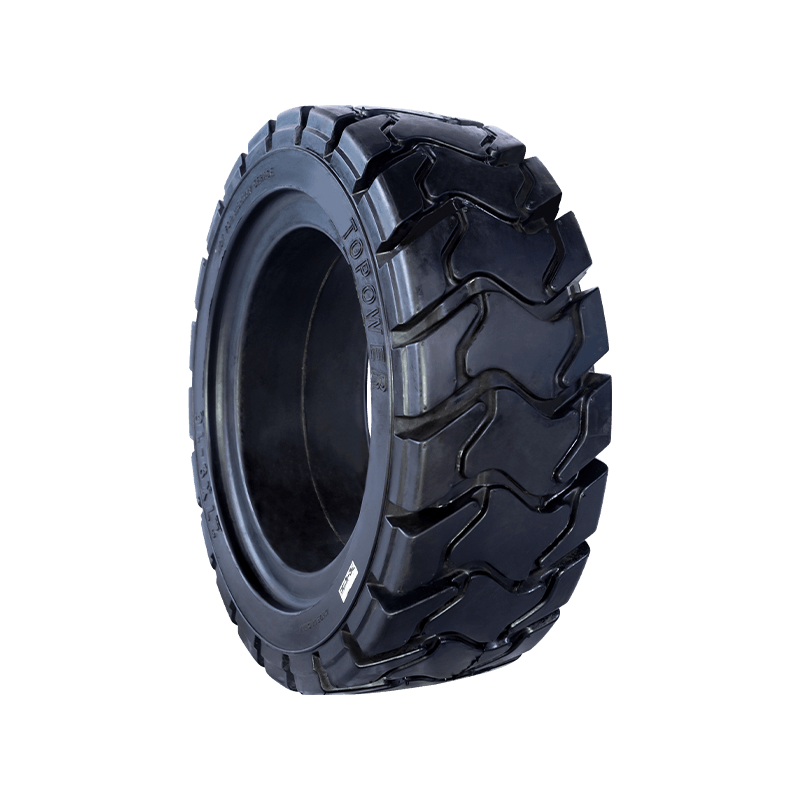
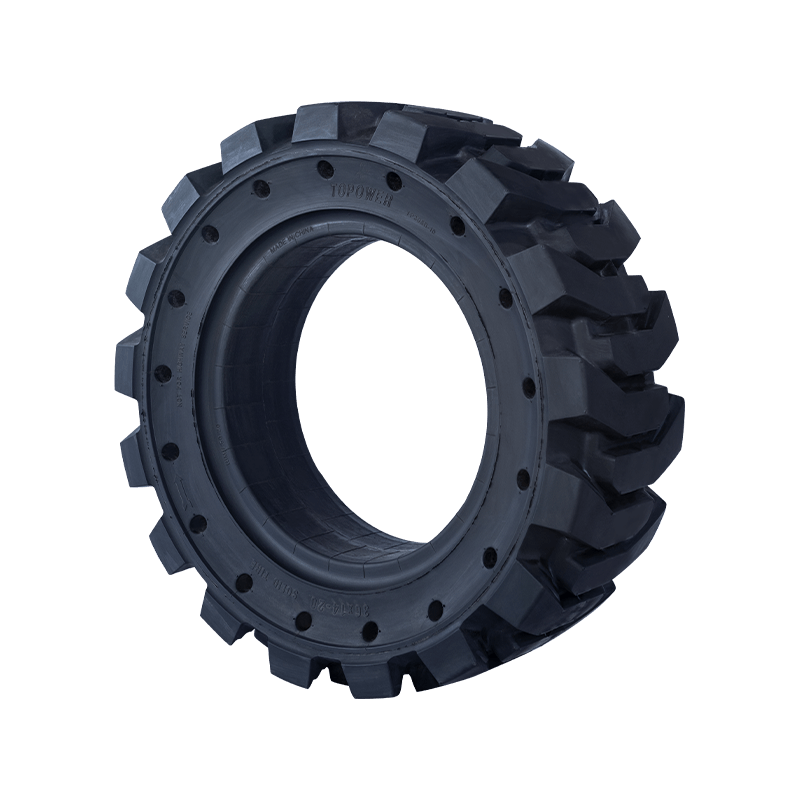
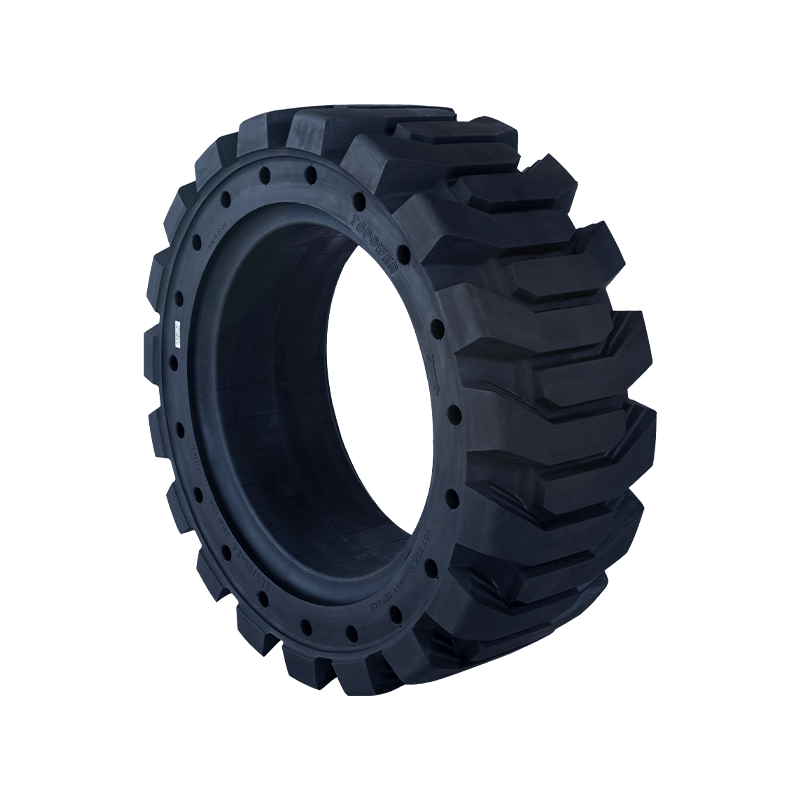
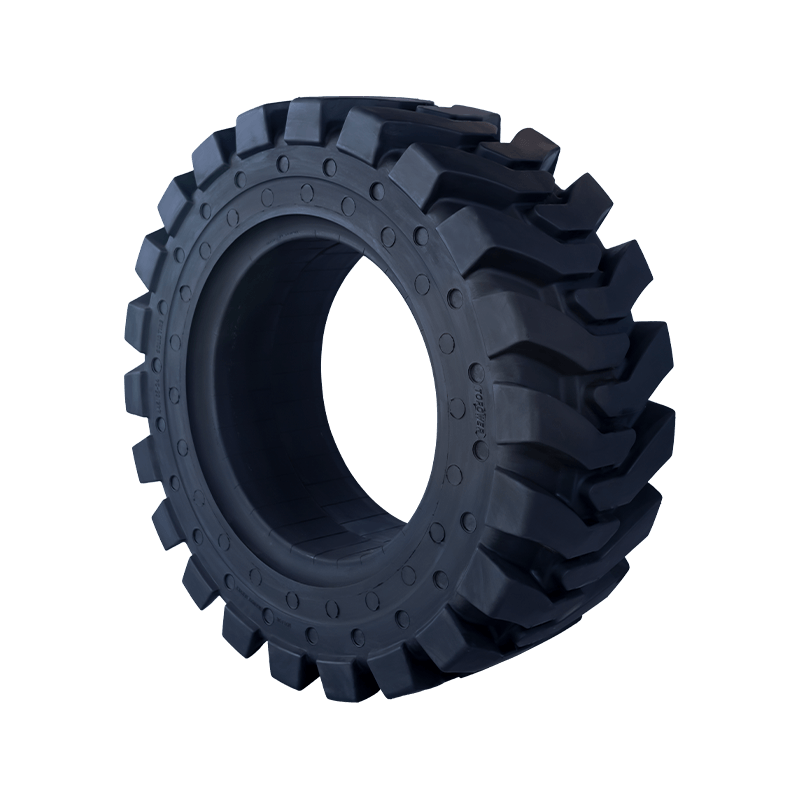
The Solid Tyre is the most widely used tyre type across indoor warehouse, distribution centre, manufacturing facility, and port terminal operations globally. Its dominance in these applications reflects a straightforward engineering reality: on smooth hard floors where pneumatic cushioning provides minimal benefit, the Solid Tyre's complete elimination of puncture risk and inflation maintenance requirements reduces total fleet operating costs more than any other single tyre specification decision.
Press-On Band Solid Tyre Construction: The Three-Layer Engineering Approach
The standard press-on band Solid Tyre used on electric counterbalance forklifts and reach trucks is manufactured as a cylindrical band of rubber that is pressed onto a steel rim under very high interference force, typically generated by a hydraulic press applying 10 to 30 tonnes of force. The bonded result is a tyre-rim assembly where the rubber band is mechanically locked to the rim surface with sufficient force to prevent any rotational slip between the tyre and rim during the lateral scrubbing, acceleration, and braking forces of normal forklift operation.
A well-engineered press-on Solid Tyre consists of three distinct rubber layers, each formulated for a different functional requirement:
- The inner base layer (Shore A hardness 78 to 90): The hardest layer, bonded directly to the steel rim surface. The extreme hardness of this layer is required to prevent the rubber from deforming and loosening on the rim during the high side-force events of tight forklift turns. Any rotational movement between the base layer and the rim generates heat and accelerates delamination, eventually causing the tyre to spin on the rim and requiring immediate replacement.
- The intermediate cushion layer (Shore A hardness 55 to 70): A softer intermediate layer that provides the primary vibration and shock absorption function of the Solid Tyre. This layer deforms elastically under load cycling, converting the mechanical energy of floor irregularities into heat energy that dissipates through the rubber mass. The thickness and hardness of the cushion layer is the primary variable that a tyre engineer adjusts to tune the ride quality of a Solid Tyre specification.
- The outer tread layer (Shore A hardness 60 to 75): The outermost layer that contacts the floor surface, formulated for abrasion resistance, traction, and in some specifications, chemical resistance or non-marking properties. The tread layer is moulded with the pattern (ribbed, block, or lug) appropriate to the operating environment and with the wear indicator line at 50% of the original tread depth that signals the mandatory replacement point.
Solid Tyre Compound Hardness Selection: Matching Durometer to Operating Conditions
The Shore A hardness of the tread layer is the most directly adjustable variable in Solid Tyre specification and requires deliberate selection matched to the specific operating conditions rather than defaulting to a generic standard specification:
- Soft tread compound (Shore A 60 to 65): Maximum cushioning and traction, minimum abrasion resistance and tread life. Appropriate for facilities where operator comfort is a high priority, where ergonomic whole-body vibration regulations are a concern, or where the floor surface is in poor condition with significant joint gaps or surface roughness that would otherwise create uncomfortable operation on harder compounds.
- Standard tread compound (Shore A 65 to 72): Balanced performance across all criteria. The most widely specified tread hardness for general distribution centre, manufacturing, and food and beverage warehouse applications on smooth concrete floors. Provides adequate cushioning for normal industrial floor conditions while delivering tread life significantly exceeding pneumatic tyre alternatives on the same surface.
- Hard tread compound (Shore A 72 to 80): Maximum abrasion resistance and tread life, minimum cushioning. The correct specification for very high cycle operations where forklifts travel long distances per shift (above 30 km per shift in continuous operation), for applications where floor contamination with abrasive particles (concrete dust, metal swarf, or mineral aggregate fines) accelerates wear in softer compounds, and for high-speed travel applications where heat generation in softer compounds would be excessive.
Choosing a tread hardness one grade above the optimum for the operating conditions adds approximately 20% to 40% to the Solid Tyre's service life but simultaneously increases operator whole-body vibration by approximately 15% to 25% on the same floor. This trade-off must be evaluated in the context of relevant occupational health regulations and the specific floor condition at the facility.
Specialist Solid Tyre Formulations for Demanding Environments
Beyond the standard hardness variations, Solid Tyre formulations are available for the specific environmental challenges that standard compounds cannot address:
- Cold store compound: Formulated with elevated natural rubber content and specialist cold-weather plasticisers that maintain compound flexibility and traction at sustained temperatures between minus 30 and plus 5 degrees Celsius. Standard rubber solid tyres stiffen progressively below 0 degrees Celsius, losing traction and developing surface cracks within months of cold store operation. Cold store Solid Tyre formulations maintain their engineered properties throughout the cold chain operating temperature range, providing consistent traction and tread life without the premature cracking that characterises standard compounds in these environments.
- Heat-resistant compound: For steel mill, foundry, glass plant, and ceramics manufacturing environments where radiant heat from process operations, hot floor surfaces from metal spill events, and sustained ambient temperatures above 40 degrees Celsius would degrade standard rubber compounds through oxidative cross-link degradation. Heat-resistant Solid Tyre formulations use specialist antioxidant and antiozonant packages with high cross-link density that maintain structural integrity and tread adhesion at operating temperatures that would cause rapid surface cracking and tread delamination in standard compounds.
- Chemical-resistant compound: For battery manufacturing, chemical processing, semiconductor fabrication, and laboratory environments where floor contamination from acids, alkalis, solvents, or process chemicals would attack standard natural or SBR rubber base compounds, causing swelling, softening, and accelerated degradation. Chemical-resistant Solid Tyre formulations substitute EPDM, neoprene, nitrile, or other specialty base rubbers whose polymer backbone is chemically inert to the specific contaminants present in the operating environment.
- ESD (electrostatic dissipative) compound: For semiconductor manufacturing clean rooms, explosive materials warehouses, electronics assembly facilities, and any environment where static electricity accumulation creates product damage or fire and explosion hazard risk. ESD Solid Tyre formulations incorporate controlled concentrations of conductive carbon black that maintain a surface resistivity of 10 to the power 4 to 10 to the power 6 ohms, dissipating static charge from the vehicle to the floor continuously through the tyre contact patch during operation.
- Non-marking compound: Manufactured without the carbon black pigment that gives standard tyres their black colour, producing white, grey, or tan-coloured tyres that leave no visible rubber deposits on polished floors during the lateral scrubbing turns of forklift operation. Non-marking Solid Tyre specifications are mandatory in food processing, pharmaceutical, paper, printing, and any industry where black rubber marks on floors or products are a quality, food safety, or aesthetic compliance issue.
Polyurethane Tyre: Material Properties, Advantages, Limitations, and Correct Application
The Polyurethane Tyre is fundamentally different from a rubber Solid Tyre in its base material chemistry, manufacturing process, performance characteristics, and appropriate application range. Confusion between Polyurethane Tyre and rubber solid tyre specifications is common in procurement processes and leads to both over-specification and under-specification errors that affect fleet performance and total cost of ownership.
What Makes Polyurethane Different from Rubber in Tyre Applications
Polyurethane is a polymer produced by the reaction of a polyol and an isocyanate, forming a material that can be tuned across an extremely wide range of hardness (from very soft elastomers to rigid plastics) by adjusting the ratio and type of the reaction components. The polyurethane compounds used for Polyurethane Tyre applications are cast into moulds as a liquid and cure to a solid elastomeric form, producing a material with the following properties that distinguish it from rubber:
- Abrasion resistance: Polyurethane is significantly more abrasion resistant than equivalent-hardness natural or synthetic rubber. In standardized DIN abrasion testing, high-quality Polyurethane Tyre compounds achieve abrasion losses of 30 to 80 cubic millimetres per standardized test pass, compared to 80 to 150 cubic millimetres for equivalent-hardness rubber compounds. This superior abrasion resistance translates directly to tread life: Polyurethane Tyres on electric pallet jacks and order pickers in distribution centres typically last 4,000 to 8,000 operating hours, compared to 2,500 to 4,000 hours for equivalent rubber solid tyres in the same application.
- Rolling resistance: Polyurethane has lower hysteretic energy loss per deformation cycle than rubber at equivalent hardness, meaning that a Polyurethane Tyre rolling on a hard surface converts less rolling energy to heat than a rubber tyre of the same hardness. This lower rolling resistance directly improves battery endurance on electric materials handling equipment, extending the operating shift between charges and reducing battery replacement frequency over the vehicle's service life. Studies comparing Polyurethane Tyre against rubber solid tyre drive wheels on electric pallet jacks have measured energy consumption reductions of 5% to 12% per shift with Polyurethane Tyre, which compounds significantly across the multi-year service life of an electric fleet.
- Hardness range and floor-marking characteristics: Polyurethane Tyre compounds used in warehouse applications are typically formulated in the Shore A 80 to 95 range, which is harder than most rubber solid tyre tread compounds. This hardness produces very low floor marking (polyurethane is light coloured and the harder compound resists the lateral shearing that transfers rubber deposits to floor surfaces during turning) and excellent dimensional stability under high load, maintaining the tyre's rolling diameter more consistently over its service life than softer rubber alternatives.
- Chemical resistance: Polyurethane is resistant to a broader range of chemicals than natural rubber or SBR rubber, including many organic solvents, oils, greases, and dilute acids that would swell or degrade rubber-based compounds. In warehouses handling chemical products, lubricants, or food processing materials where floor spill contamination is periodic, Polyurethane Tyre provides better sustained performance than rubber alternatives without requiring specialist compound formulation changes.
Where Polyurethane Tyre Falls Short Relative to Rubber Solid Tyres
Despite its performance advantages in the areas above, the Polyurethane Tyre has specific limitations that make it the wrong choice for some applications where rubber solid tyres are the correct specification:
- Traction on wet or contaminated surfaces: The higher hardness of Polyurethane Tyre compounds reduces the tyre's contact patch compliance (the ability of the tyre surface to conform to micro-roughness in the floor) compared to softer rubber compounds. On wet floors, oily surfaces, or floors with dust contamination, Polyurethane Tyre provides less grip than equivalent-size rubber solid tyres, which can cause wheel spin and reduced steering control on loaded vehicles making tight turns.
- Cushioning and ride quality: Polyurethane Tyre at Shore A 85 to 95 hardness provides substantially less cushioning than rubber solid tyres at Shore A 65 to 72, and the difference is perceptible to operators even on smooth concrete floors with minor surface irregularities. On floors with joint gaps, pitted areas, or expansion joint transitions, the additional harshness of Polyurethane Tyre compared to rubber solid tyres increases operator fatigue and contributes to cumulative whole-body vibration exposure that may become a regulatory compliance concern in long-shift operations.
- Temperature sensitivity at low temperatures: While standard Polyurethane Tyre compounds maintain acceptable performance at temperatures down to approximately minus 10 to minus 15 degrees Celsius, they stiffen more rapidly below 0 degrees Celsius than specialist cold-store rubber solid tyre compounds formulated specifically for cold chain applications. For operations at temperatures below minus 15 degrees Celsius, specialist cold-store rubber solid tyres are generally the better specification choice.
- Drive wheel applications on heavy forklifts: On counterbalance forklifts above 2 tonnes capacity, the high hardness of Polyurethane Tyre reduces traction sufficiently to cause wheel slip under acceleration and braking with full loads on the forks, particularly on slightly contaminated concrete where the rubber compound's higher compliance provides substantially better traction. Standard rubber solid tyres remain the preferred specification for drive wheel positions on heavy counterbalance forklifts, with Polyurethane Tyre used most appropriately on load wheels, support wheels, and steer wheels of lighter electric materials handling equipment.
Polyurethane Tyre Application Guide: Vehicle Types and Wheel Positions
| Vehicle Type | Drive Wheels | Load Wheels | Steer Wheels | Notes |
|---|---|---|---|---|
| Electric pallet jack | Polyurethane Tyre | Polyurethane Tyre | Polyurethane Tyre | Clean smooth warehouse only |
| Order picker | Polyurethane Tyre or rubber solid | Polyurethane Tyre | Polyurethane Tyre | Rubber solid preferred if wet areas present |
| Reach truck (electric) | Rubber solid tyre | Polyurethane Tyre | Polyurethane Tyre | Rubber solid on drive for traction under load |
| Electric counterbalance 1 to 2 tonnes | Rubber solid tyre | Polyurethane Tyre or rubber | Polyurethane Tyre or rubber | Drive wheels require rubber solid grip |
| Electric counterbalance above 3 tonnes | Rubber solid tyre | Rubber solid tyre | Rubber solid tyre | Full rubber solid specification for traction and cushioning |
| Outdoor diesel or LPG forklift | Pneumatic tyres | Pneumatic tyres | Pneumatic tyres | Full pneumatic specification for outdoor service |
Forklift Tyres: Selection Criteria, Load Rating Systems, and Replacement Standards
Forklift tyres represent a distinct engineering product category with specific standards, load rating conventions, replacement criteria, and maintenance requirements that differ from all other tyre categories. Treating forklift tyres selection as equivalent to road vehicle tyre selection produces incorrect specifications that create safety hazards, premature wear, and unnecessary fleet costs. This section covers the complete practical framework for forklift tyres management.
Why Forklift Tyres Face More Demanding Conditions Than Road Tyres
The conditions imposed on forklift tyres during normal operation are more severe in specific ways than the conditions road vehicle tyres experience, even though road tyres operate at much higher speeds:
- Cantilevered overloading at the front axle: When a forklift lifts its rated load at the maximum forward mast tilt, the load weight is cantilevered in front of the front axle, creating a downward moment that multiplies the effective load on the two front tyres far beyond the nominal vehicle weight. A 3-tonne capacity forklift weighing 4 tonnes unladen, when lifting 3 tonnes at forward tilt, may impose 7 to 9 tonnes of combined force on the two front tyres. This means each front tyre carries 3.5 to 4.5 tonnes, roughly equivalent to a medium-sized road truck's axle load distributed across a single tyre contact patch.
- Continuous lateral scrubbing during tight turns: Counterbalance forklifts steer through the rear axle, which must swing through angles of up to 75 to 80 degrees during tight turns in narrow aisles. During this turn, the rear tyres experience lateral scrubbing forces as the tyre contact patch slides sideways across the floor surface rather than rolling cleanly. This scrubbing mechanism is the primary wear driver for forklift tyres, particularly for the steer tyres that experience the most extreme lateral displacement during tight-radius turns.
- High cycle frequency in compact areas: A busy distribution centre forklift completes 50 to 150 load cycles per shift, each involving acceleration, deceleration, turning, and mast operation within the confined area of a single storage aisle. The total distance traveled per shift (typically 20 to 50 kilometres in a busy operation) and the frequency of direction changes and lateral scrubbing events per kilometre traveled far exceeds the equivalent road vehicle tyre duty cycle in terms of wear-generating events per unit distance.
- Sudden full-load stop events: Emergency stops under full load create high braking forces on the drive tyres that generate flat spots in a single event if the tyre locks. A flat spot on a solid forklift tyre cannot recover elastically as a pneumatic road tyre does after the heat from braking dissipates: the deformation in the solid rubber at the flat spot is permanent if the material's elastic limit is exceeded, resulting in a localised thinned area that becomes a failure initiation point under subsequent load cycling.
Forklift Tyre Size Marking Systems: Reading the Numbers Correctly
Forklift tyres use marking systems that differ from road tyre designations and that must be understood correctly to avoid purchasing tyres that are dimensionally incompatible with the rim or that have insufficient load capacity for the application:
- Press-on band solid tyre designation (example: 21 x 8 x 15): Three numbers separated by the letter x, representing outer diameter (21 inches), section width (8 inches), and rim diameter (15 inches). All three numbers must match the rim dimensions precisely. A 21 x 8 x 15 tyre pressed onto a 21 x 8 x 15 rim produces the specified interference fit that prevents tyre rotation on the rim. Any dimensional deviation in any of the three numbers changes the interference fit and risks either failure to seat correctly or inadequate grip on the rim during operation.
- Pneumatic forklift tyre designation (example: 8.25 x 15 or 250/75 R15): The older format gives section width and rim diameter only. The newer metric format provides section width in millimetres, aspect ratio (section height as percentage of section width), construction code (R for radial, B for bias-ply), and rim diameter in inches. Both formats refer to the same physical dimensions; the choice of format depends on the age and origin of the equipment specification.
- Polyurethane Tyre designation: Typically given as outer diameter, tyre width, and hub bore diameter in millimetres (example: 230 x 78 x 150), because Polyurethane Tyres mount on wheel hubs with a through-bore rather than on steel rims with an interference fit. The hub bore diameter must match the wheel hub outer diameter precisely to prevent the tyre from rocking on the hub during operation.
Mandatory Replacement Criteria for Forklift Tyres
Forklift tyres must be removed from service when they reach defined wear limits or develop specific damage conditions, regardless of whether the vehicle operator or maintenance supervisor believes the tyre "looks okay." The replacement criteria differ by tyre type:
- Press-on Solid Tyre: remove at the safety line (50% wear indicator). When the tread surface wears down to the moulded safety line on the tyre sidewall, the tyre must be replaced immediately. The safety line marks the point where the original tread depth has been reduced by 50%, leaving insufficient rubber above the base layer to provide adequate load cushioning and support. Below the safety line, the risk of the cushion layer reaching its deformation limit and allowing rim contact with the floor surface increases significantly, and the load distribution characteristics of the tyre change in ways that reduce vehicle stability under full rated load. This is not a "recommendation" but a mandatory safety criterion enforced by OSHA in the USA and equivalent regulatory authorities in other jurisdictions as part of the pre-shift forklift inspection requirement.
- Pneumatic forklift tyre: remove when tread depth reaches 1.5 to 2 mm or when structural damage is visible. Unlike road tyres where the primary concern is wet-weather traction, pneumatic forklift tyres wear primarily through abrasion rather than tread groove reduction. The replacement criteria include: tread depth reaching 1.5 mm or the tread wear indicator whichever occurs first; any visible cording (the ply cords visible through the tread or sidewall); sidewall cracks deeper than 2 mm; or uneven wear exceeding 5 mm across the tread width that indicates alignment or load distribution problems requiring investigation.
- Polyurethane Tyre: remove when diameter reduction reaches 10% to 15% of original or when flat spots develop. Polyurethane Tyres wear by progressive reduction in overall tyre diameter. When the tyre diameter has reduced by 10% to 15% from its original specification (the vehicle manufacturer typically specifies the minimum acceptable diameter), the tyre's rated load capacity is no longer guaranteed, and the height difference between new and worn tyres may affect mast alignment and load height positioning accuracy on order pickers and reach trucks. Flat spots on Polyurethane Tyres from extended stationary parking under load also require replacement, as the permanently deformed contact area creates vibration with each wheel revolution and is structurally weakened at the deformed location.
Total Cost of Ownership: Building the Case for Solid and Polyurethane Tyres in Warehouse Operations
The correct comparison framework for forklift tyre procurement decisions is total cost of ownership across the full service life of the tyre rather than initial unit purchase price. The components of total cost of ownership for forklift tyres are:
- Initial tyre purchase cost: Pneumatic tyres for forklifts typically cost USD 150 to USD 400 per tyre for standard industrial sizes; rubber solid press-on band tyres cost USD 300 to USD 800 per assembly; Polyurethane Tyres cost USD 50 to USD 200 per tyre depending on size. These initial costs require context from service life to calculate the cost per operating hour.
- Puncture repair and unplanned downtime cost: Pneumatic forklift tyres in facilities with floor debris generate 4 to 12 puncture events per year per forklift in typical distribution centre environments. Each event costs USD 50 to USD 150 in repair labour and materials, plus the cost of unplanned forklift downtime during peak operational periods (which may be many times the repair cost in high-throughput facilities operating against tight delivery windows). Solid tyres and Polyurethane Tyres eliminate this cost category entirely.
- Inflation maintenance labour cost: Maintaining correct tyre pressure in pneumatic forklift tyres requires approximately 15 minutes per forklift per week for pressure checking and inflation. Across a fleet of 20 forklifts, this represents approximately 260 hours of maintenance labour per year for tyre pressure management alone. Solid tyres and Polyurethane Tyres eliminate this entirely.
- Tyre service life cost per operating hour: Dividing the tyre set purchase price by the average service life in hours gives the tyre cost per operating hour, which is the most useful metric for comparing alternatives. A pneumatic tyre set costing USD 600 with a 2,000-hour service life costs USD 0.30 per operating hour. A solid tyre set costing USD 1,200 with a 3,500-hour service life costs USD 0.34 per operating hour. A Polyurethane Tyre set costing USD 400 with a 6,000-hour service life costs USD 0.067 per operating hour. When all cost components are combined, solid and Polyurethane Tyres in appropriate applications typically reduce total forklift tyre-related costs by 30% to 55% compared to pneumatic tyres over a 3-year fleet management cycle.
Fleet Management Best Practices for Forklift Tyres: Pre-Shift Inspection, Record-Keeping, and Planned Replacement
Effective forklift tyres fleet management transforms tyre replacement from a reactive maintenance event (driven by unexpected failure or visible damage that takes a forklift out of service at operationally inconvenient times) into a planned, scheduled activity where tyre condition is monitored continuously and replacement is scheduled during planned maintenance windows before failure occurs.
Pre-Shift Tyre Inspection Requirements
OSHA regulation 29 CFR 1910.178 in the United States (and equivalent regulations in the UK, EU, and Australia) requires that forklifts be inspected before each shift. The tyre inspection component of this pre-shift check must address:
- Solid tyre wear check: Visually confirm that the tread surface is above the safety line on all tyres. If any tyre shows the safety line at or near the floor surface, the forklift must be removed from service and the tyre replaced before return to operation.
- Chunking and tearing inspection: Check all tyre surfaces for sections of tread missing or partially detached (chunking). Any chunking requires immediate removal from service because the resulting asymmetric tyre causes vehicle instability and the exposed underlying rubber is structurally compromised.
- Sidewall crack inspection: Inspect all solid tyre sidewalls for radial cracks. Surface crazing (very fine surface cracks) may be acceptable in many cases; cracks deeper than 3 to 4 mm require specialist assessment before continued operation.
- Pneumatic tyre pressure check: Check and record inflation pressure on all pneumatic tyres against the manufacturer's specification. Any tyre more than 15 PSI below specification must be inflated before the forklift enters service.
- Flat spot check: Walk alongside the forklift as it moves forward slowly to detect the rhythmic vertical bounce that indicates a flat spot on any tyre. Any flat spot larger than approximately 30 mm in the rolling direction requires tyre replacement.
Tyre Service Life Recording and Planned Replacement Scheduling
Forklift fleet management systems that track tyre service hours against expected service life allow maintenance managers to schedule tyre replacement during planned maintenance windows rather than reacting to in-service failures. The practical implementation requires:
- Recording the date and forklift hour meter reading at each tyre set installation: This provides the baseline from which remaining service life can be calculated at any future inspection date.
- Establishing expected service life ranges for each tyre type and operating condition combination in the fleet: Based on past replacement records and tyre supplier guidance, define the expected service life range for each vehicle-tyre combination. Alert maintenance scheduling when any tyre set reaches 80% of its expected service life, creating a 20% buffer period during which replacement can be planned and scheduled.
- Conducting quarterly physical tyre measurement: For solid tyre fleets, measuring tread depth or the distance from the safety line to the current tread surface at each quarterly service appointment creates a wear rate record that allows more accurate service life prediction than hour-based scheduling alone, because actual wear rate varies with shift length, load intensity, and floor surface condition.
Frequently Asked Questions
1. What is the most important factor in deciding between pneumatic tyres vs solid tyres for a forklift?
The most important single factor in deciding between pneumatic tyres vs solid tyres is the operating surface. If the forklift operates outdoors on unpaved, rough, or soft ground at any point in its regular duty cycle, pneumatic tyres are required because solid tyres cannot provide adequate traction, flotation, or shock absorption on these surfaces. If the forklift operates exclusively on smooth indoor concrete or sealed asphalt, solid tyres are the technically and economically superior choice in the vast majority of cases, eliminating puncture risk and inflation maintenance while delivering longer tread life and greater load capacity per tyre size. The pneumatic tyres vs solid tyres debate is largely resolved by answering this single environmental question before any other performance or cost comparison is made.
2. What is a Polyurethane Tyre and how is it different from a rubber Solid Tyre?
A Polyurethane Tyre is a solid tyre manufactured from cast polyurethane polymer rather than rubber compound. The key practical differences from a rubber Solid Tyre are: the Polyurethane Tyre has 2 to 3 times the abrasion resistance of rubber at equivalent hardness, producing tread life of 4,000 to 8,000 operating hours on smooth warehouse floors compared to 2,500 to 4,000 hours for rubber solid tyres in the same application; the Polyurethane Tyre has lower rolling resistance, reducing battery energy consumption by 5% to 12% per shift on electric materials handling equipment; the Polyurethane Tyre is inherently light-coloured (white, cream, or light grey) and leaves virtually no floor marking during lateral scrubbing turns; and the Polyurethane Tyre typically costs less per tyre unit than an equivalent rubber solid tyre while lasting significantly longer. The main limitations are lower traction on wet or contaminated surfaces and less cushioning due to the higher hardness typical of Polyurethane Tyre specifications.
3. When must a Solid Tyre be replaced on a forklift?
A Solid Tyre on a forklift must be replaced when the tread surface has worn down to the safety line, which is a moulded indicator line in the tyre sidewall that marks the point where 50% of the original tread depth has been consumed. This safety line indicates that the remaining tread and cushion layer above the base is insufficient to reliably distribute the forklift's maximum rated load without risk of rim contact with the floor surface, which would cause vehicle instability and catastrophic tyre failure. Additional replacement criteria include: any chunking or tearing of tread sections from the tyre body; sidewall cracks deeper than 3 to 4 mm; flat spots from emergency braking or extended stationary parking under load; and any condition where the tyre is visibly non-round during vehicle movement. All of these criteria require immediate removal from service regardless of the distance from the safety line.
4. Can I fit solid tyres to a forklift that was originally supplied with pneumatic tyres?
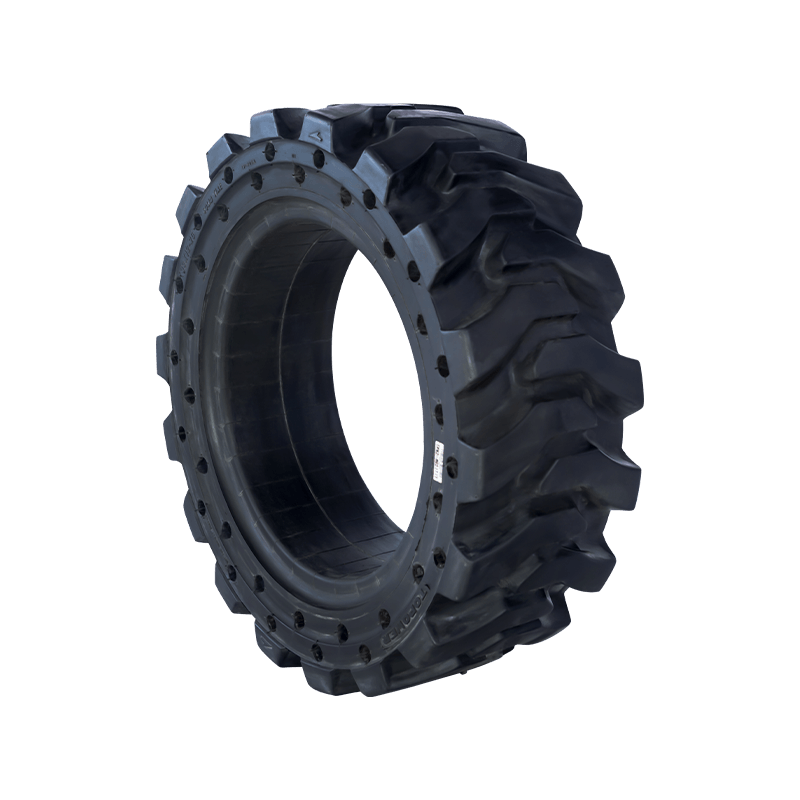
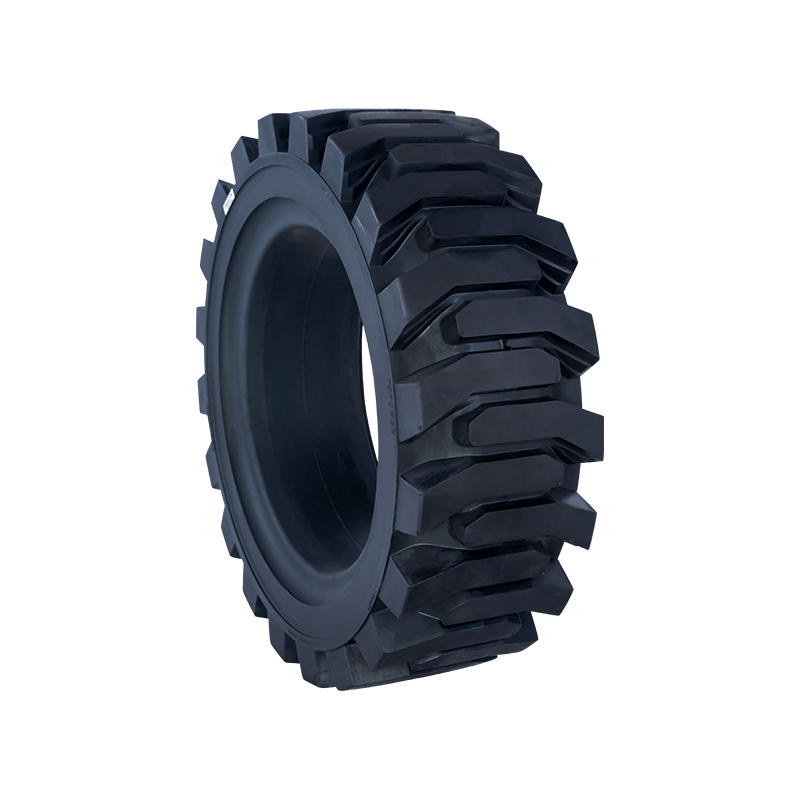
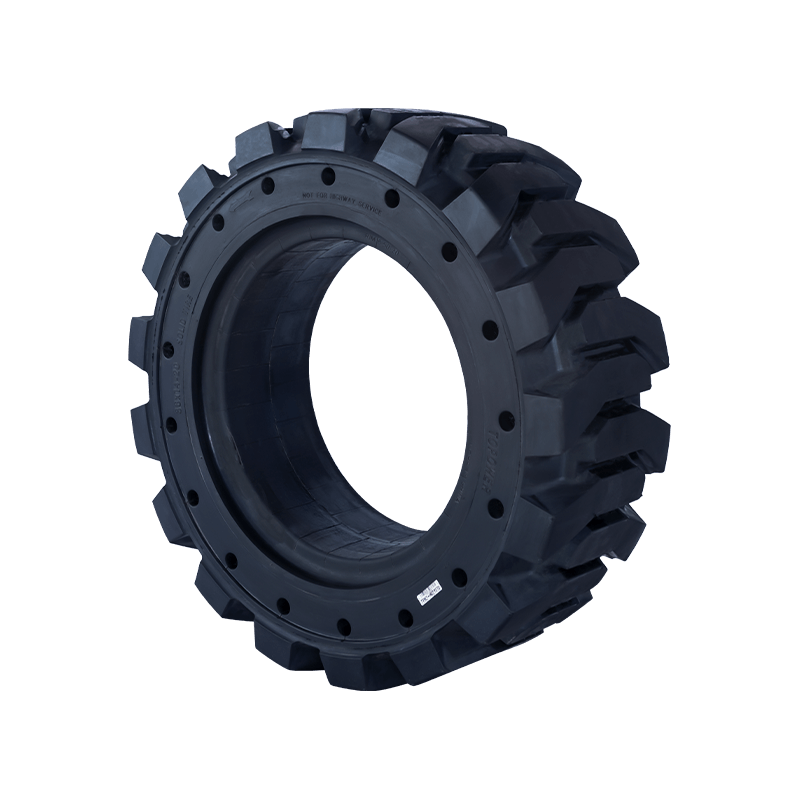
Pneumatic-profile solid tyres can be fitted to many forklifts originally supplied with pneumatic tyres because they are manufactured in the same external profile dimensions and are designed to mount on standard drop-centre pneumatic rims without modification. However, several engineering factors must be verified before making this substitution. The forklift manufacturer's specification must explicitly approve solid tyre fitment, because some forklift suspension geometries, mast settings, or load centre calculations assume pneumatic tyre deflection characteristics that change with solid tyre fitment. The wheel hub and bearing capacity must be verified against the higher weight of solid tyres compared to pneumatic alternatives at the same external dimensions. Press-on band solid tyres require specific press-on rims that are not interchangeable with pneumatic drop-centre rims, so this style of solid tyre cannot be retrofitted to pneumatic-rim vehicles. Always consult both the forklift manufacturer and the tyre supplier before substituting solid for pneumatic tyres on any vehicle.
5. How do I read a forklift tyre size marking to ensure I buy the correct replacement?
Forklift tyre size markings use different formats depending on tyre type. For press-on band solid forklift tyres, the format is three numbers separated by x: for example, 21 x 8 x 15 means outer diameter 21 inches, section width 8 inches, rim diameter 15 inches. All three must match the mounted rim exactly for correct fitment. For pneumatic forklift tyres in the older format, two numbers separated by x give section width and rim diameter only: 8.25 x 15 means 8.25-inch section width on a 15-inch rim. In the newer metric format, 250/75 R15 means 250 mm section width, 75% aspect ratio, radial construction, 15-inch rim. For Polyurethane Tyres, the format is typically three numbers in millimetres giving outer diameter, tyre width, and hub bore diameter. Always read the marking directly from the tyre being replaced rather than relying on memory or parts lists, as similar-looking forklifts from the same manufacturer sometimes use different tyre sizes at different production dates.
6. What causes rapid tyre wear on forklifts and how can it be reduced?
Rapid tyre wear on forklifts has four primary causes. First, aggressive driving including high-speed tight turns, hard acceleration, and emergency braking all generate scrubbing forces between the tyre contact patch and the floor surface that accelerate wear beyond the normal rate: operator training programmes focused on smooth operation and speed reduction during turns produce measurable reductions in tyre wear rates of 15% to 30% in operations where aggressive driving was previously common. Second, overloading beyond the forklift's rated capacity places excessive compressive and shear stress on the tyre contact patch, accelerating wear and risking structural failure. Third, floor contamination with abrasive material such as concrete dust, metal swarf, or mineral aggregate fines dramatically increases abrasion wear in softer rubber compounds: floor cleaning programmes that keep abrasive contamination away from main forklift travel routes significantly extend tyre life. Fourth, incorrect tyre specification for the application, specifically using a soft compound where a medium or hard compound is appropriate for the operating conditions, produces faster wear than the optimum specification.
7. What are non-marking forklift tyres and when are they mandatory?
Non-marking forklift tyres are manufactured without the carbon black pigment that gives standard tyres their black colour, producing white, light grey, or cream-coloured tyres that leave no visible rubber deposits on floor surfaces during lateral scrubbing turns. Standard black forklift tyres deposit visible black rubber marks on polished concrete, resin-coated, and epoxy-painted floors during tight turns, which accumulate progressively into unsightly patterns that require intensive floor cleaning to remove. Non-marking tyres are mandatory in food processing plants where black rubber contamination of food or food contact surfaces is unacceptable under food safety regulations; in pharmaceutical manufacturing where contamination control standards prohibit any foreign material deposit on production floors; in paper, printing, and electronics industries where black rubber marks on products or product contact surfaces constitute a quality defect; and in high-end retail, hospital, and food retail distribution environments where floor appearance standards require clean, mark-free floors at all times. Polyurethane Tyres are inherently non-marking due to their light colour and higher hardness; non-marking rubber solid tyres use special compound formulations without carbon black reinforcement and are typically priced 15% to 30% above equivalent black compound tyres.
8. What is foam filling and how does it compare to true Solid Tyre performance?
Foam filling is a process where the air cavity of a standard pneumatic tyre is filled with polyurethane foam that cures to fill the internal volume completely, eliminating the air that would otherwise be lost through puncture. Foam-filled tyres occupy a middle position between pneumatic tyres and true solid rubber tyres: they provide puncture immunity like a solid tyre, retain the pneumatic tyre's rim compatibility and external profile without modification, and provide cushioning intermediate between a true solid rubber tyre (less cushioning) and a fully pneumatic tyre (most cushioning). Foam-filled tyres are popular for outdoor forklifts on rough terrain and for construction equipment where both puncture immunity and acceptable ride quality on uneven ground are required. Compared to true press-on band Solid Tyres, foam-filled tyres are heavier (because the foam-filled carcass is heavier than the equivalent solid rubber band), more expensive per unit (the filling process adds cost above the base pneumatic tyre cost), and have a service life typically 20% to 30% shorter than press-on band solid tyres in comparable indoor applications because the foam filler degrades in the high-load cycling environment more rapidly than the solid rubber compound of a purpose-built solid tyre.
9. How does cold store operation affect the choice between pneumatic tyres vs solid tyres?
Cold store operation at temperatures between minus 25 and plus 5 degrees Celsius fundamentally changes the pneumatic tyres vs solid tyres comparison compared to ambient temperature warehouse operation. Standard rubber solid tyre compounds stiffen progressively below 0 degrees Celsius as the rubber approaches its glass transition temperature, losing traction and becoming brittle enough to develop surface cracking within months of continuous cold store operation. Standard pneumatic tyres suffer a different problem: the air volume inside the tyre contracts at low temperatures, reducing inflation pressure significantly from its ambient-temperature setting. A pneumatic tyre inflated to 100 PSI at 20 degrees Celsius will have only approximately 83 PSI at minus 20 degrees Celsius (a 17% pressure reduction), reducing load capacity below the rated level. The correct solution for cold store forklift tyres is specialist cold store Solid Tyre formulations with elevated natural rubber content and cold-weather plasticiser packages that maintain compound flexibility and performance throughout the operating temperature range, providing the puncture immunity and maintenance-free advantages of solid tyres without the stiffening and cracking problems of standard compounds at cold store temperatures.
10. How does the Polyurethane Tyre contribute to electric forklift battery life extension?
The Polyurethane Tyre contributes to electric forklift battery life extension through its lower rolling resistance compared to both pneumatic tyres and rubber solid tyres of equivalent size. Rolling resistance is the energy consumed by the tyre deformation cycle as it rolls: the rubber or polymer must compress in the contact patch with each revolution and recover behind the contact patch, and the energy that is not recovered elastically (the hysteretic loss) is dissipated as heat rather than contributing to vehicle motion. Polyurethane has substantially lower hysteretic loss per deformation cycle than natural or synthetic rubber at equivalent load and hardness, meaning that less electrical energy from the battery is consumed per metre of vehicle travel with Polyurethane Tyres than with rubber tyres. Measured across a full operating shift, this lower rolling resistance reduces total energy consumption by 5% to 12% per shift depending on vehicle type, load profile, and travel distance. Over the multi-year service life of an electric forklift, this energy saving reduces total charging cycles on the battery, extending battery service life, reducing battery replacement cost, and lowering total fleet energy consumption in a distribution centre operating a large electric forklift fleet.