 English
 русский
 Español
 عربى
عربى
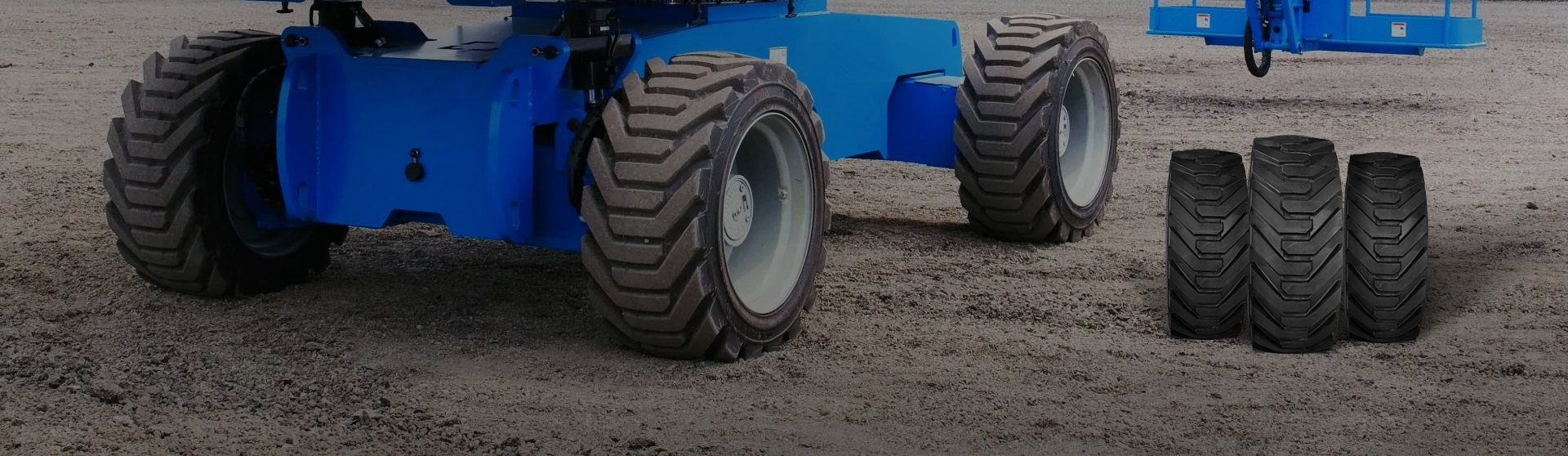

What Tread on Tyres Is, What Solid Tyres Are, and How Forklift Tyres Differ from Road Tyres
Tread on tyres is the patterned rubber surface that forms the outermost contact layer between the tyre and the road or ground surface. It consists of raised rubber blocks, ribs, lugs, and channels (called grooves) moulded into the tyre casing during manufacture. The tread pattern and the depth of rubber above the base of the grooves determine how effectively a tyre channels water away from the contact patch, how much grip the tyre generates on wet and dry surfaces, how much noise the tyre produces, and how long the tyre will last before the tread wears below the legal or safety minimum depth.
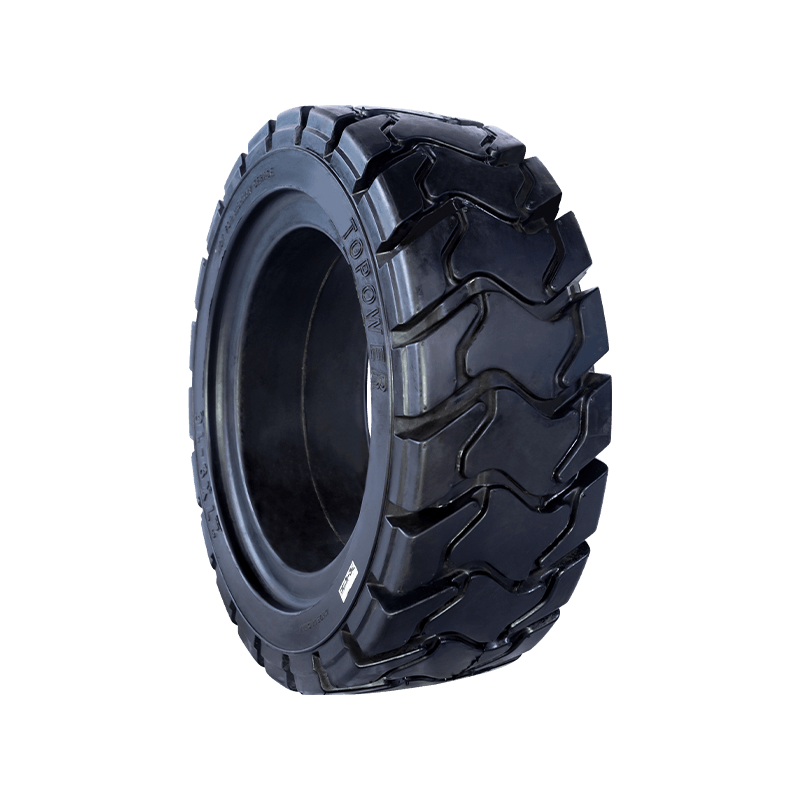
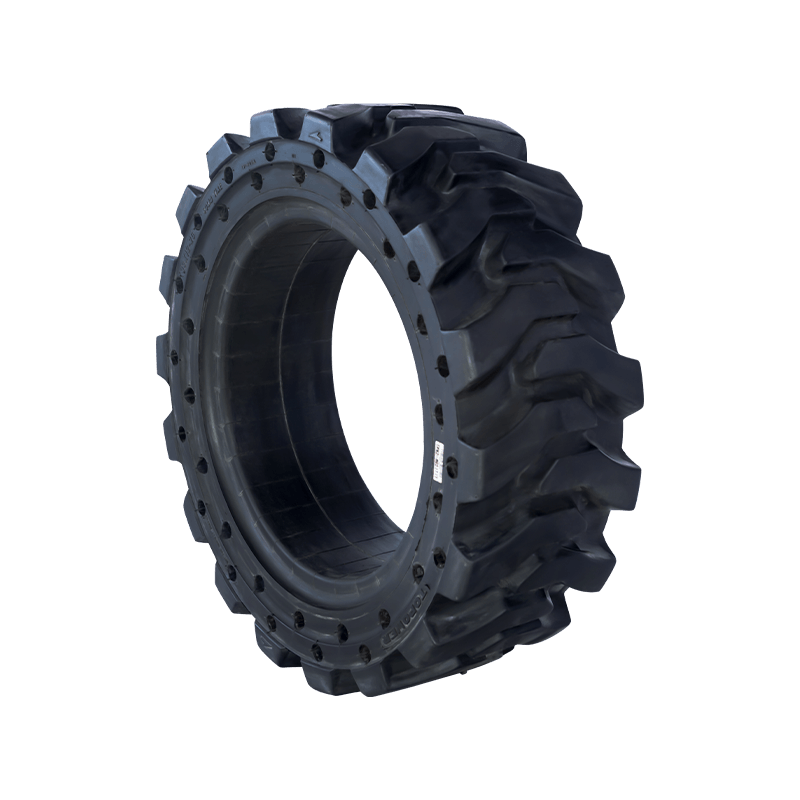
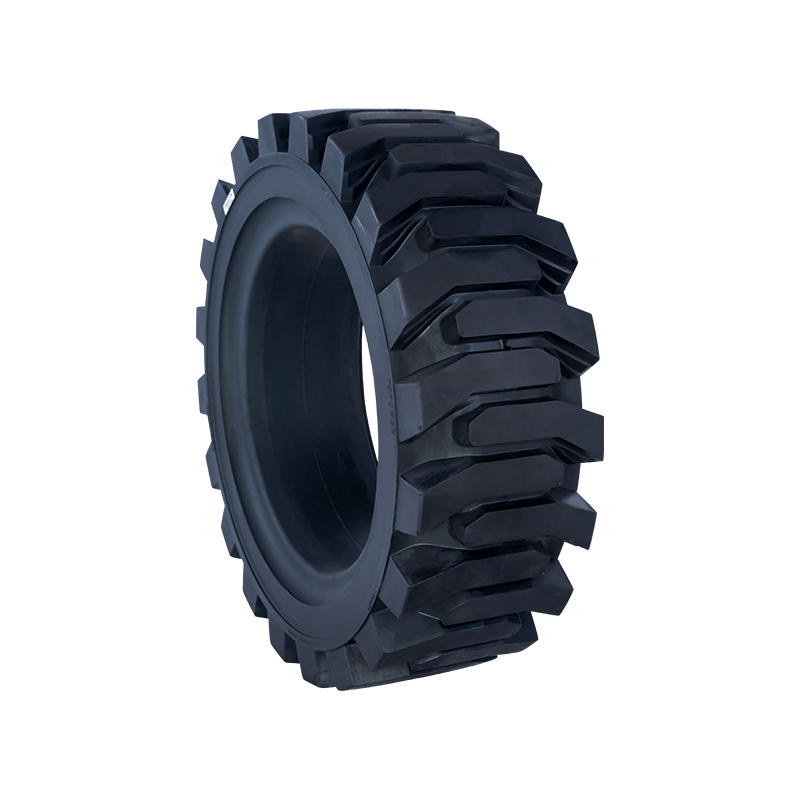
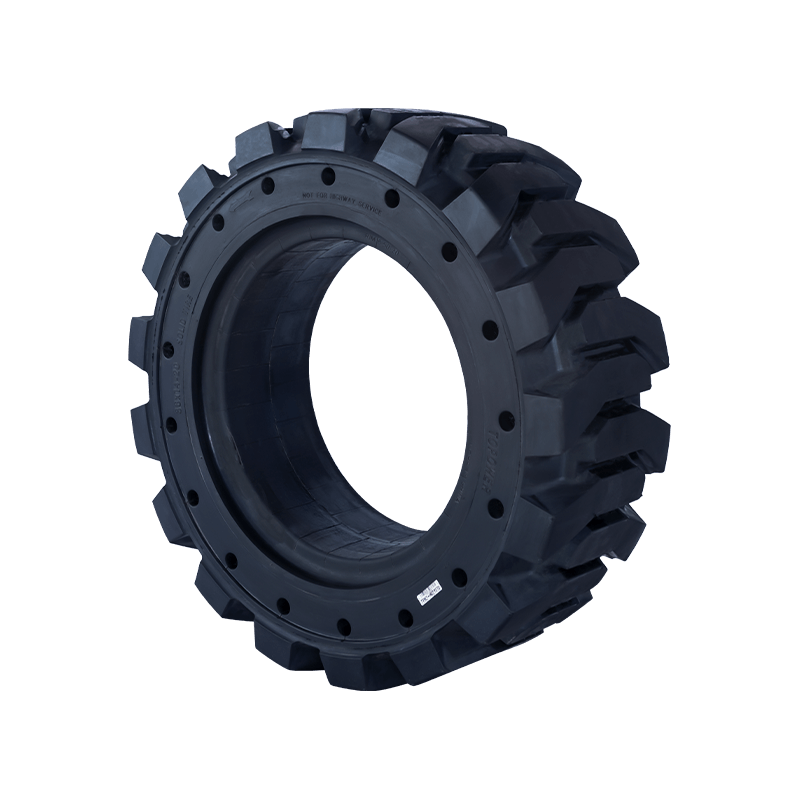
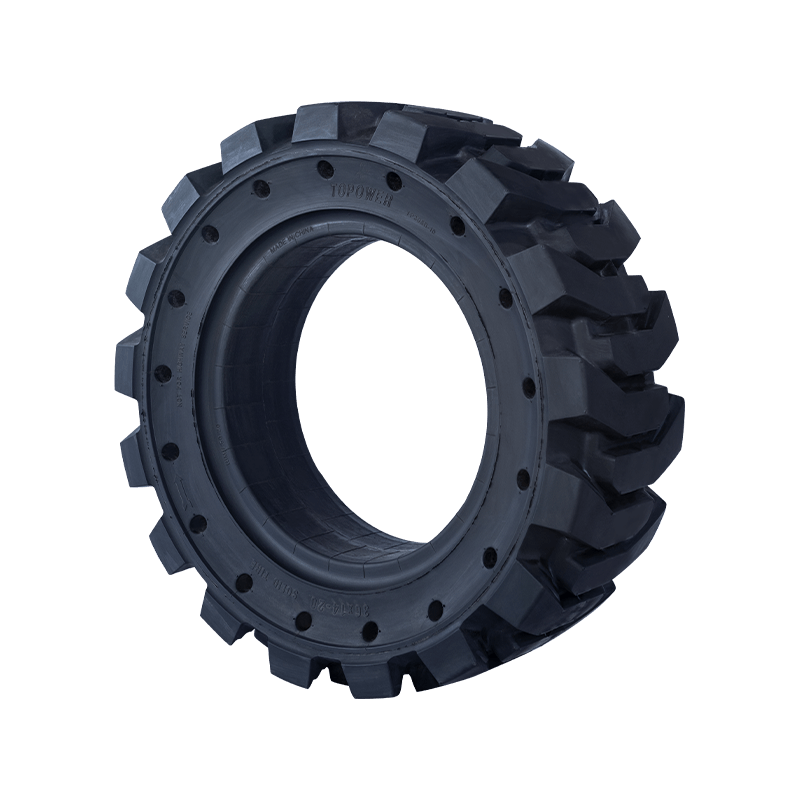
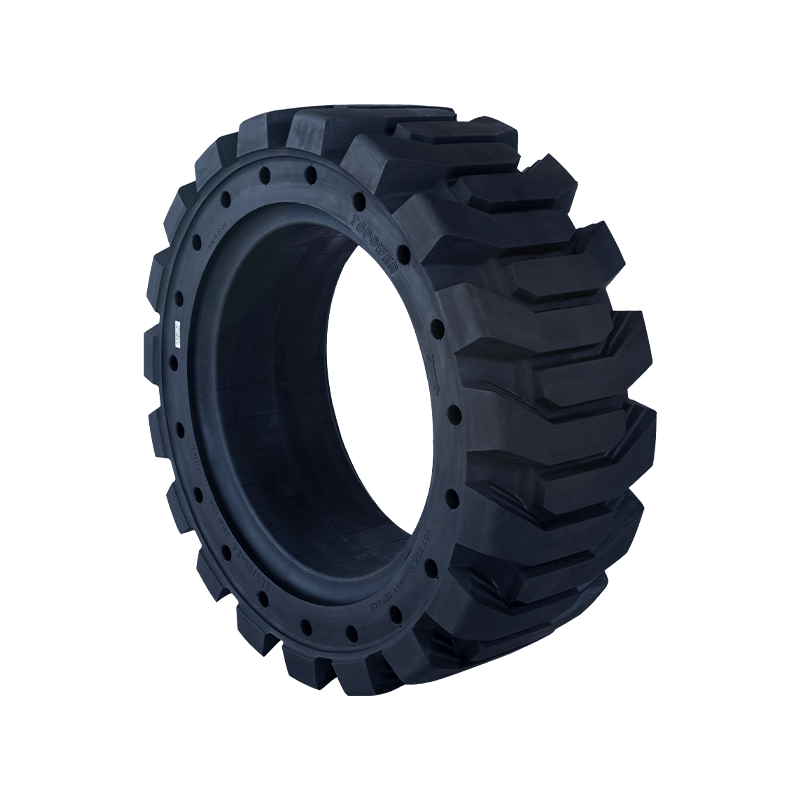
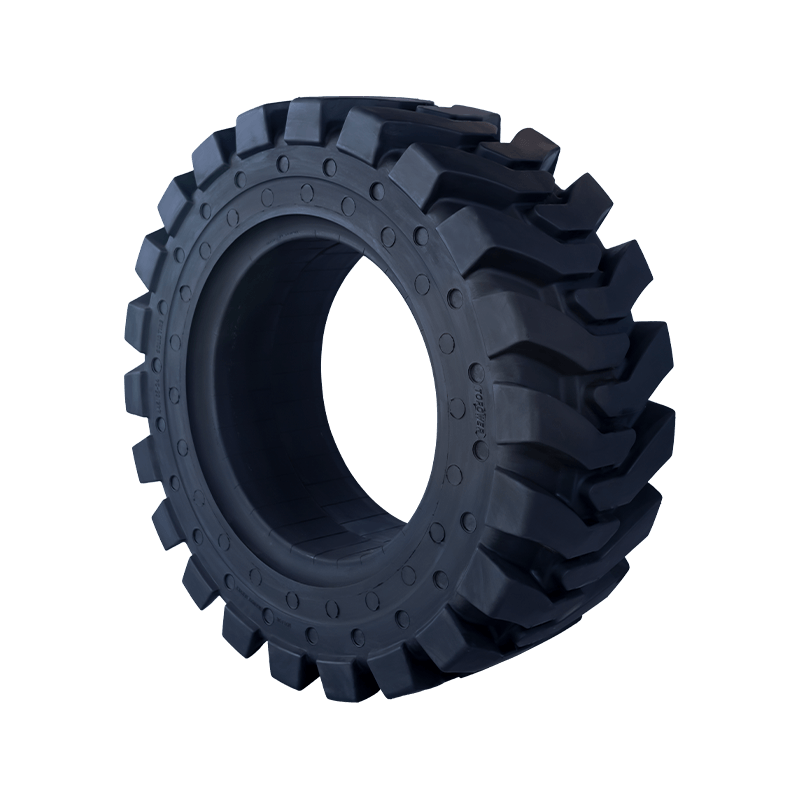
Solid tyres are tyres manufactured entirely from solid rubber compound with no internal air cavity or pressure chamber. They cannot puncture, cannot deflate, and require no pressure monitoring or inflation maintenance. Solid tyres sacrifice the ride cushioning that pneumatic (air-filled) tyres provide through their compressed air volume, but they deliver operational continuity, load capacity, and tread life advantages that make them the correct specification for the majority of industrial forklift, warehouse, port, and heavy materials handling applications.
Forklift tyres are a distinct engineering category from road vehicle tyres. They are designed for slow-speed operation under very high static and dynamic vertical loads, frequent pivoting and lateral scrubbing on hard surfaces, and continuous shift-length duty cycles in warehouses, distribution centres, and ports where downtime from a flat tyre is operationally and commercially unacceptable. The tread patterns, rubber compounds, sidewall construction, and load rating systems of forklift tyres reflect these demands and are incompatible with road tyre selection logic in almost every dimension.
What Is Tread on Tyres: Design, Function, and the Physics of the Contact Patch
Understanding what is tread on tyres requires examining both the physical structure of tread and the specific functions each structural element performs during tyre-to-surface contact. Tread is not simply a layer of rubber on the outside of the tyre: it is a precisely engineered three-dimensional surface architecture whose geometry determines the tyre's entire performance envelope across wet grip, dry grip, noise, wear rate, rolling resistance, and aquaplaning resistance.
The Anatomy of Tread on Tyres: Blocks, Grooves, Sipes, and Shoulders
Tread on tyres is composed of four structural elements that interact during contact with the road surface:
- Tread blocks: The raised rubber elements that physically contact the road surface, transmitting acceleration, braking, and cornering forces between the tyre and the ground. Block size, stiffness, and arrangement determine how much rubber contacts the road at any moment (the contact patch area) and how effectively that rubber transmits lateral and longitudinal forces.
- Grooves: Channels cut or moulded between tread blocks running circumferentially (around the tyre's circumference) or laterally (across the tyre width). Circumferential grooves are the primary water evacuation channels: on a wet road, water ahead of the contact patch is squeezed into these channels and expelled laterally from under the tyre to maintain rubber-to-road contact. A tyre travelling at 80 km/h in 8 mm of standing water must evacuate approximately 25 litres of water per second from the contact patch through its grooves to prevent aquaplaning, demonstrating the critical hydraulic engineering role that groove geometry plays in wet road safety.
- Sipes: Very narrow slots cut into individual tread blocks (typically 0.4 to 0.7 mm wide and 3 to 7 mm deep) that create additional biting edges within each block. When the tyre contacts the road under braking or cornering load, sipes close on the incoming edge and open on the departing edge, creating a wiping action that improves water film removal from the road surface immediately below each block. Sipes dramatically improve wet grip and snow traction without significantly reducing dry grip, and are particularly dense in winter and all-season tyre tread patterns.
- Shoulders: The outermost edges of the tread pattern where the tread transitions to the tyre sidewall. The shoulder blocks are the primary contributors to cornering grip because during cornering, vehicle weight transfers to the outer tyre and loads the outer shoulder blocks most heavily. Wide, stiff shoulder blocks with limited groove depth provide maximum cornering response at the cost of wet clearance; narrower shoulders with deeper lateral grooves improve wet drainage at the cost of some lateral stiffness.
Tread Depth: Legal Minimums, Safety Thresholds, and Replacement Decisions
Tread depth is measured from the top surface of the tread blocks to the bottom of the adjacent grooves. New tyres for passenger vehicles typically have 7 to 9 mm of tread depth; commercial vehicle tyres start with 12 to 16 mm; specialist off-road and industrial tyres may have 20 to 30 mm of initial tread depth. Legal minimum tread depths vary by jurisdiction:
- European Union and United Kingdom: Minimum 1.6 mm across the central 75% of the tread width and around the complete circumference for passenger vehicles. Commercial vehicles (over 3.5 tonnes) require minimum 1.0 mm across the full tread width.
- United States: Minimum 2/32 inch (approximately 1.6 mm) for most states, with many safety organisations recommending replacement at 4/32 inch (3.2 mm) for wet road safety.
- Australia: Minimum 1.5 mm across the full breadth of the tread in contact with the road.
Safety research consistently demonstrates that the real-world wet braking performance of a tyre deteriorates long before it reaches the legal minimum. TÃœV SÃœD testing found that passenger vehicles braking from 80 km/h on a wet road with 3 mm of tread depth stopped in approximately 25 to 30 metres more distance than the same vehicle with new 8 mm tyres. At 1.6 mm (the legal minimum), the difference increases to 35 to 50 metres on wet surfaces, representing a stopping distance increase of 50% to 70% compared to new tyres. This is why tyre safety organisations universally recommend replacing passenger car tyres at 3 mm rather than waiting for the 1.6 mm legal limit.
Tread Pattern Types and Their Performance Characteristics
The design of tread on tyres falls into several pattern categories, each optimised for a different performance priority:
| Pattern Type | Key Characteristic | Wet Performance | Noise Level | Primary Application |
|---|---|---|---|---|
| Symmetrical | Same pattern both sides, can be rotated any direction | Good | Low to moderate | Economy passenger tyres |
| Asymmetrical | Different inner and outer zones, fixed fitment side | Very good | Low | Performance and premium passenger tyres |
| Directional (V-pattern) | V-shaped grooves, single rotation direction | Excellent (water expulsion) | Moderate | Wet-focused and winter tyres |
| Ribbed (smooth circumferential) | Continuous ribs, minimal lateral slots | Moderate | Very low | Industrial and forklift tyres |
| Lug (deep lateral) | Deep cross grooves, high void ratio | Good on soft ground | High | Agricultural and off-road tyres |
Tread Wear Indicators and How to Read Them
All modern road tyres incorporate tread wear indicators (TWIs): small raised rubber blocks moulded into the base of the main circumferential grooves at a height of 1.6 mm. When tread wear reduces the surrounding groove depth to 1.6 mm, the wear indicator becomes flush with the adjacent tread blocks, providing a clear visual signal that the tyre has reached the legal minimum and must be replaced. TWIs are typically located at 6 equally spaced positions around the tyre circumference and are marked by a small triangle, the letters TWI, or a brand-specific symbol on the tyre sidewall indicating the position of each indicator location.
Beyond the legal indicator, practical assessment of tread on tyres should include:
- Depth gauge measurement: A tread depth gauge (available for USD 5 to USD 15) allows precise measurement of remaining tread depth at multiple points across the tread width and at multiple positions around the circumference. Measuring at five points across the width (centre, two quarter points, and both shoulder edges) reveals uneven wear patterns that indicate alignment, inflation, or suspension issues before they become safety problems.
- Wear pattern analysis: Centre-only wear indicates chronic overinflation; edge-only wear indicates chronic underinflation; diagonal wear patterns suggest alignment problems; flat spots indicate emergency braking or locked-wheel events. Each pattern points to a specific maintenance action beyond simple tyre replacement.
- Age assessment: Rubber compounds degrade over time regardless of wear, becoming harder, less grippy, and more prone to cracking. Most tyre manufacturers recommend replacement of road tyres after 6 to 10 years from manufacture date (encoded in the tyre sidewall DOT code as the last four digits: two digits for week and two for year) regardless of remaining tread depth.
Tread Rubber Compounds: How Chemistry Affects Grip and Wear Rate
The rubber compound used for tread on tyres has as much influence on tyre performance as the tread pattern geometry. Tread compound chemistry determines the fundamental trade-off between grip (which requires a softer, more deformable compound with higher hysteresis at road-contact frequencies) and wear rate (which requires a harder, more abrasion-resistant compound). Key compound developments that have changed modern tyre performance include:
- Silica-reinforced tread compounds: The introduction of silica as a partial replacement for carbon black as the primary reinforcing filler in tread rubber, pioneered by Michelin in the 1990s with the Energy tyre, dramatically reduced the grip-rolling resistance trade-off that had characterised all-carbon-black compounds. Silica-filled compounds achieve better wet grip and lower rolling resistance simultaneously, with modern premium tyre tread compounds containing 50% to 80% of their reinforcing filler content as precipitated silica.
- Winter tread compounds: Winter and all-season tyre tread compounds use rubber formulations that remain flexible at low temperatures (below 7 degrees Celsius) where standard summer compounds harden and lose grip. Higher natural rubber content, specialised synthetic rubbers, and specific plasticiser packages maintain the tread's ability to deform and create biting edges against snow and ice at temperatures where summer compound tyres become effectively rigid blocks with poor traction.
- Industrial tread compounds: Solid tyre and forklift tyre tread compounds prioritise cut resistance, abrasion resistance, and heat dissipation over the wet grip performance that road tyre compounds optimise. High carbon black content, specialist anti-degradant packages, and cross-link density optimised for slow-speed high-load contact characterise the compound chemistry of solid tyres and forklift tyres.
Solid Tyres: Construction, Types, Performance Characteristics, and Selection
Solid tyres are manufactured entirely from rubber compound with no internal air chamber, relying on the compressive stiffness of the solid rubber mass rather than the pressurised gas volume of a pneumatic tyre to support the vehicle load. This fundamental structural difference from pneumatic tyres creates a distinct set of advantages and limitations that define the applications where solid tyres are the correct specification.
How Solid Tyres Are Constructed
The construction of solid tyres differs between the two main types, press-on solid tyres and pneumatic-profile solid tyres, but both share the defining characteristic of a solid cross-section with no air cavity:
- Press-on band solid tyres: A thick solid rubber band, typically 30 to 100 mm in radial depth depending on the application, is pressed or bonded onto a metal rim with extremely high interference fit. The rubber band consists of multiple distinct layers with differentiated compound properties: a hard inner mounting layer (Shore A hardness typically 75 to 90) that grips the rim without slipping, an intermediate cushion layer (Shore A 55 to 70) that provides moderate vibration absorption, and an outer tread layer (Shore A 60 to 75) formulated for abrasion resistance and traction. The three-layer construction allows each zone to be optimised independently for its function. Press-on solid tyres are the most common type for electric counterbalance forklifts and reach trucks in warehouse environments.
- Pneumatic-profile solid tyres: Moulded in the same external profile shape as an equivalent pneumatic tyre, including a moulded sidewall and a bead structure that seats in a standard drop-centre wheel rim in the same manner as a pneumatic tyre. Pneumatic-profile solid tyres can be fitted to standard pneumatic rims without modification, making them suitable as flat-free replacements in applications where the vehicle was originally equipped with pneumatic tyres. They are heavier and provide less cushioning than the pneumatic tyre they replace, but eliminate the puncture risk completely.
- Foam-filled tyres: A variant of the pneumatic tyre concept where the air cavity of a standard pneumatic tyre is filled with polyurethane foam that cures to fill the internal volume completely. Foam filling adds the puncture immunity of a solid tyre while retaining the pneumatic tyre's rim compatibility and some portion of its cushioning capability (reduced from a fully pneumatic tyre but better than a solid rubber alternative). Foam-filled tyres are popular for outdoor forklifts on rough terrain and for construction equipment where both puncture resistance and ride quality matter.
The Key Advantages of Solid Tyres Over Pneumatic Alternatives
Solid tyres deliver several concrete operational advantages that justify their higher initial unit cost and reduced ride comfort in industrial applications:
- Zero puncture risk: There is no air to lose, no inner tube to pinhole, and no sidewall to cut in a solid tyre. In environments where floor contamination from nails, wire, glass, staples, or metal swarf is unavoidable (recycling facilities, scrap yards, construction sites, tyre recycling plants), pneumatic tyres suffer multiple punctures per shift while solid tyres operate indefinitely without interruption.
- No inflation maintenance requirement: Pneumatic tyres lose pressure through natural permeation and require regular pressure checking and inflation to maintain the correct operating pressure (typically weekly checks for forklifts under intensive use). Under-inflated pneumatic forklift tyres cause load instability, increased rolling resistance, accelerated tyre wear, and rim damage. Solid tyres require none of this maintenance because there is no inflation pressure to manage.
- Greater load capacity per unit size: At equivalent external dimensions, a solid tyre carries a higher static load rating than a pneumatic tyre of the same size because the solid rubber cross-section can support load without the risk of sidewall bulge-to-ground contact that limits pneumatic tyre load ratings. For high-capacity forklifts (5 to 16 tonnes), solid tyres allow the load-carrying requirement to be met within smaller external dimensions than equivalent pneumatic tyres, which assists with load visibility and stability.
- Longer tread life on hard surfaces: Solid tyres used on smooth concrete and asphalt warehouse floors experience lower abrasion rates than pneumatic tyres because the solid rubber mass dissipates scrubbing energy through a larger cross-sectional area. A quality solid forklift tyre on a 2-tonne electric counterbalance forklift in a distribution centre environment typically lasts 2,500 to 4,000 operating hours before requiring replacement, versus 1,500 to 2,500 hours for a comparable pneumatic tyre.
The Limitations of Solid Tyres That Restrict Their Application
- Vibration and operator fatigue: The solid rubber cross-section transmits significantly more vibration from floor surface irregularities to the vehicle frame and operator platform than an air-cushioned pneumatic tyre. On smooth concrete warehouse floors this difference is minimal; on rough outdoor surfaces (cobblestones, cracked asphalt, unpaved areas), the vibration transmitted through solid tyres can cause operator fatigue and discomfort that reduces productivity and raises ergonomic health and safety concerns. European Directive 2002/44/EC on occupational exposure to whole-body vibration is a regulatory driver that has led some operations with rough surfaces to retain pneumatic tyres specifically to manage vibration exposure.
- Speed limitation: The heat generated within the solid rubber mass during rolling at elevated speeds cannot dissipate as effectively as in a pneumatic tyre (which benefits from convective cooling of the internal air volume). Solid tyres are typically limited to maximum operating speeds of 15 to 25 km/h depending on load and tyre size. This is rarely a constraint for forklifts (maximum permitted speed in most warehouse environments is 10 to 12 km/h) but limits the applicability of solid tyres for vehicles required to travel at road speeds between sites.
- Higher vehicle weight: Solid tyres are heavier than pneumatic tyres of equivalent external dimensions, increasing the total vehicle weight. For electric forklifts operating on weight-restricted mezzanine floors or multi-storey distribution facilities, this additional weight must be factored into floor loading calculations.
Forklift Tyres: Engineering Requirements, Types, and Selection Logic
Forklift tyres operate under conditions that are more demanding than road vehicle tyres in several specific ways, and the engineering requirements that result from these conditions place forklift tyres in a distinct product category from all other tyre types. Understanding the specific operating environment of a forklift is the foundation of correct forklift tyre selection, because the wrong tyre type for a specific application causes accelerated wear, vehicle instability, operator safety risks, and floor damage that all have direct operational and financial costs.
The Unique Operating Demands Placed on Forklift Tyres
A forklift's operating cycle imposes demands on its tyres that have no equivalent in road vehicle tyre service:
- Static overload at full rated capacity: When a forklift lifts its rated load, the load is cantilevered forward from the front axle, placing a dynamic vertical force on the front tyres that may exceed the nominal vehicle weight by 200% to 400% depending on load weight and mast tilt. The front tyres of a 3-tonne capacity forklift lifting 3 tonnes at maximum forward mast tilt may experience momentary combined loads exceeding 6 to 8 tonnes on the two front tyres combined.
- Continuous tight-radius turning with load: Forklift operation in narrow aisles requires the rear-steered tyres to pivot through very large angles (the rear axle steers on most counterbalance forklifts, turning up to 75 to 80 degrees) while the vehicle is simultaneously loaded and moving. This turning motion generates lateral scrubbing between the rear tyres and the floor surface that accelerates tyre wear far beyond what straight-line road driving produces on comparable tyres.
- High-cycle duty on a compact area: A busy distribution centre forklift may complete 50 to 150 pick-and-deposit cycles per shift, each involving acceleration, deceleration, turning, and load lifting, all within the confined area of a single warehouse bay or aisle. The tyre-hours accumulated in a single operating shift equate to substantial road mileage in terms of tread wear.
- Surface contamination and temperature extremes: Forklifts operating in cold store environments at minus 25 to minus 30 degrees Celsius require rubber compounds that remain flexible at these temperatures. Forklifts in steel mills or foundries operate in environments where floor temperatures from spilled metal can reach hundreds of degrees Celsius. Forklifts in food processing environments face washdown with hot water and chemical sanitisers. Each environment demands specific compound formulations that generic forklift tyre ranges do not provide.
Forklift Tyre Types: Cushion vs Pneumatic vs Solid
Forklift tyres are available in three primary configurations, each suited to specific vehicle types and operating environments:
- Cushion solid tyres (press-on band): The standard tyre for indoor electric counterbalance forklifts and reach trucks operating on smooth concrete surfaces. Available only for smooth, flat, hard indoor surfaces. Provide the lowest rolling resistance (reducing battery consumption in electric forklifts), highest load capacity, and longest service life in indoor warehouse environments. Cannot be used outdoors or on rough surfaces due to ride quality and potential vehicle stability issues on uneven ground.
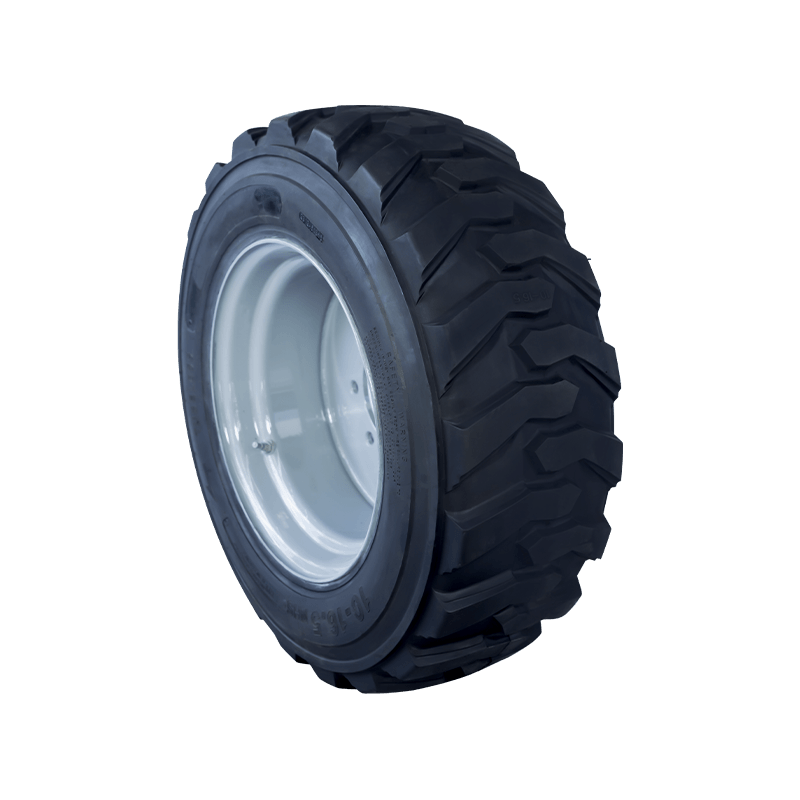
- Pneumatic forklift tyres: Bias-ply or radial-ply tyres with air-filled cavities, providing the cushioning needed for outdoor operation on rough terrain, dock areas, unpaved yard surfaces, and multi-surface applications. Pneumatic forklift tyres are required for rough-terrain and telescopic handler type forklifts and for indoor/outdoor mixed-operation vehicles. They offer better flotation on soft ground and lower vibration on rough surfaces than solid alternatives, at the cost of puncture vulnerability and inflation maintenance requirements.
- Pneumatic-profile solid tyres: Solid rubber tyres moulded in the external profile of a pneumatic tyre, fitting standard drop-centre rims. Used as puncture-immune alternatives to pneumatic forklift tyres in outdoor applications where the surface is hard enough that pneumatic-profile solid tyres can be used without unacceptable vibration levels. Common in ports, steel yards, lumber yards, and recycling facilities where punctures in pneumatic tyres are frequent and operationally disruptive.
Forklift Tyre Marking and Load Rating Systems
Forklift tyre size designations use a different format from road tyre markings and must be interpreted correctly to ensure correct replacement selection:
- Cushion solid tyre marking example: 21 x 8 x 15. The three numbers represent: tyre outer diameter (21 inches), tyre section width (8 inches), and rim diameter (15 inches). All three dimensions must match the vehicle manufacturer's specification and the press-on band rim dimensions exactly.
- Pneumatic forklift tyre marking example: 8.25 x 15. Section width (8.25 inches) and rim diameter (15 inches). The absence of a load index and speed rating in the standard format reflects the forklift tyre's industrial-use-only categorisation; load ratings are referenced from the tyre manufacturer's load table at the applicable operating speed and inflation pressure.
- Metric marking: 250/75 R15. Section width (250 mm), aspect ratio (75, meaning section height is 75% of section width), and rim diameter (15 inches, with R indicating radial construction). This metric format is becoming more common on larger forklift tyres in alignment with ISO standardisation.
A critical safety rule in forklift tyre selection is that the tyre's load rating at the forklift's operating speed must equal or exceed the maximum load imposed on that tyre position as specified by the forklift manufacturer. Fitting under-rated tyres because they are physically compatible with the rim and appear to fit the vehicle is a serious safety violation that has caused forklift tip-over accidents when tyres have failed under overload conditions.
Forklift Tyre Tread Patterns and Their Function
Unlike road tyres where tread pattern is primarily about wet road water evacuation, forklift tyre tread patterns serve different functional priorities that reflect the forklift's operating environment and movement patterns:
- Ribbed pattern (smooth circumferential ribs): The most common pattern for indoor cushion solid forklift tyres. Circumferential ribs provide uniform contact across the tyre width for straight travel and even wear distribution, while the narrow circumferential grooves between ribs carry away any minor surface contamination without the lateral slots that would reduce the tyre's footprint area and increase floor marking on polished concrete floors. The ribbed pattern produces the lowest floor marking risk, making it the preferred choice in operations where finished floor surfaces must be protected.
- Lug pattern (deep lateral grooves): Used on outdoor pneumatic forklift tyres operating on unpaved surfaces, mud, loose aggregate, or wet dock areas. Deep lateral lugs provide the traction needed on soft or contaminated surfaces where a ribbed tyre would spin or slip, and the large void ratio of the lug pattern self-cleans as mud and debris are expelled by the rotating tyre without packing in the grooves.
- Block pattern (combined circumferential and lateral grooves): An intermediate pattern providing better traction than a ribbed pattern in mixed indoor-outdoor and wet-surface applications, while maintaining better wear characteristics than a pure lug pattern on hard surfaces. Used for multi-surface forklifts that regularly transit between warehouses and outdoor yard areas.
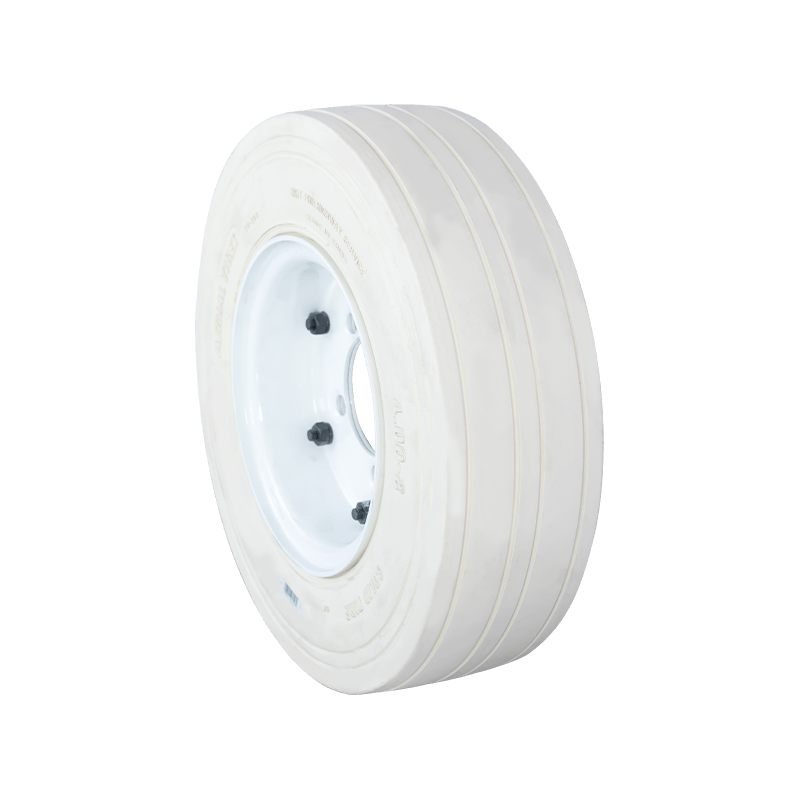
- Non-marking compound: A tread compound designation rather than a tread pattern, non-marking forklift tyres are compounded without the carbon black that gives standard tyres their black colour. Non-marking tyres are white or light grey and are mandatory in food processing, pharmaceutical, paper, and other environments where black rubber marks on floors or product contamination from tyre rubber is unacceptable. Non-marking compounds are available in both solid cushion and pneumatic-profile solid tyre formats.
When to Replace Forklift Tyres: Wear Indicators and Safety Limits
Forklift tyre replacement timing is determined differently from road tyre replacement because the primary concern is not wet-road grip (which solid tyres do not rely on tread depth to maintain) but structural integrity, load-bearing capacity, and vehicle stability as the tyre wears:
- The 50% wear line (safety line): Most press-on solid forklift tyres have a moulded or engraved line at 50% of the original tread depth (called the wear line, safety line, or remove-from-service line). When the tread surface reaches this line, the tyre must be replaced regardless of any other assessment, because the cushioning layer thickness has been reduced to a point where the tyre can no longer provide adequate load distribution and vibration absorption, and rim contact with the floor surface becomes a risk. Operating solid forklift tyres beyond the wear line is a significant operator safety risk and a forklift fleet management violation in most jurisdictions.
- Chunking and tearing: Sections of tread breaking away from the tyre body (chunking) indicate that the tyre has experienced overloading, operating on sharp debris, or compound degradation from chemical contamination. Any chunking requires immediate tyre removal because the missing material creates an asymmetric tyre that causes vehicle instability, and the exposed underlying material may fail suddenly under the next load cycle.
- Sidewall cracking: Radial or circumferential cracks in the tyre sidewall or body indicate either age-related ozone cracking (in tyres stored or operated for extended periods without use) or structural fatigue from overloading. Deep sidewall cracks require immediate replacement; surface crazing alone may be acceptable depending on depth, but requires expert assessment.
- Flat spotting: A localised flat area on the tyre circumference caused by locking wheels during emergency braking or by the vehicle being parked stationary under load for an extended period (particularly on cold-stored vehicles where the rubber becomes stiff). Severe flat spots create an uneven rolling surface that causes periodic shock loads on the vehicle frame and operator platform with each tyre revolution, and the thinned rubber at the flat spot location is at risk of internal delamination.
Solid Tyres for Forklifts: Matching Compound and Construction to Operating Environment
The selection of solid tyres for a specific forklift application involves far more variables than simply matching the size to the forklift manufacturer's specification. The operating environment, shift duration, floor type, load weight, and any special contamination or temperature considerations all affect which solid tyre construction and compound formulation will provide the best balance of service life, performance, and total cost.
Compound Hardness Selection for Indoor Solid Forklift Tyres
Solid tyre hardness (measured on the Shore A scale, where higher numbers indicate harder rubber) is the most directly adjustable parameter in solid forklift tyre selection and directly trades ride quality against wear life:
- Soft compound (tread Shore A 60 to 65): Better cushioning, lower operator vibration, better traction, faster wear rate. Preferred for operator comfort-sensitive applications, operations with vibration exposure concerns, and facilities where floors are in good condition and floor marking is not a concern.
- Medium compound (tread Shore A 65 to 72): Balanced performance across comfort, wear rate, and traction. The most widely used specification for general-purpose counterbalance forklift applications on smooth concrete in standard warehouse and distribution environments.
- Hard compound (tread Shore A 72 to 80): Maximum abrasion resistance and wear life, minimum cushioning. Preferred for very long shift operations, high mileage per shift forklifts, or environments where floor contamination with abrasive material (fine aggregate dust, metal shavings) accelerates tyre wear in softer compounds.
Specialist Solid Tyre Formulations for Extreme Environments
- Cold store solid tyres: Formulated with higher natural rubber content and cold-weather plasticisers that maintain compound flexibility at temperatures between minus 30 and plus 5 degrees Celsius, where standard compounds would stiffen, lose grip, and develop surface cracking. Operating standard compound solid tyres in deep freeze cold stores dramatically shortens tyre life and increases the risk of sudden tyre chunk-out from thermal shock.
- Heat-resistant solid tyres: Formulated for steel mill, foundry, and glass plant environments where floor temperatures from process operations, radiant heat, and occasional metal spill contact can damage standard rubber compounds. Heat-resistant formulations use higher cross-link density and specialist antioxidant packages that maintain compound integrity at sustained elevated temperatures.
- Chemical-resistant solid tyres: For chemical processing and battery manufacturing environments where floor contamination from acids, alkalis, or organic solvents would attack and swell standard rubber compounds, specialist chemical-resistant formulations use alternative base rubber polymers (EPDM, neoprene, or nitrile rubber in place of natural or SBR rubber) that are chemically inert to the specific contaminants present.
- ESD (electrostatic dissipative) solid tyres: For semiconductor manufacturing, electronics assembly, and explosive materials handling environments where static electricity accumulation and discharge creates product damage or ignition risk, ESD-formulated solid tyres incorporate conductive carbon black in controlled concentrations to maintain a specific surface resistivity range (typically 10^4 to 10^6 ohms) that dissipates static charge continuously without fully insulating the vehicle from ground potential.
Total Cost of Ownership: Comparing Pneumatic vs Solid Forklift Tyres Across Operational Life
The decision between pneumatic and solid forklift tyres is frequently made on initial unit cost alone, which consistently produces the wrong outcome because the ongoing operational costs of pneumatic tyres (puncture repair, inflation maintenance, premature replacement from damage) in many environments exceed the total lifecycle cost of solid tyres despite solid tyres' higher initial unit price.
Cost Comparison Framework: Pneumatic vs Solid Tyres in a Typical Distribution Centre
| Cost Category | Pneumatic Forklift Tyres | Press-On Solid Tyres | Notes |
|---|---|---|---|
| Initial tyre cost per set of 4 | USD 300 to USD 600 | USD 600 to USD 1,200 | Solid tyres cost 1.5 to 2x more initially |
| Puncture repairs per year | 4 to 12 events (USD 50 to USD 150 each) | Zero | Includes labour and downtime cost |
| Inflation maintenance labour | Weekly check required | None required | Approximately 15 minutes per forklift per week |
| Average service life | 1,500 to 2,500 hours | 2,500 to 4,000 hours | On smooth indoor concrete |
| Unplanned downtime risk | High (punctures) | Negligible | Critical in time-sensitive operations |
| Floor marking risk | Higher (lateral tread) | Lower (ribbed tread) | Significant in food/pharma facilities |
In a typical high-throughput distribution centre operating two or three shifts per day, the total annual cost of maintaining pneumatic tyres (including puncture repairs, inflation maintenance labour, premature replacement from damage, and unplanned downtime cost when a forklift is removed from service for tyre repair) routinely exceeds the total cost of solid tyres despite the solid tyre's higher initial unit price. Industry analyses from major forklift fleet management programmes indicate that switching from pneumatic to solid tyres reduces total annual tyre-related costs by 30% to 50% in high-puncture-risk environments, while also improving operational reliability and reducing safety incidents related to sudden tyre failure.
Frequently Asked Questions
1. What is tread on tyres and why does tread depth matter for road safety?
What is tread on tyres is the patterned rubber surface on the outer circumference of the tyre that contacts the road. The tread pattern consists of raised rubber blocks separated by grooves (channels) and sipes (fine slots within blocks). Tread depth matters for road safety primarily because the grooves serve as water evacuation channels on wet roads: they direct water away from the contact patch between the tyre and the road surface, maintaining rubber-to-road contact and preventing aquaplaning. As tread wears down, the groove volume decreases and the tyre's ability to evacuate water at speed is reduced. Testing shows that wet braking distance increases by 35 to 50 metres (equivalent to 50% to 70% longer stopping distance) when tread depth reaches the 1.6 mm legal minimum compared to new tyres at 7 to 8 mm. This is why safety authorities recommend replacing tyres at 3 mm rather than waiting for the legal 1.6 mm minimum, particularly in climates with frequent rain.
2. What are solid tyres and what makes them different from standard pneumatic tyres?
Solid tyres are manufactured entirely from solid rubber compound with no internal air cavity, chamber, or tube. Standard pneumatic tyres derive their load-carrying ability and ride cushioning from compressed air sealed inside the tyre cavity; solid tyres derive these properties from the compressive stiffness of the solid rubber cross-section. The practical differences are: solid tyres cannot puncture or deflate because there is no air to lose; they require no inflation pressure monitoring or maintenance; they carry higher static loads at equivalent external dimensions than pneumatic tyres; and they have longer service life on hard smooth surfaces. Their limitations are reduced ride cushioning (transmitting more vibration to the vehicle and operator), higher vehicle weight, and maximum speed restrictions that make them unsuitable for road use. Solid tyres are the standard specification for indoor warehouse forklifts and materials handling equipment operating on smooth concrete surfaces.
3. When are solid tyres better than pneumatic tyres for forklift operations?
Solid tyres are better than pneumatic tyres for forklift operations in any indoor environment with smooth concrete or asphalt surfaces, where floor contamination from sharp objects (nails, wire, staples, glass, metal swarf) creates puncture risk that disrupts operations, where consistent high-intensity shift operation means that forklift downtime for puncture repair is commercially unacceptable, or where the load capacity requirements of the forklift are at the upper limit of what pneumatic tyres can reliably support. Pneumatic tyres remain better than solid tyres for outdoor operation on rough or unpaved surfaces (where the cushioning of air pressure is needed to protect the vehicle and operator from shock loads and to provide flotation on soft ground), for vehicles that travel at speeds above 15 to 25 km/h, and for rough-terrain operations where the superior traction and self-cleaning of pneumatic tyre tread patterns on loose surfaces outweighs the puncture risk disadvantage.
4. How do I know when forklift tyres need to be replaced?
Forklift tyres need to be replaced when any of the following conditions are present. For press-on solid forklift tyres: when the tread surface has worn to the moulded wear line (safety line) that indicates 50% tread depth remaining, because below this point the cushioning layer is insufficient and rim-to-floor contact risk increases significantly. For all forklift tyre types: chunking or tearing of tread sections (indicating structural failure), deep sidewall cracking (indicating age degradation or overloading), severe flat spotting from locked-wheel events, visible cord or ply material through the tread or sidewall, or any deformation that makes the tyre visibly non-circular during operation. A pre-shift safety inspection that includes tyre condition assessment (mandated by OSHA in the USA under 29 CFR 1910.178 and by equivalent regulations in most other jurisdictions) should identify all of these conditions before the forklift enters service.
5. What do the numbers in forklift tyre size markings mean?
Forklift tyre size markings use two common formats. For cushion solid press-on band tyres, the format is three numbers separated by the letter x: for example, 21 x 8 x 15 means the tyre outer diameter is 21 inches, the tyre section width is 8 inches, and the rim diameter is 15 inches. All three dimensions must match the press-on rim exactly for correct fitment and safe operation. For pneumatic forklift tyres, the format is typically two numbers separated by the letter x or a multiplication sign: for example, 8.25 x 15 means the section width is 8.25 inches and the rim diameter is 15 inches. In the newer metric format (for example, 250/75 R15), the section width is 250 mm, the aspect ratio (section height as a percentage of section width) is 75%, and the rim diameter is 15 inches. Always verify the complete size marking against the forklift manufacturer's specification plate before purchasing replacement tyres, as multiple sizes may look visually similar but differ in load capacity or dimensional compatibility.
6. What are non-marking forklift tyres and when are they required?
Non-marking forklift tyres are solid or pneumatic-profile tyres manufactured with rubber compounds that do not contain the carbon black pigment used in standard black tyres. Standard black forklift tyres leave visible black rubber deposits (tyre marks) on polished floors, particularly during tight turns and sudden stops where lateral scrubbing deposits rubber residue. Non-marking tyres are white, light grey, or tan in colour and leave no visible marks on the floor surface. They are required in food processing, beverage production, pharmaceutical manufacturing, electronics assembly, and paper or printing industries where black rubber marks on floors, products, or pallets are unacceptable for aesthetic, food safety, or product quality reasons. Non-marking forklift tyres typically cost 15% to 30% more than equivalent black compound tyres and may have slightly shorter abrasion life because the absence of carbon black reduces the abrasion resistance that carbon black provides as a reinforcing filler in standard rubber compounds.
7. How does tread pattern affect forklift tyre selection for different surfaces?
Tread pattern on forklift tyres serves different functions from road tyre tread because forklifts primarily operate at low speeds where aquaplaning is not a concern, and the dominant performance requirements are traction under load, floor surface protection, and wear rate management. Ribbed patterns (smooth circumferential ribs) are optimal for smooth indoor concrete because they maximise contact area for load distribution, produce minimal floor marking, and wear evenly across the tyre width during the combination of straight travel and tight turns typical of warehouse operation. Lug patterns (deep lateral grooves) are required for outdoor surfaces, dock areas, and unpaved yards where water, mud, and loose material would cause a ribbed tyre to spin or slip, and where the self-cleaning action of widely spaced lugs maintains traction as the tyre rotates. Block patterns combine elements of both and are used for mixed indoor-outdoor operations or for facilities where the floor surface varies between areas.
8. What causes rapid tyre wear on forklifts and how can it be reduced?
Rapid tyre wear on forklifts has four primary causes, each with a specific mitigation. First, overloading beyond the forklift's rated capacity places excessive compressive and shear stress on the tyre contact patch, accelerating wear and risking structural failure: mitigation is strict adherence to load capacity limits with operator training and load weight verification. Second, aggressive driving behaviour including rapid acceleration, hard braking, and high-speed tight turns generates high scrubbing forces between tyre and floor: mitigation is operator training programmes and speed restriction through forklift fleet management systems. Third, abrasive floor surface contamination (concrete grit, metal swarf, sand) accelerates tread abrasion when driven over repeatedly: mitigation is floor cleaning programmes and routing forklifts away from abrasive debris areas. Fourth, incorrect tyre compound selection for the environment (for example, using a soft compound tyre in a high-abrasion environment where a hard compound was appropriate) produces faster wear than the optimum compound would experience: mitigation is specialist tyre selection consultation with the tyre supplier based on the specific operating environment data.
9. Can solid tyres be fitted to any forklift originally equipped with pneumatic tyres?
Pneumatic-profile solid tyres can be fitted to forklifts originally equipped with pneumatic tyres in many cases, because they are moulded to fit standard drop-centre pneumatic rims without modification. However, several engineering and operational factors must be verified before making this substitution. The forklift manufacturer's specification must be checked to confirm that solid tyre fitment is approved: some forklift models have suspension or mast geometry that is incompatible with the slightly different rolling radius or rigidity of solid tyres. The forklift's wheel load rating must be verified against the solid tyre's higher weight to confirm that bearings and hub assemblies can manage the increased unsprung mass. For indoor-only forklifts with cushion rim designs (not drop-centre), press-on band solid tyres are the only applicable type and require compatible press-on rims which are not interchangeable with pneumatic drop-centre rims. Always confirm compatibility with both the forklift manufacturer and the tyre supplier before substituting solid for pneumatic tyres.
10. How does temperature affect solid tyres and forklift tyres differently from road tyres?
Temperature affects solid tyres and forklift tyres through mechanisms distinct from road tyres because the load and speed conditions are fundamentally different. Road tyres at highway speeds generate heat from internal viscoelastic deformation of the rubber that must be managed through tyre design and inflation pressure; the air volume inside a pneumatic road tyre acts as a heat sink and convective cooling medium. Solid forklift tyres generate heat at the tyre surface through scrubbing friction during tight turns and under high loads, but the slow operating speeds limit the total heat generation rate, meaning solid tyre heat build-up is generally manageable within normal compound design limits at standard shift-length duty cycles. At environmental temperature extremes, solid tyre compound selection becomes critical: cold store operations below minus 15 degrees Celsius require specifically formulated cold-weather compounds to prevent the rubber stiffening and surface cracking that standard compounds develop at low temperatures. High-temperature environments (steel mills, foundries) require heat-resistant compound formulations that maintain structural integrity and tread adhesion at sustained elevated operating temperatures that would degrade standard forklift tyre compounds within weeks of service.