 English
 русский
 Español
 عربى


A 2.5-ton counterbalance forklift can tip on a flat concrete aisle even when the load is under the rated capacity. The cause is often a small shift rather than a dramatic mistake: the load sits a little too far forward, the mast is tilted while the truck turns, a tire is low on pressure, or the operator travels with the load high and the steering wheel moving too fast. The forklift's stability triangle is the model that explains why those small changes matter. Its purpose is to define the zone in which the combined center of gravity of the truck and the load must remain so that all support points stay on the ground. When that combined center moves outside the triangle, the machine begins to tip.
The stability triangle is not a physical part, and it does not replace the capacity plate or operator training. It is a field model for load capacity, turning, mast tilt, tire choice, maintenance, and operator judgment. The practical conclusion is direct: treat the triangle as a boundary, not a target. Keep the combined center of gravity low, centered, and well inside it, and the forklift keeps margin. Move it toward an edge, and the margin disappears.
What the Forklift Stability Triangle Is and Why It Has Three Points
On a typical counterbalanced forklift, the stability triangle is formed by three support points: the center of the left front tire contact patch, the center of the right front tire contact patch, and the center of the rear steer axle. The front points carry the load side of the machine. The rear point carries the counterweight side. The rear wheels normally pivot together on a center pin, so the rear axle behaves like one effective support point rather than two independent corners. That is why a four-wheel forklift is still modeled with a three-point support base. The result is a triangle, not a rectangle.
The forklift's center of gravity is not fixed. The empty truck has one center of gravity. The load has another. Together they produce a combined center of gravity that moves as the load is raised, lowered, tilted, shifted, or turned. The stability triangle is the area inside which that combined center must stay. If the combined center stays inside the triangle, the machine remains supported by all three points. If it moves outside, the truck starts to rotate around a tipping line. The triangle is therefore a simple visual answer to a difficult question: how close is this machine to losing support?
| Support point | Location | Effect on stability |
|---|---|---|
| Left front contact point | Center of the left front tire footprint | Forms the front-left corner of the support base and carries load-side weight. |
| Right front contact point | Center of the right front tire footprint | Forms the front-right corner of the support base and carries load-side weight. |
| Rear axle center | Center pivot of the rear steer axle | Forms the narrow rear point and allows the rear wheels to follow uneven ground. |
The shape matters. The front edge of the triangle is wide because the front wheels are spread apart. The rear point is narrow because the rear axle pivots at one center. That difference explains why a forklift can feel stable in a straight line and then become less forgiving in a tight turn. The narrow rear end gives less lateral margin than many operators expect. A three-wheel counterbalance truck also uses a three-point support base, but the geometry can differ. Reach trucks, order pickers, and articulated machines may have different support polygons. Use the manufacturer's capacity plate and training materials for the specific machine rather than assuming every industrial truck follows the same drawing.
The triangle is also a reminder that a forklift is not a car. A car is designed to be stable at road speed with a low center of gravity and a wide track. A counterbalance forklift carries a heavy load on a short wheelbase and steers with the rear wheels. The operator sits behind a mast that can be tilted, and the load can be raised several meters. The machine is useful because it is compact and has a small turning radius, but that same design means the stability margin changes constantly. The triangle is a way to keep that changing margin visible.
The Purpose of the Forklift's Stability Triangle in Load Capacity
The main purpose of the forklift's stability triangle is to turn an invisible center of gravity into a visible operating limit. The capacity plate on the truck gives a rated load at a stated load center and lift height. The triangle explains why that rating is not a simple weight number. A load has weight, but it also has a lever arm. Load moment is weight multiplied by distance from the front wheel line. A 1,000 kg load at a 600 mm load center creates a smaller moment than the same 1,000 kg load at a 900 mm load center. The load is the same, but the effect on the truck is not.
Many counterbalance forklifts are rated at a 24-inch or 600 mm load center. That number is a rating point, not a suggestion. If the load center moves to 36 inches or 900 mm, the load moment for the same weight increases by 50 percent. The combined center of gravity moves forward, toward the front edge of the triangle. The rear axle carries less counterweight effect, and the truck approaches forward tipping. The capacity plate may still say the truck can lift a certain weight, but the real question is whether it can lift that weight at the actual load center, height, and mast tilt. The triangle is the reason a competent operator asks about load dimensions, not just load weight.
Attachments make the same point. A side shifter, fork positioner, clamp, or extension adds weight and moves the load forward. The attachment may be useful, but it consumes capacity. A truck that handles a load comfortably with standard forks may be near its limit with a heavy attachment. The stability triangle does not calculate the new rating for the operator, but it explains why the rating changes. If the attachment moves the combined center of gravity forward or raises it, the safe operating envelope shrinks. The capacity plate for the equipped configuration is the authority. The triangle is the mental model that helps the operator respect it.
Forward tipping is often described as a see-saw. The front axle area acts like the pivot, the load on the forks acts on one side, and the truck's counterweight acts on the other. When the load moment is greater than the counterweight moment, the rear wheels begin to lift. At that point, the combined center of gravity has moved toward the front edge of the stability triangle. If the operator continues to raise, tilt forward, or drive, the truck can rotate over the front edge. The rear wheels lifting is a warning, not a normal operating condition. A forklift that is light on the rear axle is already telling the operator that the margin is gone.
Forward Tipping and the Load-Moment See-Saw
Forward tipping is the most familiar use of the triangle because it is easy to picture. The load is a weight on a lever. The farther it is from the front wheel line, the greater the tipping force. The higher it is lifted, the higher the combined center of gravity and the less lateral margin the truck has. If the mast is tilted forward, the load center moves farther forward. If the truck brakes while the load is raised, inertia adds a forward force. If the load is unstable and shifts after the lift, the combined center can move suddenly. The triangle does not prevent any of these actions, but it gives the operator a way to predict the result.
A common mistake is to treat rated capacity as a license to lift the stated weight at any height or reach. A 5,000 lb rating at a 24-inch load center does not mean 5,000 lb at 36 inches, and it does not mean 5,000 lb with the mast raised and tilted. The rating is a matched set of conditions. The further the load is from the carriage, the lower the remaining capacity. The higher the load is lifted, the more carefully the operator must manage travel speed, floor conditions, and steering. The triangle explains why the same load can feel secure at one height and precarious at another.
Operators should also think about the load itself. A pallet with a high center of gravity, a drum, a long pipe, or an uneven machine frame can shift weight after the forks are inserted. A load that is off-center to one side moves the combined center toward a side edge of the triangle. A load that is not fully seated against the backrest increases the load center. A load that overhangs the forks can flex or swing. The triangle is not only about the truck's geometry. It is about the total mass in motion, including the load and any attachment. The operator's job is to keep that total mass centered low and inside the support base.
Sideways Tipping, Rear-Wheel Steering, and the Narrow End
Sideways tipping is often less intuitive than forward tipping, but the triangle explains it clearly. The side edges of the triangle run from each front wheel to the rear axle center. If the combined center of gravity crosses one of those side edges, the truck tips sideways. The rear end is narrow, so the margin near the rear axle is smaller than the front width suggests. A turn creates centrifugal force acting outward from the turn center. That force increases with the square of speed and decreases with a larger turn radius. Doubling speed in the same turn produces four times the outward force. Reducing speed is therefore the most direct way to protect the side margin.
Rear-wheel steering adds a handling characteristic that many new operators underestimate. The rear of the forklift swings outward as the front turns in. In a tight aisle, the operator may focus on the forks and forget the rear counterweight. If the turn is sharp and the load is high, the rear swing combines with centrifugal force and the narrow rear point of the triangle. The result can be a rear wheel lifting or a sudden sideways tip. The correct habit is to slow down before the turn, keep the load low, and make a squared turn rather than a sweeping turn. The steering input should be smooth. A sudden correction at speed is exactly the kind of dynamic input the triangle is warning against.
Floor conditions also matter on the side edge. A dock plate, expansion joint, pothole, or soft patch can tilt the truck and shift weight to one side. A side slope in a yard or ramp changes the effective gravity vector relative to the truck. The stability triangle is drawn for level ground, so a slope reduces the margin in the downhill direction. If the truck is on a side slope, the combined center is already closer to one edge before the operator turns or raises the load. The safe response is not to test the limit. It is to avoid the slope, reduce the load, lower the mast, or use a different route. The triangle is a static diagram, but the operator must apply it to a dynamic situation.
Dynamic Forces: Why Stability Is Never Static
The stability triangle is usually drawn with the truck at rest, but a working forklift is never truly static. Acceleration, braking, turning, lifting, lowering, tilting, and floor shocks all move the combined center of gravity. The triangle is the baseline. The operator's decisions determine how far the combined center moves from the center of that baseline. A load that is stable at rest can become unstable when the truck starts, stops, or turns. A load that feels light on the forks can produce a large moment when it is raised. A smooth operator preserves margin. An abrupt operator consumes it.
Braking is a good example. When the truck slows, the load tends to keep moving forward. The combined center shifts toward the front edge of the triangle. If the load is already forward and high, braking can produce a tip that would not happen at rest. Acceleration has the opposite effect, shifting load rearward, but it can still unsettle a tall load. Turning adds lateral force. Lifting raises the combined center and reduces the lateral margin. Tilting the mast moves the load forward or back. Each control input changes the geometry. The operator should make one smooth input at a time when the load is near a limit, rather than combining speed, turn, lift, and tilt.
| Action or condition | Effect on combined center | Practical response |
|---|---|---|
| Load moved forward on the forks | Moves toward the front edge | Reduce load, retract the load, or use a truck rated for the actual load center. |
| Mast tilted forward | Moves forward and can raise the load center | Keep the mast tilted back during travel and tilt forward only when placing the load. |
| Sharp turn at speed | Moves toward a side edge through centrifugal force | Slow down before the turn and keep the load low. |
| Load raised high | Raises the center and reduces lateral margin | Travel with the load low and lift only when the truck is positioned. |
| Uneven floor or side slope | Shifts weight toward the low side or a single support point | Avoid the condition, reduce speed, and do not turn on the slope. |
Shock loads deserve separate attention. A forklift that strikes a dock plate, a pothole, or a raised joint can experience a brief vertical and lateral force that is much higher than the static load. The tire and mast absorb some of that force, but the combined center can still move suddenly. A load that is not restrained can shift. A operator who is not wearing a seat belt can be thrown. The triangle is not a substitute for restraints or safe speed. It is a reminder that stability is a margin, and shock loads consume margin quickly.
Where Tires Enter the Stability Triangle
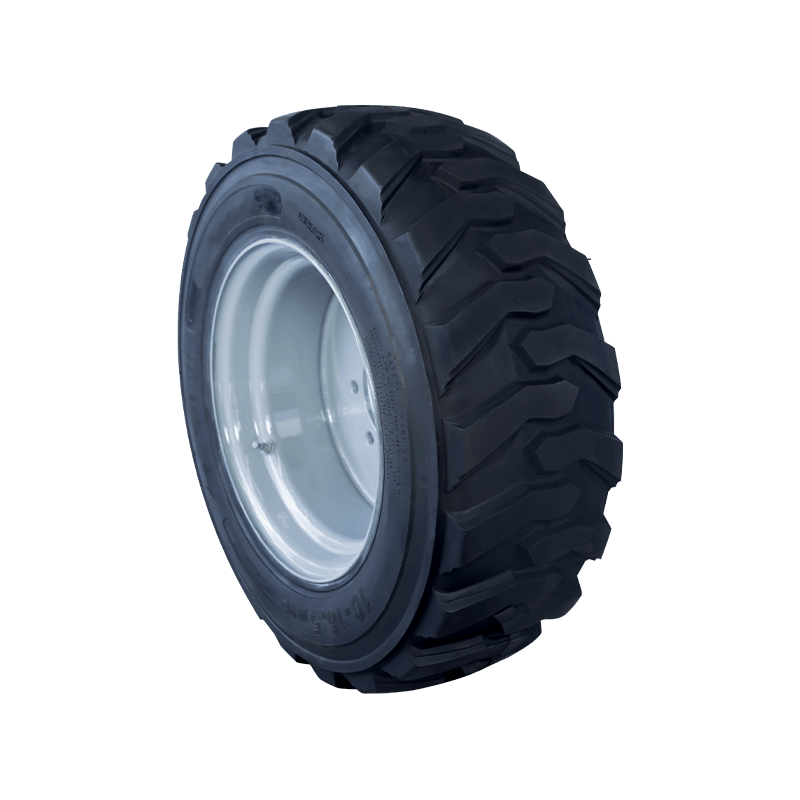
The stability triangle is geometry, but tires define the contact points that create the geometry. Tire size, profile, stiffness, inflation, wear, and wheel offset all affect how the truck sits on the floor and how load transfers through the support points. A pneumatic tire that is low on pressure can flex more than expected, reducing lateral stiffness and changing the machine's attitude. A solid tire has different deflection characteristics and usually a higher load capacity for a given size, but it also transmits more shock to the chassis. Neither type is automatically safer. The correct specification depends on the truck, the load, the route, the floor, and the duty cycle.
Tire condition matters because the triangle assumes the contact patches are where the designer intended them to be. A worn tire has a smaller effective radius. A mismatched tire can make one side of the truck sit lower than the other. A damaged wheel or incorrect rim offset can change the track width. Even a few millimeters of side-to-side difference changes the attitude of the chassis and moves the combined center slightly toward one side. In a truck that is already near a limit, that small shift can matter. The operator may not feel it in a straight line, but it reduces the margin in a turn.
Load rating is another purchase consideration. A tire that fits the rim but has a lower load rating than the axle demand can flex excessively, run hot, or fail earlier. The load rating must be checked against the actual axle load, not just the truck's nominal capacity. Speed, heat, and continuous operation also affect tire life. A tire that is acceptable for occasional handling may not be suitable for a busy warehouse with long shifts and repeated turns. The load-bearing behavior of industrial solid tires depends on compound, profile, and wheel assembly, not just the label. Buyers should ask for the load and speed data, mounting instructions, and recommended applications rather than choosing by size alone.
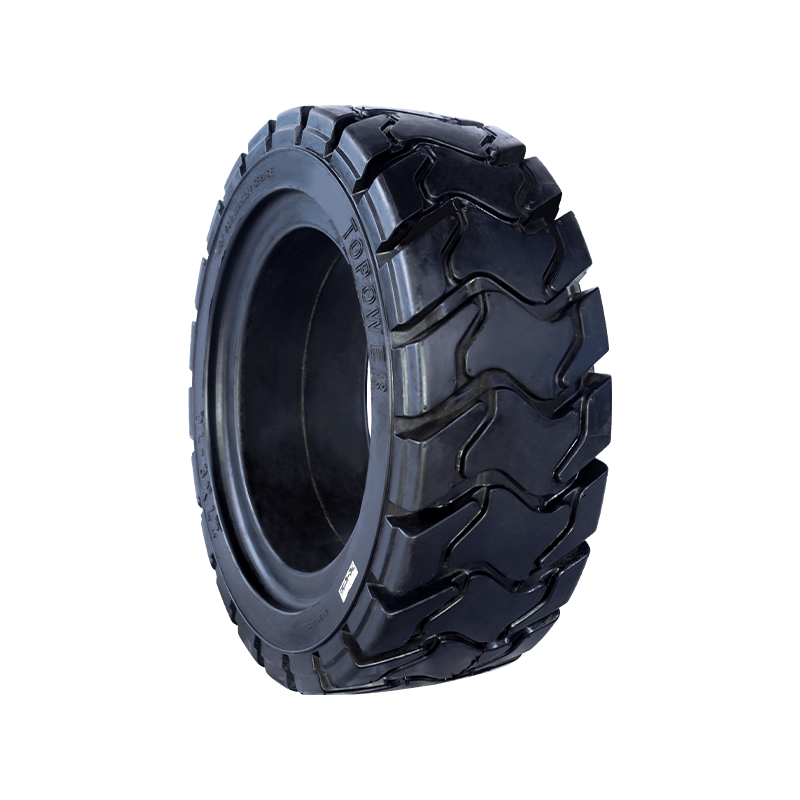
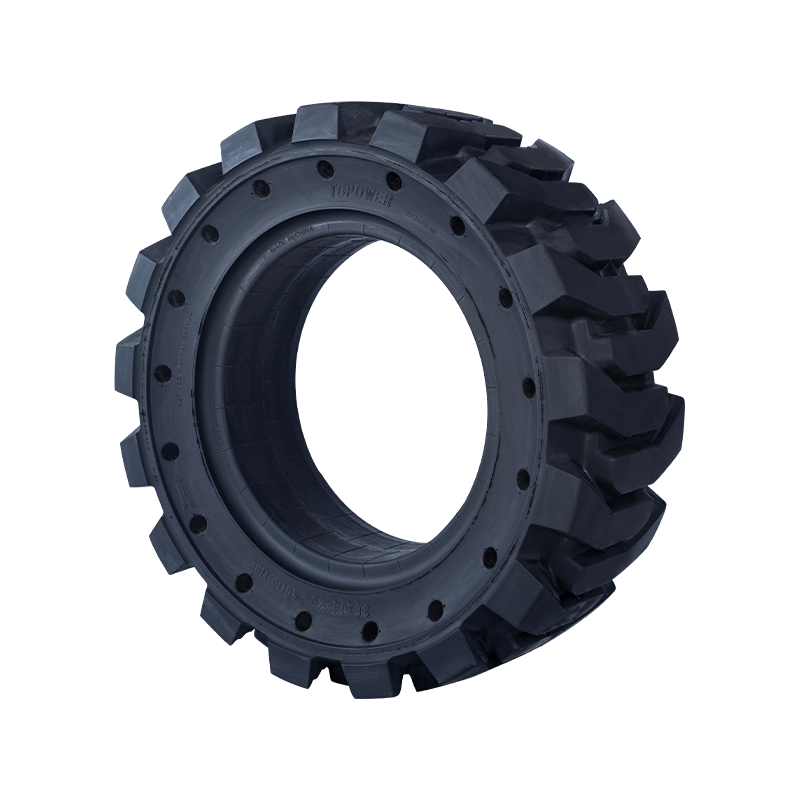
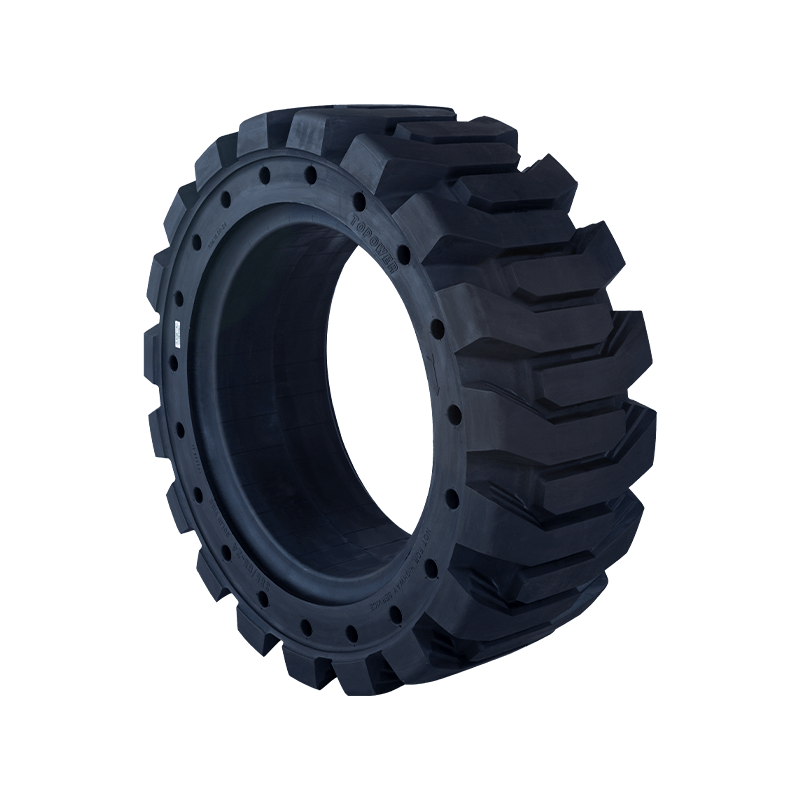
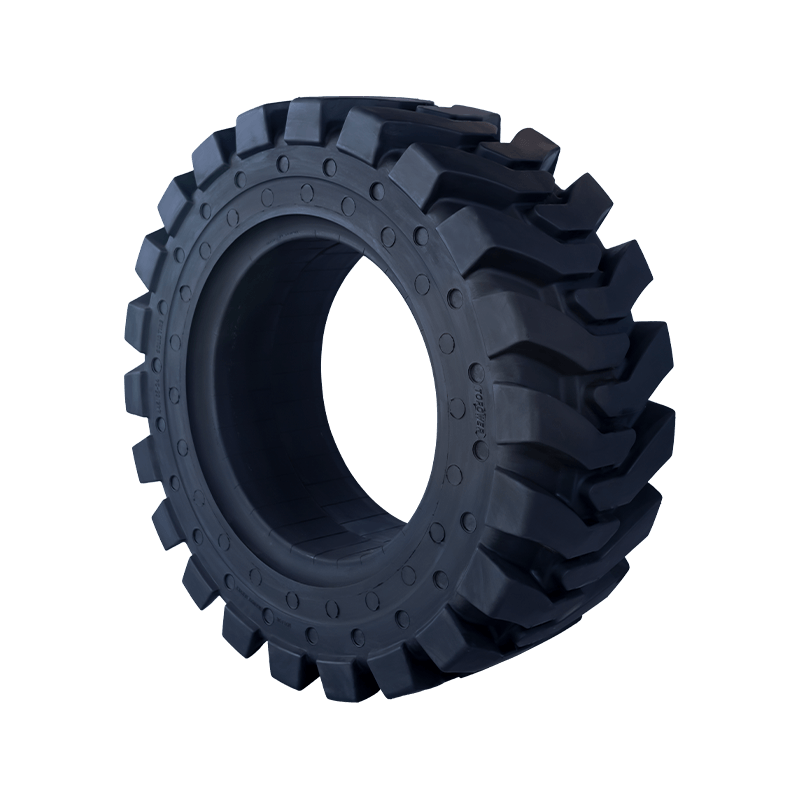
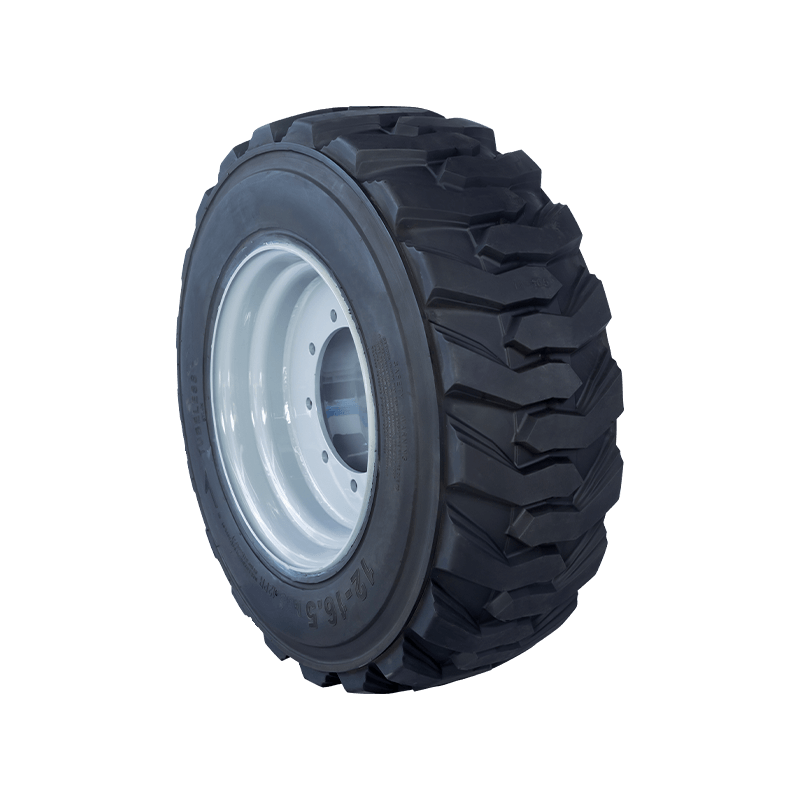
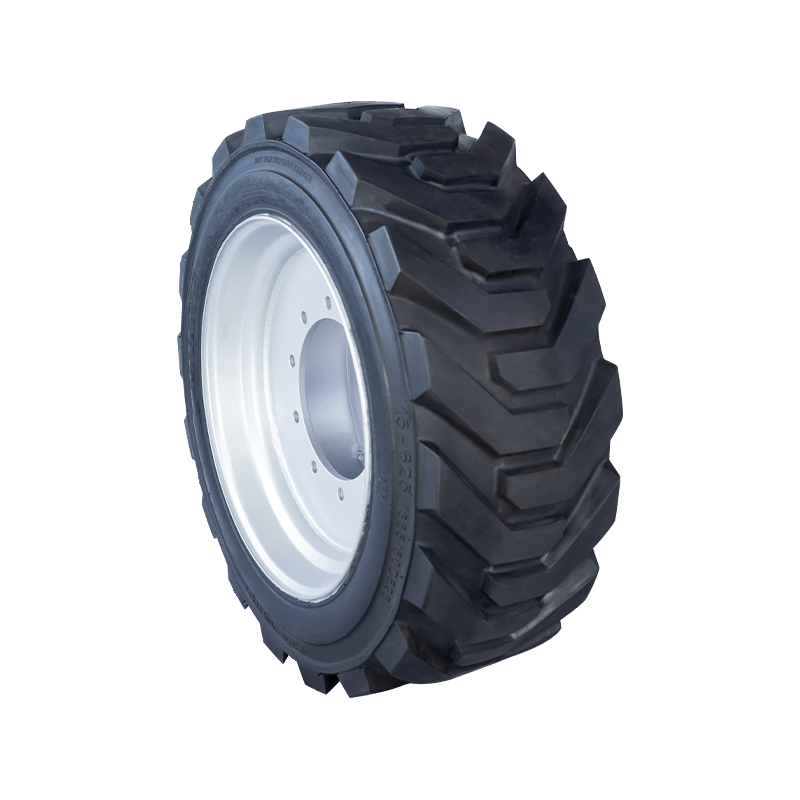
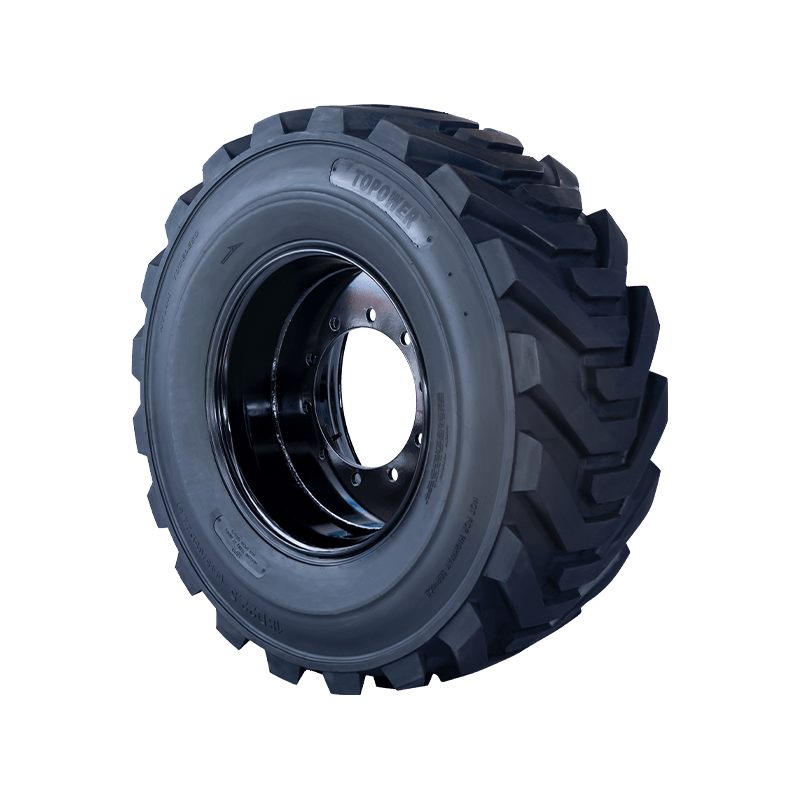
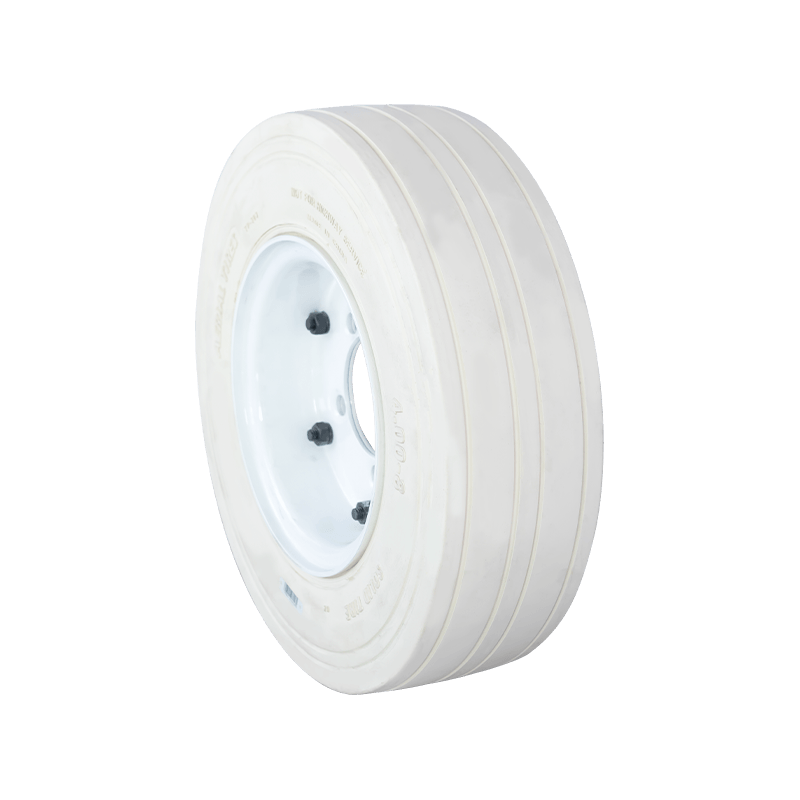
For counterbalance trucks working in warehouses, ports, production cells, and loading yards, a forklift solid tire can remove inflation risk and provide a stable contact patch, but the specification must match the machine, rim, and duty cycle. Tire choice should preserve the original overall diameter, width, offset, and load rating unless an engineering review approves a change. A lower-priced tire with the wrong compound or a different profile can reduce the stability margin, increase heat, or change the truck's ground clearance. The triangle does not tell the buyer which tire to order, but it explains why the tire is part of the stability system rather than a disposable accessory.
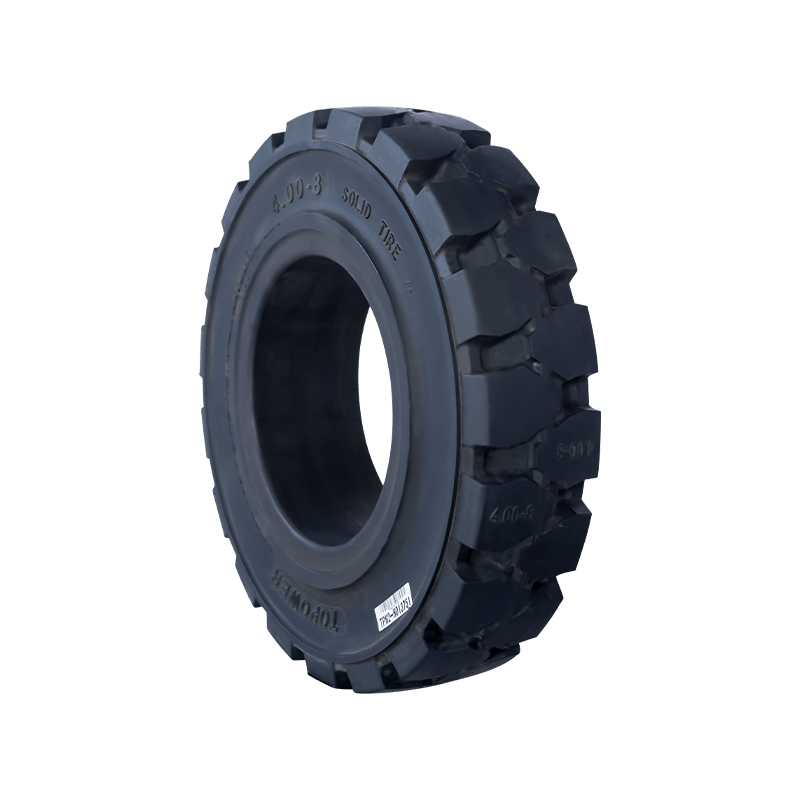 Forklift Solid Tyres in TP301 and TP301B PatternsBrowse solid forklift tyres in TP301 and TP301B patterns and multiple sizes, with black wear-resistant or non-marking options for counterbalance truck applications.View Product →
Operators should also watch for tire-related warning signs: uneven wear, flat spots, cuts, embedded metal, loose wheel nuts, or a tire that looks low even when it is not. A tire that is damaged or incorrectly inflated changes the support base. A wheel that is loose or a rim that is cracked can shift under load. These are not cosmetic issues. They are stability issues. The daily walkaround is the cheapest stability inspection available, and it should be treated as part of the same safety system as the capacity plate and the operator training.
What Operators Should Check Before Each Shift
Before the first lift, the operator should confirm that the stability triangle still represents the machine in front of them. That means checking the capacity plate, the load, the attachment, the tires, and the floor. The checks do not take long, but they prevent the most common causes of tip-over. If any check fails, the operator should stop and report the issue rather than working around it.
- Confirm that the capacity plate is present, legible, and matches the truck and attachment configuration.
- Know the load weight and estimate the load center. If the load is long, wide, or off-center, treat the capacity as reduced.
- Inspect the forks, carriage, mast, chains, and backrest for damage or wear.
- Check tires for pressure if pneumatic, and for cuts, flat spots, embedded debris, or uneven wear if solid.
- Check wheel nuts and rims for looseness, cracks, or missing hardware.
- Look at the travel path for oil, water, loose material, dock plates, potholes, and side slopes.
- Keep the load low and tilted back while traveling. Raise the load only when the truck is in position.
- Slow down before turns, use smooth steering, and allow for rear-end swing.
- Use a seat belt and keep the body inside the operator compartment.
- If the load feels light on the rear axle, stop. The combined center is already too far forward.
These checks are practical because they map directly to the triangle. The capacity plate defines the rated load and load center. The tire check protects the support points. The floor check protects the contact patches. The travel habits keep the combined center low and centered. The operator does not need to calculate the center of gravity in the aisle. The operator needs to recognize the conditions that move it toward an edge and then remove those conditions before the lift begins.
Procurement and Fleet Management: Using the Triangle as a Specification Tool
Fleet managers and buyers can use the stability triangle as more than a training slide. It is a specification tool. When specifying a new forklift, the buyer should define the loads, load centers, lift heights, attachments, aisle widths, floor conditions, and duty cycle. Those inputs determine the required capacity, mast, tires, and counterweight. A truck that is adequate for a low-load, wide-aisle warehouse may be under-specified for a port or foundry application with long loads, high lifts, and uneven floors. The triangle is the reason the specification should include the real load case, not just the maximum weight on the pallet.
For replacement tires, the buyer should compare more than price and size. The correct tire should match the rim, overall diameter, width, load rating, speed rating, and intended application. A change in tire profile can alter the truck's ground clearance and stability. A change in wheel offset can alter the track width. A change in compound can alter heat buildup and wear life. The purchasing decision should include the maintenance team and the operator, because they see the wear pattern and the floor conditions. A tire that lasts longer but reduces stability margin is not a good trade. A tire that is inexpensive but fails early can cost more in downtime, damage, and risk.
Training is the other half of the system. Operators should understand why the capacity plate includes a load center, why the rear wheels lift when the load is too far forward, why a sharp turn with a raised load is different from a sharp turn with a low load, and why tire condition is part of the pre-shift check. In the United States, OSHA's forklift rule requires trained operators and safe operation, and the stability triangle is a common way to explain the underlying physics. The triangle does not replace the standard or the manufacturer's instructions, but it makes the standard easier to apply in the aisle.
Incident reviews should also use the triangle. When a near miss occurs, ask where the combined center of gravity was relative to the triangle. Was the load too far forward? Was the mast tilted? Was the turn too fast? Was the tire low? Was the floor sloped? The answers often reveal a pattern that can be fixed through layout, training, tire specification, or load planning. A tip-over is usually the end of a chain of small margins being consumed. The triangle helps the team see that chain before the accident.
The purpose of the forklift's stability triangle is to show the operator and the fleet team where the combined center of gravity must stay to keep the truck supported. It explains why the same load can be safe at one load center and unsafe at another, why a raised load reduces margin, why a sharp turn is more dangerous than a wide turn, and why tire condition belongs in the daily check. The triangle is simple, but it is not optional knowledge. It is the link between the capacity plate, the load, the floor, the tires, and the operator's decisions.
The practical rule is easy to remember: keep the combined center of gravity low, centered, and well inside the triangle. Use the capacity plate for the equipped truck, respect the load center, travel with the load low, slow down before turns, and maintain the tires and wheels. If the truck feels light at the rear, stop and correct the condition. The stability triangle does not make a forklift safe by itself. It gives the operator a clear boundary for keeping it safe.