 English
 русский
 Español
 عربى
عربى

If you drive a counterbalance forklift, the answer is: keep the fork tips 4 to 6 inches (10 to 15 centimeters) above the ground whenever you travel with a load. This is the height range used in forklift operator training programs and described in OSHA's powered industrial truck eTool as the practical target for loaded travel. Carry the load lower and you risk dragging the pallet or hitting floor debris. Carry it higher and you raise the center of gravity, reduce visibility, and put the entire truck closer to a lateral tip-over. The 4-to-6 inch band is not an arbitrary number. It is a deliberately narrow window that balances stability, floor clearance, and sight lines. If your forklift is loaded, the load must be low. If your forklift is empty, the forks should still be carried low, typically 4 to 6 inches above the surface, so that the operator can see what is on the floor ahead of them.
The Short Answer: Four to Six Inches Off the Ground
When a forklift travels with a pallet, a crate, or any other load on the forks, the bottom of the load should sit 10 to 15 centimeters above the ground. In imperial units, that is 4 to 6 inches measured from the tips of the forks to the floor. The load itself should not be held lower than that unless the load is being lowered deliberately onto a stacking position or a delivery dock.
This height range serves three purposes at once.
- It keeps the forklift stable. A loaded mast carrying a heavy pallet at 6 inches has a much lower combined center of gravity than the same pallet raised to 30 inches. A lower center of gravity means a wider effective stability triangle and less chance of the rear wheels lifting.
- It gives the operator a corridor of visibility. With the load near the floor, the operator can see over the top of the load in many situations, or at least see obstacles around the sides of the mast and ahead of the truck.
- It avoids damaging the forks. Running the tips of the forks 2 inches above the ground through a warehouse can strike floor plates, expansion joints, and debris. A 4-inch minimum gives more clearance while still keeping the load safely low.
Some operators ask whether the load height should change when the load is very heavy or very light. The answer is no. The recommended travel height remains 4 to 6 inches regardless of weight. What changes with weight is the rated capacity of the truck and the load center. A 4,000-pound rated forklift carrying a 4,000-pound load with a 24-inch load center is at its limit. Carrying that load higher than 6 inches adds dynamic force through the mast and reduces the margin of stability.
Think of it this way: the 4-to-6 inch rule is a floor, not a ceiling. It is the lowest safe height for travel, and it is also the target. If you drive the forklift with the load at 12 inches because the pallet is sagging or damaged, you are already giving up stability you may need when you turn a corner or stop suddenly.
Why Load Height Is the Most Important Stability Factor
Every forklift, regardless of type, depends on a stability triangle. The forklift has two front wheels and a steer axle in the rear. If you draw a line between the two front wheel contact patches and connect it to the center of the steer axle, you get a triangle. As long as the combined center of gravity of the forklift and the load stays inside this triangle, the truck is stable. If it moves outside the triangle, the truck tips.
When you raise the load, you do something very specific to the physics: you move the load's center of gravity upward and increase the load moment. The load moment is calculated by multiplying the weight of the load by its horizontal distance from the front axle. Raising the load vertically does not change the horizontal distance, but it does change how the truck reacts to lateral forces, braking, and turning.
The Center of Gravity Rises Faster Than You Think
Lifting the load from 6 inches to 36 inches above the ground moves the load's center of gravity significantly. The entire forklift plus load system has a combined center of gravity that sits somewhere between the front axle and the rear axle. When the load is low, the combined center of gravity is closer to the front axle and closer to the ground. When the load is high, the combined center of gravity moves upward, and the stability margin shrinks.
The stability of a forklift is not merely about weight. It is about the distance between the center of gravity and the tipping axis. The front axle is the tipping axis for a laterally tipping forklift. A higher load center means a shorter effective distance for counterbalancing. The rear wheels, which provide counterweight, become less effective as the load rises.
What a 12-Inch Difference Actually Costs You
Consider a typical 5,000-pound capacity counterbalance forklift with a 24-inch load center. At a 4- to 6-inch travel height, the load's center of gravity may be about 12 to 14 inches above the ground. If the operator raises the load to 20 inches, the combined center of gravity may move upward by more than 8 inches. This reduces the lateral stability margin. In practice, this means the operator has to slow down more than expected for turns, and the likelihood of a rear-wheel lift during a sharp turn increases.
The Dynamic Effect of Traveling
Stability is not a static condition. When the forklift is moving, the load's momentum, the mast's forward tilt, the floor slope, and centrifugal forces all add dynamic stresses. A load carried high is not just a bigger risk in a static sense. It is a much bigger risk when the forklift brakes, accelerates, turns, or crosses a floor joint. The OSHA-recommended height of 4 to 6 inches is specifically a driving height because it keeps the dynamic load stable.
In a real warehouse, a forklift operator may need to stop abruptly when a pedestrian appears in an aisle. With the load at 4 to 6 inches, the forward shift of the load is small. With the load at 18 inches, the forward momentum continues to push the load in the direction of travel, and the rear counterweight becomes less reliable. The stopping distance itself is not the only factor; the load's vertical position determines how much the truck leans forward and whether the rear wheels remain in contact with the floor.
Load Capacity and Load Center: What the Data Plate Tells You
Every forklift has a data plate. This plate lists the truck's configuration, the maximum rated capacity, and most importantly, the load center for which that capacity is valid. For most counterbalance forklifts, the standard load center in the United States is 24 inches. This means the load's center of gravity must be 24 inches or less from the face of the forks. If the load center is greater than 24 inches, the safe capacity drops.
Understanding load center is essential for two reasons. First, it tells you how much weight you can lift at a given fork position. Second, it explains why a pallet that is within rated weight can still be dangerous if it is not positioned correctly on the forks.
How to Calculate Actual Capacity
The formula is simple in concept: capacity times standard load center equals actual capacity times actual load center. If a forklift is rated for 4,000 pounds at a 24-inch load center, and you are carrying a load with a 30-inch load center, the calculation is:
4,000 × 24 = 96,000 inch-pounds of maximum load moment. Divide that by 30 inches to get 3,200 pounds of actual capacity.
This is why you can see a 4,000-pound rated forklift tip over with a 3,000-pound load. If the load is long, the load center may be farther forward than expected, and the actual capacity drops dramatically.
| Load Center (inches) | Actual Capacity (pounds) |
|---|---|
| 24 | 4,000 |
| 30 | 3,200 |
| 36 | 2,667 |
| 48 | 2,000 |
How Load Height Fits Into the Equation
Rated capacity is always determined with the load at something near its nominal position. When you lift the load higher, you do not necessarily reduce the weight-carrying capacity in the data plate sense, but you reduce the margin of stability. The data plate tells you the maximum static weight, not the safe dynamic height. That is why OSHA and forklift manufacturers teach that raised loads reduce the stability margin and increase tip-over risk.
The Consequences of Overloading
When a forklift is overloaded, the rear wheels may lift off the floor before the load is even lifted. When they lift, the steering function is effectively lost. If the forklift continues to travel, the operator may lose control entirely. Overloading can also cause hydraulic strain, brake fade, and premature wear on the front axle, the mast channels, and the carriage rollers.
A common phrase among forklift trainers is "the data plate is not a suggestion." If the load exceeds the rated capacity for its specific load center, the safest option is to split the load, use a larger forklift, or reposition the load to bring it closer to the carriage.
For a 5,000-pound rated forklift at a 24-inch load center, a 2,500-pound load placed 48 inches from the face of the forks is at the limit. Carrying this load at 4 to 6 inches is already at the edge of the stability triangle. Lifting it to 15 inches could push the truck over the edge in a turn.
Mast Tilt and Fork Position: The Other Half of the Formula
Load height is only part of the equation. The tilt angle of the mast and the levelness of the forks have just as much impact on stability. When you travel with a load, the mast should be tilted back slightly, usually 5 to 10 degrees from vertical. This tilts the load backward toward the carriage, which moves the load's center of gravity closer to the front axle and increases the effective counterweight of the rear of the truck.
Why Tilt Back When Traveling?
If you travel with the mast vertical and the load horizontally forward on the forks, the load's center of gravity is farther from the front axle. That reduces the load moment capacity. Tilting the mast back pulls the load closer to the carriage and puts more of the load's weight over the front axle. This is why OSHA guidance and manufacturer guidelines consistently say to tilt the mast back before traveling.
The correct sequence for picking up a pallet is:
- Approach the load with the forks level and at the correct height for the pallet openings.
- Insert the forks fully under the pallet.
- Lift the load slightly, just enough to clear the floor.
- Tilt the mast back 5 to 10 degrees.
- Raise the load to 4 to 6 inches off the ground.
- Travel with the load tilted back and low.
Fork Levelness and the One-Sided Problem
If only one fork catches the pallet under a stringer, the load is unevenly supported. This creates a lateral load moment. The load may lean to one side, and the hydraulic cylinders may show uneven pressure. When traveling with such a load, the 4-to-6 inch rule becomes even more important. The load is already less stable laterally, and any additional height increases the likelihood of an off-center tip.
Before lifting a pallet, check that both forks are underneath the pallet. Check that the pallet stringers are not broken or missing, and that the load is centered between the forks. A pallet that extends 12 inches more on one side than the other shifts the effective load center sideways. Even a perfectly rated load can become unstable in this condition.
Why You Must Use Extra Caution When Tilting the Mast Forward
Tilting the mast forward while the load is elevated is one of the most dangerous operations in forklift work. When the mast tilts forward, the load's center of gravity moves forward and outward. This increases the load moment and can cause the forklift to tip forward. It can also cause the load to slide off the forks if the forks are not fully engaged or if the pallet is damaged.
Forklift trainers often say that the forward tilt is for placing a load, not for transporting it. Never travel with the mast tilted forward. Only tilt forward when you are over the destination and ready to lower the load. Even then, use a small tilt angle, and lower the load until it is supported by the ground or rack before releasing.
Driving on Ramps and Uneven Surfaces
Ramps and sloped surfaces change the stability triangle of a forklift in a way that many operators underestimate. The load height rule stays the same, but the direction of travel and the tilt of the mast must be adjusted.
Loaded Forklift on a Ramp: Load Uphill
When a forklift travels up a ramp with a load, the load must face uphill. This keeps the load on the uphill side of the truck, which places the load's weight against the forklift rather than away from it. On a ramp, the ground is inclined, so the stability triangle rotates with the surface. If the load is high and the ramp is steep enough, the load's center of gravity can move beyond the stability triangle even while the forklift is stationary.
With an empty forklift, the rule is reversed: forks must face downhill. An empty forklift has most of the weight in the rear counterweight. Driving down a ramp with the forks facing uphill puts the counterweight on the downhill side, which is less stable.
| Truck Condition | Ramp Direction | Correct Position |
|---|---|---|
| Loaded | Traveling up | Load faces uphill |
| Loaded | Traveling down | Load faces uphill (backward) |
| Empty | Traveling up | Forks face downhill |
| Empty | Traveling down | Forks face downhill |
Surface Conditions and Tire Grip
Even the correct load height cannot save you if the tires do not have enough grip. A forklift with worn pneumatic tires can slip on a ramp or on wet concrete. A forklift with solid tyres also has a particular interaction with floor surfaces. Solid tyres do not flex the way pneumatic tires do, but they still require a clean, even floor to maintain full footprint contact.
Debris, loose pallet pieces, water, oil, and floor gaps all reduce tire grip. If the forklift slides laterally, the stability triangle is effectively reduced because the contact patch of the tires moves. This is why maintaining the floor surface and checking tire condition are part of a safe load-carrying procedure.
The environment around the forklift matters. For example, a guide on the requirements for the use environment of industrial solid tyres covers how temperature, moisture, and surface debris affect the performance of solid tires. The same conditions that affect tire performance also affect load stability.
High Tiering: When the 4-6 Inch Rule Doesn't Apply
There is one large exception to the 4-to-6 inch rule: when you are placing or removing a load from a rack or stacked position. In this case, the load must be raised to the height of the rack beam. You are not traveling at that height; you are positioning, and the operator must use a deliberate sequence of movements.
When high tiering, the operator should:
- Approach the rack with the load carried low.
- Stop at the correct distance from the rack.
- Raise the load to the beam height before tilting the mast forward.
- Identify the rack beam visually so the load does not hit structural members.
- Place the load on the beam, then lower the forks slightly to clear the pallet.
- Retract the forks, and tilt the mast back before lowering them to traveling height.
Why High Tiering Is the Most Demanding Operation
At heights of 12 feet and above, even a small load shift can create a dangerous dynamic. The raised mast acts as a lever. A 1,250-kilogram (2,750-pound) pallet at 4 meters (13 feet) has a load moment that is about four times higher than the same pallet at 1 meter. The forklift must be on fast, level ground, and the operator must be careful about mast tilt, because a forward tilt at high elevation can swing the load horizontally.
Stability at height is also affected by the type of mast. A triplex mast at full extension is inherently less rigid than a duplex mast at lower heights. The load height and mast height together determine the effective rigidity of the lifting system.
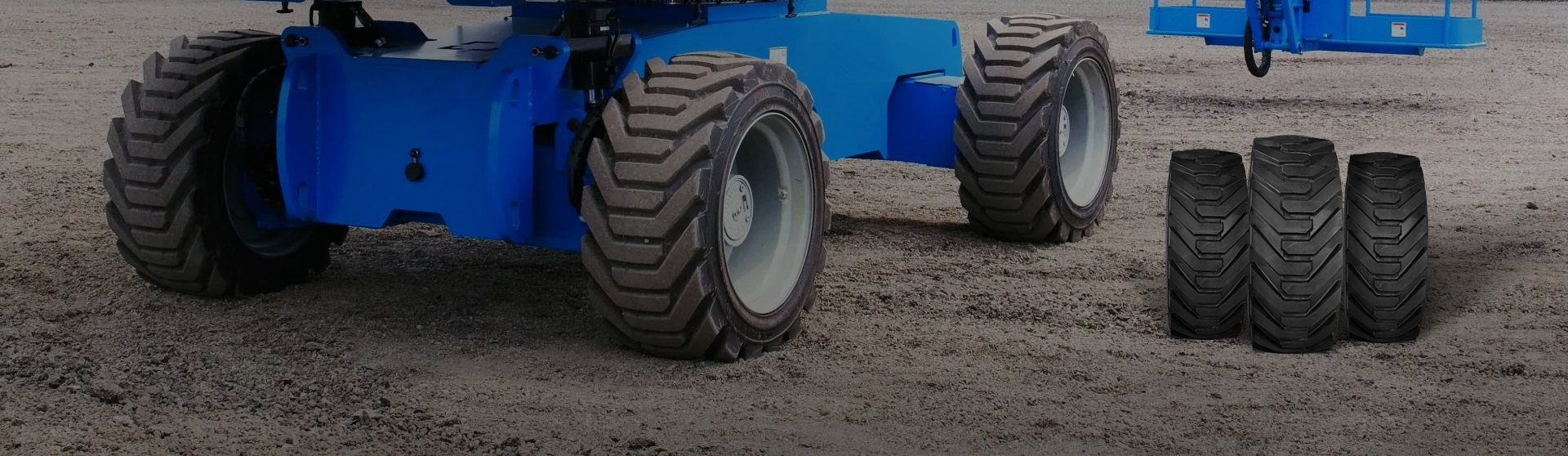
For aerial work platforms and high-reach equipment, manufacturers look for specific tire properties that help stabilize the machine when it is lifted. The same principle applies to forklifts used for high tiering: an unstable platform is a danger at height. Aerial work platform tyre stability features such as tire width, compound hardness, and sidewall construction all contribute to lateral stiffness in elevated positions.
Common Operator Mistakes That Raise a Forklift Load Too High
Most forklift tip-over accidents share similar causes. The operator may be unaware of the load height, the load center, or the condition of the floor. Here are the most common mistakes to avoid.
Driving With the Load Raised
Some operators think that raising the load is faster or easier when navigating obstacles. The opposite is true. A raised load makes the truck less stable, reduces the operator's view down the aisle, and can drag or hit overhead structures. An operator who drives with a load at 20 inches instead of 5 inches is increasing the risk of a tip-over by a very large margin.
Forklifts Are Not Cranes
Never use the forks to lift a person, hang a load from the mast, or reach out to a dock with the load raised. The forks are designed to carry a load on the carriage, not to suspend it. A suspended load has an extremely low stability margin and will swing if the mast is tilted.
Lifting a Load That Is Not Centered
A pallet that is skewed on the forks is a common accident cause. The operator may rush to pick up a pallet without checking that both forks are under the pallet. When the forklift travels with a load that is not centered, the effective load center shifts to one side, and the rear counterweight may not be enough to keep the forklift from tipping.
Improper Tilt Angle During Travel
Driving with the mast tilted forward is probably the most dangerous habit in forklift operation. It moves the load's center of gravity forward and outward, effectively converting the forklift into a lever that can tip over the front axle. This is especially dangerous when the forklift brakes or turns.
Ignoring the Floor
A forklift with a load low to the ground is still not stable on cracked or uneven concrete. The floor is the reference plane for the stability triangle. If the floor is uneven, the front wheels may be at different heights, and the stability triangle becomes distorted.
Overloading the Forks
The data plate is applicable only for the factory configuration. If the truck is equipped with a side shifter, a fork positioner, or an attachment, the capacity is reduced. These accessories move the load center forward and add weight, which means the actual capacity is lower than the data plate shows.
Carrying the Load Too Low
There is a risk on the other side of the range too. If the operator carries the load at 2 inches above the ground, the pallet can hit floor-level obstacles, and the forks can catch on expansion joints. In severe cases, the load can hit a bump and bounce upward, causing a momentary loss of contact between the pallet and the forks.
It is worth noting that carrying the load too low is a mistake, but it is nowhere near as dangerous as carrying the load too high. The 4-to-6 inch range is the target corridor, and the operator should stay inside it.
Load Composition: Weight, Size, and Position
OSHA's powered industrial truck eTool places heavy emphasis on load composition. The weight of the individual items, the size of the load, and how the load is positioned on the forks all determine the effective load center. A load may be within rated weight but still unstable if it is too large or if the weight is not distributed evenly.
Weight Distribution
If a pallet carries a heavy object on one side and a lighter object on the other, the load is unstable. The heavier side creates a greater load moment, and the forklift will tend to lean toward the heavy side. The load height of 4 to 6 inches is only safe if the load itself is not eccentrically balanced.
Load Stability and Securing
Loose items on a pallet can shift during acceleration, deceleration, and turning. A load that was properly centered when the forklift started moving may fail to one side after a sharp turn, because the individual boxes have slid. Secure the load with stretch wrap, straps, or a containment layer before lifting.
The Role of the Load Backrest
A load backrest is a rack mounted on the carriage in front of the mast. It prevents the load from falling backward toward the operator when the mast is tilted back. Most counterbalance forklifts with a load capacity of 4,000 pounds or above have a load backrest as standard equipment. However, the backrest does not prevent the load from falling forward or sideways. It is specifically a rearward protection.
OSHA does not require the backrest on every forklift, but the manufacturer's specifications often include it. In practice, for any load that is taller than the mast carriage, a backrest is necessary. Wooden pallets with loose boxes can easily fall backward if the forklift stops suddenly and the mast is tilted back.
Pallet Condition
Broken stringers, cracked deck boards, and missing nails all reduce the structural integrity of the pallet. When you pick up a pallet with a broken stringer, the pallet is likely not fully supported, and the load can shift. Check the pallet before lifting, especially if it will be raised to a rack.
How Tire Selection Affects Forklift Load-Handling Safety
Forklift tires are the interface between the truck and the ground. They bear the load, absorb shocks, and provide the traction needed for braking and turning. Tire choice has a direct impact on how the truck behaves when carrying a load at 4 to 6 inches off the ground.
Solid Tyres vs. Pneumatic Tyres
Solid tyres are commonly used in industrial forklift applications where punctures would be disruptive. Solid tyres do not have air pressure, so they cannot go flat, and they deliver a consistent footprint and lower rolling resistance in clean environments. Pneumatic tyres, on the other hand, provide more shock absorption and are better for uneven terrain, but they can fail if punctured or if pressure is too low.
For a counterbalance forklift operating on smooth concrete, solid tyres provide more lateral stability because the sidewall does not deflect under load. This means the forklift's stability triangle is maintained more consistently. The load height rule is the same, but the safety margin is slightly wider with solid tyres on a flat, clean floor.
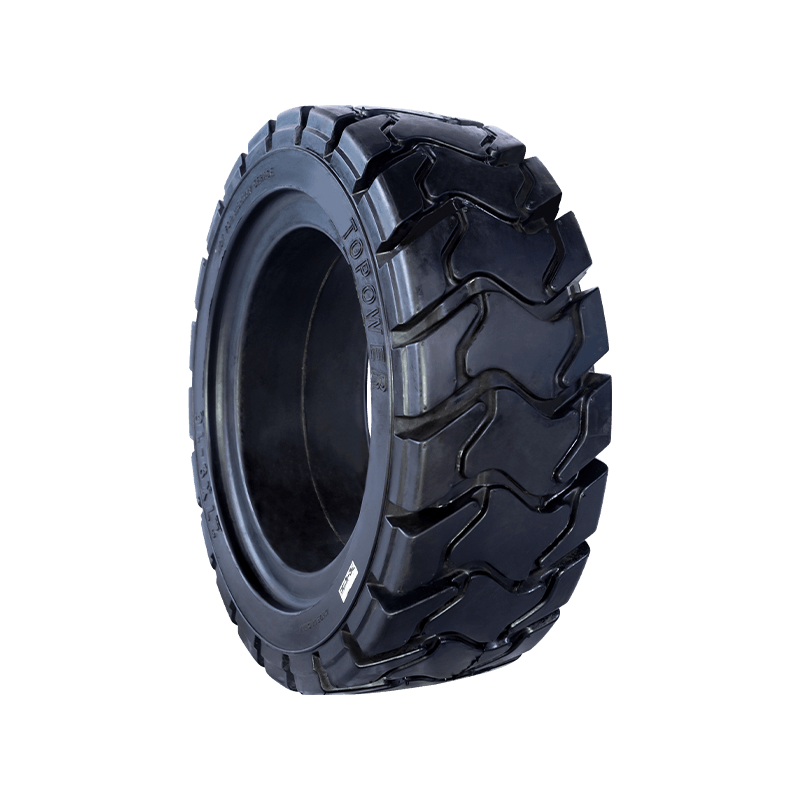
The right solid tire for a forklift depends on the surface, load type, and duty cycle. A forklift solid tyre is a good baseline option for most warehouse and dock applications, offering puncture resistance and stable handling.
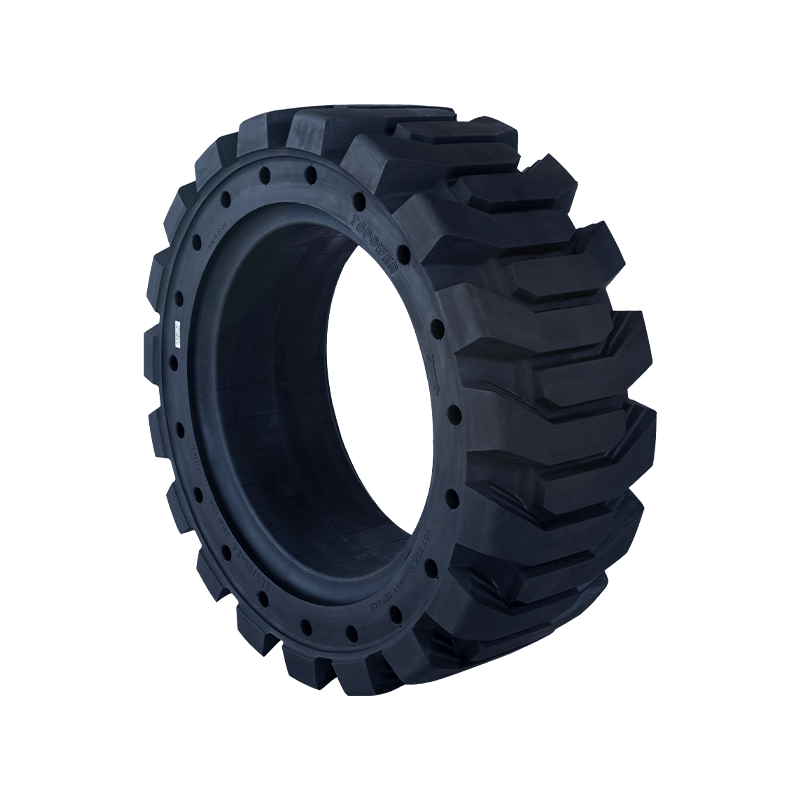
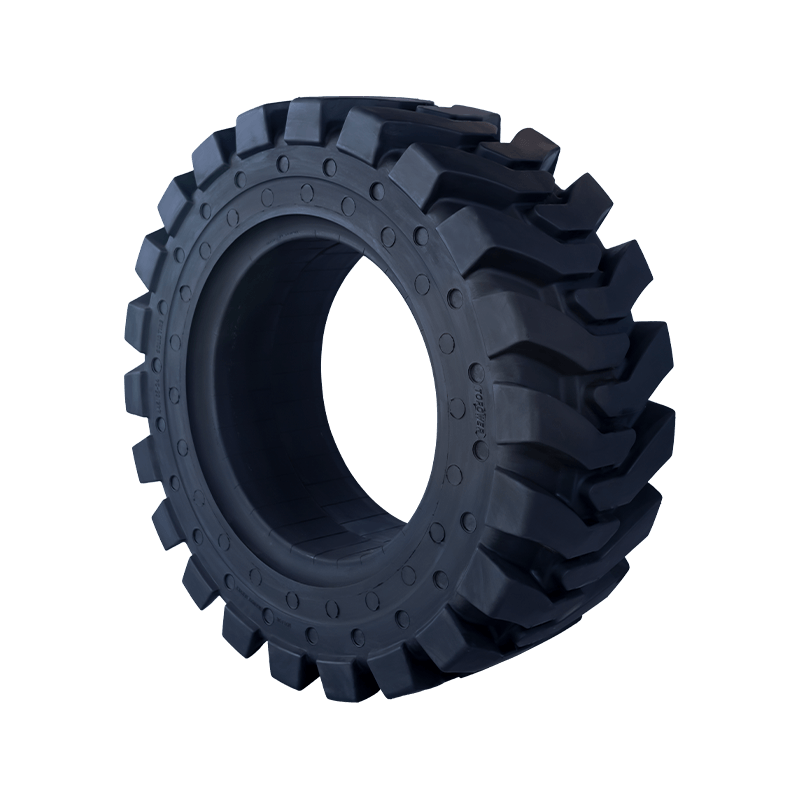
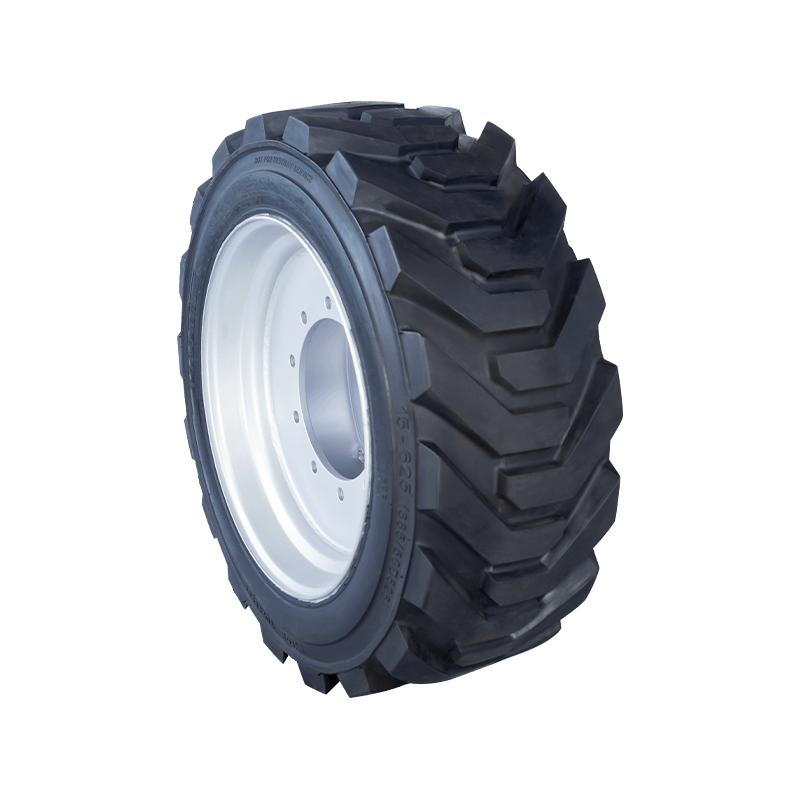
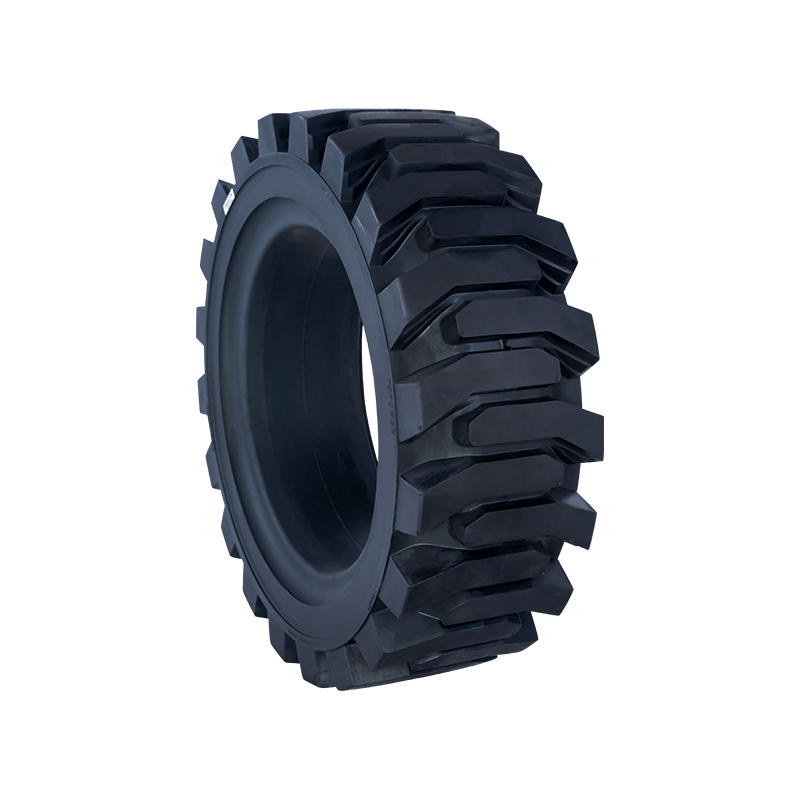 Solid Forklift Tyre for Puncture-Resistant Warehouse and Dock HandlingDesigned for pneumatic rims, this solid tire offers strong load capacity, wear and cut resistance, and explosion-proof performance for harsh conditions. Customizable black or non-marking compounds suit various industrial settings.View Product →
Non-Marking Tires for Clean Floors
Some industrial environments require floor protection. In electronics assembly, food and beverage processing, and cosmetic manufacturing, tire compound marks on the floor are unacceptable. A non-marking solid tire is made from a compound that does not leave black rubber scuffs on the concrete. These tyres are especially useful for forklifts that work in a clean-room or high-visibility environment.
When carrying a load, floor protection is a secondary concern to stability, but the two are related. A non-marking tire compound often has a slightly different hardness, which can alter the footprint and the ride feel. In a facility where the load is always carried low and the floor is clean, a non-marking solid tyre can be the right match.
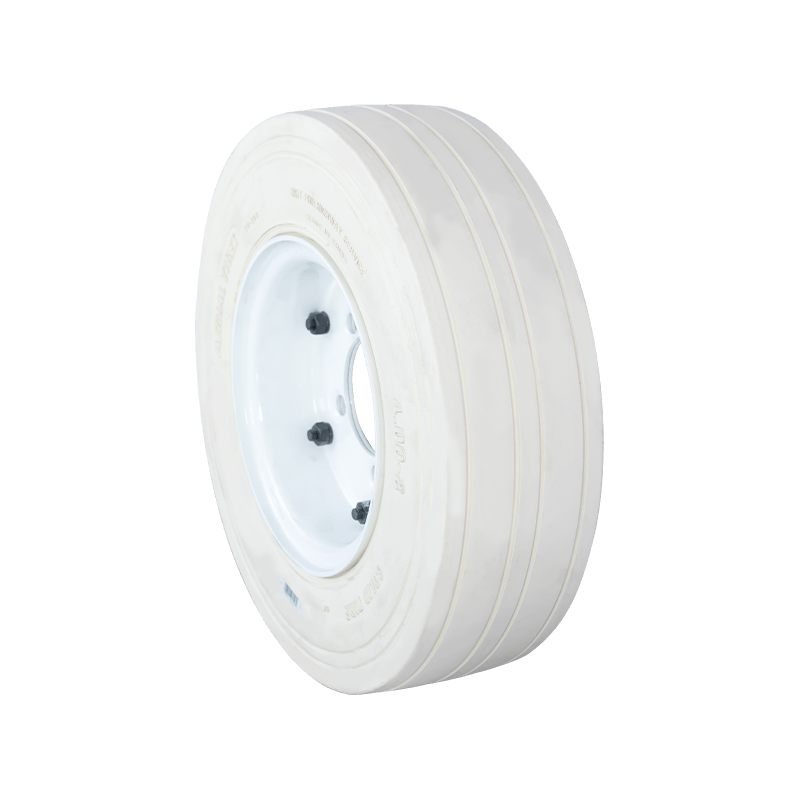
Non-Marking Solid Tyre for Clean Indoor EnvironmentsWith a light-colored, environmentally friendly rubber compound, this tire leaves no black scuffs, ideal for clean rooms, electronics assembly, food processing, and cosmetic manufacturing where floor cleanliness is critical.View Product →
Press-On Solid Tires for Heavy Loads
Press-on solid tyres are mounted directly onto the wheel hub by interference fit. They are common on heavy-duty forklifts used in steel mills, foundries, and ports. Press-on tires have a smaller diameter than pneumatic tires of the same size, which means a lower ground clearance. The load height rule remains 4 to 6 inches, but the operator must be especially careful not to drag the load at the lowest position, because the truck has less clearance over floor obstacles.
For applications that involve repetitive heavy lifting and a rough industrial floor, a press-on solid tyre is often selected for its durability and high load-carrying capacity.
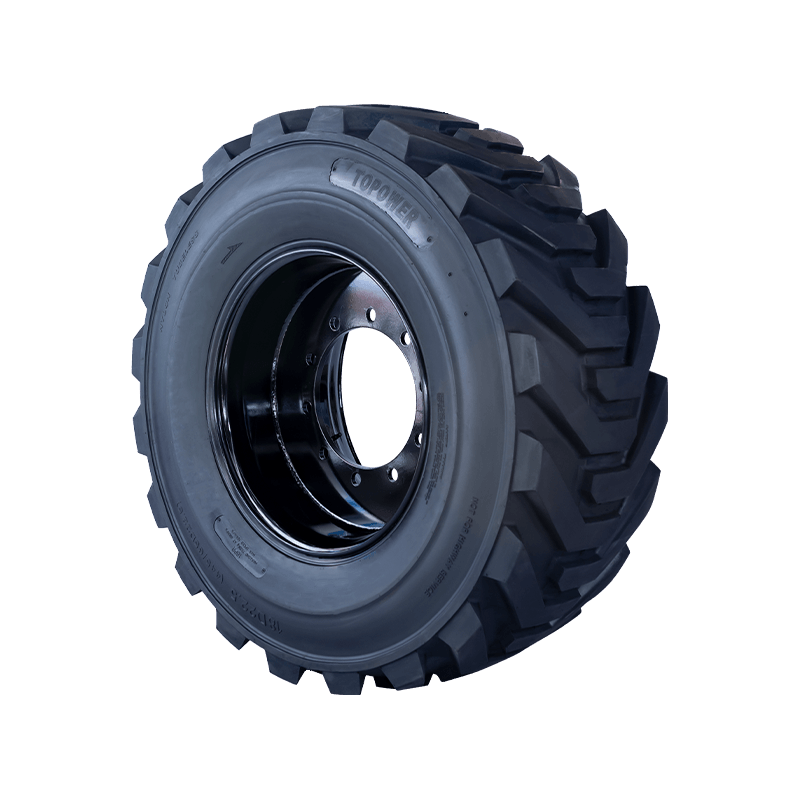
Press-On Solid Tyre for Heavy-Duty Forklift ApplicationsMounted by interference fit, this tire provides high load capacity, wear resistance, and long working times. Its reusable steel rim reduces costs, making it a practical choice for steel mills, foundries, and ports.View Product →
Tire Wear and Load Height
Tire wear changes the geometry of the forklift. If a tire is worn down on one side, the fork height will be uneven. This can cause the load to sit at an angle, which changes the effective load center. A forklift with uneven tires is less stable even at 4 inches of load height.
Check tire pressure weekly for pneumatic tires, and make sure no solid tire has started to separate from the rim. For a forklift with damaged tires, the safest decision is to take the truck out of service until the tire is replaced.
Practical Checklist for Safe Load Carrying
The 4-to-6 inch rule is easy to remember, but it works only when the whole system is in order. Below is a checklist that can be used by operators and warehouse supervisors who want to keep load height safety in mind during every shift.
Before Starting the Shift
- Inspect the fork tips for bending or excessive wear.
- Check the hydraulic leveling and mast tilt for smooth, controlled movement.
- Verify both tires have full contact and are not cut, cracked, or separated.
- Check the floor at the start of every aisle for spills, debris, and damaged expansion joints.
- Review the forklift data plate. Note the rated capacity, load center, and height of the mast.
Before Lifting a Load
- Determine the weight of the load. Do not assume the data plate is enough.
- Confirm that the load center is within the data plate range.
- Position the forks under the correct pallet or load points.
- Make sure both forks are fully engaged with the pallet.
- Secure loose items, or use a different lifting method if the load cannot be secured.
While Traveling With a Load
- Keep the fork tips 4 to 6 inches off the ground.
- Tilt the mast back 5 to 10 degrees.
- Drive at a walking speed when the load is low, and slow down even more for turns.
- Look through the gap between the mast and the load when possible.
- Watch for pedestrians, especially at blind corners and dock doors.
When Placing a Load in a Rack
- Raise the load only after you have stopped at the correct distance from the rack.
- Align the load with the rack beam before tilting the mast forward.
- Set the load down gently, then retract the forks.
- Always lower the forks to travel height before moving the forklift again.
After the Shift
- Lower the forks to the floor, and apply the parking brake.
- Report any hydraulic leaks, mast damage, or unusual noises immediately.
- Note any floor damage or near-misses in the shift log.
This checklist is not an exhaustive substitute for formal operator training, but it gives a solid daily routine that helps keep load height and overall forklift stability in the safe range.
Conclusion: Keep It Low, Keep It Stable
The safest height to carry a load on a forklift is 4 to 6 inches off the ground. This range gives the operator the best balance between stability, visibility, and floor clearance while traveling. The principle behind this number is the center of gravity. A low load keeps the center of gravity low, which keeps the forklift inside its stability triangle. A raised load moves the center of gravity upward and increases the risk of a tip-over.
Beyond the load height, the operator's job also involves the mast tilt, the load center, floor conditions, and tire condition. Tilt the mast back when traveling. Stay within the load center and capacity shown on the data plate. Check the floor and tires before every shift. And remember that the 4-to-6 inch rule applies to travel; when placing a load in a rack, you will naturally have to raise it, so use a slow, deliberate sequence.
Industrial forklift work is demanding, but a predictable routine and a solid understanding of the machine's limits can prevent most accidents. If you are a supervisor, make the 4-to-6 inch rule part of your team's daily language. If you are an operator, check your load height before you move, and never assume that a slightly higher load is a minor risk. The stability of the truck depends on the low position of the load at every stage of the journey.