 English
 русский
 Español
 عربى
عربى

Industrial operations depend on the continuous, uninterrupted movement of materials, goods, and equipment across factory floors, warehouse aisles, port terminals, construction sites, and food processing facilities. Every hour of downtime caused by a punctured pneumatic tire, a pressure loss event, or a tire failure under load translates directly into lost productivity, increased maintenance cost, and in some cases, a safety incident that could have been prevented. Solid tyres, Forklift solid tires, and the broader family of Industrial tires designed for zero maintenance, puncture proof operation exist to eliminate this category of risk entirely, replacing the air dependent vulnerability of pneumatic tires with the consistent, reliable performance of solid rubber wheel industrial applications that deliver the same load carrying function without any of the failure modes associated with pressurized air containment.
The direct conclusion for any industrial fleet manager, procurement specialist, or operations engineer evaluating Industrial tires is this: Solid tyres are the correct specification for the majority of indoor and mixed environment industrial vehicle applications because they eliminate puncture downtime, require zero maintenance, provide consistent load capacity throughout their service life, and deliver a lower total cost of ownership than equivalent pneumatic tires in virtually every high duty cycle warehouse, manufacturing, port, and food industry application. The specific product required, whether Forklift tires, Electric pallet truck solid wheels, Heavy duty loader solid tires, Aerial work platform solid tyres, Non-marking solid tires for food industry, or Heat resistant industrial solid tyres, depends on the vehicle type, operating environment, floor surface, and load requirements of the application. This article covers all of these categories in full technical and practical depth, following the outline structure from first principles through industry applications.
Why Solid Tires Matter: The Business Case for Non Pneumatic Industrial Tires
The transition from pneumatic to solid rubber wheel industrial applications in materials handling and industrial vehicle fleets is driven by a compelling combination of operational efficiency, safety performance, and lifecycle cost advantages that compound as fleet size and duty cycle intensity increase. Understanding the full scope of these advantages is the foundation for making informed tire specification decisions that serve the business rather than simply the lowest cost purchase price.
Operational Efficiency: Eliminating Unplanned Downtime
A pneumatic tire on an industrial forklift or pallet truck in a typical warehouse or manufacturing environment encounters floor debris including pallet nails, metal swarf, broken glass, ceramic fragments, and stapling wire on a regular basis. Each of these objects is a potential cause of tire puncture, and a single puncture event requires the vehicle to be withdrawn from service for a minimum of 30 to 90 minutes for tire change, plus any queuing time at the maintenance bay. In a three shift warehouse operating 20 forklifts, industry data suggests that pneumatic tire puncture events occur at a rate of 2 to 4 incidents per vehicle per month in environments with significant floor debris, representing a cumulative loss of 40 to 160 vehicle hours per month in a 20 truck fleet, or the equivalent of 1 to 4 full work shifts of productive capacity. Forklift solid tires and other Solid tyres eliminate this entire category of unplanned downtime, since solid rubber wheel industrial applications have no pressurized air cavity to puncture and no inflation pressure to lose.
Safety: Consistent Load Capacity and Stability
The load carrying capacity of a pneumatic tire is directly dependent on the inflation pressure inside the tire at the time of use. A tire that has lost 20 to 30 percent of its designed inflation pressure through a slow leak or inattentive maintenance carries proportionally less load with reduced stability, yet to the operator, the tire may appear visually normal until it is severely underinflated. This hidden underinflation creates a safety risk that is particularly acute on counterbalance forklifts, where the stability triangle calculation assumes the tire is providing its rated contact patch and load spreading geometry. Solid tyres maintain their rated load capacity and stability geometry throughout their service life without any inflation management, providing consistent safety performance from the first day of use to the point of wear replacement.
Long Term Cost Management
The total cost of ownership comparison between solid and pneumatic tires in industrial vehicle applications consistently favors solid rubber when the full lifecycle cost is considered. While Solid tyres have a higher initial purchase price than equivalent diameter pneumatic tires in most size ranges, the elimination of puncture repair costs, inflation maintenance labor, and unplanned downtime typically produces a net cost advantage for solid specification when calculated over a 12 to 24 month operational period at normal industrial duty cycle intensity. Analysis of tire cost across high cycle warehouse fleets shows that the total cost of operating pneumatic tires (including purchase, repair, maintenance labor, and downtime cost) is typically 40 to 80 percent higher than the equivalent solid tire program cost when all factors are included.
Core Advantages of Solid Tyres: What Makes Them the Right Choice
Solid tyres, also described as non pneumatic or airless tires, are manufactured entirely from rubber and reinforcing materials without any internal air cavity. Their load is supported by the elastic compression and recovery of the solid rubber body itself, which acts as a distributed spring system between the wheel rim and the operating surface. This fundamental difference from pneumatic tire construction underlies all of the performance advantages that make solid rubber wheel industrial applications the standard specification in demanding industrial environments.
- Puncture and penetration immunity: There is no air cavity to puncture, no inner tube to fail, and no bead to unseat. Any nail, bolt, shard of metal, or piece of glass that would destroy a pneumatic tire simply embeds in the rubber surface of a solid tire without affecting its load carrying function, allowing the vehicle to continue operating without interruption.
- Zero inflation maintenance: Solid tyres require no pressure monitoring, no inflation equipment, and no periodic pressure checks. This eliminates a maintenance task category entirely from the fleet management routine and removes the risk of pressure related failures that arise from maintenance oversight.
- Consistent load capacity: Unlike pneumatic tires, whose effective load capacity decreases as pressure decreases, Solid tyres maintain their rated load capacity at a consistent level throughout their service life. The load is always supported by the same mass of rubber at the same hardness specification, regardless of how long the tire has been in service.
- High lateral stability: The solid rubber construction provides greater resistance to lateral deformation under cornering and turning loads than an equivalent pneumatic tire, improving stability on tight corners and in narrow aisle operations where counterbalance forklifts and reach trucks execute rapid directional changes under load.
- Longer service life in controlled environments: On smooth, well maintained concrete or asphalt floors typical of modern warehouses and manufacturing facilities, quality Forklift solid tires achieve 4,000 to 6,000 operating hours before reaching the replacement wear indicator, compared to 2,000 to 3,000 hours for equivalent pneumatic tires on the same surface type.
Critical Selection Factors: Choosing the Right Solid Tire for Your Application
The selection of the correct solid tire specification for a specific industrial vehicle and operating environment requires systematic evaluation of several interdependent technical factors. Selecting on price alone without addressing load capacity, size compatibility, tread design, material specification, and environmental requirements risks specifying a tire that fails prematurely, damages floors, or underperforms in the specific conditions of the application.
Load Capacity: Matching Tire Strength to Vehicle and Cargo Weight
The load capacity of a solid tire must be sufficient to support the combined weight of the vehicle, the maximum rated load, and the dynamic load increases that occur during acceleration, braking, and cornering. For Forklift solid tires, the relevant load is the rated capacity of the forklift at the rated lift height, which determines the maximum load transferred to the drive and steer tires during a fully loaded lift cycle. As a practical rule, the combined rated load capacity of the tires on the drive axle of a counterbalance forklift should exceed the sum of the vehicle unladen weight plus the rated load capacity by at least 15 to 20 percent to provide an adequate safety margin for dynamic loading conditions during acceleration and turning. For Heavy duty loader solid tires on rough terrain machinery, the safety margin should be higher, at 25 to 30 percent above the calculated static load, to account for the impact loads generated when traversing uneven surfaces.
Tire Size: Ensuring Installation Compatibility and Operational Stability
Industrial tire size designations encode three critical dimensions: the section width (the widest point of the tire cross section), the rim diameter, and for solid press on tires, the overall diameter of the mounted assembly. All three dimensions must match the specifications in the vehicle manufacturer's documentation to ensure correct installation, adequate ground clearance, proper steering geometry, and compliance with the vehicle's safety certification. Installing a solid tire of a different overall diameter than specified changes the ground clearance, the center of gravity height, and the stability characteristics of the vehicle, potentially invalidating its safety certification and creating unquantified stability risks.
Tread Design: Smooth for Indoor, Deep Tread for Outdoor and Rough Surfaces
The tread pattern of a solid tire is not merely an aesthetic choice but a functional design decision that directly affects traction, floor marking, rolling resistance, and debris clearance performance in the operating environment:
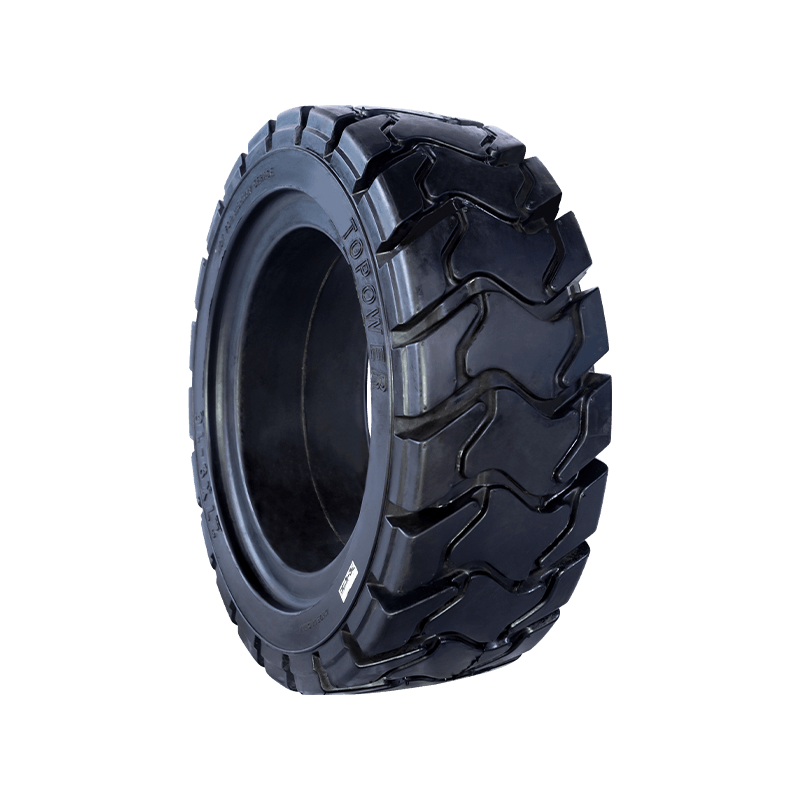
- Smooth (press on) tread: The standard specification for Forklift solid tires operating on clean, smooth warehouse and manufacturing floors. The smooth contact area maximizes the load spreading surface, minimizes floor marking, and provides the lowest rolling resistance for energy efficient electric forklift operation. This pattern is the correct specification for Non-marking solid tires for food industry environments where floor cleanliness is a hygiene priority.
- Diamond or lug tread: Provides traction on wet, contaminated, or mildly uneven surfaces through the void pattern between tread blocks that allows water and debris to escape from the contact patch. Appropriate for outdoor paved areas, loading docks with wet surfaces, and environments where occasional outdoor travel is required.
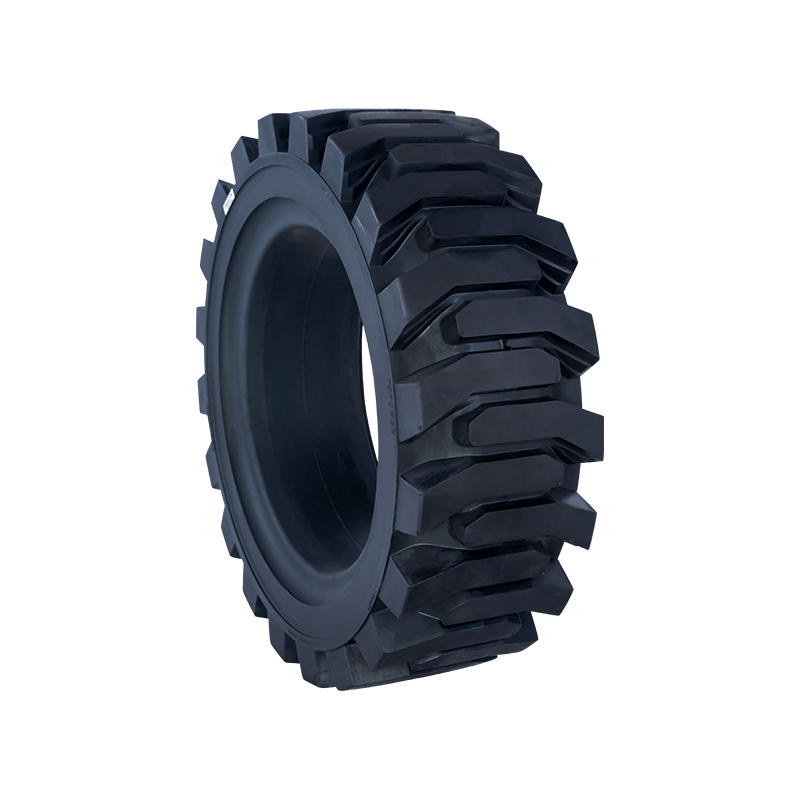
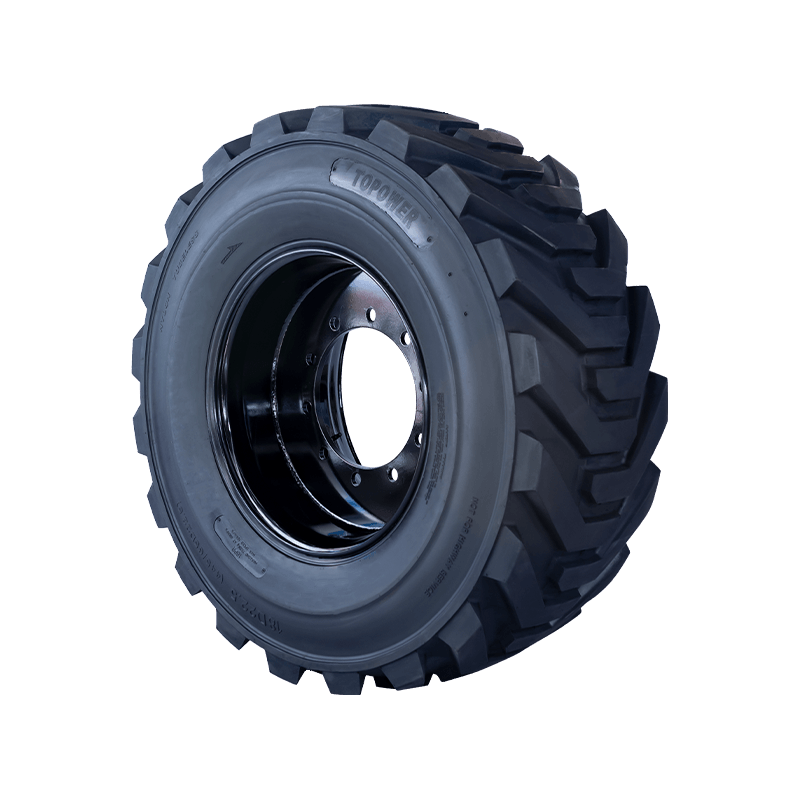
- Deep lug or block tread: The specification for Heavy duty loader solid tires and construction equipment operating on unpaved surfaces, gravel, compacted earth, or debris covered outdoor terrain where deep void patterns are needed to prevent the contact area from packing with dirt and losing traction.
Material Quality: Rubber Compound and Its Effect on Performance
The rubber compound specification of a solid tire determines its hardness, wear rate, heat generation during use, temperature resistance, and chemical resistance. Standard solid tire compounds for warehouse forklifts are formulated from natural rubber or styrene butadiene rubber (SBR) blends with carbon black reinforcement and appropriate vulcanization chemistry to achieve Shore A hardness values of 65 to 75 for the outer tread layer and 55 to 65 Shore A for the cushion layer in multi layer construction tires. Heat resistant industrial solid tyres used in steel mills, foundries, glass production, and other high temperature environments require specialized compound formulations using high temperature vulcanization systems, antioxidant packages, and heat stable reinforcing agents that maintain their mechanical properties at ambient temperatures of 60 to 80 degrees Celsius, conditions under which standard compounds would soften, deform, and wear at accelerated rates.
Operating Environment: Chemical, Temperature, and Surface Considerations
The operating environment imposes specific material requirements beyond standard mechanical performance that must be addressed in the compound specification of Industrial tires for specialized applications:
- Oil and solvent resistance: Facilities handling petroleum products, lubricants, solvents, or cleaning chemicals require solid tires compounded from nitrile rubber (NBR) or chloroprene rubber (CR) bases that resist swelling, softening, and degradation from hydrocarbon and solvent contact that would destroy standard natural rubber or SBR compound tires.
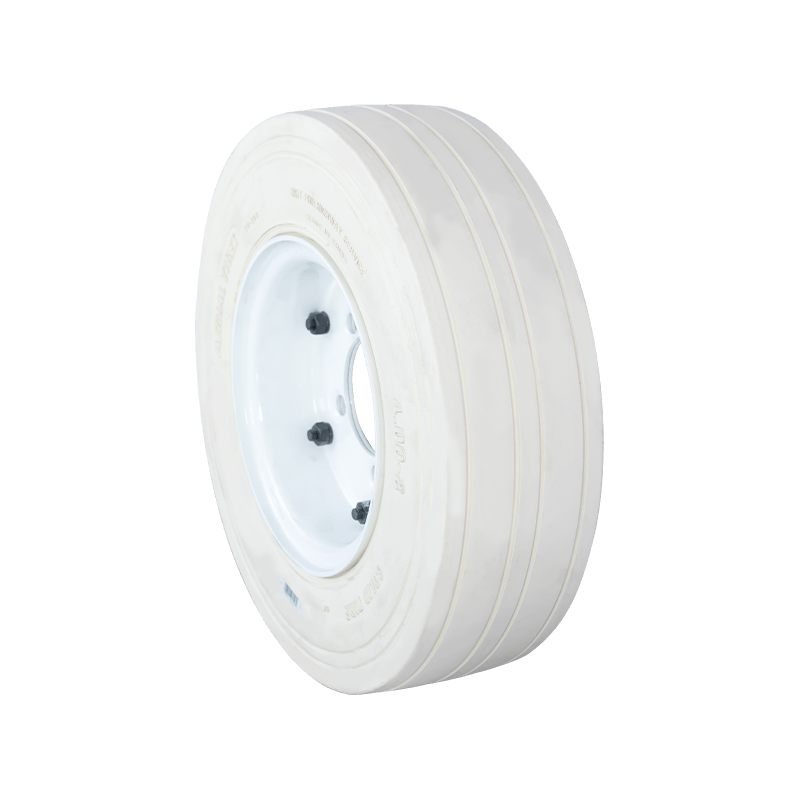
- Non-marking requirement: Non-marking solid tires for food industry and pharmaceutical applications are compounded without carbon black (the standard reinforcing agent in black rubber tires) and instead use silica or other non pigmenting reinforcing agents, producing a light gray or white tire that leaves no black rubber deposits on floors or other contact surfaces. These tires must also be free from odor generating compounding ingredients that could contaminate food products through floor level vapor transmission.
- Cold store compatibility: Solid tires for forklift operation in freezer stores and cold rooms at minus 20 to minus 30 degrees Celsius require low temperature compound formulations that maintain rubber elasticity and cushioning performance at these temperatures, unlike standard compounds that become excessively hard and brittle at sub zero temperatures, increasing floor impact forces and reducing traction.
Cost Effectiveness: Balancing Investment Against Total Operational Value
The cost effectiveness evaluation of Solid tyres must account for the full operational value delivered over the tire's service life, not just the initial purchase price comparison with pneumatic alternatives. Key factors in this total cost analysis include: the tire's service life at the expected operating intensity; the cost and frequency of pneumatic tire puncture events that solid specification eliminates; the maintenance labor savings from eliminating inflation management; the downtime cost avoidance from preventing unplanned tire related service interruptions; and the potential floor damage cost reduction from consistent contact patch geometry that eliminates the irregular surface loading of underinflated pneumatic tires.
Performance Benefits: The Technical Case for Solid Rubber Wheel Industrial Applications
The performance advantages of solid rubber wheel industrial applications over pneumatic alternatives in industrial environments are quantifiable, measurable, and consistently documented across a wide range of vehicle types and operating conditions. The following benefits represent the core technical case for solid tire specification in industrial applications.
Puncture and Penetration Resistance: Absolute Immunity
The most operationally significant performance advantage of flat proof pneumatic tires (achieved through solid construction rather than pressurized air) is absolute immunity to the puncture failures that cause pneumatic tire service interruptions. Any sharp object that would puncture a pneumatic tire, including nails up to 200 mm in length, metal swarf, shards of broken pallet boards, and glass fragments, can penetrate the tread layer of a solid tire without compromising its load carrying capability or requiring any service attention. The vehicle continues operating without any performance change, and the embedded object is typically ejected during subsequent rolling cycles without operator awareness. This puncture immunity is particularly valuable in outdoor recycling facilities, scrap metal yards, demolition sites, and any environment where floor contamination with penetrating objects is constant and unavoidable, and where pneumatic tire maintenance costs can exceed the cost of the tire itself within a single operating month.
Zero Maintenance: Eliminating Inflation Management Entirely
The zero maintenance characteristic of Solid tyres eliminates not only the reactive maintenance of puncture repair but also the proactive maintenance of regular pressure monitoring and inflation management. In large industrial fleets, tire pressure checking and inflation correction is a scheduled daily or weekly maintenance task that consumes significant technician time and requires investment in inflation equipment, pressure gauges, and trained personnel. Converting a fleet from pneumatic to solid specification eliminates this entire maintenance category, freeing maintenance resources for higher value vehicle service activities and reducing the maintenance staffing requirement proportionally with fleet size.
Enhanced Safety Through Superior Lateral Support
The solid rubber construction of Industrial tires provides greater resistance to lateral deformation under transverse loading (cornering, lateral impact, and uneven loading) than equivalent pneumatic tires. When a forklift or pallet truck executes a sharp turn under load, the centrifugal force tends to cause the outer tire to deform sideways, reducing the effective contact width and increasing the contact pressure at the inner edge of the tire. Solid tyres resist this deformation more effectively than pneumatic alternatives, maintaining a consistent contact patch geometry throughout the turning maneuver and providing more predictable lateral traction that reduces the risk of vehicle tipping, load shift, and operator loss of control.
Industry Applications: Solid Tires Across Every Industrial Sector
The range of Industrial tires and Solid tyres products available covers every major industrial vehicle type and sector, with specialized compound, tread, and construction specifications tailored to the unique requirements of each application environment. The following sector by sector review maps the key product specifications to the applications where they deliver optimal performance.
Warehousing: Forklift Tires and Electric Pallet Truck Solid Wheels
The warehouse sector is the largest market for Forklift solid tires and Electric pallet truck solid wheels, with the smooth concrete floor surfaces typical of modern logistics facilities providing ideal conditions for maximizing solid tire service life. Counterbalance forklifts in three shift warehouse operations achieve 4,000 to 6,000 hours per tire set with quality Forklift solid tires, with the drive tires typically wearing faster than the steer tires due to the higher traction forces at the drive axle. Electric pallet truck solid wheels in busy distribution center environments benefit particularly from solid specification because the compact design of these vehicles positions the operator close to the floor, making any sudden tire failure event a more direct safety risk than on the higher visibility platform of a counterbalance forklift.
Manufacturing: Heavy Duty Transport and Assembly Lines
Manufacturing environments present a more aggressive tire service context than standard warehouses, with floor surfaces that may include machining swarf, assembly fasteners, welding spatter, hydraulic fluid spillages, and the thermal effects of proximity to heat generating production equipment. Heat resistant industrial solid tyres are the standard specification for Industrial tires used in steel processing, glass manufacturing, aluminium casting, and ceramic production facilities, where the ambient temperature of the operating environment regularly exceeds the 40 to 50 degree Celsius threshold above which standard rubber compounds begin to soften and accelerate their wear rate. The key performance requirement for Heat resistant industrial solid tyres is maintenance of Shore A hardness within plus or minus 5 points of the original specification at the maximum ambient temperature of the operating environment, ensuring that the load capacity and stability characteristics of the tire do not degrade during a full production shift at elevated temperature.
Ports and Terminals: Container Handling Equipment
Port terminal operations present extreme load requirements for Industrial tires, with straddle carriers, reach stackers, and empty container handlers operating at loads of 30 to 65 tonnes and requiring tires capable of supporting these loads across unpaved or semi paved terminal surfaces while resisting the oil and chemical contamination common on port aprons. Solid rubber wheel industrial applications for port container handling equipment are typically large diameter press on or bolt on solid tire assemblies with deep lug tread patterns for outdoor traction and oil resistant compound specifications that prevent the swelling and softening that would occur with standard SBR compound tires in an oil contaminated environment.
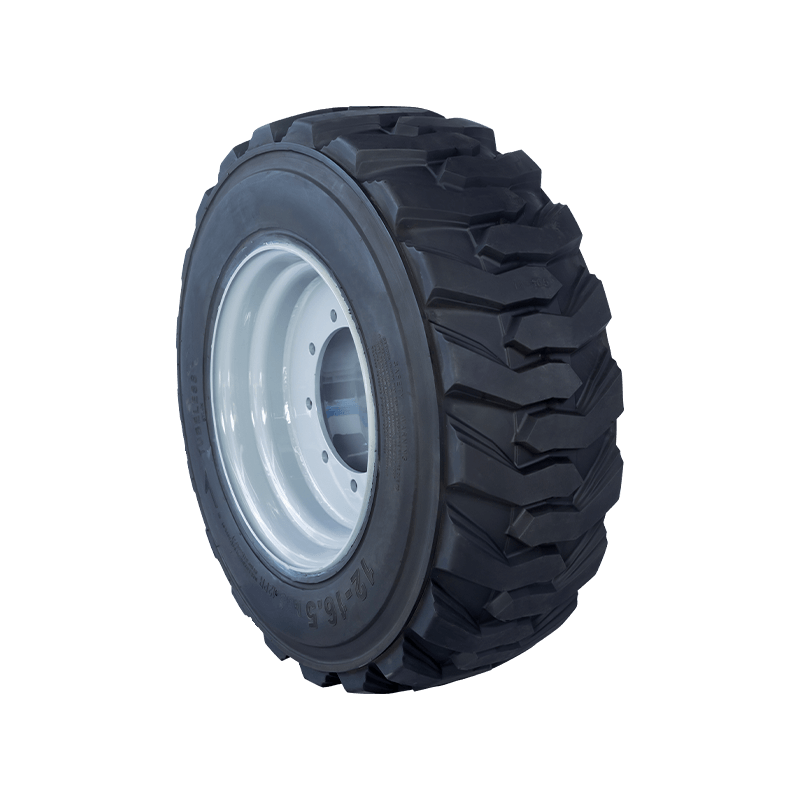
Construction and Mining: Heavy Duty Loader Solid Tires and Rough Terrain Applications
Heavy duty loader solid tires for construction and mining applications face the most demanding service conditions in the Industrial tires category: extreme loads, severe surface irregularities, constant exposure to penetrating objects, chemical contamination from fuel and lubricant spillages, and UV exposure from outdoor operation. The rubber compounds used in Heavy duty loader solid tires for these applications must provide the highest available cut and chip resistance to survive the abrasive action of gravel, rock fragments, and construction debris, while the tire construction must provide adequate cushioning to protect both the vehicle structure and the operator from the shock loads generated on rough terrain.
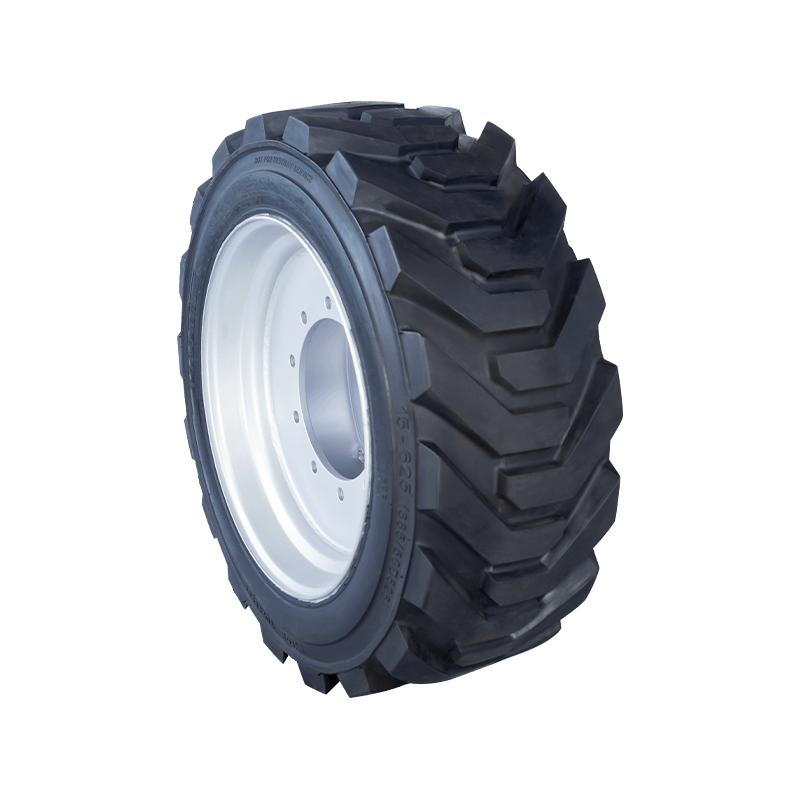
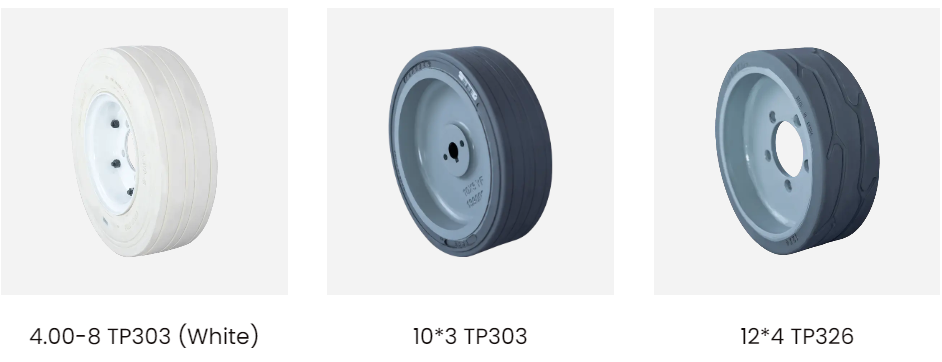
Aerial Work Platform Solid Tyres: Stability at Height
Aerial work platform solid tyres serve a uniquely safety critical function because the consequence of a tire failure on a scissor lift, boom lift, or elevated work platform is a stability risk at height that could result in a catastrophic accident rather than merely a service interruption. The solid tire specification for aerial work platforms must prioritize lateral stability and consistent load capacity at all tire wear states above all other performance parameters, since these vehicles operate on a variety of floor surfaces including smooth concrete, outdoor pavement, and occasionally rough outdoor terrain, all with the critical requirement that the platform remains stable at maximum extension under the rated payload.
Food and Chemical Industries: Non Marking Solid Tires and Specialized Compounds
Non-marking solid tires for food industry and pharmaceutical manufacturing environments address two distinct requirements simultaneously: the absence of black carbon black deposits that could contaminate food products or violate hygienic floor standards, and the mechanical performance characteristics needed to operate industrial vehicles effectively in food grade facilities. Quality Non-marking solid tires for food industry applications are certified to food safety material standards (typically FDA 21 CFR regulations in the United States or equivalent European Food Safety Authority criteria) for the rubber compounds used, ensuring that any abrasion derived particles from the tire surface that contact food products or food contact surfaces do not introduce regulated chemicals above permitted migration limits. Chemical industry applications require acid resistant, alkali resistant, or solvent resistant compound specifications that maintain tire integrity in environments where floor spillages include reagents that would rapidly degrade standard rubber compounds.
Solid Tire Product Comparison: Key Specifications by Application
| Product Category | Typical Application | Tread Type | Key Compound Property | Primary Benefit |
|---|---|---|---|---|
| Forklift solid tires | Warehouse, distribution | Smooth or diamond | Standard SBR or NR | Zero puncture downtime, 4,000 to 6,000 hours life |
| Electric pallet truck solid wheels | Logistics center, retail DC | Smooth | Low rolling resistance compound | Battery efficiency, operator safety |
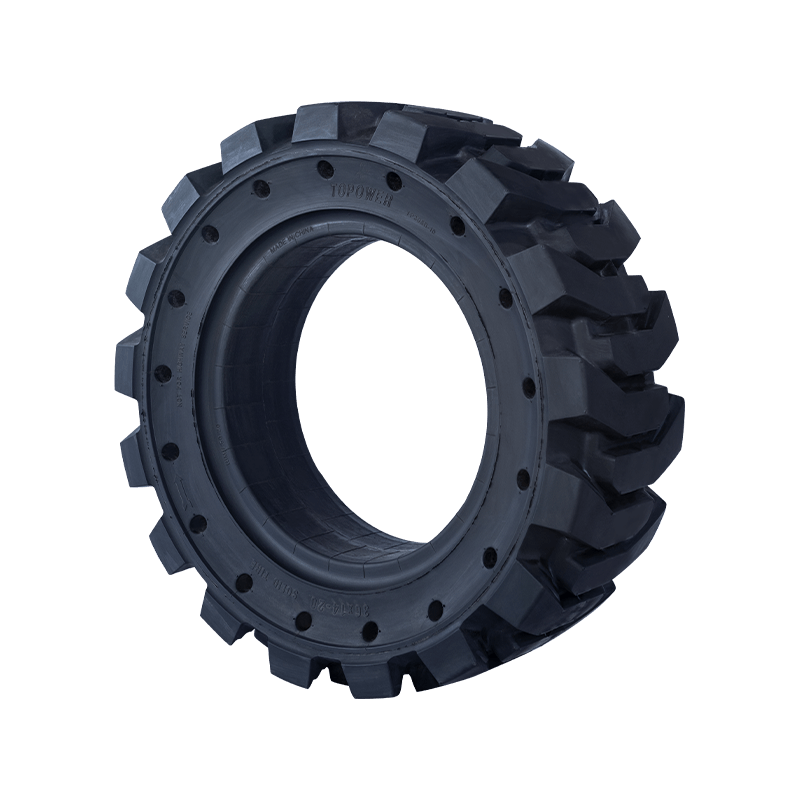
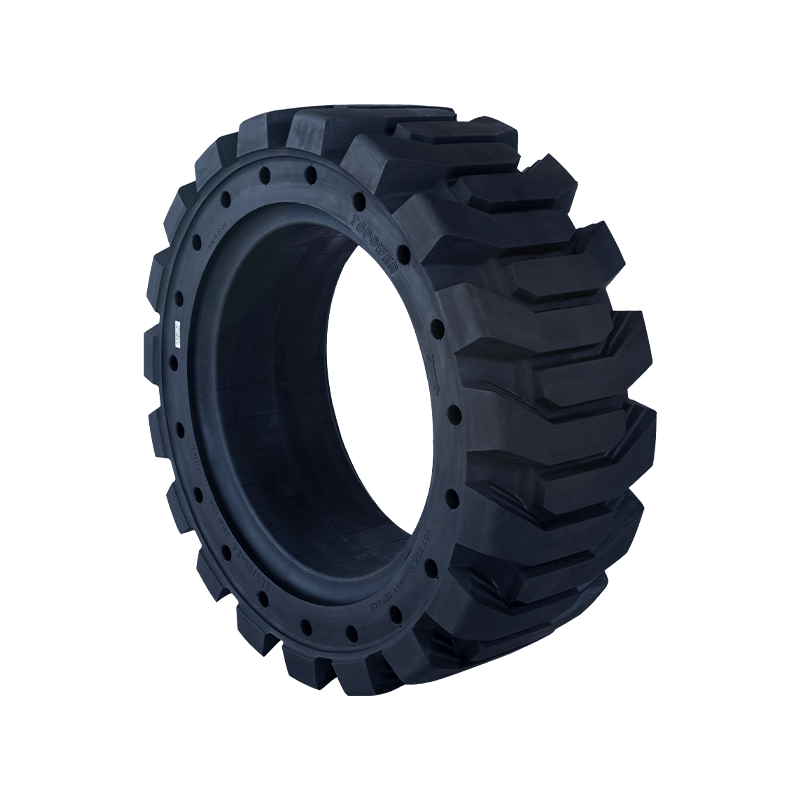
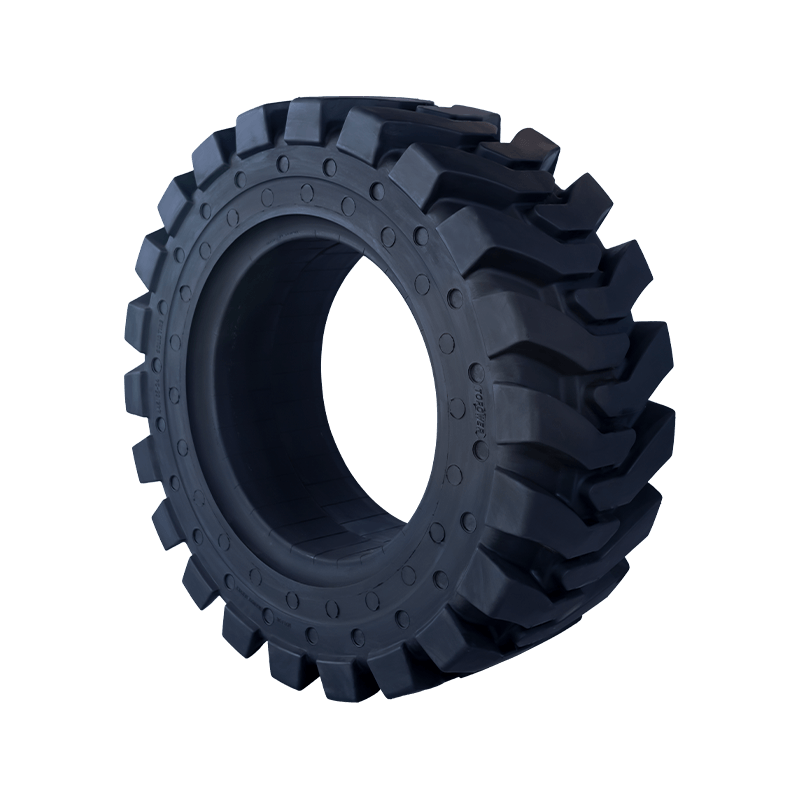
| Heavy duty loader solid tires | Construction, mining | Deep lug block | Cut and chip resistant | Survives penetrating debris, rough terrain traction |
| Aerial work platform solid tyres | Scissor lifts, boom lifts | Diamond or ribbed | High lateral stability compound | Platform stability at maximum height |
| Non-marking solid tires for food industry | Food processing, pharma | Smooth | Silica reinforced, carbon free | No floor marking, food safety compliant |
| Heat resistant industrial solid tyres | Steel, glass, foundry | Smooth or block | High temperature stable vulcanization | Maintains load capacity at 60 to 80 degrees Celsius ambient |
Forklift Solid Tires with Holes: The Press On Design Explained
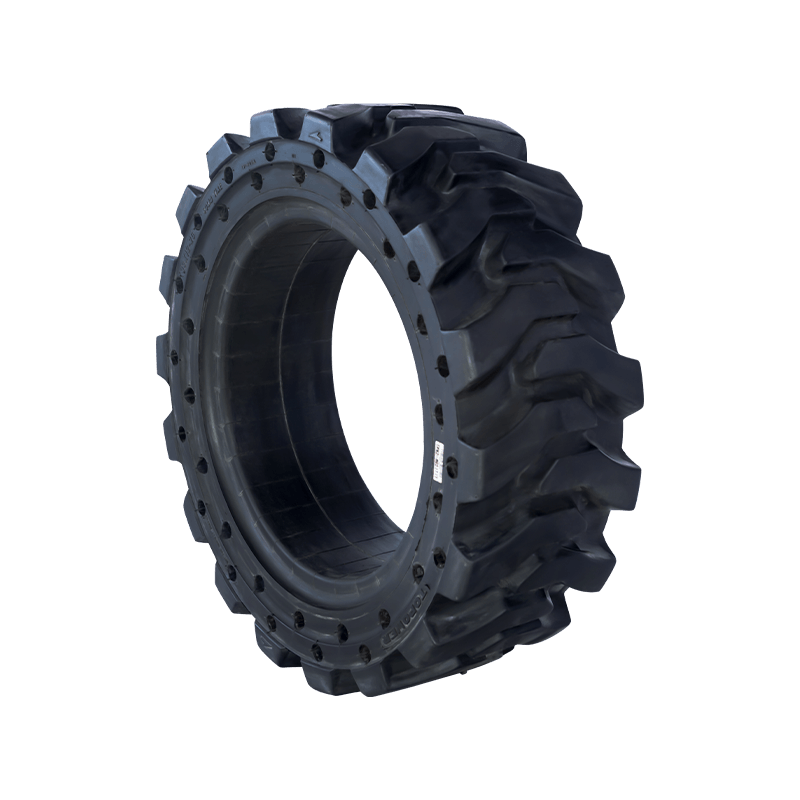
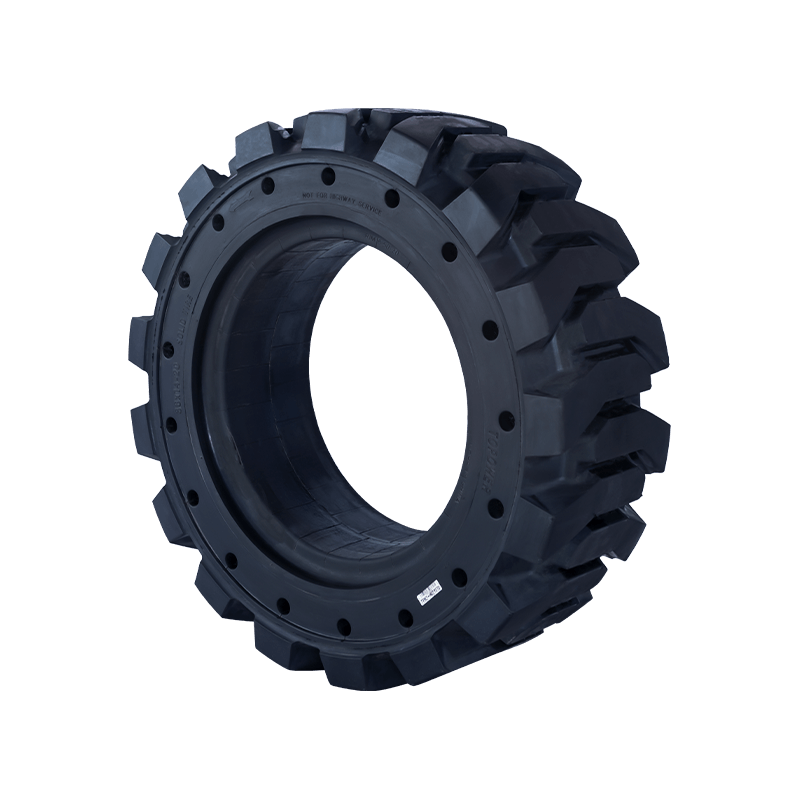
Forklift solid tires with holes are a distinctive product variant widely used on counterbalance forklifts and reach trucks in which the solid tire incorporates a pattern of through holes or recesses in the rubber body arranged circumferentially around the tire. These holes, while appearing to be a structural weakness, actually serve several important functional purposes in the forklift operating context:
- Cushioning improvement: The holes reduce the overall stiffness of the solid tire body, allowing greater elastic deflection under load that improves shock absorption and reduces vibration transmission to the vehicle frame and operator. This makes the ride quality of a Forklift solid tires with holes product significantly more comfortable than an equivalent fully solid tire of the same rubber compound, reducing operator fatigue during extended shifts.
- Weight reduction: The removal of rubber material through the hole pattern reduces the total weight of the tire assembly, which is beneficial for electric forklifts where total vehicle weight affects battery consumption and for vehicle models where the counterweight design is sensitive to tire weight.
- Heat dissipation: The hole channels in the rubber body allow air circulation that helps dissipate heat generated by rubber deformation during high cycle operations, reducing the temperature buildup in the tire body that accelerates wear in demanding applications.
Forklift solid tires with holes are most commonly specified for three shift warehouse operations where operator comfort, energy efficiency, and continuous operation are all important, and where the improved cushioning of the holed design provides a meaningful quality of working life benefit for operators spending 8 hours per shift on the vehicle.
Frequently Asked Questions About Solid Tyres and Industrial Tires
What is the difference between a solid tire for forklift and a pneumatic forklift tire?
A solid tire for forklift is manufactured entirely from rubber with no internal air cavity, while a pneumatic forklift tire contains a pressurized air cavity that provides cushioning. The solid tire cannot puncture, requires no inflation maintenance, and maintains consistent load capacity throughout its service life. The pneumatic tire offers better shock absorption on rough surfaces but is vulnerable to puncture failure, requires regular pressure maintenance, and loses load capacity and stability when underinflated. For the majority of indoor warehouse and manufacturing applications on smooth floors, the solid tire for forklift delivers better total operating economics and simpler fleet management.
How do flat proof pneumatic tires differ from standard pneumatic tires?
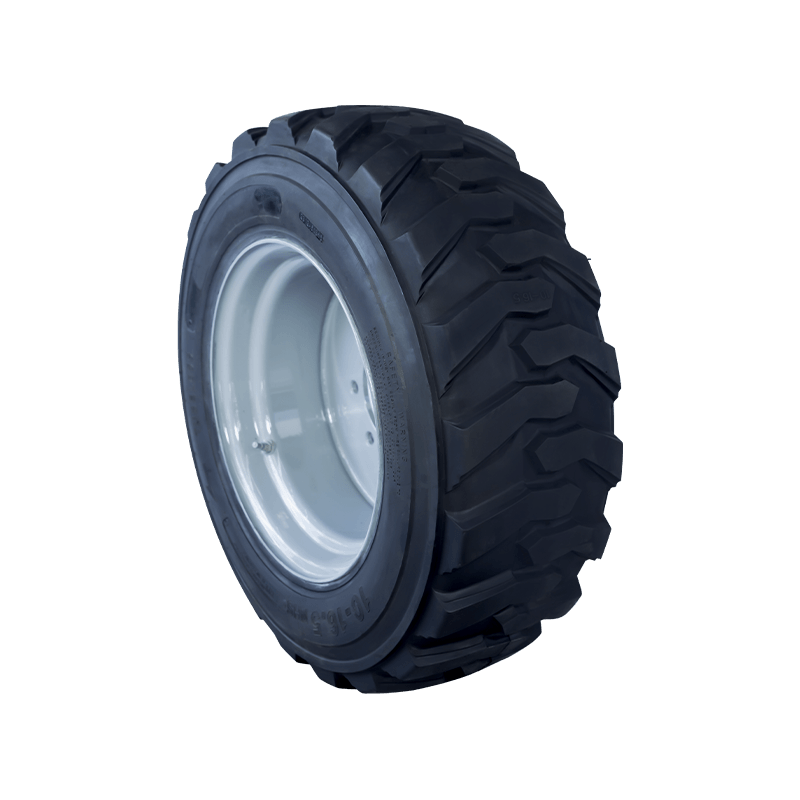
Flat proof pneumatic tires (also described as foam filled pneumatic tires) are standard pneumatic tires that have had their air cavity filled with polyurethane foam after mounting. The foam fill provides the puncture immunity of a solid tire while retaining the pneumatic tire's diameter, section width, and outer profile. This means the vehicle's stability geometry, ground clearance, and certification are maintained while the vulnerability to air loss is eliminated. Flat proof pneumatic tires are heavier than equivalent air filled tires (due to the foam mass replacing the air), provide somewhat less cushioning (since polyurethane foam is less compliant than compressed air), and are appropriate for outdoor and rough terrain applications where the pneumatic profile provides traction advantages over solid specification but puncture immunity is required.
How are Forklift solid tires installed?
Press on Forklift solid tires are installed using a hydraulic press that applies several tonnes of force to seat the tire bead against the rim flange, creating a mechanical interference fit. This press installation requires specialist equipment and trained personnel and cannot be performed with the hand tools used for pneumatic tire installation. The hydraulic press seats the tire fully and evenly in a single controlled stroke, ensuring that the tire sits straight and true on the rim without the seating variation that can occur with manual installation methods.
What is the wear indicator for solid rubber wheel industrial applications?
Most commercial Forklift solid tires and other Solid tyres incorporate a molded wear indicator, typically a colored band (red or yellow) running around the circumference of the tire at a predetermined depth from the outer surface. When the tread wears down to this indicator line, the tire has reached the end of its safe service life and must be replaced. Operating a forklift beyond the solid tire wear indicator is a safety violation because the cushion layer rubber exposed below the wear line is formulated for structural integrity rather than traction or wear resistance, and a tire operating in this worn state will show increased slip, reduced load stability, and accelerated structural deterioration that can lead to tire separation from the rim during high load operation.
Can rubber and tyre bulk container solutions reduce procurement costs for large fleets?
Rubber and tyre bulk container solution procurement, where Industrial tires are purchased in quantity through scheduled delivery agreements with bulk storage at the customer's facility or the supplier's warehouse, is a recognized strategy for large fleet operators to reduce per unit tire cost while maintaining local availability for rapid vehicle service. Bulk procurement agreements typically provide price reductions of 10 to 25 percent below spot purchase pricing in exchange for volume commitments and simplified procurement administration, and may include consignment stock arrangements where tires are held at the customer site and invoiced only on consumption.
Are there solid tire options produced from recycled rubber tyres products?
Recycled rubber tyres products incorporating reclaimed rubber from end of life tire processing are available in certain industrial tire categories, primarily in lower load, lower speed applications such as pallet jack wheels, trolley wheels, and some light duty solid tire casings where the mechanical performance requirements can be met by reclaimed rubber compounds. For high load Industrial tires such as Forklift solid tires, Heavy duty loader solid tires, and Heat resistant industrial solid tyres, the performance specifications required for safety and service life cannot currently be achieved with significant proportions of reclaimed rubber in the compound, and these products are manufactured from virgin rubber compounds to meet the load, temperature, and wear specifications of their intended applications.
Installation, Maintenance, and Replacement Guidelines for Solid Tyres
The correct installation, monitoring, and replacement of Solid tyres and Industrial tires is as important to fleet safety and economics as the initial tire specification decision. Even the highest quality Forklift solid tires will underperform or create safety risks if they are incorrectly installed, operated beyond their wear limits, or replaced without addressing the root causes of premature wear.
Press On Solid Tire Installation Standards
The hydraulic press installation of solid tire for forklift and other press on solid rubber wheel industrial applications requires the press force to be applied squarely and centrally to the tire face to seat the tire evenly on the rim without cocking or misalignment. The rim must be clean, free from rust, damage, and old rubber adhesion before the new tire is pressed on, and the tire must be checked for correct alignment against the rim flange at both sides after pressing to confirm it is seated uniformly around the full circumference. A misaligned press on solid tire that contacts the rim unevenly will develop stress concentrations at the high contact points that cause accelerated rubber degradation and potential tire to rim separation under high load conditions, which is a serious safety hazard on loaded forklifts and materials handling equipment.
Monitoring Wear and Knowing When to Replace
The wear monitoring program for Solid tyres should be integrated into the regular vehicle inspection routine, with tire condition assessed at least weekly on high duty cycle vehicles and at every scheduled service on lower intensity applications. Beyond the primary wear indicator band described in the FAQ section, operators should monitor for:
- Uneven wear patterns: Flat spots, diagonal wear, or center heavy wear patterns indicate alignment, overloading, or operating technique issues that should be addressed before the next tire set is installed to prevent premature wear recurring on the replacement tires.
- Chunking or tearing at the tread surface: Indicates operation on surfaces too rough or abrasive for the specified compound, or contamination of the operating surface with chemicals that are degrading the rubber. Investigate the root cause and adjust the compound specification for the replacement tire if the operating environment has changed.
- Sidewall cracking or ozone deterioration: Surface cracking on the sidewall of stored or infrequently used Solid tyres indicates ozone or UV degradation of the rubber. Tires showing deep sidewall cracks should be replaced regardless of remaining tread depth, as the structural integrity of the tire body may be compromised.
By combining correct initial specification from the selection criteria covered in this article with proper installation, consistent wear monitoring, and timely replacement at the wear indicator, industrial operations can extract the maximum service life and performance value from their Solid tyres and Industrial tires investment while maintaining the safety standards that protect both personnel and vehicle assets throughout the full operational lifecycle.