 English
 русский
 Español
 عربى


A warehouse supervisor watches a forklift cross a concrete aisle and hears the familiar thump of a pneumatic tire. The machine is carrying a load close to its rated capacity, the floor is clean but worn, and the operator turns sharply at the end of the racking. The supervisor has already dealt with two flat tires this quarter and asks a practical question: should this fleet move to solid rubber wheels? The answer is not simply that solid tires never go flat. A solid rubber wheel can be an excellent choice for low-speed industrial work, but it changes the way load, heat, ride, and floor conditions have to be managed.
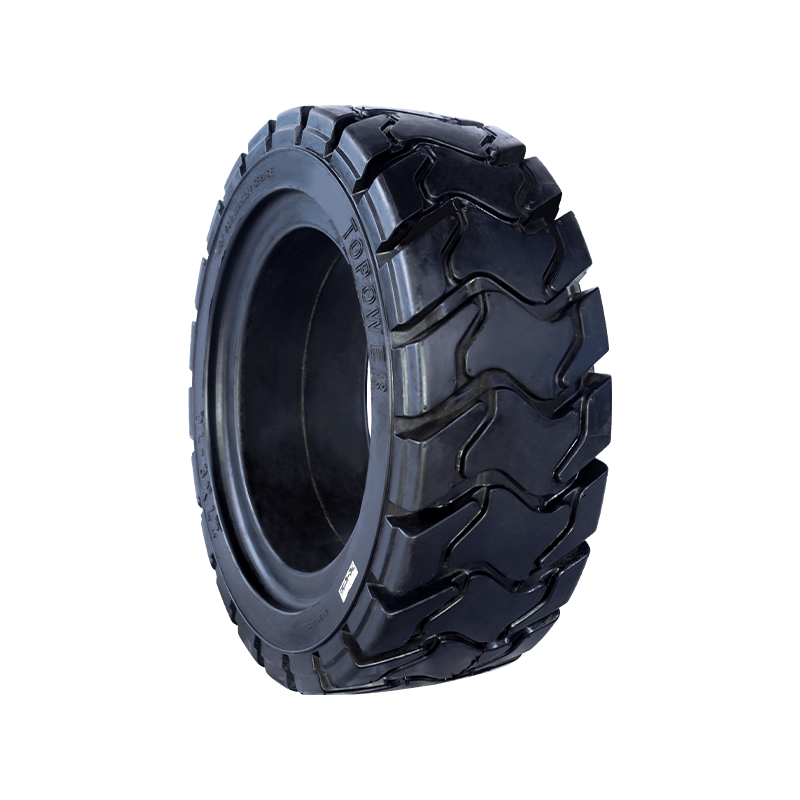
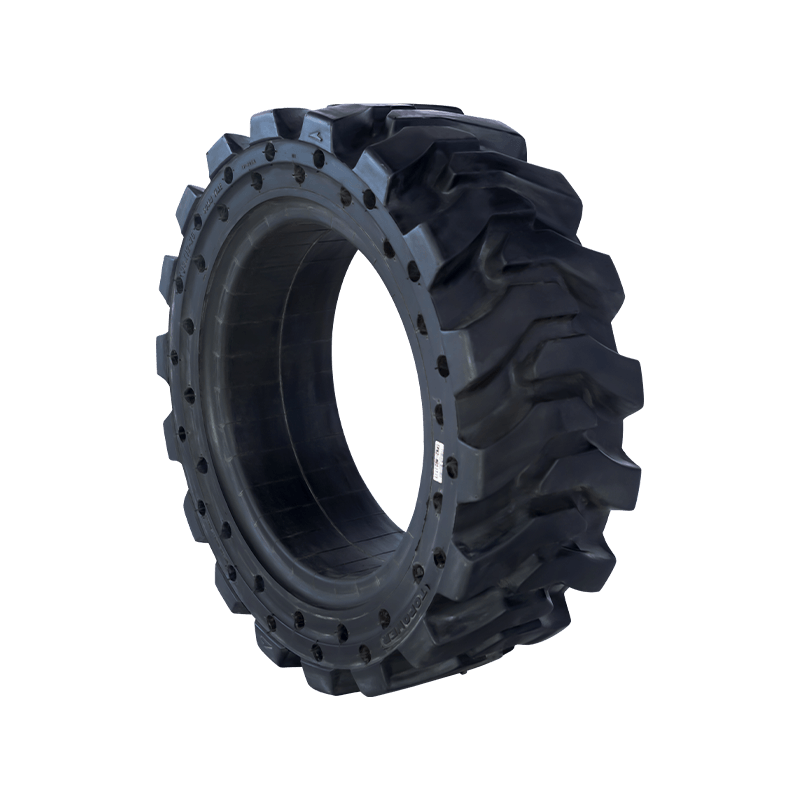
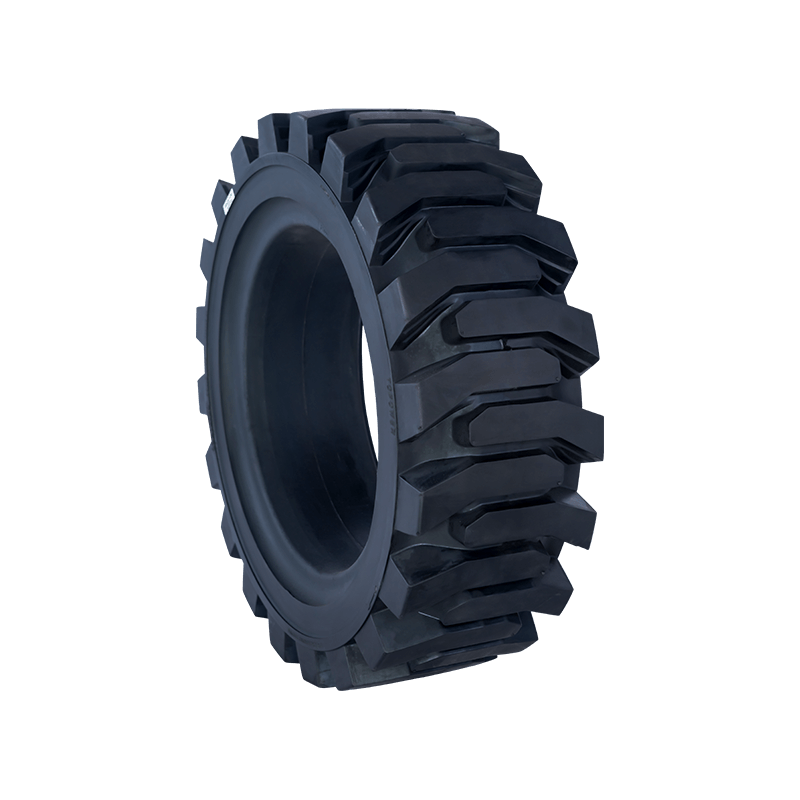
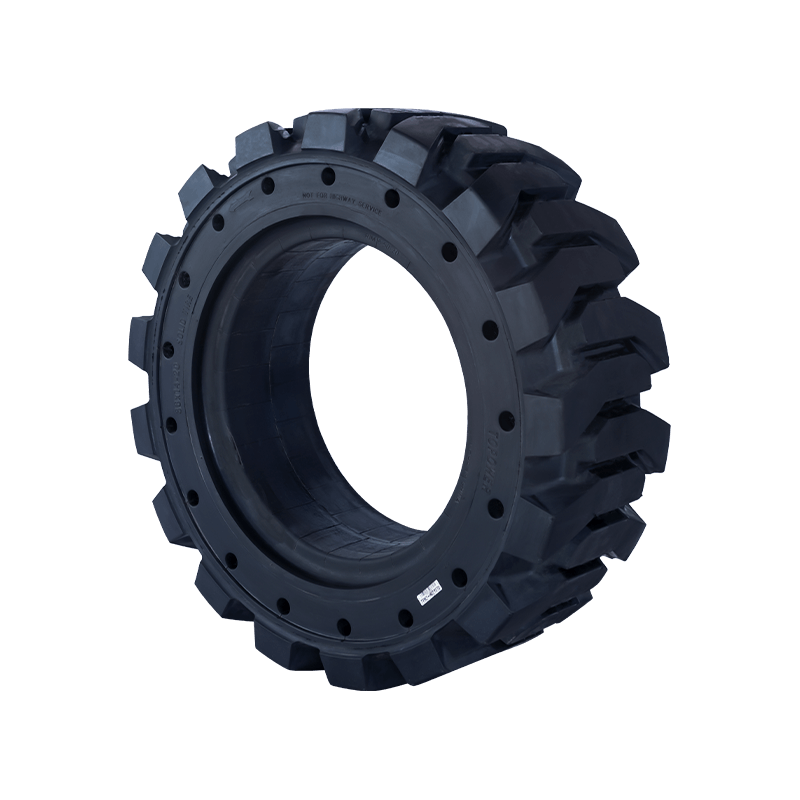
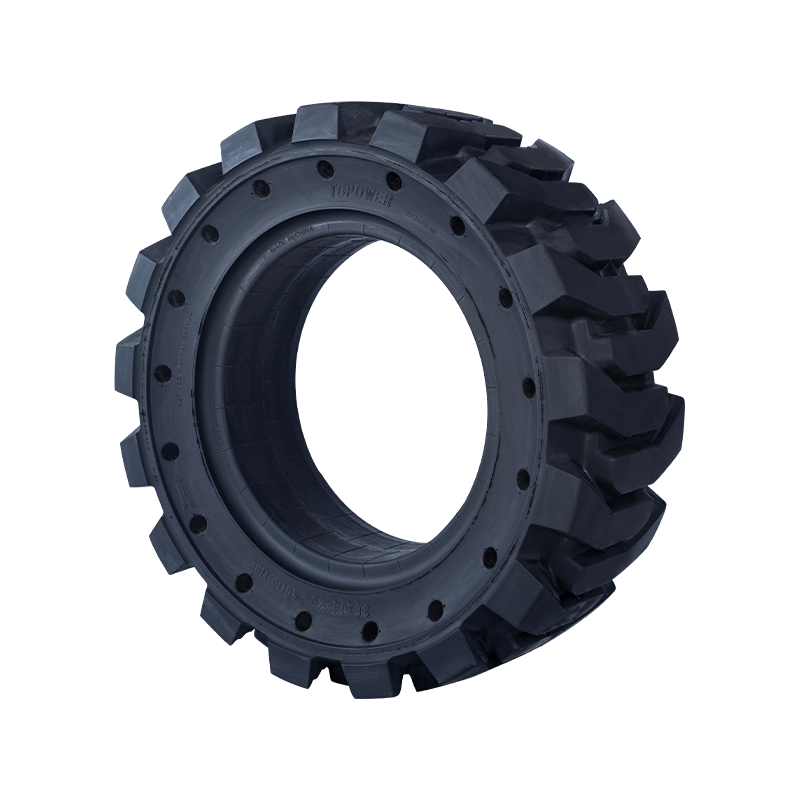
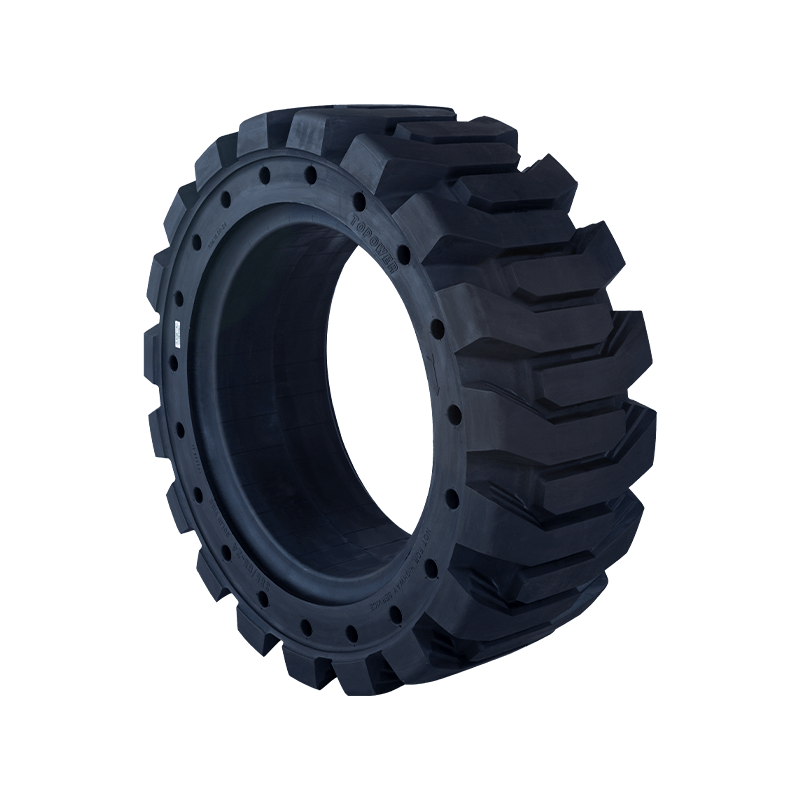
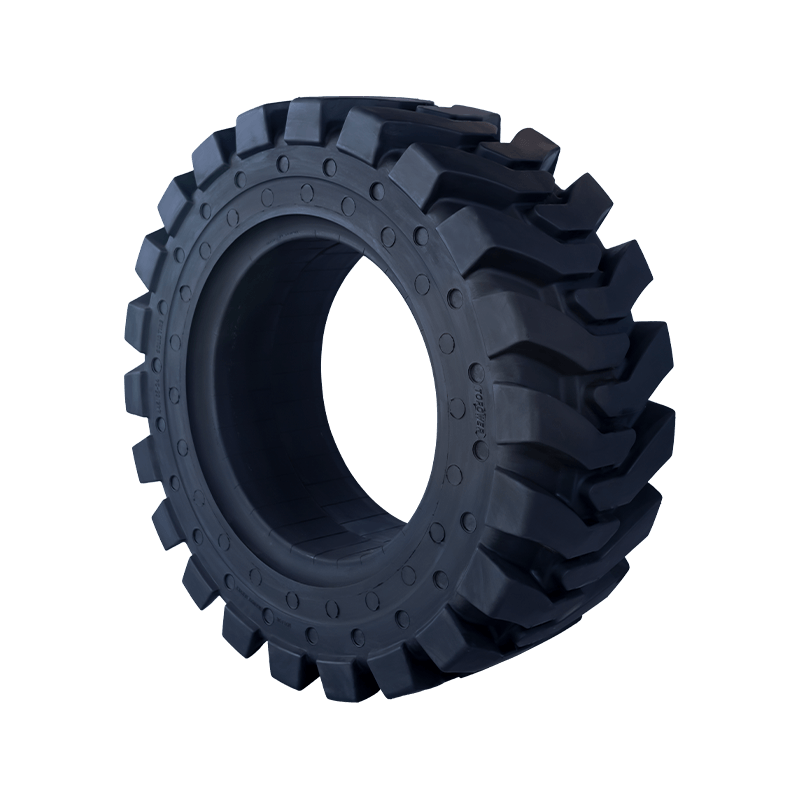
The short definition is straightforward. A solid rubber wheel is a non-pneumatic wheel in which a molded rubber tire body, usually supported by a rigid base band or rim, carries the load without air pressure. It has no inner tube and no air chamber to puncture. In industrial tire catalogs, the term often refers to a solid tire and wheel assembly for forklifts, aerial work platforms, skid-steer loaders, sweepers, trailers, and similar low-speed equipment. In a caster catalog, it can also mean a smaller solid rubber wheel used on carts and racks. The common thread is the same: the rubber section and the rigid core carry the load, while the absence of air removes the risk of a sudden pressure loss. The characteristics that follow from that design are flat-free operation, high load capacity at low speed, dimensional stability, and low routine maintenance, balanced against a firmer ride, greater weight, and a real need to control heat and operating speed.
What a Solid Rubber Wheel Is and What It Is Not
The word "solid" can mislead buyers. It does not mean the wheel is a single block of hard rubber with no engineering inside it. Most industrial solid rubber wheels use a layered construction. A wear-resistant tread compound sits on the outside. Beneath it, a cushion or resilient layer may absorb some shock and distribute load. The tire body then meets a rigid base band, which may be steel, and that base band is either bonded to a rim or pressed onto a rim. The exact construction varies by product family, but the principle is consistent: the rubber is engineered to deflect under load and recover, while the rigid core keeps the tire seated and transfers load to the axle.
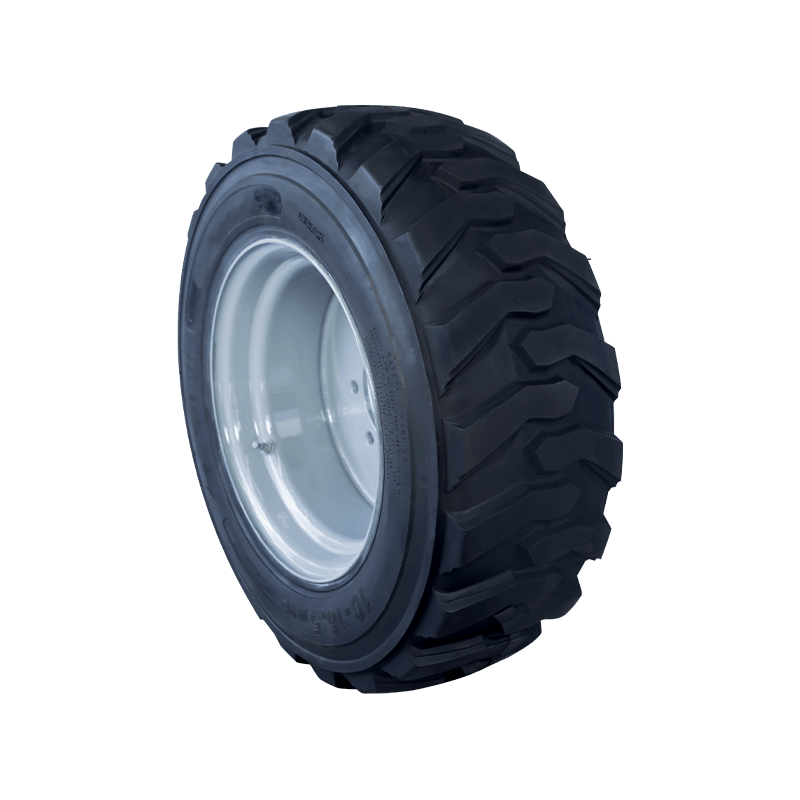
This is also why a solid rubber wheel is not the same thing as a pneumatic tire filled with foam or a PU foam-filled tire. A foam-filled tire starts as a pneumatic casing and is filled with a lightweight foam compound. A solid rubber tire is built as a solid tire from the start. A polyurethane wheel uses a different elastomer and can offer excellent cut resistance, low rolling resistance, or non-marking behavior in certain applications, but its load-deflection behavior and heat profile differ from rubber. A solid rubber caster wheel is usually a smaller, lower-speed component for manual equipment. A solid rubber industrial tire is a heavier-duty assembly designed for a specific machine, rim, load, and duty cycle. The definitions overlap, but the performance envelope does not.
Buyers should also separate the wheel from the rim. In many industrial applications, the solid tire is supplied as a press-on tire that fits a specific rim profile. The tire may be bonded to a base band and then pressed onto the wheel. The rim, bearing, and mounting hardware are part of the system. A tire that is rated for a given load on one rim may behave differently on another. That is why a responsible specification starts with the machine, the axle, the rim, and the duty cycle rather than with a tire diameter alone.
How Construction Produces the Characteristics
A solid rubber wheel's characteristics are not accidental. They come from the compound, the shape of the rubber section, the base band, and the bond between rubber and metal. The tread compound is usually formulated for wear resistance, cut and tear resistance, and traction on concrete, asphalt, or factory floors. A harder compound may last longer under abrasion but can reduce traction or increase noise. A softer compound may improve grip and ride slightly but wear faster. The cushion layer, where present, helps distribute stress and reduce the shock transmitted to the machine. The base band provides stiffness and a reliable mounting surface. If the bond between rubber and base band is poor, the tire may fail even if the tread looks healthy.
Tread, cushion, and base band
The tread is the part most buyers see, but the cushion and base band often decide the real service life. In a heavy solid tire, the rubber section is thick enough to carry load through deflection. The rubber is not meant to behave like a balloon. It is meant to deform modestly and recover. If the section is too stiff for the load, the tire may not deflect enough to spread pressure, and the machine may vibrate. If it is too soft for the load, the tire may deflect too much, generate heat, and develop fatigue cracks. The base band must remain rigid enough to keep the tire concentric on the rim. A damaged base band can cause vibration, poor tracking, or premature looseness.
Rim fit and mounting method
Mounting method is another defining characteristic. A press-on solid tire is designed to be pressed onto a rim with a specified interference fit. A resilient solid tire may be bonded to a rim or supplied as a complete wheel. A bolt-on or multi-piece rim assembly uses fasteners and must be checked for torque and corrosion. Each method has its own maintenance implications. Press-on tires require the correct press equipment and rim condition. Bonded tires require attention to the bond line. Complete wheel assemblies simplify replacement but still require correct bearing and axle fit. A buyer who compares only rubber hardness and price can miss the mounting cost and downtime that follow.
Key Performance Characteristics That Matter in Use
The practical characteristics of a solid rubber wheel can be grouped into what it does well and what it demands from the application. It does well when the job needs a flat-free wheel, high load capacity at low speed, resistance to punctures and cuts, and stable dimensions under load. It demands attention when the job involves high speed, long continuous runs, rough surfaces, heat buildup, or operator comfort. The best selection is not the tire with the highest headline load number. It is the tire whose load rating, speed rating, compound, and mounting system match the actual duty cycle.
- Flat-free operation: no air chamber means no sudden pressure loss from nails, glass, or sharp debris. This is the main reason many warehouses and rental fleets consider solid rubber wheels.
- High load capacity at low speed: a solid rubber section can support heavy loads because the rubber and base band share the stress. The load rating must still be checked at the actual speed and duty cycle.
- Dimensional stability: the tire holds its shape under load better than a pneumatic tire in some slow-speed applications, which can help with stable stacking and predictable machine height.
- Wear and cut resistance: industrial compounds are formulated for abrasive floors, small metal scraps, and repeated turning. The level of resistance varies by compound and tread design.
- Low routine maintenance: no inflation pressure checks, no tube repairs, and no puncture downtime. Maintenance shifts to inspection of tread wear, base band condition, rim fit, and heat damage.
- Firmer ride: the absence of an air cushion transmits more shock and vibration to the machine and operator. This matters on rough floors, long shifts, and equipment with sensitive components.
- Heat buildup: solid rubber deflects as it rolls. At higher speeds or under continuous load, hysteresis generates heat. Excess heat can age the rubber, soften the bond, or damage the base band.
- Greater weight: solid rubber wheels are often heavier than comparable pneumatic wheels, which affects handling, installation, and axle load.
- Floor interaction: standard black rubber can leave marks on light-colored floors. Non-marking compounds are available for clean rooms, retail areas, and food handling zones where appearance matters.
These characteristics explain why solid rubber wheels are common in industrial material handling but uncommon in highway service. A solid tire is at its best when the machine operates at low to moderate speed, the route is relatively short or stop-and-go, and the cost of a flat tire is high. It is at its worst when the machine runs continuously at high speed, the floor is uneven, or the operator spends the whole shift in the seat.
Load, Speed, Heat, and Floor Conditions
Load and speed are linked. A solid tire that carries a given load at 5 km/h may not carry the same load at 15 km/h. The faster the tire rolls, the more often the rubber section flexes per minute, and the more heat it generates. If the heat cannot escape, the rubber may degrade. This is why load charts usually specify speed, duty cycle, and sometimes ambient temperature. A buyer who takes a load rating from a catalog without checking the speed condition may create a tire that appears correctly sized but runs too hot in service. The same logic applies to continuous operation versus intermittent operation. A tire that works well for a shuttle truck making short runs may not suit a machine that runs a long loop continuously.
Floor conditions also change the picture. Smooth concrete allows a solid tire to roll with relatively low vibration. Expansion joints, drains, dock plates, and damaged concrete introduce impacts. A solid tire can handle impacts, but the shock has to go somewhere. It travels into the wheel, bearings, axle, and machine frame. That is why some solid tire designs use a cushion layer, holes, or a shaped cross-section to soften the ride. The trade-off is that a softer ride may reduce load capacity or change heat behavior. There is no universal "best" solid rubber wheel. There is only a wheel that fits the floor, the load, and the speed.
Heat is the least visible risk. A tire can look fine after a shift and still be running hot. Operators may notice a hot rubber smell, a change in handling, or a dark, glazed tread. Maintenance teams should check for heat after the first few days of a new tire installation, especially if the machine has changed duty cycle or the tire is a new compound. If the tire runs hot, the fix may be a lower speed, a different compound, a higher load-rated tire, a larger wheel, or a change in route. Ignoring heat can lead to bond failure, base band damage, or rapid wear.
Matching the Wheel to the Machine and the Floor
The first matching exercise is machine type. A forklift solid tire is designed around the mast, counterweight, and load center of a forklift. A skid-steer loader solid tire must tolerate a different steering pattern and a different load distribution. A sweeper solid tire may need a tread pattern that cleans the floor or resists glass and debris. An aerial work platform solid tire must support stability at height and may need a non-marking compound for indoor use. A trailer solid tire may prioritize load capacity and low rolling resistance over traction. These differences are not cosmetic. They affect the tire's profile, compound, and mounting system.
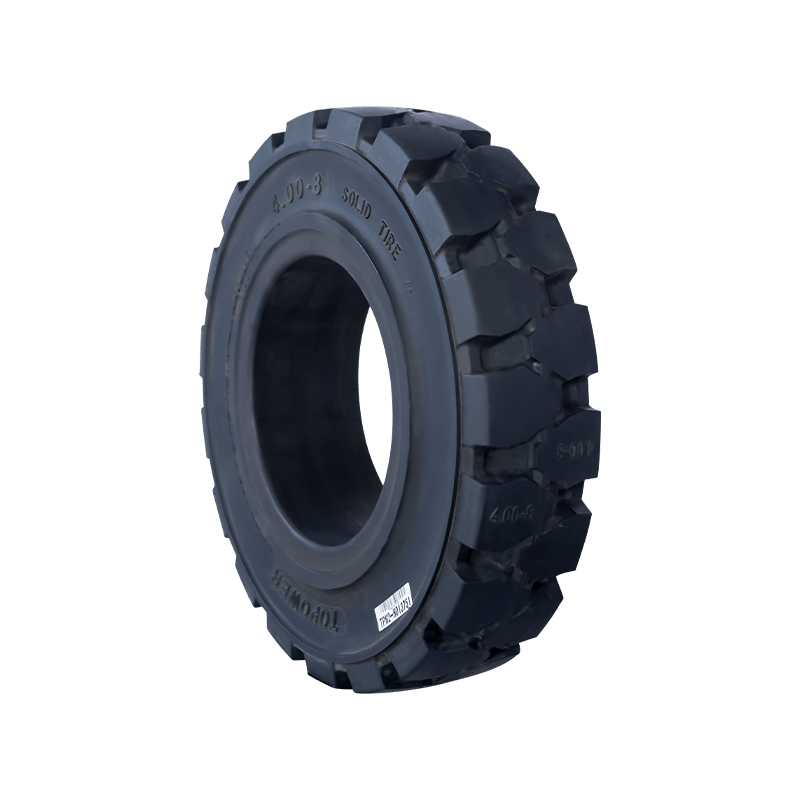 Forklift Solid Tires for Industrial Material HandlingBrowse forklift solid tires with pneumatic rims, load-bearing and wear-resistant options, plus customizable black or non-marking compounds for industrial fleets.View Product →
Forklift applications are a useful example because they combine high load, tight turning, and frequent stop-and-go movement. A forklift solid tire needs enough load capacity for the axle load, but it also needs a compound that can survive repeated scrubbing on concrete. A tire that is too hard may last a long time but can increase vibration and noise. A tire that is too soft may grip well but wear quickly. The right balance depends on the floor, the load, and the number of shifts. Buyers should also confirm the rim type and the available space around the wheel because a solid tire can have a different profile from the pneumatic tire it replaces.
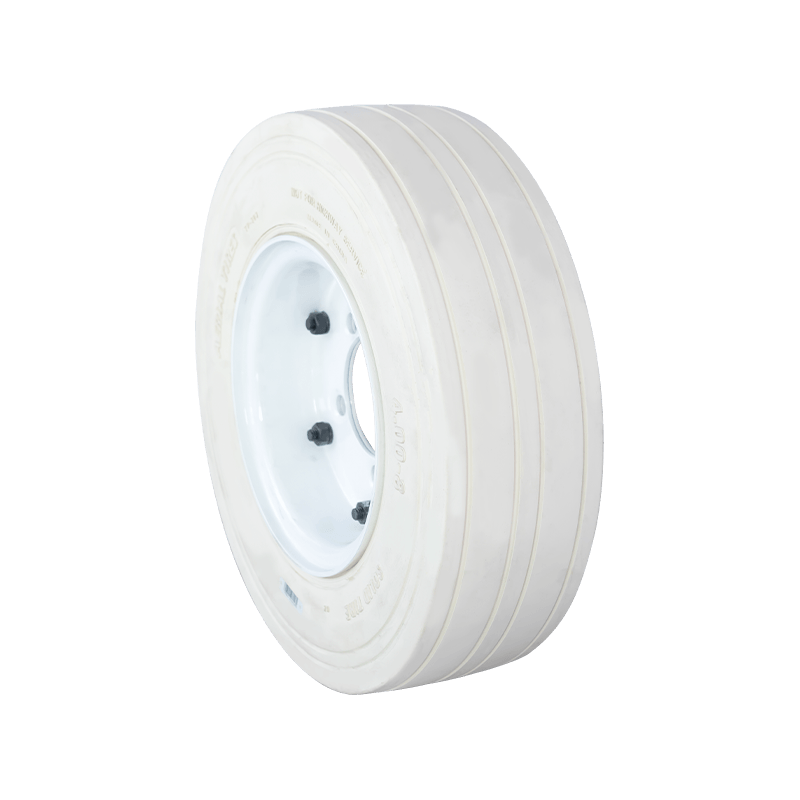 Non-Marking Solid Tires for Indoor EquipmentCompare non-marking solid tires in white or gray compounds for indoor machinery, including scissor lift sizes and bonded, press-fit, or inflatable-rim options.View Product →
Non-marking solid rubber wheels are selected when dark tire marks are unacceptable. This is common in food processing, clean manufacturing, retail backrooms, and showroom floors. The non-marking property is a compound behavior, not a surface coating. A black tire painted gray is not a non-marking tire. Buyers should ask how the compound performs after wear, because some non-marking tires become more marking as the outer layer wears away. They should also consider whether a polyurethane wheel might be a better fit if the application needs very low rolling resistance or high cut resistance. Rubber is often chosen for grip and shock absorption, while polyurethane is often chosen for load capacity and low marking in specific conditions.
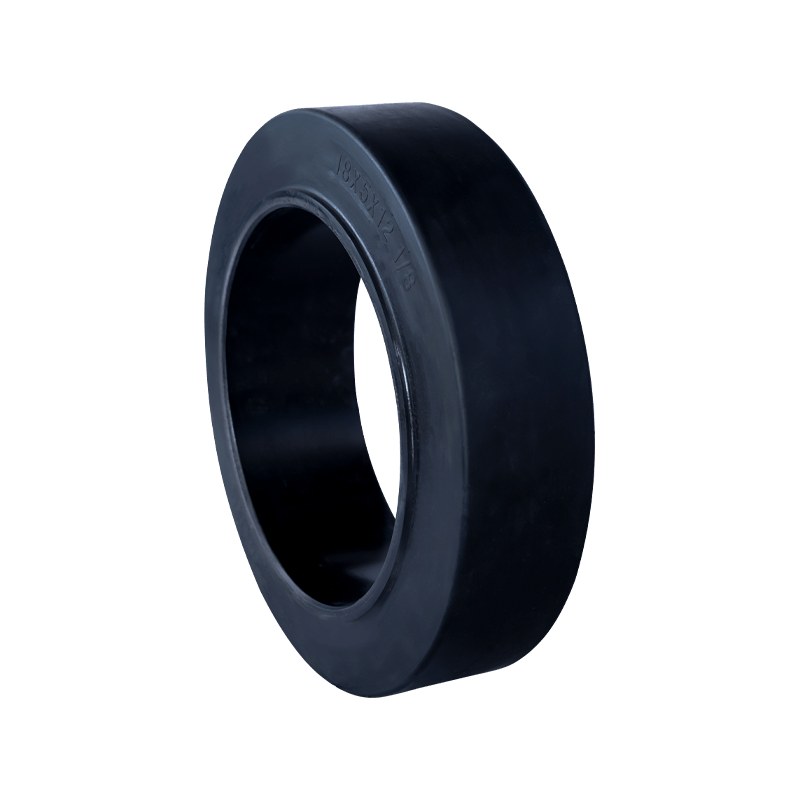 Press-On Solid Tyres with Reusable Steel RimsReview press-on solid tyres that mount by pressure and reuse the steel rim, available in wear-resistant black or non-marking compounds for industrial fleets.View Product →
Press-on solid tires are common in industrial fleets because they allow the tire to be replaced without replacing the entire wheel. The press-on tire is mounted on a rim with a specified fit. The rim must be clean, round, and free of corrosion or damage. A worn rim can cause the tire to loosen, run off-center, or fail at the base band. Press-on mounting also requires the right equipment and training. A fleet that plans to change tires in-house should confirm that the press equipment, safety procedures, and rim inspection process are in place. If not, a complete wheel assembly may be the more practical choice.
Specification and Comparison: What to Put on the Checklist
A solid rubber wheel specification should be written in the language of the application, not only in the language of the catalog. The minimum checklist includes machine type, axle load, tire size, rim type, mounting method, speed, duty cycle, floor condition, ambient temperature, marking requirement, and available maintenance resources. For each item, the buyer should record the actual condition rather than the nominal condition. For example, "indoor concrete" may include dock plates and expansion joints. "Intermittent use" may mean 10 hours per shift during peak season. "Rated load" should be checked at the actual speed and with the actual attachment or counterweight.
| Consideration | Solid Rubber Wheel | Pneumatic Tire | Polyurethane Wheel |
|---|---|---|---|
| Puncture risk | Very low; no air chamber to puncture. | Higher; sharp debris or valve damage can cause a flat. | Low for cut and puncture damage, but the wheel can chip or crack under impact. |
| Ride comfort | Firm; cushion layer and design can soften it, but it remains firmer than air. | Generally the most forgiving on uneven surfaces. | Can be firm and noisy; depends on thickness and tread design. |
| Load capacity | High at low speed when correctly sized. | Good, but load capacity depends on inflation pressure. | High for its size, but heat and impact limits must be respected. |
| Heat and speed | Needs speed and duty-cycle limits; continuous fast running can generate heat. | Better heat tolerance at higher speed, but pressure and temperature must be managed. | Heat-sensitive; high speed or sustained friction can cause failure. |
| Floor marking | Standard black rubber may mark; non-marking compounds are available. | Usually black and can mark; depends on compound. | Often chosen for non-marking behavior, but compound grade matters. |
| Maintenance focus | Tread wear, base band, rim fit, bond line, heat checks. | Pressure, tread, sidewalls, valves, and punctures. | Bond line, cracking, flat spots, and load history. |
The table is a starting point, not a substitute for a load chart. A solid rubber wheel with a high load rating at low speed may have a much lower rating at a higher speed. A pneumatic tire may be more comfortable, but it can also fail suddenly and create downtime. A polyurethane wheel may resist cuts and leave fewer marks, but it can crack under impact or overheat in continuous braking. The correct choice depends on which failure mode is most expensive in the specific application. For a warehouse that cannot tolerate flat tires, solid rubber may be the better economic choice even if the ride is firmer. For a machine that runs long distances at speed, a pneumatic tire or a different wheel system may remain the better engineering choice.
Procurement Risks and Quality Checks
One common procurement risk is buying a solid rubber wheel by size alone. Two wheels can have the same outside diameter and width but different load ratings, compounds, and base band designs. A low-cost tire may use a compound that wears quickly or a base band that does not hold the rim correctly. The buyer may not see the difference until the first month of service. A better approach is to request the load chart, the speed rating, the compound information, the rim fit specification, and the recommended mounting method. If the supplier cannot provide these details, the wheel should be treated as an unknown rather than a commodity.
Another risk is confusing a caster wheel with an industrial tire. A small solid rubber caster wheel may be rated for manual cart speeds and smooth floors. It is not automatically suitable for a powered forklift or a skid-steer loader. The load rating may be expressed at a different speed, and the bearing or mounting may not handle the shock. Buyers should match the product family to the machine class. For powered industrial equipment, the tire should be specified as an industrial solid tire, not a general-purpose caster wheel.
Quality checks should include dimensional inspection and bond inspection. The tire should sit concentrically on the rim. The base band should be free of cracks, deformation, and corrosion. The bond line between rubber and metal should be continuous. The tread should not show separation, deep cuts, or embedded metal. For press-on tires, the interference fit should be verified with the correct gauge or by a qualified mounting shop. For complete wheels, the bearings should turn freely without excessive play. A new tire that is out of round or poorly balanced can cause vibration that is blamed on the machine.
Warranty terms also deserve attention. A solid tire warranty may exclude heat damage, overload, improper mounting, and use at excess speed. That is reasonable because those conditions are outside the tire's design envelope. The buyer should understand what evidence is needed for a claim and what the supplier will inspect. A clear warranty does not replace correct specification, but it does reduce the risk of a dispute when a tire fails early. The best procurement process combines a written application profile, a supplier technical review, a trial period, and a post-trial inspection.
Inspection and Maintenance for Service Life
Solid rubber wheels need less routine attention than pneumatic tires, but they are not maintenance-free. The first check is tread wear. Uneven wear can indicate misalignment, a bent axle, a worn bearing, or a machine that is being operated with a load outside the design envelope. Flat spots can indicate repeated hard braking or a wheel that is locking. Cracks at the shoulder can indicate age, heat, or overload. Embedded metal should be removed before it works deeper into the tread. A tire that is worn to the base band should be removed from service because the remaining rubber can no longer protect the bond or the rim.
The second check is the base band and rim. Corrosion, loose fit, and deformation are serious. A press-on tire that has been overheated may lose its grip on the rim. A bonded tire may show a separation line at the bond. The rim should be checked for cracks, especially around the valve hole, stud holes, and flange. Fasteners should be checked for torque and corrosion. Bearings should be checked for play and noise. These checks are not cosmetic. A wheel that separates from the rim at speed can cause a serious accident.
The third check is operating condition. After a new set of solid tires is installed, the maintenance team should check for heat and vibration during the first shifts. If the tires run hot, the cause may be speed, load, under-inflation-like deflection, or a dragging brake. If the machine vibrates, the cause may be an out-of-round tire, a damaged rim, or a mounting error. Operators should report changes in handling, noise, or ride. A solid tire often gives warning signs before it fails, but those signs are easy to ignore when the tire still looks black and round.
For teams that want a more detailed inspection routine, the article on inspection points for industrial solid tires provides a useful field checklist. The broader principle is to inspect the whole wheel system, not just the rubber. The tire, rim, bearing, axle, and machine mounting are one assembly. A failure in any part can damage the others. Maintenance records should include tire hours, load history, and any heat events so that repeat problems can be traced to the real cause.
Where Solid Rubber Wheels Work Best
Solid rubber wheels work best in low-speed, high-load, flat-free applications where downtime is expensive. Warehouses, manufacturing plants, ports, loading docks, rental fleets, and municipal equipment are common examples. A forklift that runs on concrete and turns frequently is a natural fit. A sweeper that picks up debris and cannot afford a flat is another. Aerial work platforms benefit from the stability and flat-free behavior of solid tires, especially when the machine is working indoors or on finished floors. Trailers and agricultural equipment may use solid tires where slow speed and load capacity matter more than ride comfort.
They are less suitable for high-speed transport, long continuous road runs, and machines that rely on air cushioning for operator comfort or load protection. They can also be a poor choice on very rough ground where impact loads are high and the machine frame is not designed for the shock. In those cases, a pneumatic tire, a foam-filled tire, or a different suspension design may be the better solution. The decision should be based on the actual duty cycle rather than on a general preference for "no flats." A flat-free tire that overheats or damages the machine is not a low-cost solution.
The load-bearing behavior of solid industrial tires is another reason to match the tire to the machine. The article on how industrial solid tires achieve load-bearing capacity explains how compound, section shape, and base band work together. A buyer who understands that relationship can ask better questions during specification. Instead of asking only for the cheapest tire in a size, the buyer can ask for the load rating at the actual speed, the recommended rim, the heat limits, and the inspection points. That is how a solid rubber wheel becomes a reliable part of the fleet rather than a recurring problem.
Practical Takeaway
A solid rubber wheel is defined by what carries the load: a molded rubber section and a rigid base band or rim, not air pressure. Its most valuable characteristics are flat-free operation, high load capacity at low speed, dimensional stability, wear resistance, and low routine maintenance. Its most important limits are heat, speed, ride harshness, weight, and floor interaction. Those limits are manageable when the wheel is specified against the real application, but they can cause early failure when the buyer treats the tire as a simple black circle with a diameter and a price.
The practical buying decision starts with the machine and the route. Record the axle load, speed, floor surface, duty cycle, marking requirement, and mounting method. Ask for a load chart that matches those conditions. Check the base band, rim fit, and bond quality. Plan the first inspection after installation. If the application is a low-speed industrial machine that cannot tolerate flats, a solid rubber wheel is often a strong choice. If the application demands high speed, long continuous runs, or a soft ride, another wheel system may be the better engineering choice. The definition is simple, but the characteristics are what determine success in service.