 English
 русский
 Español
 عربى
عربى
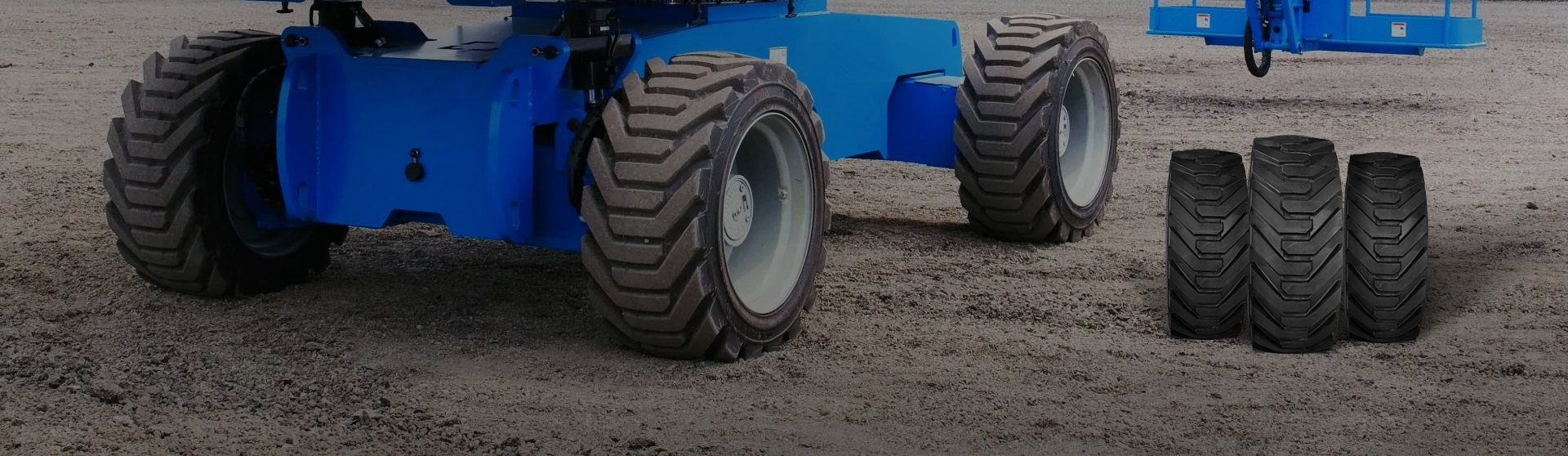

In industrial operations, warehouse logistics, construction sites and similar environments, tire reliability and durability directly determine operational efficiency and safety. While pneumatic tires are common in civilian use, they show significant weaknesses in settings with abundant sharp debris and frequent heavy loads. In contrast, solid tires and polyurethane foam-filled tires, designed specifically for harsh working conditions, have become the mainstream choice for industrial equipment. Below is a detailed analysis of their core advantages over pneumatic tires.
1. Fundamental Structural Differences: From Air Pressure Support to Solid Reliability
1. Pneumatic Tires: Air-Dependent and Fragile
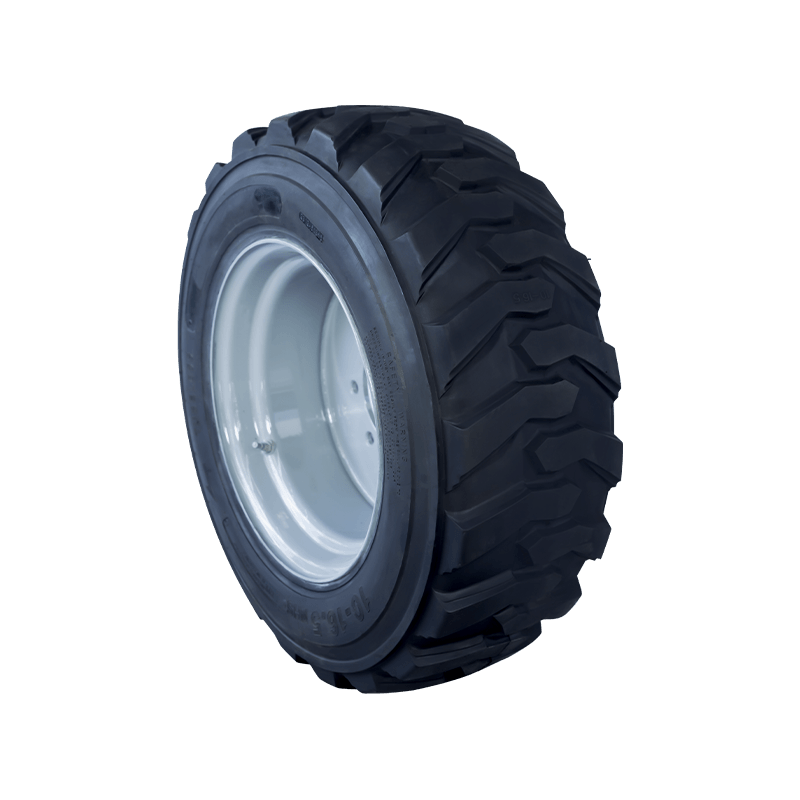
Pneumatic tires are hollow ring-shaped structures composed of an inner tube (or airtight liner), tire body plies, tread, etc. They rely on compressed air for load-bearing and shock absorption. Their critical drawbacks are air pressure dependency and vulnerability to punctures. Sharp objects like nails, glass and metal shards can pierce the tire casing, causing rapid air leakage or blowouts, which may to equipment tipping or cargo spills—serious safety hazards. Frequent tire pressure checks and repairs are required, resulting in high maintenance costs and costly downtime.
2. Solid Tires: All-Rubber Solid Construction, No Air Worries
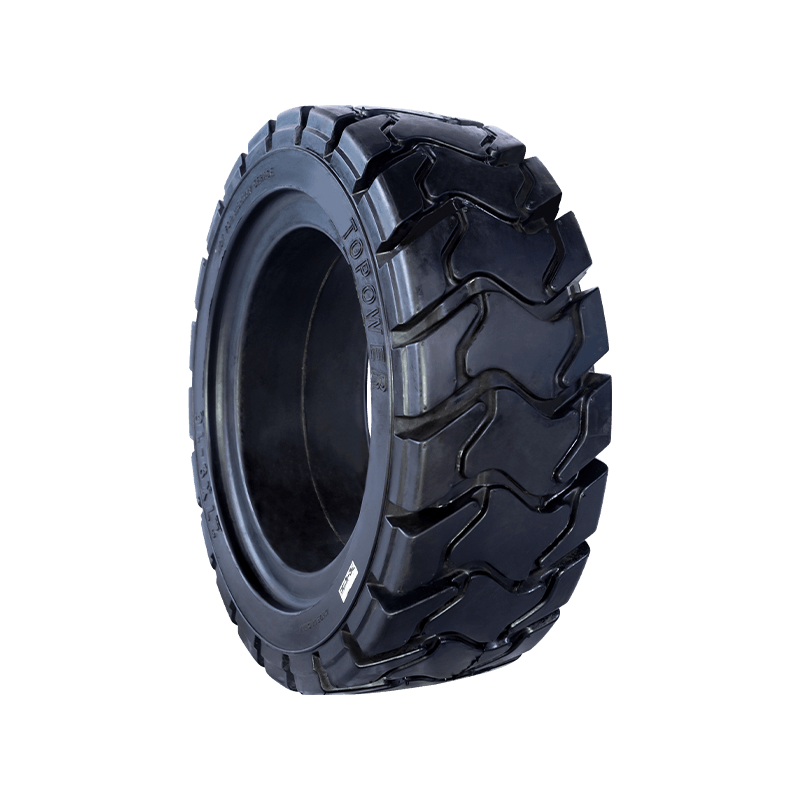
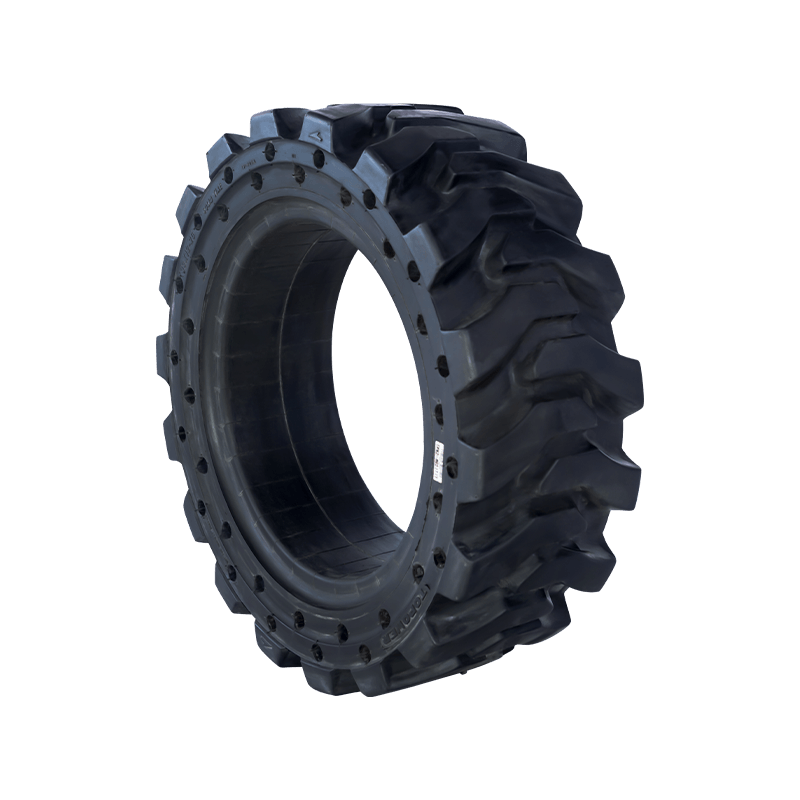
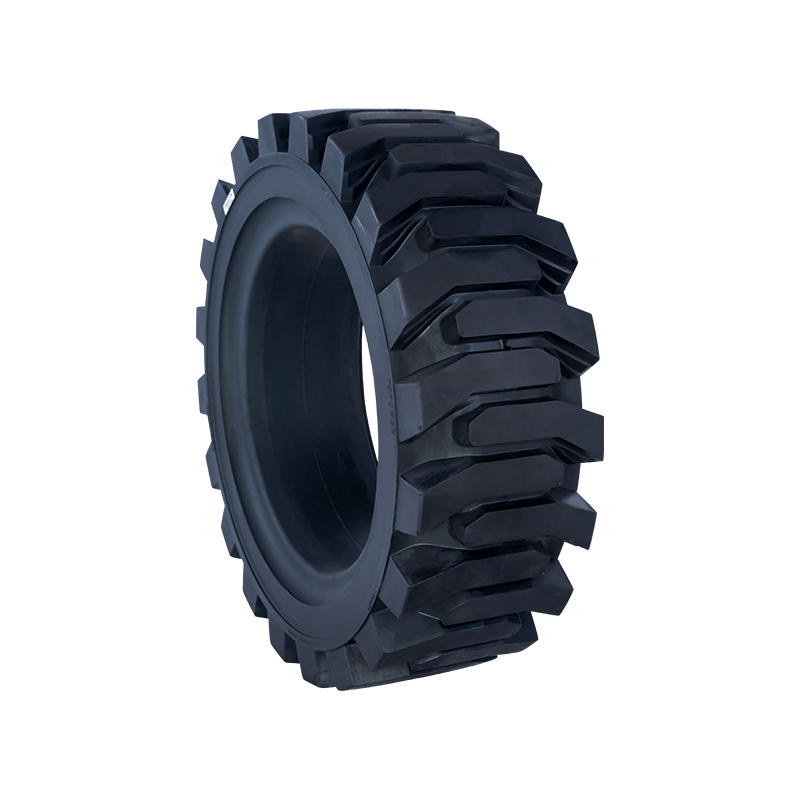
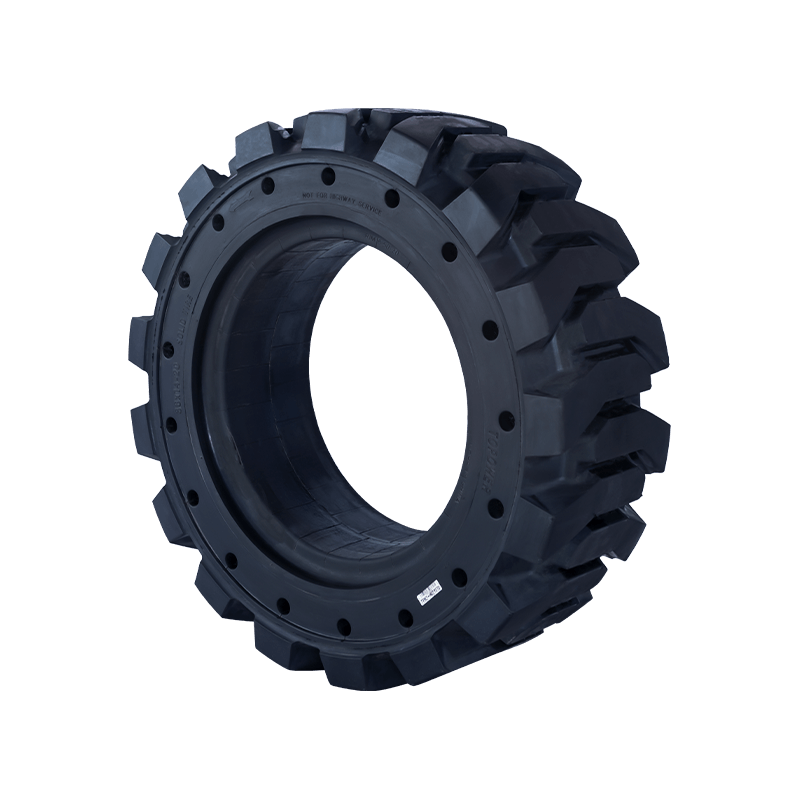
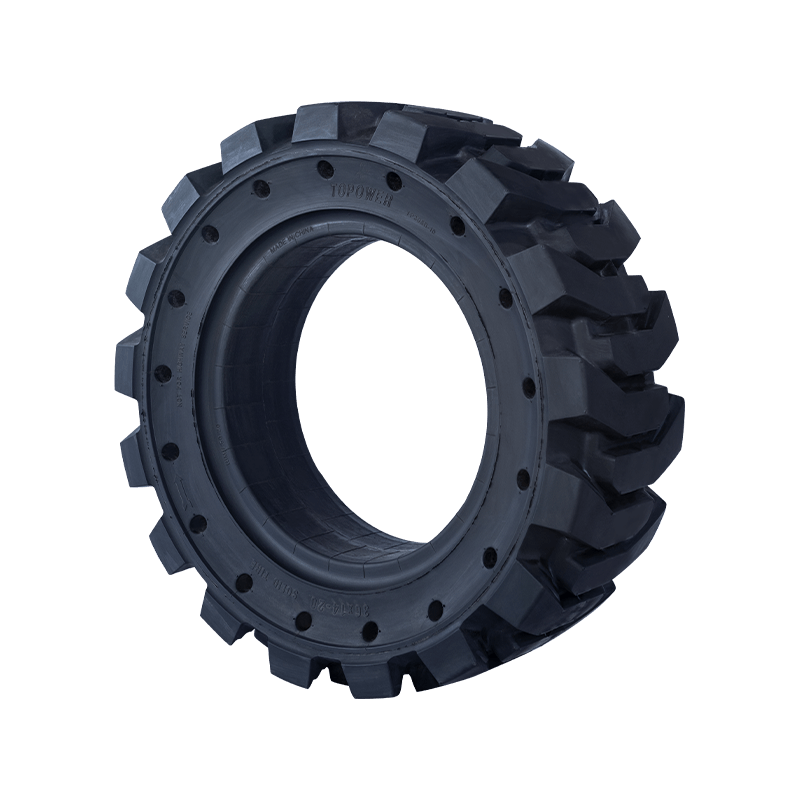
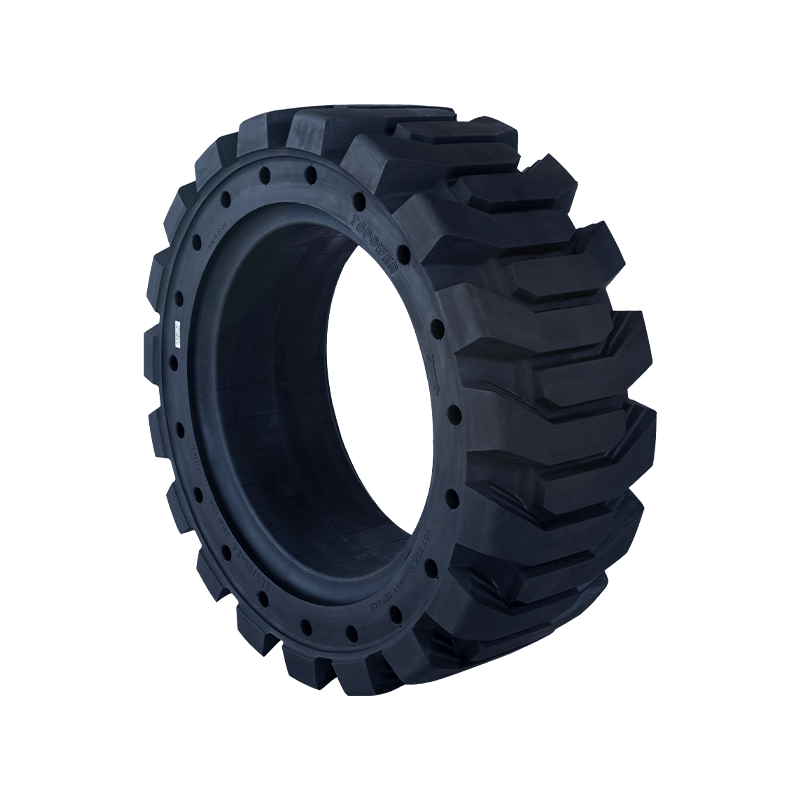
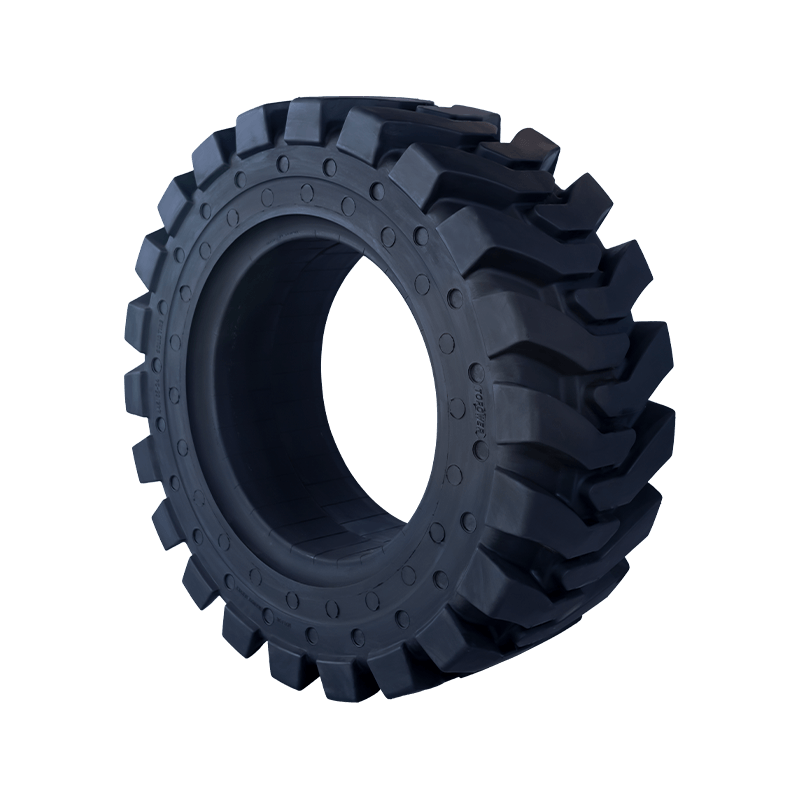
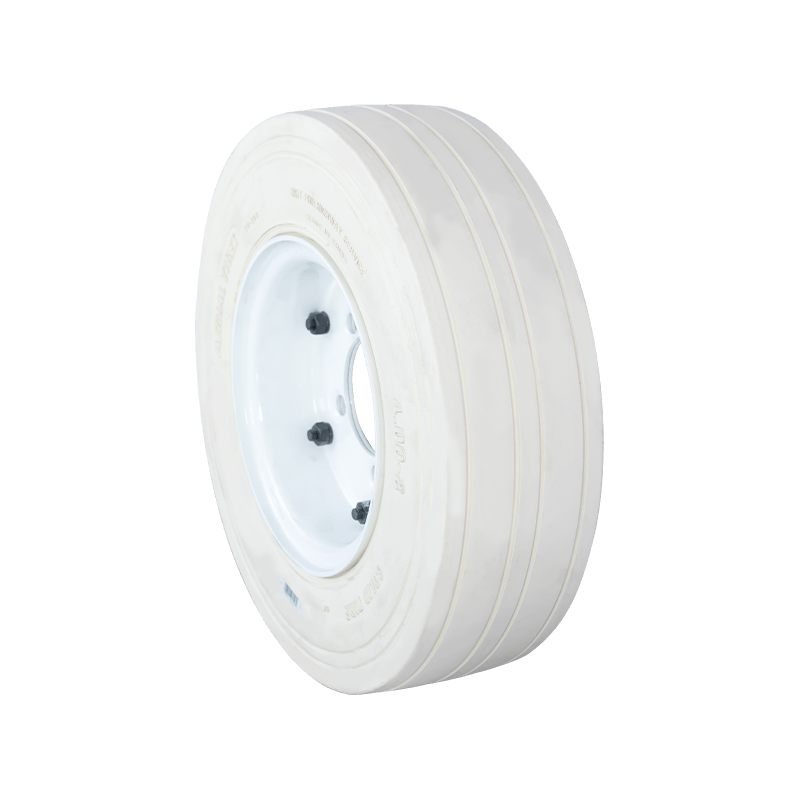
Solid tires are made of a single piece of high-elastic rubber (or multi-layer composite rubber) with no inner tube or hollow cavity. They support loads solely through the rubber’s elasticity. They eliminate air leakage and blowout risks entirely. Even if pierced by sharp objects, they remain operational, making them a safety necessity in scrapyards, glass factories, steel mills and other high-risk environments.
3. Foam-Filled Tires: Pneumatic Casing + Polyurethane Core, Balancing Toughness and Puncture Resistance
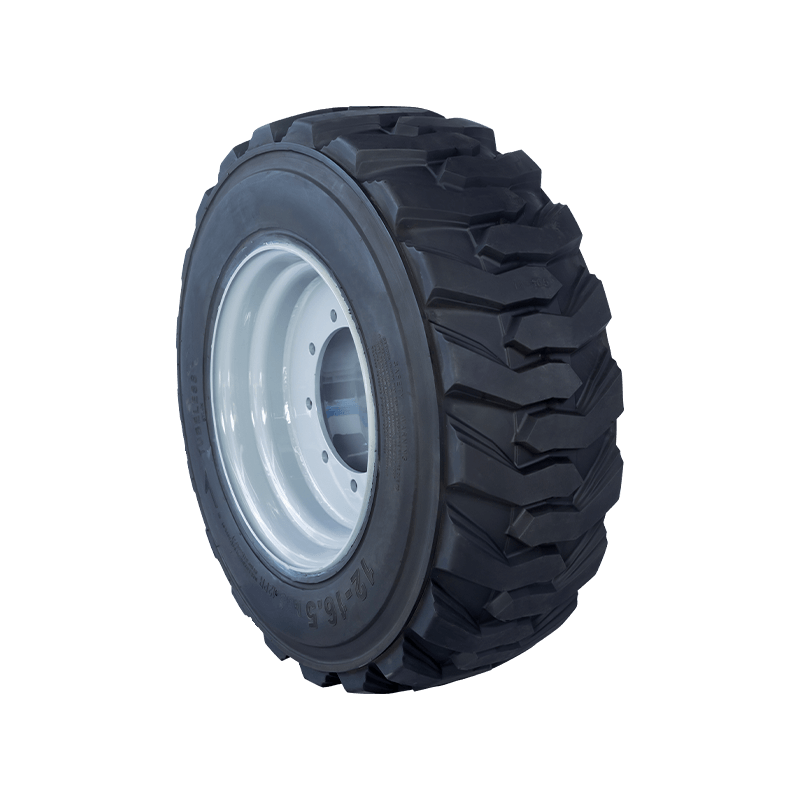
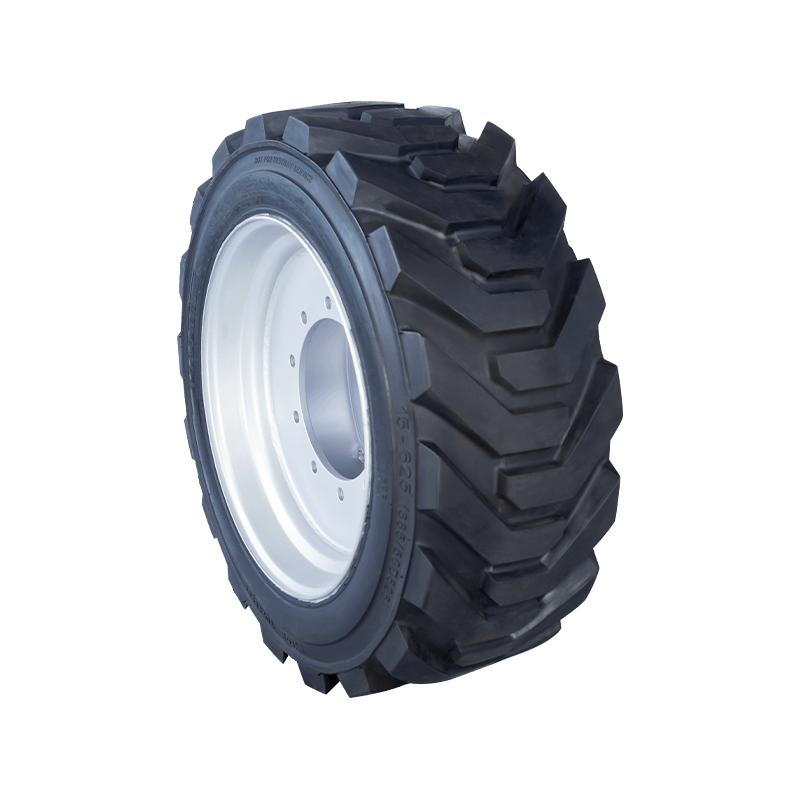
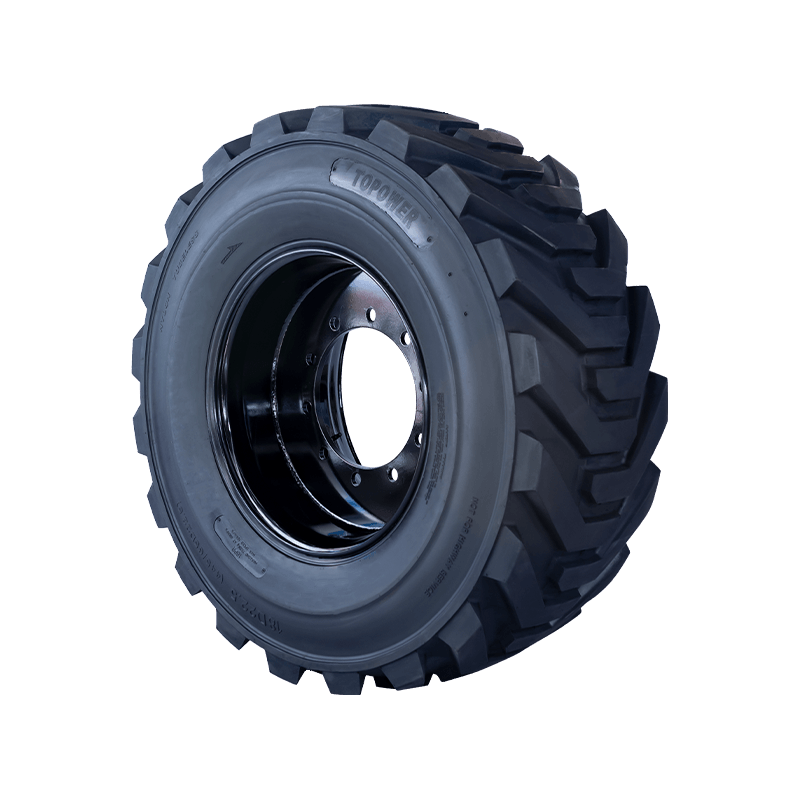
Foam-filled tires use standard pneumatic tire casings filled with high-density polyurethane foam that replaces air to form a solid core. They retain the ground contact area and basic shock absorption of pneumatic tires while offering the puncture resistance of solid tires. They address the dual pain points of pneumatic tires’ vulnerability to punctures and solid tires’ poor shock absorption, making them ideal for mixed working conditions like outdoor construction sites and warehouse transit yards.
2. Five Core Advantages: Solid & Foam-Filled Tires Outshine Pneumatic Tires
1. Unmatched Safety: Zero Leaks, Zero Blowouts, Eliminating Sudden Risks
- Solid tires: No air chamber, puncture and blowout resistant. Minimal deformation under heavy loads ensures stable equipment center of gravity—critical for forklifts and loaders. Safety accidents from tire failures are completely avoided.
- Foam-filled tires: Sealed and cured polyurethane core prevents air leakage or deflation even if pierced by sharp objects. No unexpected downtime, delivering far greater safety than pneumatic tires in demolition sites and recycling yards.
- Pneumatic tires: Rapid pressure loss when punctured, prone to blowouts under heavy loads, to equipment instability and severe safety hazards.
2. Exceptional Durability: Longer Lifespan, Lower Replacement Costs
- Solid tires: Rubber thickness is 2–3 times that of pneumatic tires, offering good wear and cut resistance. Service life ranges from 2,000 to 5,000 hours—1.5–2 times longer than pneumatic tires (1,000–3,000 hours). Lifespan is even longer in smooth indoor warehouses.
- Foam-filled tires: Tread performance matches pneumatic tires, while the internal foam core does not wear. Lifespan is 30%–60% longer than pneumatic tires, reducing labor and material costs from frequent replacements.
- Pneumatic tires: Thin sidewalls and poor wear resistance make them prone to damage in sharp environments. Short lifespan requires frequent replacements, to high overall costs.
3. Maintenance-Free & Cost-Effective: No Tire Pressure Management, Minimizing Downtime
- Solid tires: No inflation, pressure checks or repairs needed. Virtually maintenance-free after installation, eliminating the daily pressure checks, regular refills and puncture repairs required for pneumatic tires.
- Foam-filled tires: Permanently shaped after foam curing, no air leakage or pressure decay. No routine maintenance—only tread wear inspections are needed, significantly reducing labor costs.
- Pneumatic tires: Daily pressure checks are mandatory. Underinflation reduces load capacity and accelerates wear. Repairs take 45–90 minutes per incident, severely disrupting workflow.
4. Superior Heavy-Load Performance: Higher Load Capacity for Industrial Heavy-Duty Needs
- Solid tires: Load-bearing via solid rubber with even stress distribution. Load capacity per size is over 30% higher than pneumatic tires, supporting 500–8,000 kg loads. Ideal for heavy-duty forklifts, reach stackers, terminal tractors and other heavy equipment.
- Foam-filled tires: Polyurethane core density of 0.3–0.6 g/cm³ delivers 90%–95% of pneumatic tires’ load capacity, meeting standard industrial heavy-load requirements.
- Pneumatic tires: Load capacity depends entirely on air pressure. Underinflation drastically reduces capacity, while heavy loads cause deformation and blowouts, unsuitable for high-intensity heavy-duty applications.
5. Versatile Application: Full-Scene Compatibility for All Industrial Environments
- Solid tires: Ideal for indoor warehouses, food processing plants, steel mills, glass factories and scrapyards with smooth or sharp surfaces. Perfect for low-speed (≤25 km/h), high-frequency equipment.
- Foam-filled tires: Suited for outdoor construction sites, demolition yards, recycling facilities and airport ground support with mixed conditions. Balances puncture resistance and shock absorption, solving solid tires’ rough ride and pneumatic tires’ puncture vulnerability.
- Pneumatic tires: Only suitable for smooth public roads and low puncture-risk environments. Their drawbacks become pronounced in complex industrial settings, limiting practicality.
3. Performance Comparison: Solid vs. Foam-Filled vs. Pneumatic Tire
| Performance Aspect | Solid Tires | Foam-Filled Tires | Pneumatic Tires |
|---|---|---|---|
| Puncture Resistance | Fully Resistant | Fully Resistant | Highly Vulnerable |
| Service Life | 2,000–5,000 hours | 1,500–4,000 hours | 1,000–3,000 hours |
| Maintenance Needs | Maintenance-Free | Maintenance-Free | Daily Pressure Checks + Repairs |
| Load Capacity | Strongest (+30%) | Strong (90%–95%) | Weak (Pressure-Dependent) |
| Shock Absorption | Poor (Rigid Cushion) | Moderate (Balanced) | Excellent (Air Cushion) |
| Max Operating Speed | ≤25 km/h | ≤40 km/h | ≤100+ km/h |
| Overall Cost | Medium (High Purchase, Low Maintenance) | Medium-High (High Purchase, Low Maintenance) | Low (Low Purchase, High Maintenance) |
4. Conclusion: Prioritize Solid or Foam-Filled Tires for Industrial Applications
Pneumatic tires excel only in high-speed, smooth, low-risk civilian scenarios. In industrial settings with heavy loads, abundant sharp debris and intense operation, solid tires and foam-filled tires outperform pneumatic tires with four core strengths: safety against punctures, long durability, zero maintenance and Good load capacity. They are the good choice to reduce operational risks, boost efficiency and control costs.
Selection Recommendations:
- Indoor smooth floors, low-speed heavy loads (e.g., warehouse forklifts): Choose solid tires for the good cost-effectiveness.
- Outdoor mixed conditions, balancing shock absorption and puncture resistance (e.g., construction loaders): Choose foam-filled tires for adaptability.
- Public roads, high-speed operation: Pneumatic tires are optional (rare in industrial use).
Would you like me to recommend specific tire specifications and purchasing tips based on your equipment type (e.g., forklift/loader model), work environment (indoor/outdoor) and typical road conditions?