 English
 русский
 Español
 عربى
عربى
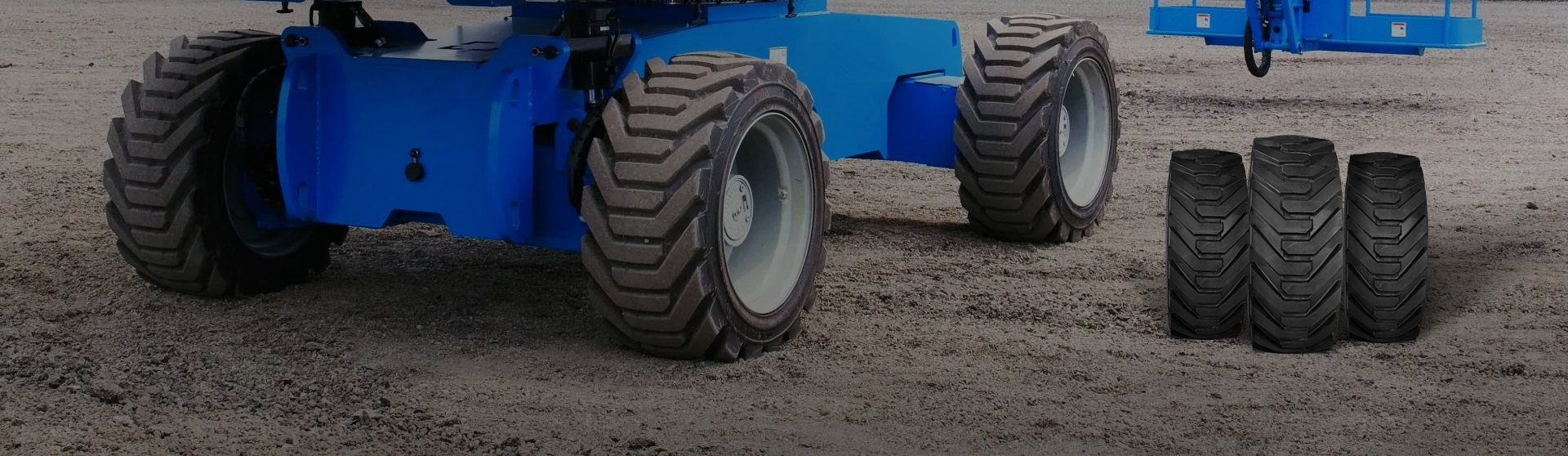

Which Tyre Type Is Right for Your Operation
If your equipment operates in puncture-prone environments such as scrap yards, demolition sites, glass recycling facilities, or steel manufacturing floors, a solid tyre is the correct and only practical choice. If your vehicle operates on public roads, travels at speeds above 25 km/h, or requires operator comfort over long shifts on uneven terrain, a pneumatic tyre is superior. The decision between pneumatic tyres vs solid tyres is not about which product is generally better. It is about matching tyre construction to the specific demands of the operating environment, load cycle, and surface conditions your equipment encounters every day.
This guide covers everything buyers, fleet managers, and procurement teams need to know: what is pneumatic tires construction and how it differs from solid rubber wheel definition industrial applications, how solid truck tires are specified and sourced, what tyres depth of tread means for solid versus pneumatic products, and what to look for when evaluating a solid tires factory as a supplier.
Solid Rubber Wheel Definition Industrial Applications: What a Solid Tyre Actually Is
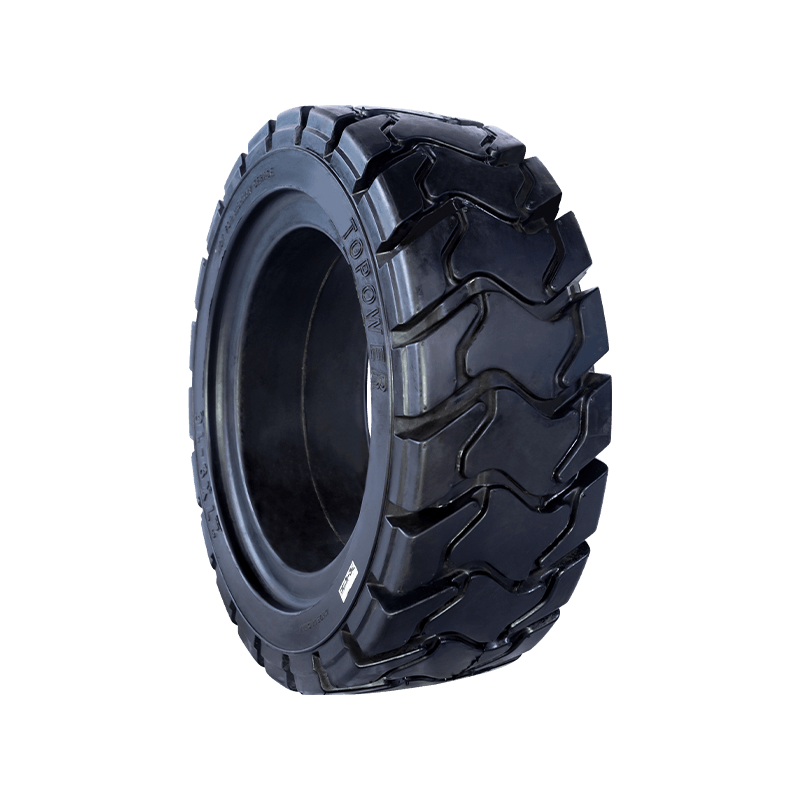
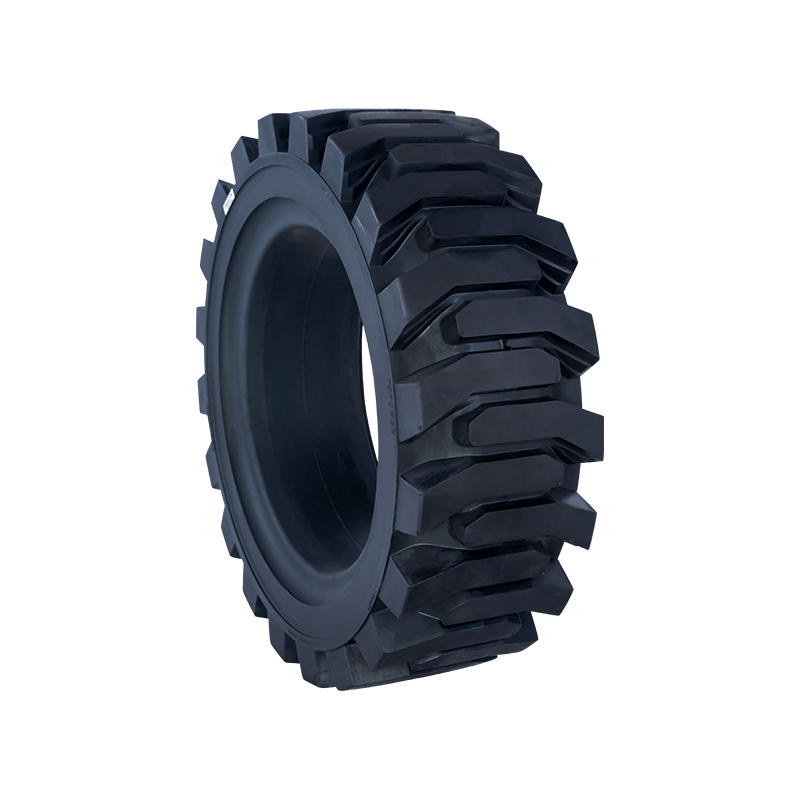
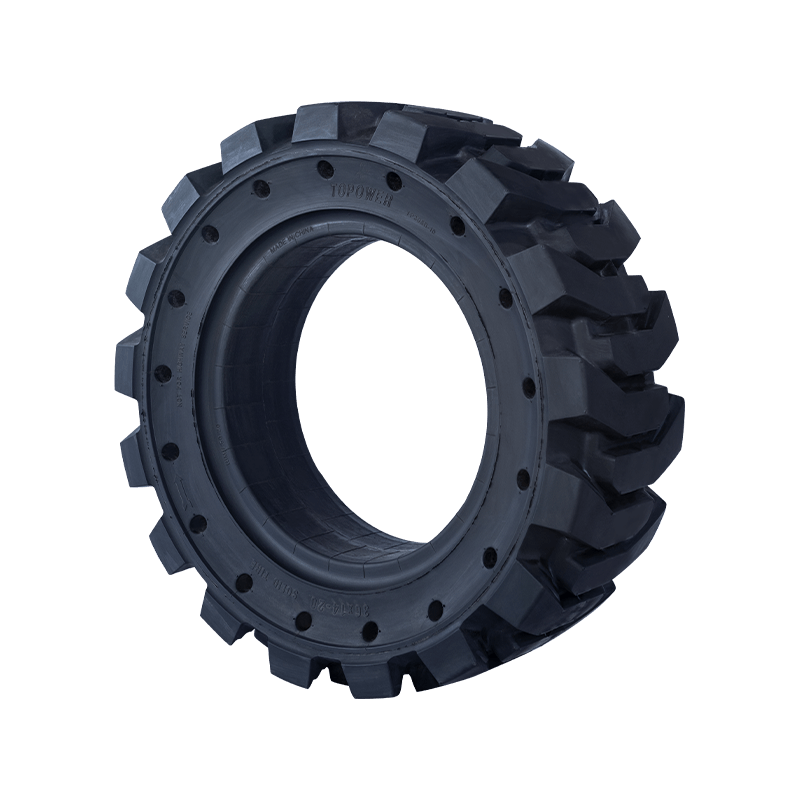
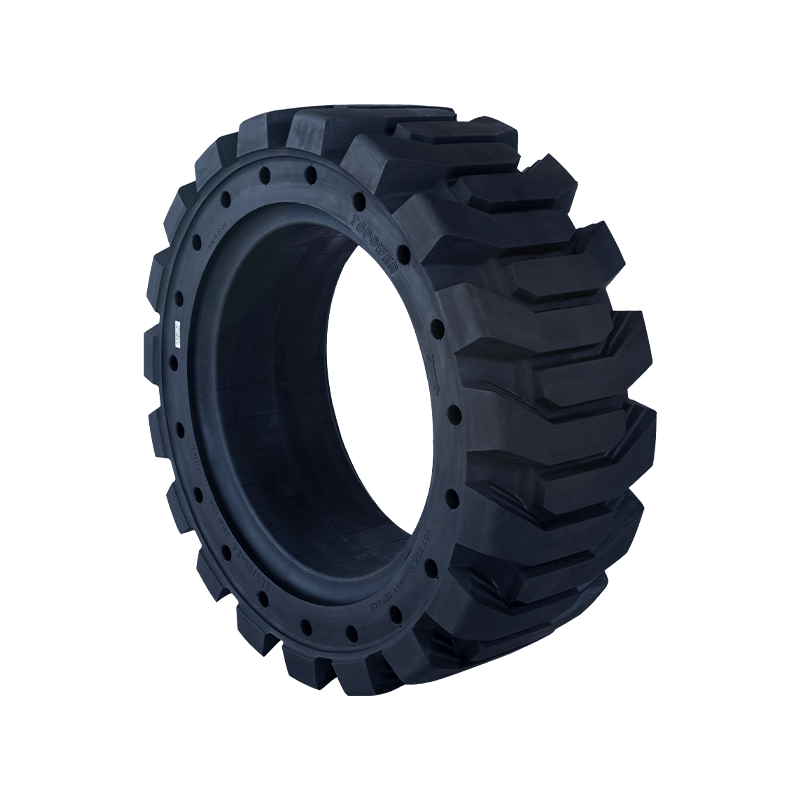
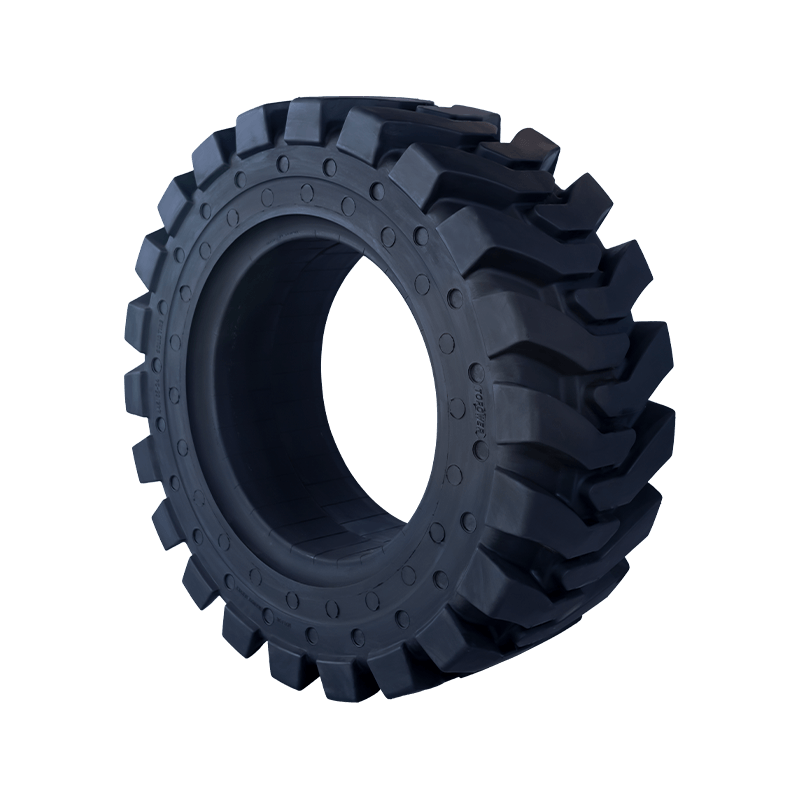
A solid tyre, also written as solid tire, is a tyre constructed entirely from rubber compound with no internal air chamber. Unlike a pneumatic tyre that derives its load-carrying capacity and cushioning from pressurized air enclosed within a casing, a solid tyre achieves its load capacity through the mechanical properties of its rubber matrix alone. The solid rubber wheel definition industrial applications framework recognizes two primary construction types:
Press-On Solid Tyres (Band-On Solid Tyres)
Press-on solid tyres, sometimes called band solid tyres, are manufactured as a solid rubber ring that is hydraulically pressed onto a steel wheel rim. The rubber band is manufactured with an internal diameter slightly smaller than the rim diameter, so that after pressing, the interference fit between the rubber and the steel creates a secure bond without adhesive. Press-on solid tyres are the most widely used solid tyre format for electric forklifts and counterbalance trucks operating in warehouses, cold storage facilities, and food processing plants. Standard press-on solid tyre sizes run from 15x5x11.125 up to 300x160x184, with load ratings from 500 kg to over 8,000 kg per tyre depending on construction.
Bolt-On (Cushion) Solid Tyres
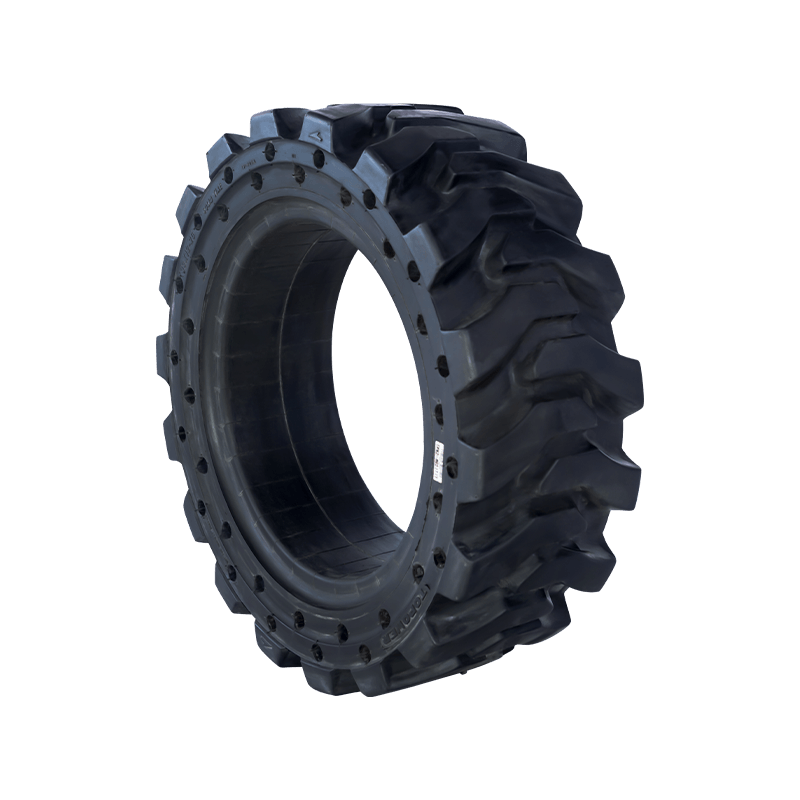
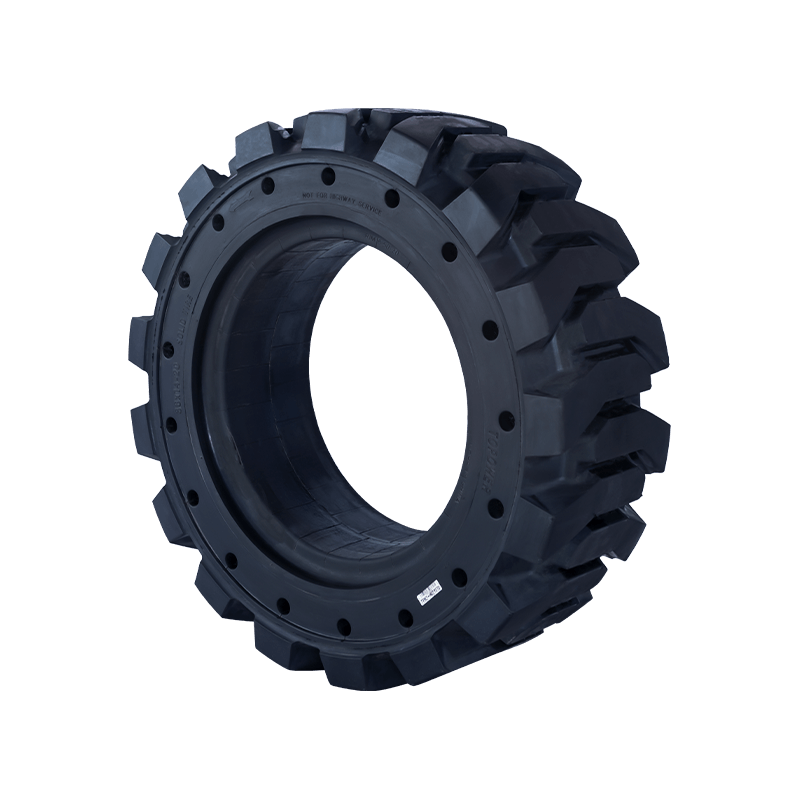
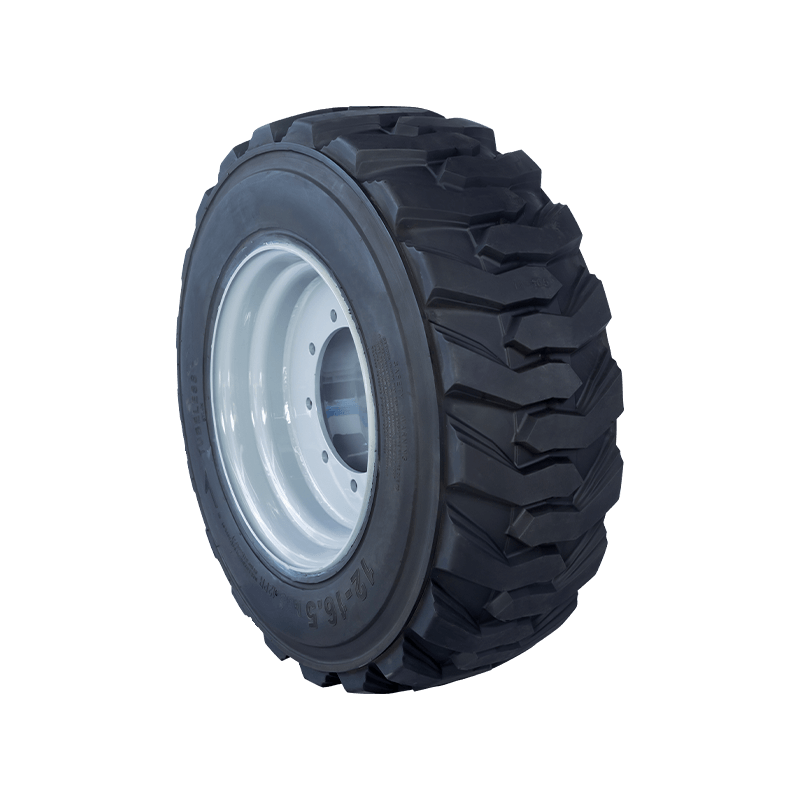
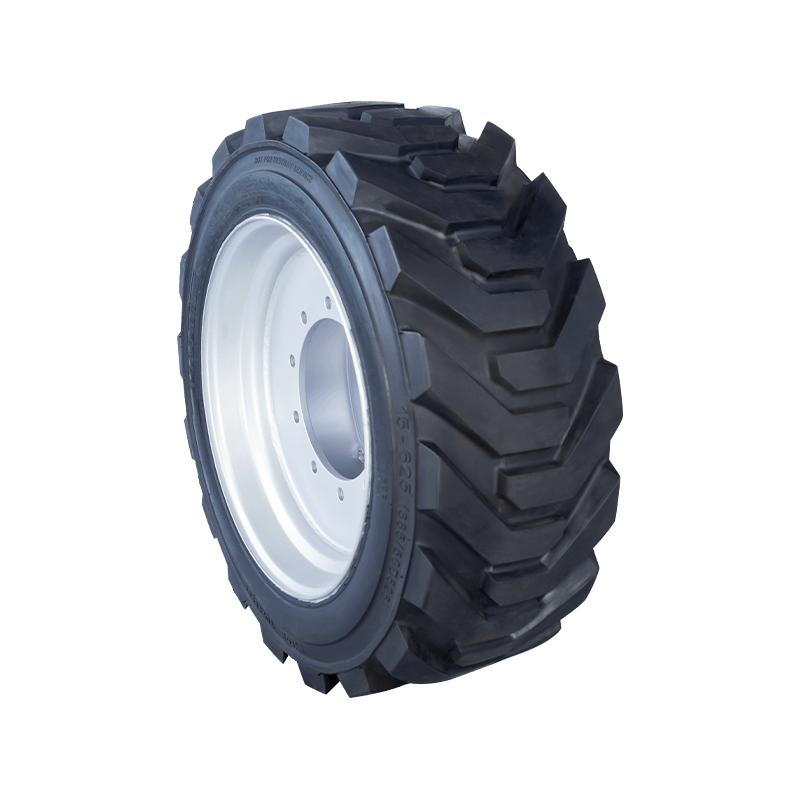
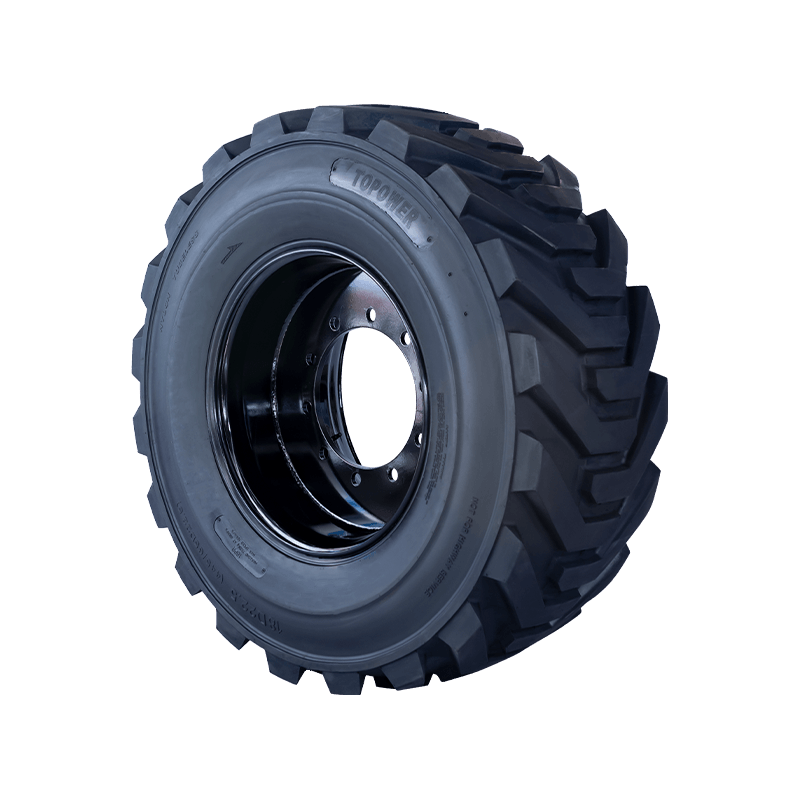
Bolt-on solid tyres are mounted similarly to a conventional pneumatic tyre on a split rim wheel assembly, using a bolted rim arrangement to secure the solid rubber tyre to the wheel. This format is more common on solid truck tires for larger capacity vehicles including reach stackers, container handlers, and heavy-duty forklift trucks with lift capacities above 10 tonnes. Cushion-style solid tyres incorporate a softer inner rubber zone and a harder outer tread compound to provide a graduated stiffness profile that reduces vibration transmission to the operator and the vehicle frame.
Industrial Applications Where Solid Rubber Wheels Are the Standard
- Forklift trucks and reach trucks: The most common application globally for solid press-on tyres. A punctured tyre on a forklift carrying a 2,000 kg load in a busy warehouse creates an immediate safety emergency. Solid tyres eliminate this risk entirely.
- Scrap metal handling equipment: Shredded steel, sharp offcuts, and wire fragments destroy pneumatic tyres within hours. Solid rubber wheels are the only commercially viable option for wheel loaders and handling equipment in scrap processing facilities.
- Airport ground support equipment: Baggage tugs, cargo loaders, and aircraft towing tractors operating on aprons and in hangars use solid tyres where puncture risk from FOD (foreign object debris) and the operational cost of downtime cannot be accepted.
- Glass and ceramic manufacturing: Sharp glass shards and fired ceramic fragments make solid rubber wheels standard equipment for all internal transport in these facilities.
- Waste and recycling facilities: Mixed waste streams containing metal, glass, and construction debris demand solid tyre fitment on all wheeled handling equipment.
- Mining surface operations: Load-haul-dump (LHD) equipment and underground personnel carriers in certain mine configurations use solid tyres when operating on sharp broken rock surfaces where pneumatic tyres would sustain constant damage.
What Is Pneumatic Tires: Construction, Working Principle, and Load Mechanism
Understanding what is pneumatic tires construction is essential before evaluating pneumatic tyres vs solid tyres for any specific application, because many buyers mistakenly assume that pneumatic tyres are simply the default option and solid tyres are a niche product. In reality, both are engineered systems with distinct structural logic.
The Core Structure of a Pneumatic Tyre
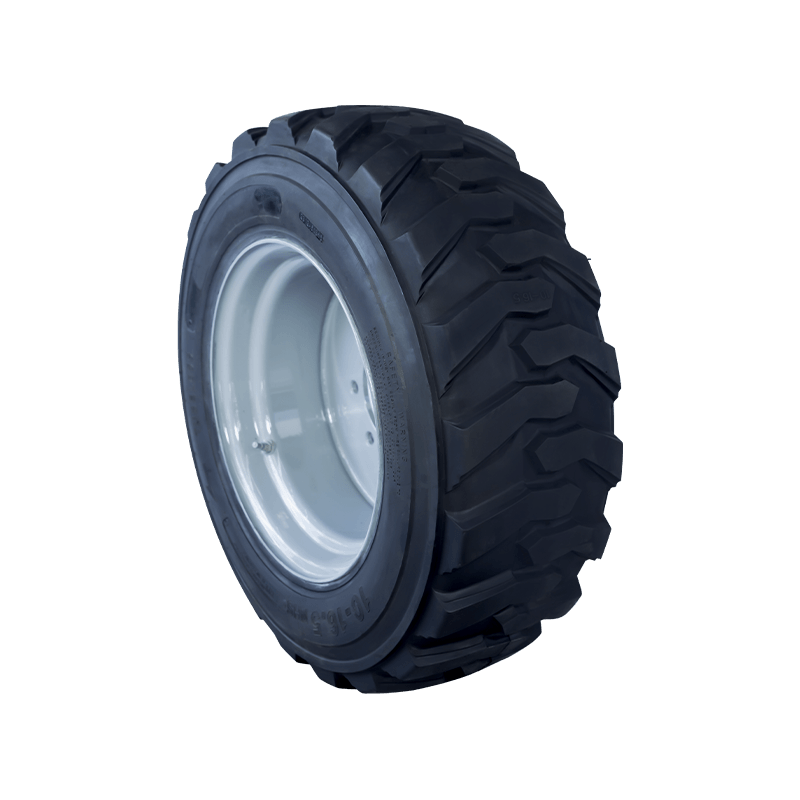
A pneumatic tyre is a toroidal (donut-shaped) structure built around a pressurized air chamber. The structure consists of multiple functional layers working together:
- Inner liner: A layer of low-permeability butyl rubber that forms the air-tight inner surface of the tyre. In tubeless tyres, the inner liner replaces the function of an inner tube.
- Body plies (carcass): Layers of cord fabric (nylon, polyester, rayon, or steel depending on tyre category) embedded in rubber and running radially or diagonally across the tyre from bead to bead. The carcass provides the structural integrity of the tyre under inflation pressure and load.
- Belt package: In radial tyres, multiple steel cord belts are layered circumferentially under the tread to stabilize the contact patch and resist tread puncture.
- Bead assembly: High-tensile steel wire bundles at the inner diameter of the tyre that anchor the carcass and lock the tyre onto the wheel rim under inflation pressure.
- Sidewall: A layer of ozone-resistant carbon black rubber that protects the carcass plies from abrasion and weathering.
- Tread: The outer rubber layer that contacts the road or ground surface, providing traction, wear resistance, and self-cleaning through the groove pattern.
How Pneumatic Tyres Carry Load
The load-carrying mechanism of a pneumatic tyre is counterintuitive to many people. The load is not carried by the air pushing up on the bottom of the tyre. Instead, the inflated tyre acts like a pressure vessel, and the wheel rim hangs from the top of the inflated carcass by tension in the sidewalls. The contact patch at the bottom of the tyre is slightly deflected from the perfect circle, and it is the reduction in internal air pressure across that contact patch that provides the upward reaction force on the rim. This is why inflation pressure is so critical: an underinflated pneumatic tyre cannot develop the correct tension in its carcass and the sidewall buckles, generating heat and causing accelerated wear and potential carcass failure.
For industrial pneumatic tyres on forklifts and material handling equipment, correct inflation pressure is typically specified in the range of 7 to 9 bar (100 to 130 psi) depending on tyre size and load rating. A 10% reduction in inflation pressure below the minimum specified value reduces the load capacity of an industrial pneumatic tyre by approximately 15% to 20% and reduces tyre life by 25% to 30% due to increased flexing heat generation in the sidewall and shoulder areas.
Bias Ply vs Radial Pneumatic Tyres for Industrial Use
What is pneumatic tires discussion must distinguish between bias ply and radial construction, as both are used extensively in industrial and commercial vehicle applications:
- Bias ply pneumatic tyres have carcass cords running at 30 to 40 degree angles to the circumferential direction, crossing each other in alternating plies. The sidewall and tread are a single integrated unit. Bias ply tyres have stiffer sidewalls, better resistance to sidewall cuts, and generate more heat under high-load continuous operation. They are common on slow-moving construction equipment and some forklift applications.
- Radial pneumatic tyres have carcass cords running 90 degrees to the circumferential direction (radially from bead to bead) with a separate circumferential belt package stabilizing the tread. Radial tyres run cooler, have lower rolling resistance, and provide better traction and longer tread life than equivalent bias ply tyres. They dominate truck, bus, and modern construction equipment applications.
Pneumatic Tyres vs Solid Tyres: A Direct Performance Comparison
The pneumatic tyres vs solid tyres debate is most productively framed as a performance tradeoff analysis rather than a quality comparison. Neither type is universally superior. Each excels in conditions the other cannot handle effectively.
| Performance Criterion | Solid Tyre | Pneumatic Tyre | Winner in Industrial Context |
|---|---|---|---|
| Puncture resistance | Complete immunity (no air chamber) | Vulnerable to penetration by sharp objects | Solid tyre |
| Operator comfort (vibration) | Higher vibration transmission to operator | Air cushion absorbs ground irregularities | Pneumatic tyre |
| Tyre lifespan | 2,000 to 5,000 operating hours typical | 1,000 to 3,000 hours in forklift use | Solid tyre (on smooth indoor surfaces) |
| Maintenance requirement | Zero inflation maintenance needed | Regular pressure checks required | Solid tyre |
| Load capacity per unit size | Comparable to equivalent pneumatic size | Well established load index tables | Equal (application dependent) |
| Performance on rough outdoor terrain | Poor traction and stability on loose ground | Excellent ground conformation and traction | Pneumatic tyre |
| Maximum operating speed | Typically 25 km/h maximum | Road speeds above 100 km/h possible | Pneumatic tyre |
| Floor surface impact | Higher contact pressure, more floor damage | Larger contact patch, lower contact pressure | Pneumatic tyre (for floor-sensitive facilities) |
| Heat generation during continuous use | Higher heat build-up, chunking risk above speed limit | Heat managed by inflation pressure and ply design | Pneumatic tyre (for high duty cycles) |
The Hidden Cost of Pneumatic Tyres vs Solid Tyres in Warehouse Operations
When evaluating pneumatic tyres vs solid tyres for fleet operations, total cost of ownership over a 5-year period tells a more accurate story than purchase price alone. Consider a 2,500 kg capacity electric counterbalance forklift operating 2,000 hours per year in a distribution warehouse:
- Pneumatic tyre set (four tyres): Purchase cost approximately USD 600 to USD 900. Expected life in warehouse use: 1,200 to 1,800 hours. Over 5 years at 2,000 hours per year, the fleet requires approximately 5 to 8 tyre changes per truck. Including labor cost of USD 80 to USD 150 per change and downtime cost of 2 to 3 hours per change event, total 5-year tyre cost per truck reaches USD 5,000 to USD 9,000 before accounting for puncture repair events.
- Solid tyre set (four tyres): Purchase cost approximately USD 900 to USD 1,400. Expected life in equivalent warehouse use: 2,500 to 4,000 hours. Over 5 years, the fleet requires approximately 2 to 4 tyre changes per truck. Zero puncture events. Total 5-year tyre cost per truck falls to USD 3,000 to USD 6,000, representing a 30% to 40% reduction in lifetime tyre expenditure despite a higher initial purchase price.
This analysis explains why over 80% of indoor warehouse forklift fleets in Europe and North America are fitted with solid tyres as the standard configuration, with pneumatic tyres reserved for outdoor and rough terrain applications only.
Solid Truck Tires: Specifications, Applications, and Selection Criteria
Solid truck tires represent a distinct product category within the solid tyre market, referring specifically to solid rubber tyres used on larger capacity vehicles including heavy-duty forklifts, container handlers, reach stackers, terminal tractors, and heavy burden carriers operating in port, steel mill, and heavy industrial environments. The term distinguishes these products from smaller solid press-on tyres used on standard counterbalance forklifts.
Standard Size Ranges for Solid Truck Tires
Solid truck tires are commercially available in sizes ranging from 18x7 up to 45/65-45 and larger for the heaviest port equipment. The most common sizing systems used by solid tires factory manufacturers are the inch-based system (width x height-rim diameter, such as 18x7x12.125) for press-on tyres, and the metric system (section width/aspect ratio-rim diameter, such as 355/50-15) for bolt-on solid tyres. ISO 10458 defines the dimensional standards for solid rubber tyres for industrial trucks.
| Tyre Size | Type | Load Capacity (kg) | Typical Vehicle | Speed Limit (km/h) |
|---|---|---|---|---|
| 15x5x11.125 | Press-on | 1,650 | 1.5T to 2T forklift (drive position) | 16 |
| 18x7x12.125 | Press-on | 3,250 | 2.5T to 3.5T forklift (drive position) | 16 |
| 250x15 | Cushion | 5,700 | 5T to 7T counterbalance forklift | 20 |
| 355/50x15 | Solid pneumatic equivalent | 7,500 | 8T to 10T heavy forklift | 25 |
| 28x9x15 | Press-on | 8,100 | 10T to 16T heavy duty forklift (drive) | 20 |
Rubber Compound Selection for Solid Truck Tires
Not all solid truck tires are made from the same rubber compound, and compound selection is one of the most consequential decisions when specifying solid tyres for a given operating environment. The primary compound grades available from most solid tires factory manufacturers are:
- Standard black compound: Carbon black reinforced natural and synthetic rubber blend. Good wear resistance and load capacity. Suitable for most warehouse and industrial applications. Shore A hardness typically 60 to 70 for the tread zone.
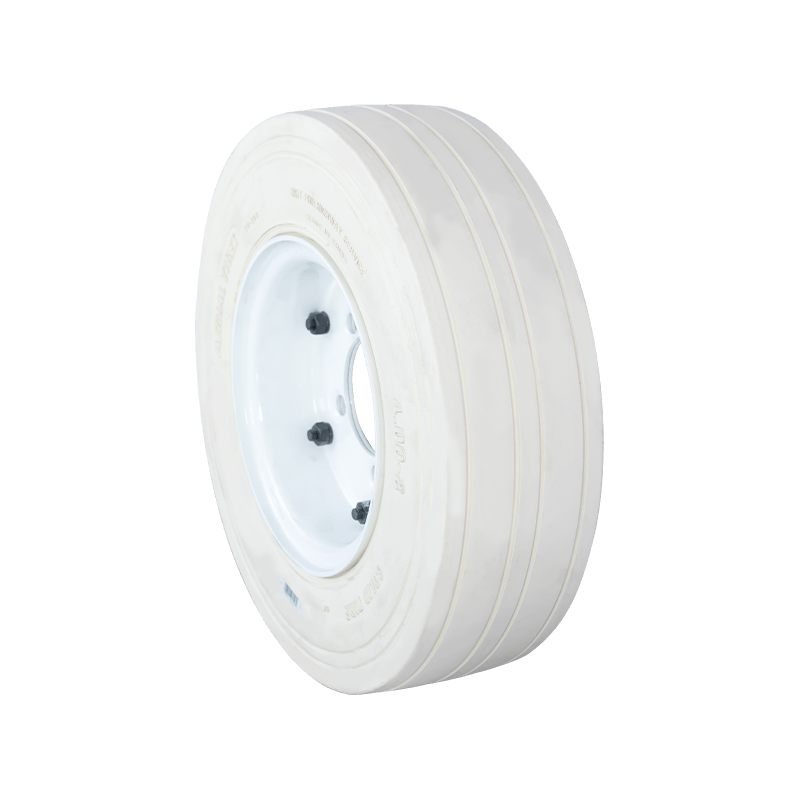
- Non-marking white or grey compound: Silica-reinforced rubber without carbon black. Essential for food processing, pharmaceutical manufacturing, ceramic tile production, and any facility where black rubber marks on finished floors or products cannot be tolerated. Non-marking solid tyres carry a price premium of 20% to 40% over equivalent black compound tyres due to the higher cost of silica reinforcement and the additional processing care required to prevent carbon contamination.
- Heat-resistant compound: Formulated for operations in steel mills, foundries, aluminum smelters, and other high-temperature environments where floor temperatures regularly exceed 60 degrees Celsius or where the tyre is exposed to radiant heat from molten metal operations. Standard rubber compounds begin to soften and lose load capacity at sustained temperatures above 55 degrees Celsius.
- Anti-static (ESD) compound: Carbon-loaded compound with controlled electrical resistivity for use in explosive atmosphere environments, electronics manufacturing, and fuel handling facilities where static electricity discharge must be prevented. Electrical resistivity for ESD tyres is typically controlled to below 10^6 ohms under ISO 16898.
- Oil-resistant compound: Formulated with nitrile rubber content for operations in petrochemical plants, engine assembly facilities, and lubrication depots where contact with mineral oils, hydraulic fluids, and lubricants would cause standard rubber compounds to swell, soften, and degrade.
Sourcing From a Solid Tires Factory: What Buyers Must Verify
The global solid tires factory supply base is concentrated primarily in China, India, South Korea, Germany, and the United States, with China accounting for approximately 60% to 65% of global solid tyre production volume by unit count as of 2024. The quality variation between solid tires factory producers is significant, and buyers sourcing solid tyres for critical industrial applications must apply rigorous supplier qualification criteria.
Key Certifications a Solid Tires Factory Should Hold
- ISO 9001:2015 Quality Management System certification: The baseline requirement for any solid tires factory supplying to professional industrial markets. Confirms documented and audited manufacturing quality controls.
- ISO 10458 compliance: The international standard specifically governing solid rubber tyres for industrial trucks. Any solid tires factory supplying to European markets must be able to provide dimensional and performance conformity data referenced to ISO 10458.
- REACH and RoHS compliance documentation: Required for solid truck tires entering the EU market. Confirms that the rubber compound does not contain restricted substances including certain polycyclic aromatic hydrocarbons (PAHs) that are regulated under EU REACH Regulation 1907/2006.
- TUV, BV, or SGS test reports: Third-party laboratory test reports from recognized certification bodies confirming that the tyre meets its rated load capacity, hardness specification, dimensional accuracy, and material composition claims. These reports are particularly important for buyers sourcing from new or unfamiliar solid tires factory suppliers.
- OSHA and local safety compliance: For US buyers, confirmation that solid truck tires meet OSHA 1910.178 requirements for powered industrial truck tyres, including performance under the rated load capacity of the vehicle on which they are fitted.
Technical Data Points to Request From Any Solid Tires Factory
- Shore A hardness of tread compound and base compound (should be measured per ASTM D2240)
- Tensile strength and elongation at break of the tread rubber (ASTM D412)
- Abrasion resistance index (DIN 53516 or ISO 4649)
- Dimensional inspection report for the specific size ordered (OD, SD, BD tolerances per ISO 10458)
- Load capacity rating and the test standard used to establish it
- Maximum operating speed rating
- Operating temperature range of the compound
- Electrical resistivity (for non-marking and ESD variants)
- Specific gravity of the compound (confirms consistent formulation across batches)
- Shelf life from manufacturing date (most solid tyres carry a 5-year shelf life from date of manufacture when stored correctly in a cool, dark, ozone-free environment)
Tyres Depth of Tread: How to Read Wear and Know When to Replace
Tyres depth of tread is a critical safety and performance parameter for both pneumatic and solid tyres, but the measurement method, wear indicators, and replacement criteria differ significantly between the two tyre types. Many fleet operators are familiar with pneumatic tyre tread depth monitoring but are not aware that solid tyres also have defined wear limits based on tread depth measurement.
Tyres Depth of Tread for Pneumatic Tyres
For road-legal pneumatic tyres on vehicles operating on public highways, minimum tyres depth of tread is legally mandated in most jurisdictions. In the European Union, the legal minimum tread depth for car tyres is 1.6 mm across the central three-quarters of the tread width and around the entire circumference, as defined by EU Directive 92/23/EEC. For truck and bus tyres over 3.5 tonnes GVW in the EU, the minimum legal tread depth is also 1.6 mm, though many transport safety authorities and fleet operators apply a more conservative 3.0 mm withdrawal limit to ensure a safety margin above the legal minimum.
In the United States, federal regulations under FMCSA 49 CFR 393.75 specify a minimum tread depth of 2/32 inch (1.6 mm) for steering axle tyres and 1/32 inch (0.8 mm) for all other positions on commercial motor vehicles. Industry safety organizations including the American Trucking Association recommend a voluntary withdrawal limit of 4/32 inch (3.2 mm) for steering axle tyres, recognizing that wet-weather stopping distance increases significantly as tread depth falls below 4/32 inch even though the tyre remains technically legal at 2/32 inch.
Tread depth measurement is performed using a calibrated tread depth gauge inserted into the main circumferential groove at multiple points around the tyre circumference. For tyres with tread wear indicator bars (TWI bars) molded into the groove base, the tyre reaches its minimum service depth when the TWI bar becomes flush with the adjacent tread blocks, without requiring a depth gauge measurement.
Tyres Depth of Tread for Solid Tyres: The 50% Tread Depth Rule
Solid tyres do not have open grooves in the same way as pneumatic road tyres, but they are manufactured with a defined total tread depth from the outermost tread surface to the base of the tread zone (above the harder base compound layer). The total original tread depth of a standard solid press-on tyre is typically 25 mm to 35 mm depending on the tyre size. The industry-standard replacement criterion for solid tyres, as defined by the Industrial Truck Association (ITA) and recommended by forklift manufacturers including Toyota, Komatsu, and Hyster-Yale, is:
Replace the solid tyre when the remaining tread depth reaches 50% of the original tread depth, or when tread depth above the base line (marked by a groove or color indicator in many premium solid tyre products) is exhausted, whichever comes first.
The 50% rule exists because the outer tread compound in a solid tyre provides cushioning as well as traction. As the softer tread compound wears away, the vehicle progressively rides on the harder base compound, increasing vibration transmitted to the operator and to the vehicle structure, potentially causing joint fatigue in reach truck mast assemblies and increasing the risk of cargo damage from vibration. Many quality solid tires factory producers now mold a continuous colored stripe into the tyre body at the 50% tread depth position, which appears at the tyre surface when the tyre is due for replacement, eliminating the need for manual measurement by maintenance staff.
Practical Tread Depth Monitoring Program for Solid Truck Tires Fleets
- Record the original tread depth of each new solid tyre at installation using a calibrated depth gauge at three circumferential positions, 120 degrees apart.
- Re-measure tread depth at each 500-hour vehicle service interval and record results against the original measurement.
- Calculate the wear rate in mm per 1,000 hours of operation. A consistent wear rate allows prediction of the remaining service life and enables proactive tyre ordering from the solid tires factory, avoiding unexpected downtime.
- Inspect for uneven wear patterns. Accelerated wear on one side of the tyre indicates incorrect wheel alignment or overloading of that wheel position. Circumferential flat spots indicate wheel lockup events (emergency braking or skidding). Both patterns require investigation of vehicle condition, not just tyre replacement.
- Check for chunking, cracking, or tearing of the tread rubber at each inspection. Chunks missing from the tread surface indicate heat build-up from excessive speed, overloading beyond the tyre's rated capacity, or operating on sharp abrasive surfaces incompatible with the compound grade specified.
Frequently Asked Questions
1. What is the solid rubber wheel definition industrial applications context and how does it differ from a foam-filled tyre?
In the solid rubber wheel definition industrial applications context, a solid tyre or solid rubber wheel is constructed entirely from vulcanized rubber compound with no internal void, air chamber, or filling material. A foam-filled tyre is a different product: it starts as a standard pneumatic tyre and has its air replaced with injected polyurethane foam. Foam-filled tyres offer puncture resistance similar to solid tyres while retaining the larger contact patch and somewhat better vibration damping of a pneumatic tyre profile. However, foam-filled tyres are significantly heavier than pneumatic tyres (a foam-filled 18.00-25 tyre weighs approximately 350 kg, compared to 90 kg for the unfilled pneumatic version), which reduces the effective payload capacity of the vehicle and increases fuel consumption in internal combustion machines.
2. What is pneumatic tires construction advantage for outdoor rough terrain equipment?
The primary advantage of pneumatic tyre construction on outdoor rough terrain equipment is the ability of the inflated tyre to conform to the ground surface. A pneumatic tyre deflects around rocks, ruts, and surface irregularities, maintaining a larger contact patch and distributing ground pressure more evenly than a rigid solid tyre. This provides better traction, lower ground compaction (important in agricultural applications), and significantly reduced vibration transmission to the operator and vehicle frame. On rough outdoor surfaces, solid tyres transmit every ground irregularity directly into the vehicle structure, which accelerates wear of mast assemblies, chassis welds, and electronic components, and causes operator fatigue that reduces productivity over a working shift.
3. Can solid truck tires be used on public roads?
In most jurisdictions, solid truck tires are restricted to off-highway and private site use only. In the United Kingdom, vehicles fitted with solid tyres are legally limited to 20 mph (32 km/h) and are not permitted on certain road categories under the Road Vehicles (Construction and Use) Regulations 1986. In the European Union, national road traffic regulations in most member states restrict solid-tyred vehicles to private property, ports, and defined industrial zones, not public highways. In the United States, solid-tyred vehicles are generally restricted to private property operations under OSHA guidelines, though state regulations vary. Before operating any solid-tyred vehicle on or near a public road, always consult the specific traffic regulations of the jurisdiction involved.
4. How does a solid tires factory press solid tyres onto steel rims?
Press-on solid tyres are installed using a hydraulic press that applies controlled force to push the steel rim into the pre-formed rubber tyre ring. The tyre's internal diameter is manufactured 1% to 3% smaller than the rim's outer diameter, creating an interference fit. The press applies force at a controlled rate (typically 50 to 150 tonnes of force depending on tyre size) while holding the tyre in a guide fixture to ensure the rim enters squarely without cocking. After pressing, the interference fit generates radial compressive stress in the rubber that locks the tyre securely to the rim without any adhesive. Some solid tires factory producers apply a thin film of rubber cement to the rim surface before pressing to supplement the mechanical interference fit for particularly demanding operating conditions.
5. What is the difference in tyres depth of tread requirements between a pneumatic car tyre and a solid forklift tyre?
For road-use car pneumatic tyres, the legal minimum tyres depth of tread across most of the EU and UK is 1.6 mm, with many safety authorities recommending replacement at 3 mm for wet-weather safety. For solid forklift tyres, there is no equivalent statutory minimum mandated by traffic law because these tyres operate off public roads. Instead, the industry standard replacement criterion is the 50% tread depth rule: replace when the remaining tread depth above the base compound line reaches 50% or less of the original total tread depth. For a solid tyre with an original tread depth of 30 mm, this means replacement is triggered when 15 mm of tread remains. This equates to a remaining tread depth far greater than any pneumatic tyre wear limit, because solid tyres are replaced based on cushioning performance loss rather than traction loss.
6. How do I know whether pneumatic tyres vs solid tyres is the right choice for my outdoor yard operations?
Evaluate three factors in your specific outdoor yard application. First, surface condition: if the yard surface contains metal scrap, nails, glass, or other sharp debris at any regular frequency, solid tyres are necessary regardless of other factors. Second, travel speed and distance: if your equipment regularly travels more than 500 meters per journey or operates at speeds above 20 km/h, the vibration and heat generated in solid tyres will reduce component life and operator comfort to unacceptable levels, favoring pneumatic tyres. Third, load cycle: if equipment is continuously loaded to near maximum capacity with minimal breaks, pneumatic tyres manage heat more effectively. For most mixed-surface outdoor operations with moderate puncture risk, foam-filled tyres or heavy-duty pneumatic tyres with cut-resistant sidewalls represent the best compromise between pneumatic tyres vs solid tyres performance profiles.
7. What causes chunking in solid tyres and how can it be prevented?
Chunking in solid tyres, where segments of tread rubber tear away from the tyre body, is caused by a combination of heat build-up within the rubber mass and mechanical shear stress at the interface between the soft tread compound and the harder base compound. The primary causes are operating the tyre continuously above its rated speed limit (which generates internal heat faster than it can dissipate), operating on sharp abrasive surfaces such as broken concrete or rough stone that concentrate stress at tread edges, and using the wrong compound grade for the application temperature. Prevention requires matching tyre speed rating to actual operating speed, matching compound grade to surface type, and ensuring load does not exceed the tyre's rated capacity at the operating speed. Some solid tires factory manufacturers offer enhanced anti-chunking compounds with increased tear strength (measured per ASTM D624) specifically formulated for aggressive surface applications.
8. How does what is pneumatic tires knowledge affect forklift fleet management decisions?
Understanding what is pneumatic tires construction helps fleet managers make correct inflation pressure management decisions. Because the pneumatic tyre's load capacity depends entirely on maintaining correct inflation pressure, a fleet management system that does not include systematic inflation pressure checks (at minimum daily before first shift) is systematically under-utilizing the load capacity of its pneumatic tyres and over-stressing the tyre structure. Studies by major tyre manufacturers including Michelin and Bridgestone consistently show that 20% to 30% of pneumatic industrial tyres in service at any given time are operating at 15% or more below their specified inflation pressure, resulting in reduced load capacity, accelerated tyre wear, and increased risk of sudden deflation events. Switching to solid tyres eliminates this maintenance dependency entirely.
9. What tyres depth of tread should trigger immediate removal from service in a safety-critical operation?
For safety-critical operations such as forklift operation in high-traffic warehouses, airport ground support, and explosive atmosphere facilities, best practice is to set internal tyre withdrawal standards more conservative than the manufacturer minimum. For pneumatic industrial tyres, a withdrawal trigger of 40% of original new tyre tread depth is recommended by most major forklift manufacturers' service manuals. For solid tyres, withdrawal at 55% to 60% of remaining original tread depth (rather than the standard 50% minimum) provides an additional safety margin in operations where vehicle handling stability, floor surface integrity, or vibration-sensitive cargo are primary concerns.
10. What should I ask a solid tires factory when ordering non-marking solid tyres for a food processing facility?
When ordering non-marking solid tyres for food processing or pharmaceutical manufacturing from any solid tires factory, request documentation on five specific points. First, confirm that the compound is certified non-marking through testing per ISO 16898 or an equivalent standard, not merely labeled as such by the manufacturer. Second, request the full material composition disclosure and confirm that no carbon black is used anywhere in the tread compound. Third, confirm that the manufacturing process prevents cross-contamination between black and non-marking production runs, including cleaning protocols and process controls. Fourth, request food contact safety documentation if the tyres will operate in a zone where direct contact with food products or food packaging is possible; the applicable standard is EU Regulation 10/2011 on plastic materials in contact with food. Fifth, confirm the Shore A hardness of the non-marking compound, as some non-marking formulations achieve reduced hardness of 55 to 62 Shore A compared to 65 to 72 Shore A for black compounds, which affects load capacity ratings and should be rechecked against your vehicle manufacturer's tyre specification sheet.