 English
 русский
 Español
 عربى
عربى
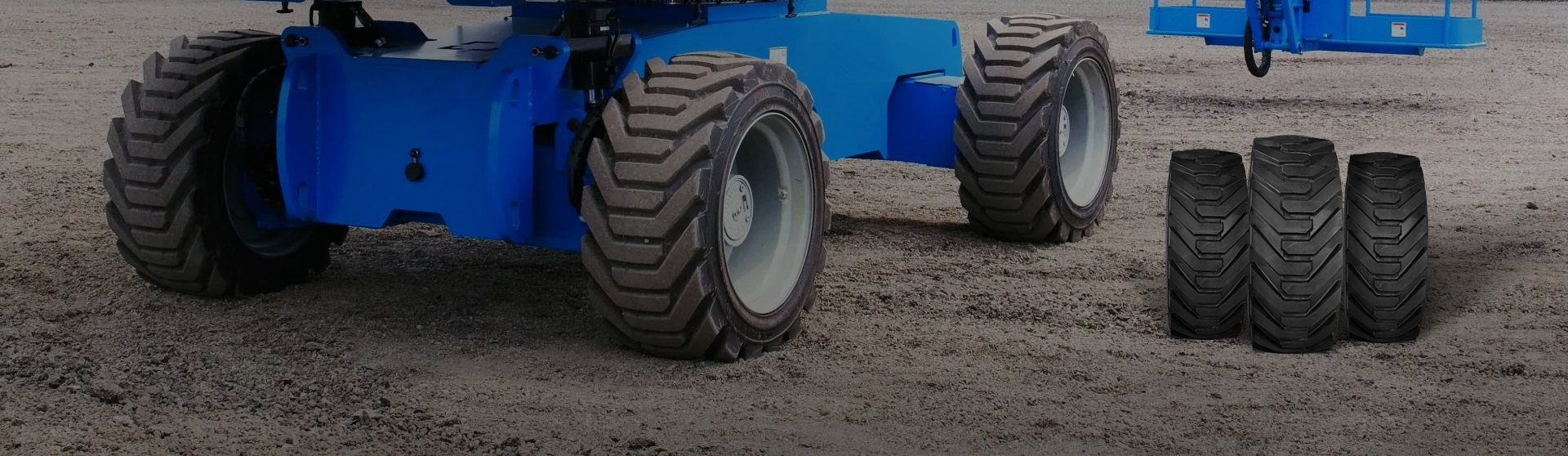

Every hour a forklift or industrial vehicle sits idle due to a flat tyre costs money — in lost productivity, in maintenance labour, and in the disruption to warehouse and manufacturing operations that depend on uninterrupted material flow. Industrial solid tyres eliminate this problem entirely. With no air chamber to puncture, no bead to unseat, and no pressure to monitor, solid tyres keep industrial vehicles moving through the sharpest debris, the heaviest loads, and the longest shifts that any warehouse, port, or factory floor can produce.
Within the industrial solid tyre category, the two dominant technologies — press-on solid tyres and polyurethane solid tyres — serve different applications with distinct performance profiles. Understanding which construction suits which operating environment is the foundation of a tyre selection decision that delivers genuine value over the full service life of the equipment.
What Industrial Solid Tyres Are and Why They Dominate Indoor Material Handling
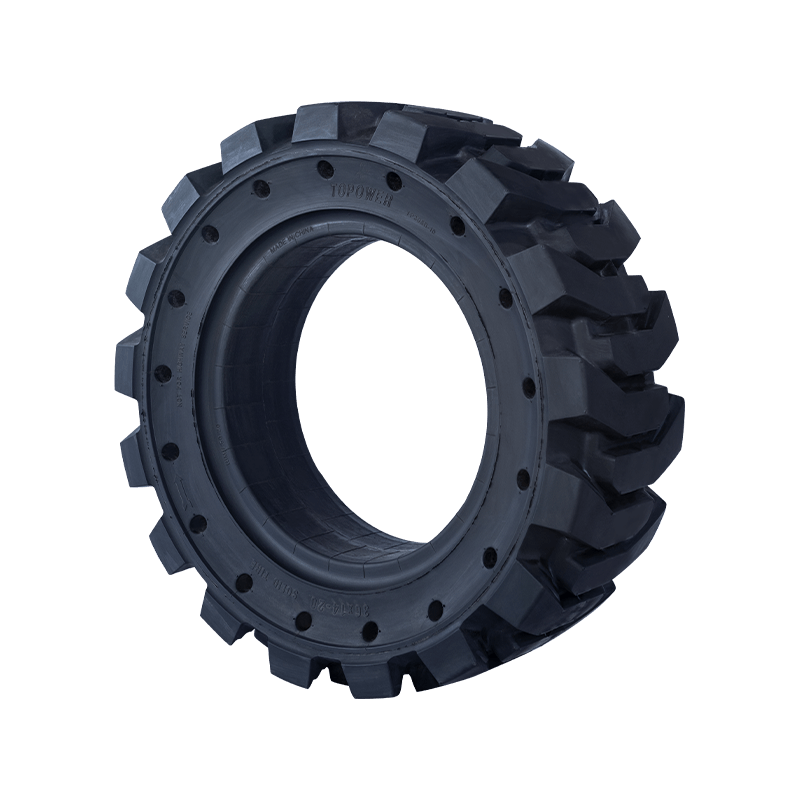
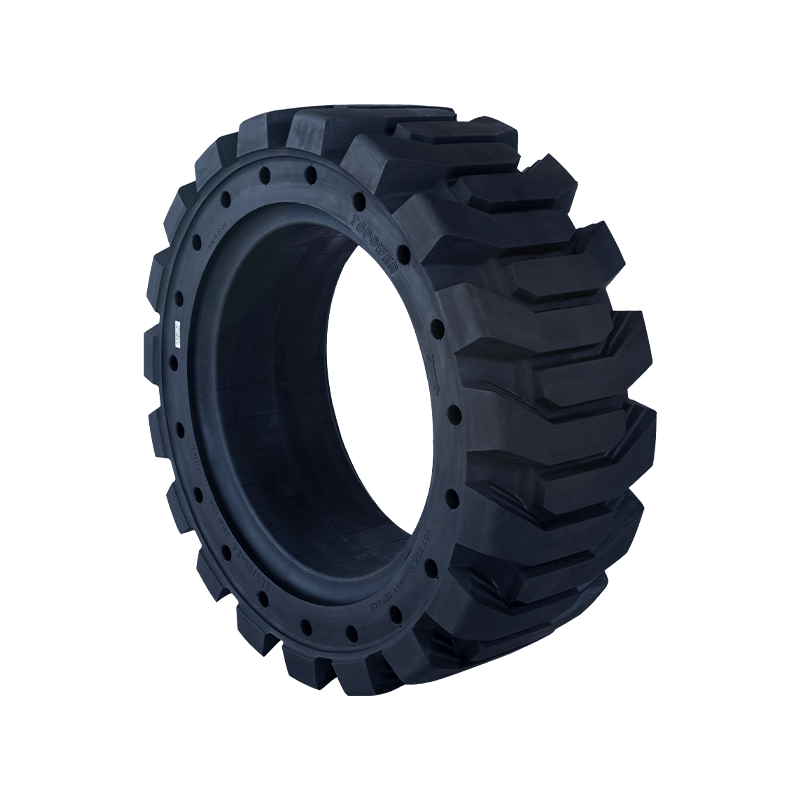
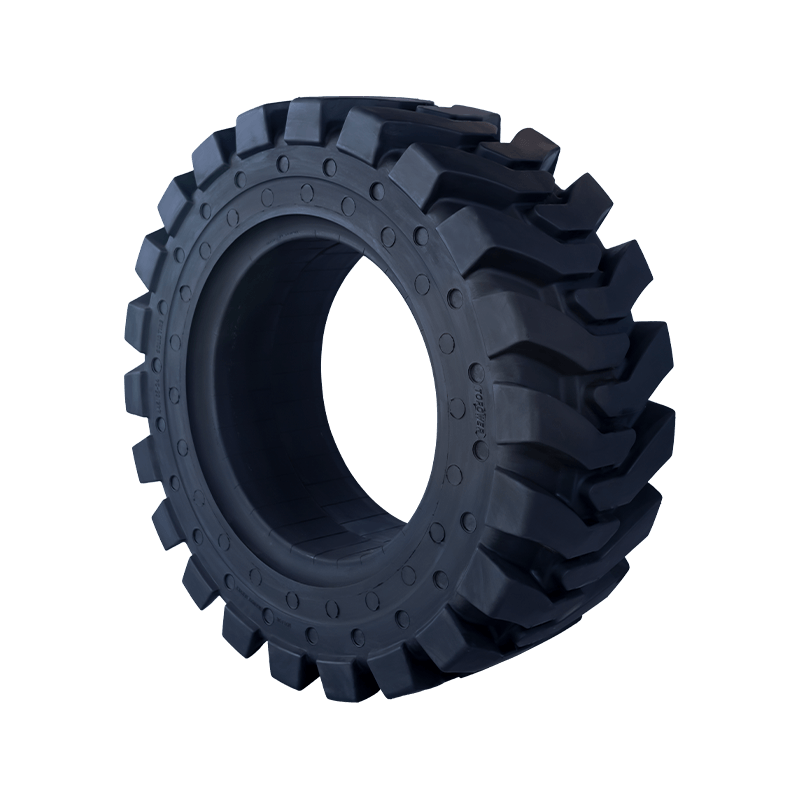
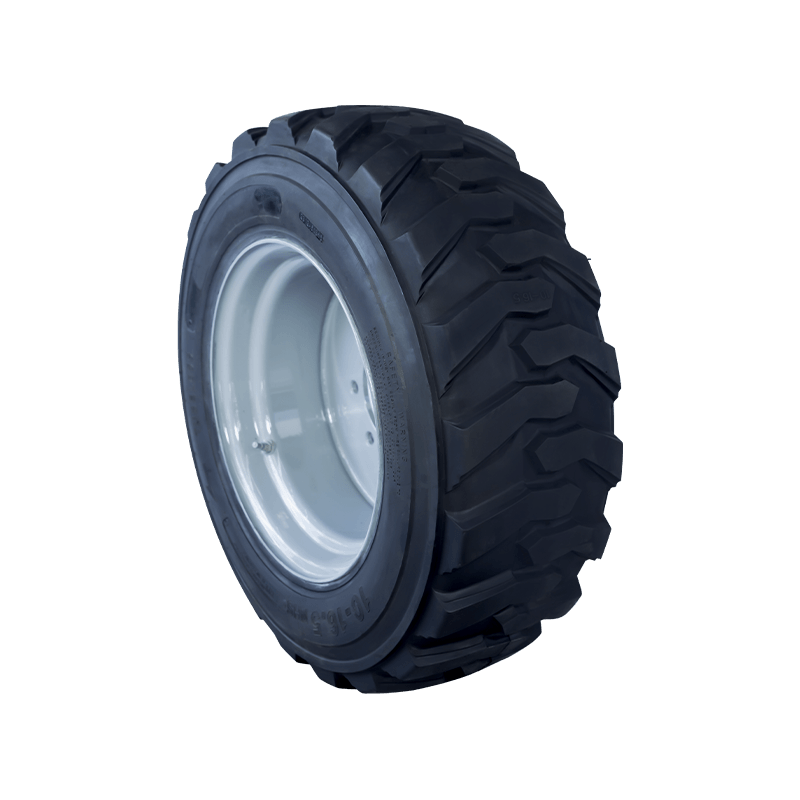
An industrial solid tyre is a tyre constructed from solid elastomeric or polymer material throughout its cross-section — there is no hollow air cavity, no inner tube, and no pneumatic pressure. The tyre derives its load-carrying capacity from the mechanical properties of the solid compound itself rather than from compressed air, as in conventional pneumatic tyres.
This construction is not a compromise forced by the absence of pneumatic technology — it is a deliberate engineering choice optimised for the specific demands of industrial material handling. In warehouse, manufacturing, and port environments, the ability to operate over floor surfaces contaminated with metal swarf, nails, broken glass, wire, and other puncture hazards without any risk of tyre failure is worth more than the ride comfort advantages of pneumatic tyres. For most indoor forklift applications, solid tyres are not merely an alternative to pneumatic tyres — they are the correct engineering choice.
Core Performance Advantages Over Pneumatic Tyres in Industrial Use
- Zero puncture risk: The most commercially significant advantage. A puncture on a loaded forklift requires immediate unloading, removal from service, and tyre replacement — a process that typically takes 45–90 minutes and may require specialist equipment. Solid tyres make this scenario impossible.
- No pressure maintenance: Pneumatic forklift tyres require regular pressure checks and inflation — a maintenance task that is frequently neglected in busy operations, leading to accelerated tyre wear, increased fuel consumption, and reduced stability. Solid tyres require no pressure management at any point in their service life.
- Longer service life: Quality industrial solid tyres typically achieve 2,500–5,000+ operating hours on standard warehouse floors — significantly longer than equivalent pneumatic tyres in the same environment, where cuts, abrasion, and pressure loss all contribute to earlier replacement.
- Consistent load capacity throughout service life: A pneumatic tyre's load capacity is directly tied to its inflation pressure — a tyre that loses pressure loses capacity. A solid tyre's load capacity is determined by its material properties and dimensions, which remain stable throughout its service life.
- Floor cleanliness: Solid tyres — particularly polyurethane variants — leave no carbon black marks or rubber particles on sealed warehouse floors, an important consideration in food, pharmaceutical, and electronics manufacturing environments where floor contamination is unacceptable.
Press-On Solid Tyres: Construction, Performance, and Applications
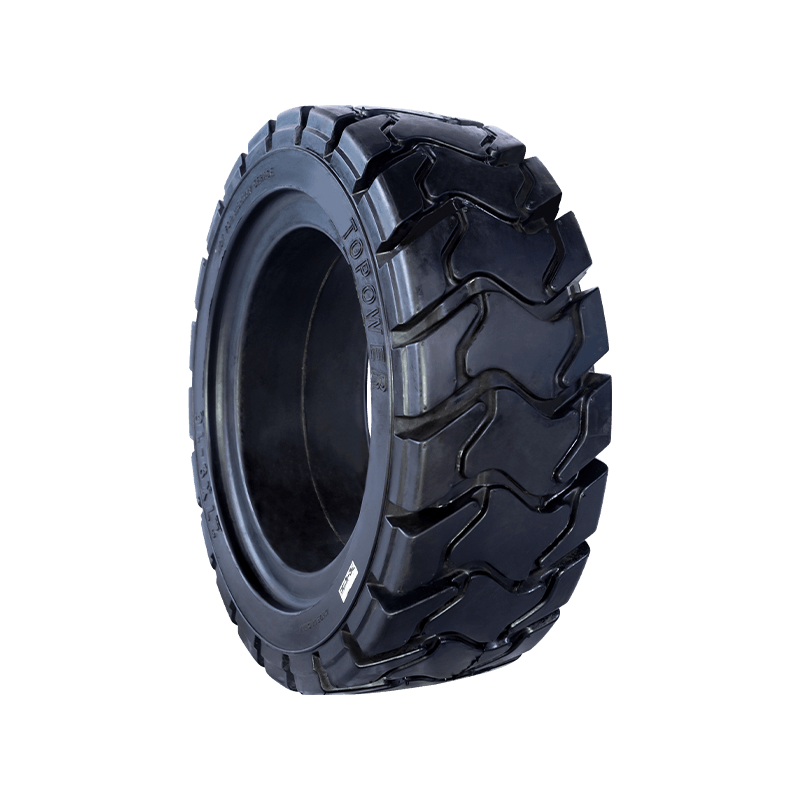
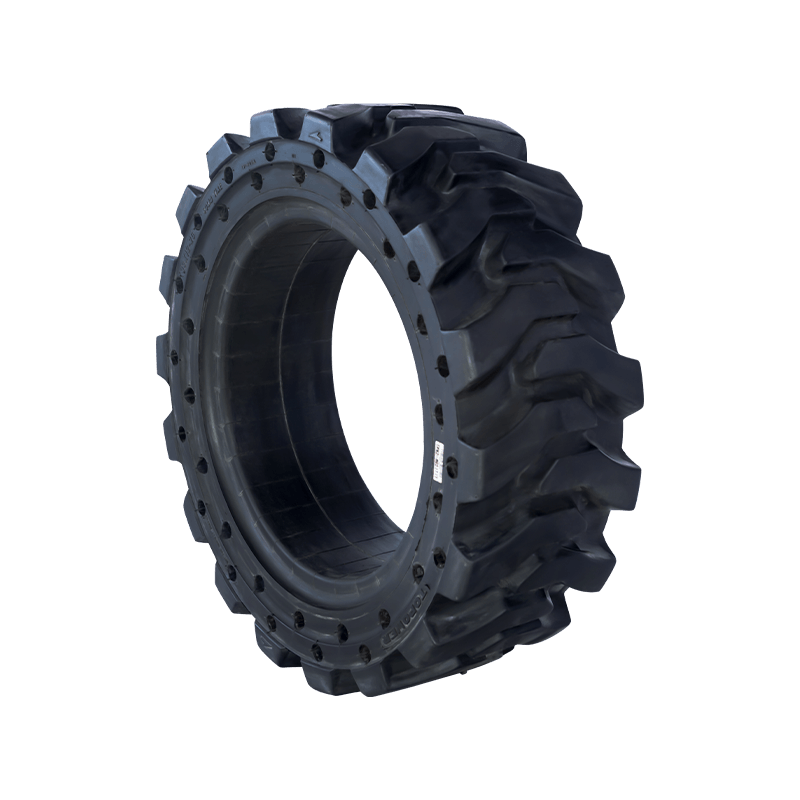
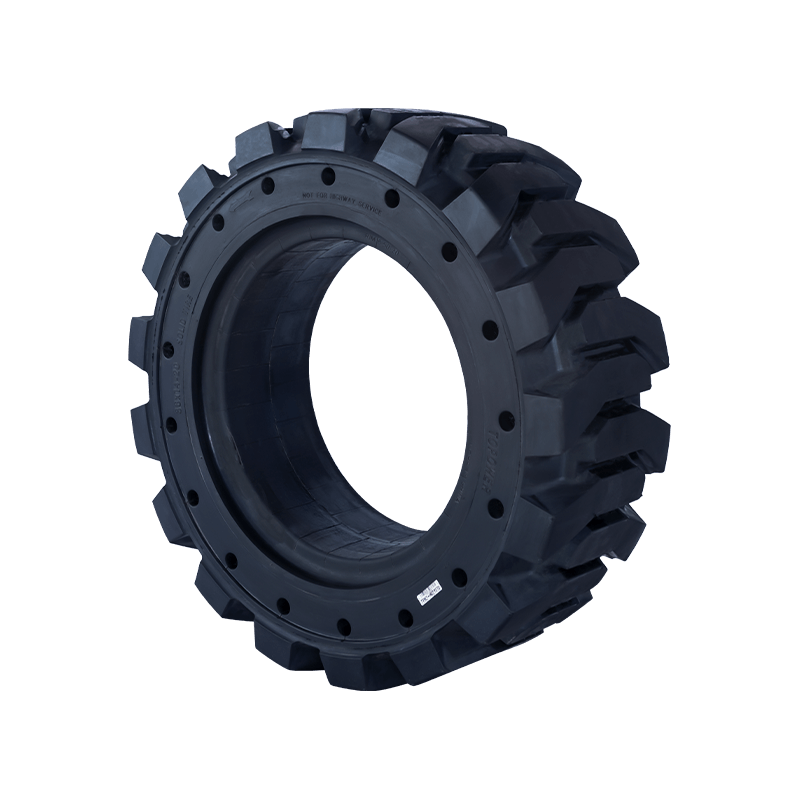
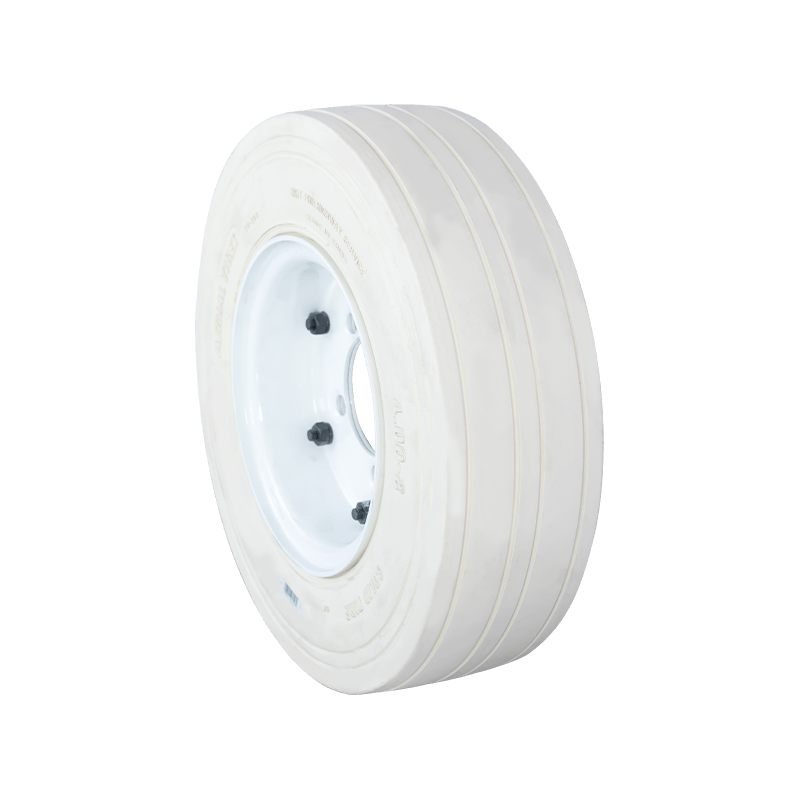
The press-on solid tyre is the most widely used industrial solid tyre format for forklifts and heavy material handling equipment. It is a multi-layer rubber construction mounted by pressing directly onto a steel wheel rim using a hydraulic press — a mounting method that creates a mechanical interference fit between the tyre's steel band and the wheel, eliminating the need for bolts, adhesives, or any other fastening system.
Multi-Layer Compound Architecture
Quality press-on solid tyres are engineered as a three-zone compound structure, with each zone performing a distinct function:
- Tread compound (outer zone): A wear-resistant, high-traction rubber formulation that provides the working surface in contact with the floor. The tread compound must balance abrasion resistance with adequate grip to prevent wheel slip under load. Premium tread compounds incorporate specific carbon black grades and antioxidant packages that extend service life by 20–40% compared to standard formulations.
- Cushion compound (middle zone): A softer, higher-resilience rubber layer that absorbs shock from floor imperfections, reducing vibration transmitted to the vehicle frame and operator. The cushion layer is the primary engineering variable that determines the ride quality of a press-on solid tyre — thicker, softer cushion compounds improve ride comfort but can generate more heat under high-duty-cycle loading.
- Steel band (inner zone): A formed steel band bonded to the inner circumference of the tyre that provides the interface with the wheel rim. The interference fit between the steel band and the wheel rim bore must be maintained within tight tolerances — typically 0.3–0.8mm of interference — to ensure the tyre cannot spin on the rim during operation while remaining removable at end of service life.
Tread Pattern Options and Their Applications
- Smooth (non-marking) tread: A flat, ungrooved tread surface providing maximum contact area and minimum floor marking. Used in clean warehouse environments, food processing, and pharmaceutical facilities where floor cleanliness is critical.
- Ribbed tread: Circumferential grooves that channel water and debris away from the contact patch, improving traction on wet or contaminated floors. Standard choice for mixed indoor/covered outdoor use.
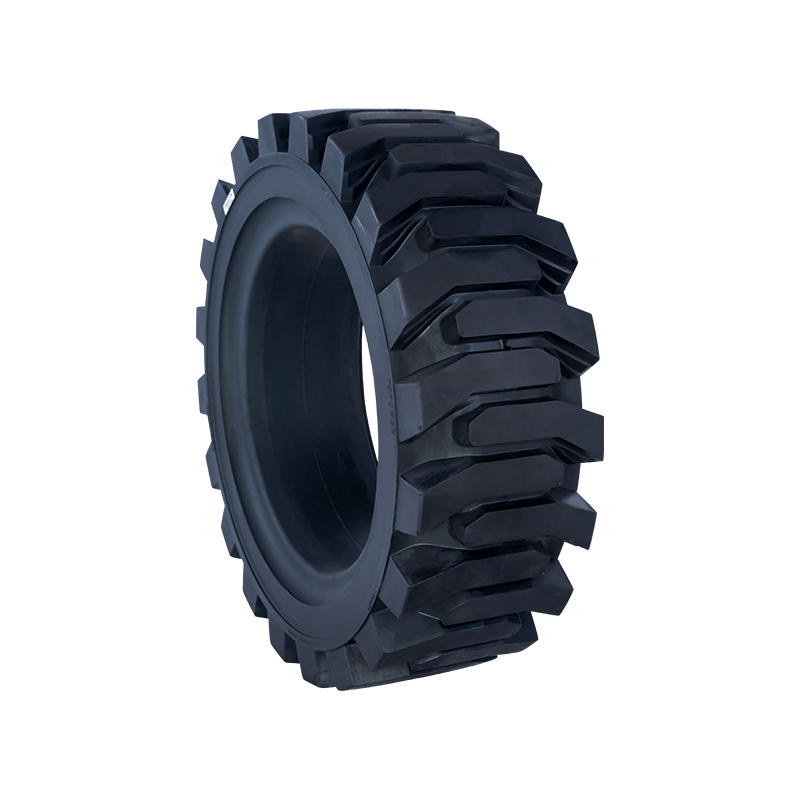
- Block tread: Aggressive tread blocks providing maximum grip on rough, uneven, or loose surfaces. Used in outdoor yard applications, container handling, and heavy industrial environments where floor conditions are variable.
Operating Parameters and Limitations
Press-on solid tyres perform optimally within defined operating parameters. Maximum recommended operating speed is typically 20–25 km/h for standard warehouse forklifts — solid tyres generate significantly more heat at higher speeds than pneumatic tyres due to hysteretic energy loss in the solid rubber compound, and sustained high-speed operation accelerates tyre wear and can cause internal heat buildup. For rough outdoor terrain, cobblestones, or highly uneven ground, the absence of pneumatic cushioning results in high impact loads being transmitted directly to the vehicle frame — for consistently rough outdoor applications, pneumatic or semi-pneumatic tyres remain the appropriate choice.
Polyurethane Solid Tyres: Superior Performance for Smooth Floor Applications
Polyurethane solid tyres represent a distinct technology within the industrial solid tyre category — using cast or injection-moulded polyurethane elastomer rather than rubber compound as the tyre material. On smooth, sealed concrete and epoxy-coated warehouse floors, polyurethane tyres outperform rubber press-on solid tyres across virtually every measurable performance parameter: wear life, rolling resistance, load capacity, and floor cleanliness.
Material Properties That Define Polyurethane Tyre Performance
Polyurethane elastomers used in solid tyres typically have Shore A hardness values of 80–95A, with specific grades selected based on the load and speed requirements of the application. The key material properties include:
- Exceptional abrasion resistance: Polyurethane has an abrasion resistance typically 3–5 times higher than equivalent natural or synthetic rubber compounds as measured by standard DIN 53516 abrasion testing, translating directly to longer service life on smooth concrete floors.
- Low rolling resistance: The elastic recovery properties of polyurethane result in lower hysteretic energy loss during tyre rotation, producing lower rolling resistance compared to rubber solid tyres. On electric forklifts and AGVs, this translates to a measurable 8–15% improvement in energy efficiency compared to rubber alternatives.
- High load capacity per unit tyre volume: Polyurethane's high tensile strength (typically 35–55 MPa) and tear resistance allow polyurethane tyres to carry equivalent loads in smaller cross-sections — widely used on compact electric pallet trucks and reach trucks where wheel housing dimensions are constrained.
- Non-marking and floor-friendly: Polyurethane tyres contain no carbon black and leave no marks on sealed floors — a critical requirement in food processing, clean rooms, and retail distribution centres. Available in a range of natural colours (cream, yellow, red, blue).
- Chemical resistance: Polyurethane resists many industrial fluids — including dilute acids, alkalis, and hydraulic oils — that would cause swelling or degradation in rubber tyres, making it the preferred choice in chemical processing, food and beverage, and pharmaceutical manufacturing environments.
Where Polyurethane Tyres Have Limitations
- Rough surface performance: Higher Shore hardness means less shock absorption on rough or uneven floors. On floors with significant damage or rough aggregate, polyurethane transmits higher impact loads to the vehicle than rubber alternatives.
- Thermal sensitivity: Sustained high-speed operation or continuous heavy loading can cause internal heat buildup — maximum recommended continuous operating temperature is typically 60–70°C surface temperature for standard polyurethane grades.
- Cold temperature brittleness: Standard polyurethane formulations become stiffer and more brittle below −10°C to −15°C. Specialised low-temperature polyurethane compounds are available for freezer warehouse applications but carry a significant cost premium.
- UV and outdoor exposure sensitivity: Polyurethane degrades more rapidly than rubber under prolonged UV exposure and weathering, making standard polyurethane tyres unsuitable for vehicles used primarily outdoors without cover.
Press-On vs. Polyurethane Solid Tyre: Direct Comparison for Forklift Applications
The decision between press-on rubber solid tyres and polyurethane solid tyres is one of the most consequential tyre specification choices in industrial fleet management. The two technologies serve overlapping but distinct application ranges, and using the wrong type for the operating environment wastes significant cost through premature tyre replacement or reduced vehicle and floor performance.
| Criterion | Press-On Solid Tyre | Polyurethane Solid Tyre |
|---|---|---|
| Primary Material | Multi-layer rubber compound | Cast / moulded polyurethane elastomer |
| Shore Hardness (typical) | 60–80A | 80–95A |
| Abrasion Resistance | Good | Excellent (3–5× rubber) |
| Rolling Resistance | Moderate | Low (8–15% energy saving) |
| Ride / Shock Absorption | Better (softer cushion layer) | Harder; less shock absorption |
| Floor Marking | Possible (non-marking grades available) | Non-marking (no carbon black) |
| Cold Temperature Performance | Good (down to −30°C, standard grades) | Limited below −10°C (special grades required) |
| Outdoor / UV Suitability | Good | Limited (UV degradation) |
| Service Life on Smooth Concrete | 2,500–4,000 hours | 4,000–7,000+ hours |
| Relative Purchase Cost | Moderate | Higher (30–80% premium) |
| Best Application | Mixed indoor/outdoor, rough floors, cold storage, counterbalance forklifts | Smooth warehouse floors, electric vehicles, clean environments, AGVs |
Neither technology is universally superior — each has a clear domain of optimal performance. The most common specification error is applying polyurethane tyres to applications with rough floors or outdoor use, or using rubber press-on tyres on smooth-floor electric pallet truck fleets where polyurethane's energy efficiency and extended service life would deliver substantially lower total operating cost.
Forklift Solid Tyre Selection: Matching Specification to Operating Environment
Forklift tyre specification is not a single decision — it is a matrix of choices across drive wheels, load wheels, and steering wheels, each of which may have different optimal tyre specifications depending on their function and the forces they experience.
Drive Wheel, Load Wheel, and Steering Wheel Considerations
- Drive wheels bear the highest torque loads and are subject to the most traction-related wear. They require tread compounds optimised for grip under power and braking, with cushion layers thick enough to absorb shock from floor transitions and loading dock impacts. For counterbalance forklifts on rough or mixed surfaces, press-on solid tyres with block or ribbed tread are the standard specification.
- Load wheels on electric pallet trucks and reach trucks carry the majority of the rated load directly and roll under essentially static or slowly moving load conditions. This is the optimal application for polyurethane tyres — their high load capacity and low rolling resistance directly reduces motor current draw and extends battery charge duration.
- Steering wheels (caster wheels on three-wheel and reach truck configurations) experience significant lateral scrubbing forces during tight-radius turning manoeuvres. Tyre compounds for steering positions must balance lateral stability with acceptable scrub wear — typically a harder tread compound than the drive position but with sufficient resilience to resist chunking under repeated scrub loads.
Environment-Based Forklift Tyre Selection Guide
| Operating Environment | Drive Tyre Recommendation | Load / Caster Tyre Recommendation | Key Priority |
|---|---|---|---|
| Smooth sealed warehouse floor | Press-on solid, non-marking | Polyurethane solid | Floor cleanliness, service life |
| Mixed indoor / covered outdoor | Press-on solid, ribbed tread | Press-on solid or polyurethane | Versatility, wet traction |
| Outdoor yard / port terminal | Press-on solid, block tread | Press-on solid (rubber) | UV resistance, rough surface durability |
| Cold storage / freezer warehouse | Press-on solid, cold compound | Low-temp polyurethane or rubber | Cold flexibility, non-brittleness |
| Food / pharma clean facility | Non-marking press-on solid | Polyurethane solid (coloured) | Zero floor marking, chemical resistance |
| AGV / electric pallet truck fleet | Polyurethane drive wheel | Polyurethane solid | Energy efficiency, service life |
Tyre Wear Indicators and Replacement Timing: Protecting Equipment and Operators
Running industrial solid tyres beyond their serviceable wear limit is one of the most common and consequential maintenance errors in forklift fleet management. Worn-out solid tyres compromise vehicle stability, increase floor impact loads on the axle and frame, reduce load capacity, and — in the case of press-on solid tyres — risk the tyre detaching from the wheel rim under load, creating an immediate safety hazard.
The Safety Line: Industry-Standard Wear Limit
Most press-on solid tyre manufacturers mould a continuous circumferential groove into the tyre sidewall at a defined depth from the tread surface — the safety line or wear indicator line. When the tread has worn down to the level of this safety line groove, the tyre has reached its end of serviceable life and must be replaced immediately. Operating below the safety line means the cushion zone has been consumed — the tyre can no longer absorb shock loads and the vehicle and operator are experiencing direct transmission of all floor impacts through the steel wheel to the frame.
Visual and Operational Signs That Indicate Replacement Is Needed
- Tread worn to or below the safety line groove — immediate replacement required regardless of other condition
- Chunking or tearing of tread blocks — indicates operation on abrasive surfaces beyond design parameters, or compound aging and degradation
- Visible cracking in the sidewall or at the tread-to-sidewall junction — indicates rubber oxidation and aging; structural integrity may be compromised
- Uneven wear across the tyre width — indicates wheel misalignment, overloading on one side, or a bent axle; address the root cause before fitting replacement tyres
- Increased vehicle vibration compared to baseline — often the first operational sign that tyre wear has reached a level affecting ride quality and vehicle dynamics
- Tyre spinning on the wheel rim (press-on tyres) — the interference fit has been lost, creating an immediate risk of tyre separation under load; remove from service immediately
Total Cost of Ownership: Evaluating Solid Tyre Investment Beyond Purchase Price
The purchase price of an industrial solid tyre represents only a fraction of its true cost over the full replacement cycle. A rigorous total cost of ownership (TCO) analysis — accounting for service life, fitting labour, vehicle downtime, energy impact, and floor maintenance — consistently shows that premium solid tyres deliver lower cost per operating hour than economy alternatives, despite their higher initial price.
The Components of True Tyre Cost
- Tyre purchase price: The most visible cost, but typically only 30–40% of total tyre TCO over a replacement cycle
- Fitting and press cost: Press-on solid tyre fitting requires a hydraulic press and skilled labour — typically 45–90 minutes of technician time per tyre set. At current labour rates, fitting cost for a four-tyre counterbalance forklift set adds significantly to the per-replacement cost and rewards less frequent replacement through better-quality tyres.
- Vehicle downtime during tyre change: A forklift removed from service for tyre replacement represents lost productive capacity. In operations running on tight throughput margins, this downtime cost can exceed the tyre fitting cost itself.
- Energy cost (for electric vehicles): A 10% improvement in rolling resistance from polyurethane tyres on a battery electric forklift operating two shifts per day represents a measurable reduction in energy cost per year and an increase in available operating time between charges.
- Floor maintenance cost: In facilities where marking tyres require floor refinishing — an epoxy warehouse floor refinish costs $8–20 per square metre — the switch to non-marking polyurethane tyres can eliminate this cost entirely, delivering savings that dwarf the tyre price premium.
The most common TCO calculation error is optimising for the lowest tyre purchase price rather than the lowest cost per operating hour. A premium press-on solid tyre delivering 4,500 hours of service at $180 costs $0.040 per hour. An economy tyre at $110 lasting 2,200 hours costs $0.050 per hour — 25% more expensive per operating hour before fitting costs are included. When fitting labour ($80–150 per vehicle tyre change) is factored in, the premium tyre's advantage typically increases further, as it requires half as many replacements over the same fleet operating period.