 English
 русский
 Español
 عربى
عربى
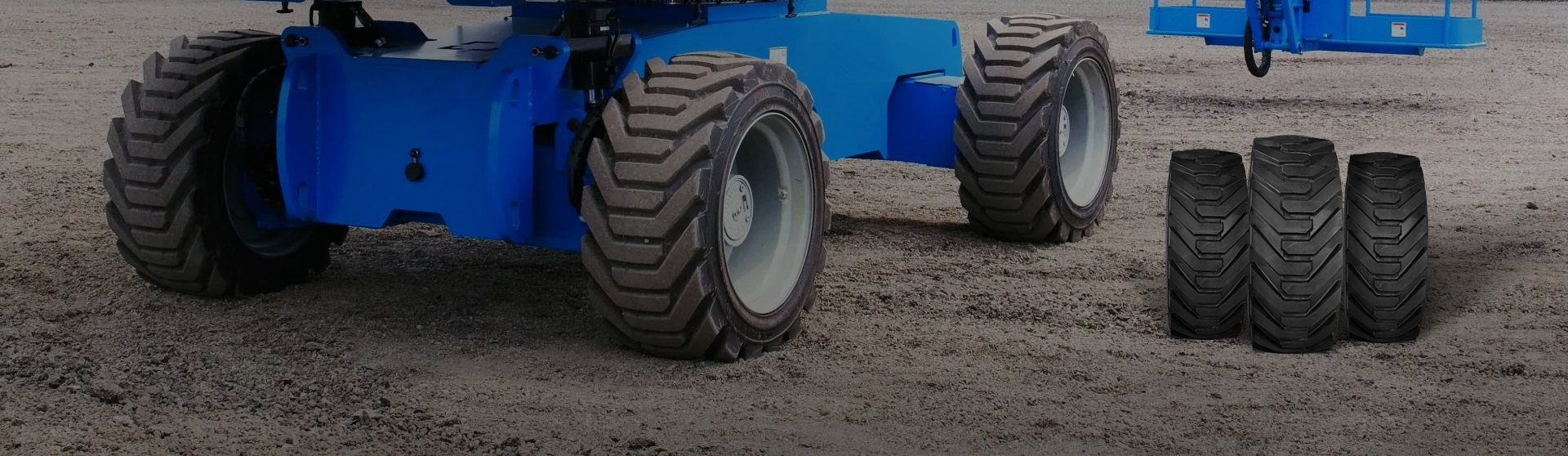

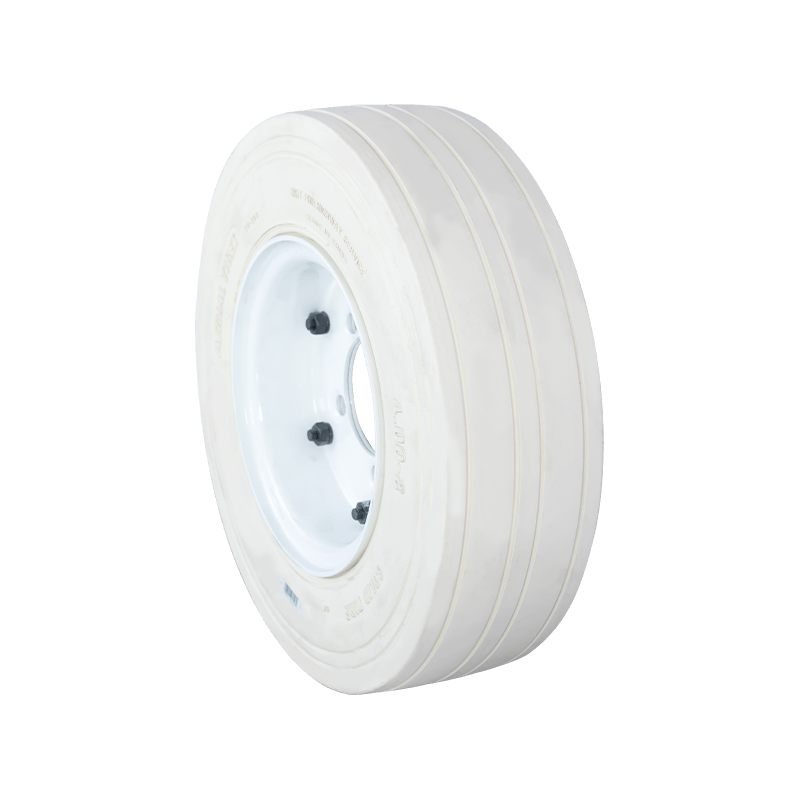
In modern warehouse management and food processing facilities, the demand for cleanliness is as critical as mechanical efficiency. Non-marking solid tires have emerged as the premier solution for material handling equipment that operates on light-colored or treated indoor floors. Unlike traditional black rubber tires, which utilize carbon black as a reinforcing agent, non-marking solid tires are engineered using high-quality silica or specialized light-colored synthetic rubber compounds. This material shift eliminates the possibility of leaving unsightly black streaks or "skid marks" during sudden stops or pivots. A premium non-marking solid tire is designed to provide the same load-bearing capacity and heat resistance as its black counterparts while ensuring a pristine working environment. This technical guide explores the chemistry of silica reinforcement, the multi-stage structural design of solid tires, and the operational protocols required to maximize the lifespan of these specialized industrial components.
What Specialized Chemical Compounds and Structural Layers Define the Durability of Non-marking Solid Tires?
The engineering of non-marking solid tires is a complex balance between eliminating carbon black and maintaining the structural rigidity required to support multi-ton forklift loads.
-
Silica Reinforcement and the Elimination of Carbon Black: The most significant technical difference in non-marking solid tires is the substitution of carbon black with silica (silicon dioxide). In traditional tires, carbon black provides the tensile strength and UV resistance necessary for industrial use. However, carbon black is inherently staining. By using high-dispersion silica, manufacturers can achieve a similar level of molecular cross-linking within the rubber matrix. This results in a tire that is "clean" yet possesses high tear resistance. Because silica-based compounds tend to generate less heat during internal friction, non-marking solid tires often exhibit lower rolling resistance, which directly translates to improved energy efficiency for electric reach trucks and pallet jacks.
-
The Three-Stage Construction for Shock Absorption: A high-quality non-marking solid tire is not a single block of rubber; it is composed of three distinct layers. The outer "Tread Layer" is designed for wear resistance and traction, utilizing a light-colored compound that resists abrasion. Beneath this lies the "Cushion Layer," a softer rubber compound engineered to act as a shock absorber. This layer protects the vehicle's axle and the operator from the jarring impacts of uneven floor joints. Finally, the "Base Layer" is a high-durometer, wire-reinforced rubber that ensures a secure "press-fit" onto the steel rim. In non-marking solid tires, the integration of these layers is critical to prevent "delamination," where the different rubber types separate under the extreme torque of industrial motors.
-
Anti-Static Integration and Electrical Conductivity: One technical challenge with silica-based non-marking solid tires is that silica is a natural insulator, meaning the tire can accumulate static electricity as it rolls. To solve this, premium non-marking solid tires incorporate specialized anti-static strips or conductive chemical additives. This allows the static charge to dissipate safely through the floor, preventing accidental electrical shocks to the operator or interference with sensitive electronic warehouse management systems (WMS). This feature is particularly vital in pharmaceutical and electronics manufacturing where static discharge can damage products or ignite flammable vapors.
How Does the Tread Pattern and Contact Patch Design of Non-marking Solid Tires Optimize Traction?
While the lack of marks is the primary selling point, a non-marking solid tire must still provide reliable grip on various surface textures, from polished concrete to epoxy resin floors.
-
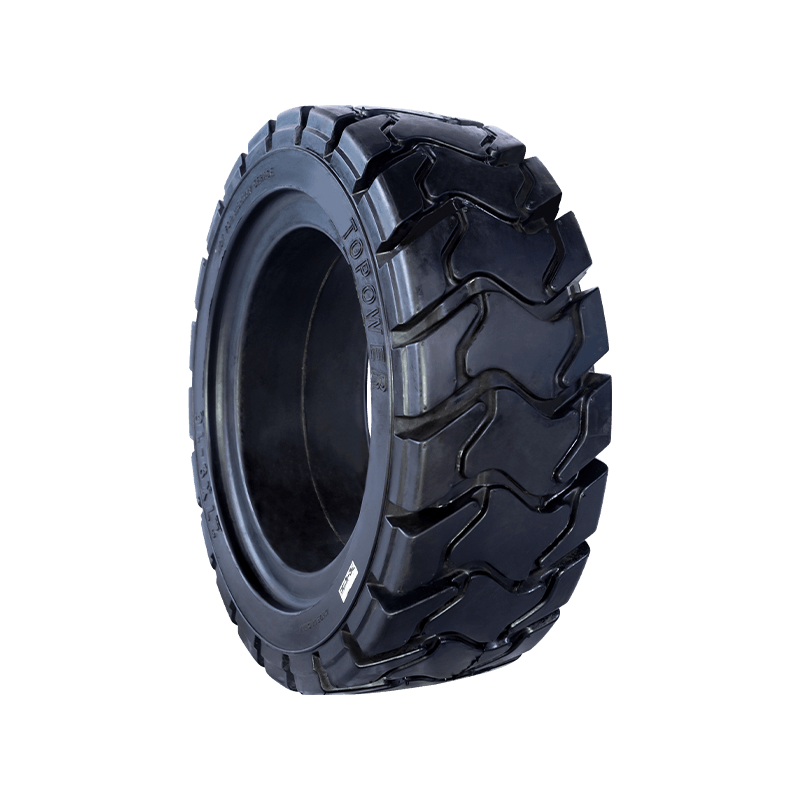
Deep-Lug and Ribbon Tread Geometries: The traction efficiency of non-marking solid tires is determined by the tread geometry. For indoor applications, a "ribbon" or smooth tread is often used to maximize the contact patch on flat surfaces, providing high stability and quiet operation. However, for environments where floors may be damp—such as cold storage or food prep areas—"deep-lug" patterns are employed. These lugs are designed with wide "void ratios" to effectively channel away moisture, preventing hydroplaning. The edges of the lugs on a non-marking solid tire are often siped (small slits in the rubber) to provide extra "biting" edges on slippery surfaces, ensuring that the forklift can accelerate and brake safely without losing its trajectory.
-
Heat Dissipation and Abrasive Wear Resistance: Friction generates heat, and heat is the primary enemy of solid rubber. Non-marking solid tires feature specific sidewall contours and tread depths designed to facilitate air cooling. As the tire rotates and compresses, the "flexing" of the rubber creates thermal energy. High-performance non-marking solid tires use "cool-running" compounds that remain stable even when the internal temperature of the tire rises during three-shift operations. The abrasive wear resistance is also optimized through the use of coupling agents that bond the silica to the rubber polymers more tightly, ensuring that the tire doesn't "crumb" or leave dust behind, which is essential for maintaining the ISO Cleanroom standards of many high-tech facilities.
-
Stability and Load Distribution in High-Lift Operations: When a forklift lifts a heavy load to a high racking position, the stability of the vehicle depends entirely on the "footprint" of its tires. Non-marking solid tires are engineered with a wide, flat profile to ensure a large contact area. This reduces the "ground pressure" and prevents the tire from deforming excessively under load. For heavy-duty applications, the internal steel bead wires are strategically placed to prevent the tire from "spinning" on the rim during high-torque starts. This structural rigidity is what allows non-marking solid tires to support the same weight ratings as traditional tires, ensuring that safety is never compromised for the sake of cleanliness.
Which Operational Standards and Maintenance Cycles Ensure the Long-Term Performance of Non-marking Solid Tires?
To ensure that non-marking solid tires provide the best return on investment, industrial facilities must adhere to strict maintenance protocols and environmental controls.
-
Monitoring Wear Indicators and Replacement Timing: Unlike pneumatic tires that go flat, non-marking solid tires wear down gradually. Most professional tires feature a "60J Line" or a built-in wear indicator on the sidewall. Once the tread has worn down to this line, the tire must be replaced to ensure the vehicle maintains its ground clearance and shock-absorbing capabilities. Running a non-marking solid tire beyond its wear limit increases the risk of "chunking," where large pieces of rubber break off due to excessive stress on the base layer. Regular visual inspections for cracks, flat spots (caused by long periods of inactivity under load), and embedded debris are essential components of a proactive maintenance schedule.
-
Floor Surface Compatibility and Debris Management: While non-marking solid tires protect the floor, the condition of the floor also affects the tire. Sharp metal shavings, gravel, or broken pallets can tear the silica-reinforced rubber. In facilities using non-marking solid tires, daily floor sweeping and the use of floor scrubbers are mandatory. Furthermore, because these tires are more expensive than standard black tires, they are strictly reserved for indoor use. Transitioning a vehicle equipped with non-marking solid tires to an outdoor asphalt or gravel yard will cause rapid abrasion and "pitting," effectively destroying the clean-room capabilities of the tire in a very short amount of time.
-
Correct Press-Fit Installation and Rim Integrity: The installation of non-marking solid tires requires a high-pressure hydraulic tire press. It is vital that the steel rims are inspected for rust or distortion before the new tires are mounted. Any irregularities in the rim can lead to uneven pressure on the "Base Layer," causing the tire to vibrate or slip during operation. Lubricants used during the pressing process must be compatible with the non-marking compound; petroleum-based lubricants can degrade the rubber, so water-based tire mounting pastes are preferred. By ensuring a perfect fit, the facility ensures that the non-marking solid tire operates at its peak efficiency, providing a smooth, quiet, and streak-free environment for the entire duration of its service life.